

medium-to-large breed
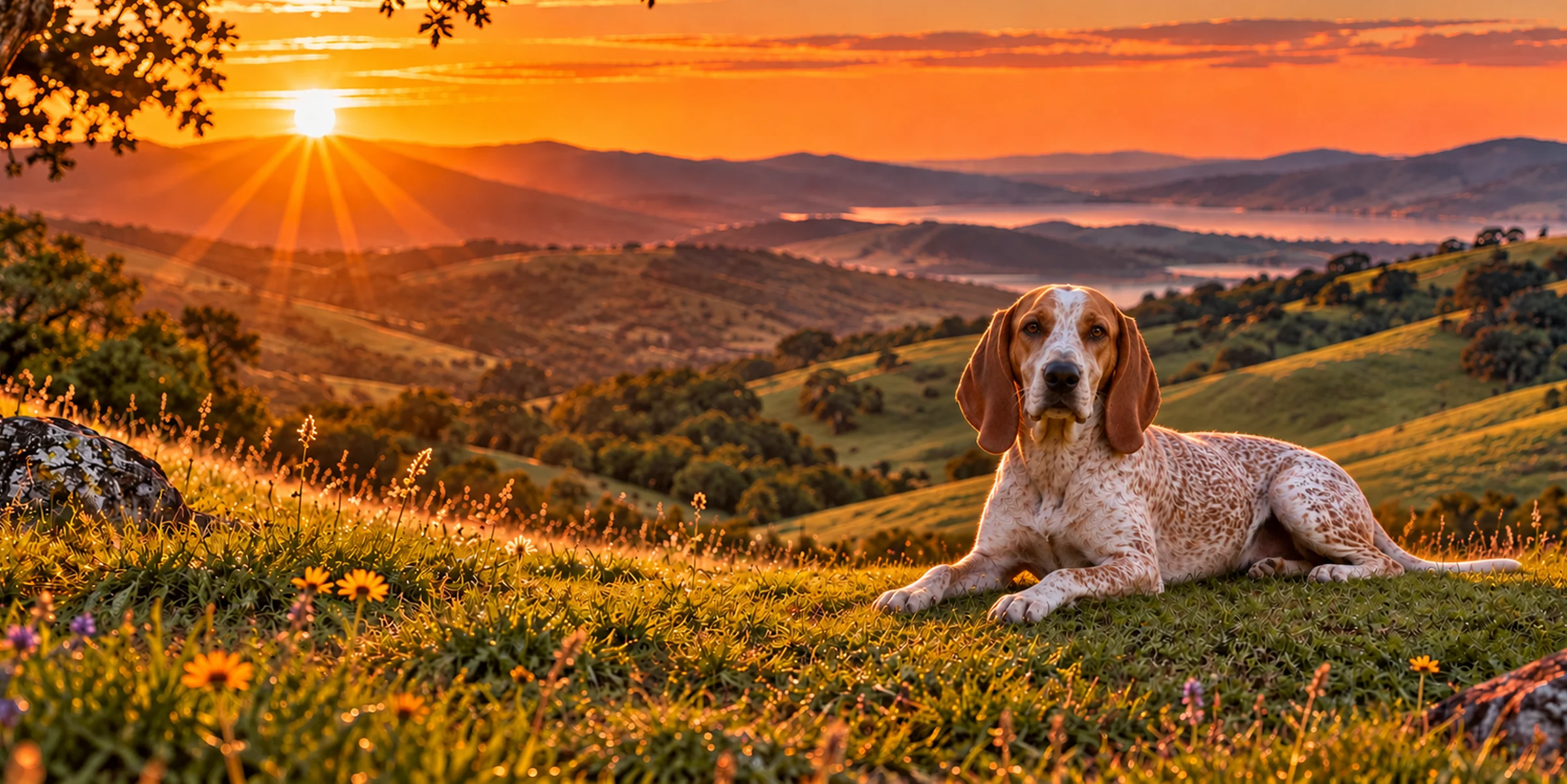
American Leopard Hound
A tree hound with a guarding streak, which is an unusual pairing. Indoors American Leopard Hounds are affectionate, calm and good with children; outdoors they bring a hound's nose and stamina plus a firm sense that the property is theirs to look after. They are uncommon, physically demanding and loud, and the merle coat carries real deafness and eye risk that a careful breeder will have tested both parents for.

Pup Height
21-27 in

Pup Weight
45-70 lb
Figures are for males; females are 20-25 in and 35-60 lb. The spotted leopard pattern the breed is named for is only one of several the standard allows - black, blue, brindle, red and yellow all appear, and a solid-colored dog is no less a Leopard Hound. Source: UKC breed standard, recognized 1998.

Pup Lifespan
12-15 years
Your pup, at a glance
What’s Life With This Pup Really Like?

Genuinely affectionate with their own people and noticeably devoted to the household - the contrast with their working self surprises owners the way it does with the coonhounds.

Good, and protective of them. Sturdy, patient and tolerant with children they know, with the usual caveat that a sixty-pound hound at speed does not check what is in front of them.

Fine with dogs they are raised with or hunt alongside. Cats are the problem - this is a breed that trees things for a living, and the instinct does not distinguish between a squirrel and the family cat.

High. A ringing treeing bay outdoors and a real alarm voice at home. They are more selective about it than a coonhound, but no quieter when they decide to use it.

Very high. Bred to work rough country for hours, and ninety minutes of hard exercise is the floor rather than a generous allowance.

Moderate and year-round. The coat is short and dense, so the hair is manageable but constant.

Enthusiastic and nose-led. Tracking games and problem-solving hold them far better than fetch, and they stay game well into middle age.

Mild. Some loose lip, nothing that needs a towel by the door.

The most trainable of the American hounds on this site. Leopard Hounds are independent by design but they genuinely look to their handler, which the pure pack hounds do not - the limit is the prey drive rather than their willingness.

Excellent, and the clearest difference between this breed and the coonhounds. Leopard Hounds are territorial by inheritance and will treat a stranger at the gate as their business.

Very low for the coat, real for the ears. Weekly ear cleaning is the difference between a cheap breed to keep and a recurring vet bill.

Low. The exercise requirement, the voice and the guarding instinct together need land and distance from neighbors, and none of the three is trainable away.
Lifestyle fit
Could This Be Your Best Breed?
An American Leopard Hound suits rural or rural-adjacent land with a real fence, and an owner who has handled a large, driven, territorial dog before and can fill ninety minutes a day with work for the nose as well as the legs. Costs run $1,600 to $2,600 a year over twelve to fifteen years. An apartment or a suburban street is where this falls apart, and a first dog is not the one to learn on.

Living Space
Rural or genuinely rural-adjacent, with land and a real fence. The Leopard Hound is a working tree hound with a guarding streak, and both halves of that need space and a boundary - the exercise load rules out an apartment before the barking even comes up.

Pup Experience
Not a first dog. Leopard Hounds are more biddable than the coonhounds and actually want to work with you, but they are large, driven, territorial dogs with serious prey drive, and an owner who has not managed that combination before will be behind from the start.

Daily Pup Time
Ninety minutes or more of hard exercise daily, and it needs to engage the nose and the head as well as the legs. The coat asks for almost nothing.

Allergies & Coat
The American Leopard Hound scores 5/10 for shedding and 3/10 for drooling. No dog is truly hypoallergenic. The allergens come from dander and saliva, and a dog that sheds this much will leave plenty of hair behind - especially on your furniture, floors, and clothes.
Quirks & challenges
The Not-So-Easy Stuff

Bred to Tree, Still Does
Cats, squirrels and anything that climbs will be chased up something. Off-leash freedom in unfenced ground is not realistic for most individuals.
The Guarding Is Real
Unlike the pack hounds, Leopard Hounds are genuinely territorial with strangers. Early, wide socialization is what keeps that useful rather than a liability.
A Serious Exercise Load
Ninety minutes hard, most days, with something for the nose to do. An under-worked Leopard Hound finds their own occupation.
The Bay Carries
A ringing treeing voice bred to be located from a distance. It is used with more discretion than a coonhound's, but it is just as loud.
Merle to Merle Is Dangerous
Two spotted parents can produce blind and deaf puppies. Ask any breeder directly what the parents' coat patterns are.
Rare Enough to Be Hard
Few breeders, long waits, and little breed-specific support if something goes wrong. Worth knowing before you commit.
The good, the bad & the hairy
Health, Care & Costs
Understanding the health risks and ongoing costs of a American Leopard Hound helps you plan for a happy, healthy life together.

12-15 years
$40-$65
per groom (bath, nails and ears), every 8-12 weeks - a short coat needs little ($180-$320/year)
$1,600-$2,600/year
all-in (food, routine vet, grooming, insurance, incidentals)

Health Risks
Conditions this breed is prone to.

The gene that makes the leopard pattern also affects the inner ear. One merle parent is fine; two can produce double-merle puppies that are deaf, blind or both. This is entirely a breeding decision, which is why it belongs in the first conversation with a breeder rather than a later one with a vet.
The same gene causes malformed or undersized eyes in double-merle puppies, sometimes alongside the deafness. A puppy from two spotted parents should have a full eye examination before you take it home.
The hip joint develops loosely, so the ball and socket grind instead of gliding. It leads to arthritis and, in severe cases, replacement surgery. Ask to see hip scores for both parents.
The knee ligament tears under the load of a hard-running dog turning at speed on rough ground. It usually needs surgery, and dogs that do one side often do the other later.
Drop ears seal in warmth and moisture, which is what bacteria and yeast want. Structural rather than inherited - weekly cleaning is genuine prevention, and neglect turns it into a recurring cost.
Less a disease than a consequence of the job. Torn pads, cuts, ticks, pulled muscles and the occasional encounter with what they treed are routine in a dog worked through rough country.

Insurance & Health Coverage
A hardy, long-lived working breed with no great burden of inherited disease - twelve to fifteen years is good going for a dog this size.

The costs here come from the work rather than the genes. Cruciate surgery runs several thousand dollars per knee and a hard-running hound is a candidate for it, and the injuries that come with rough country - cuts, pads, the occasional serious one - are the sort of claim that arrives without warning. Chronic ear infections are the quiet recurring line.

The merle-linked deafness and eye defects are the exception, and they are not really an insurance question at all: they are congenital, they would be excluded as pre-existing on any policy, and the only protection against them is asking a breeder about both parents' coat patterns before you choose a puppy.
 Get a Pet Insurance Quote
Care needs
The Daily Routine

Grooming
A short, dense coat that needs a weekly once-over and regular nails, nothing more. The ears are the real job: check and clean them weekly, and dry them thoroughly after any swim or wet day out.

Exercise
Ninety minutes or more daily, and a walk does not cover it. Long-line tracking, hiking over rough ground and scent work use the dog they actually are; a securely fenced acre helps but does not replace the work.

Food & Weight
Two measured meals rather than one large one, with hard exercise kept clear of mealtimes. Feed to the work - a dog running hard through country needs considerably more than the same dog resting through two wet weeks, and the difference shows up on their ribs either way.
Similar breeds
If This Isn’t Quite the One
American English Coonhound
The other American treeing hound here, and the closer comparison on the hunting side. The Coonhound is louder, more single-minded on a trail and friendly with everyone; the Leopard Hound is the one that also guards the place.

German Shepherd
If it is the combination of a working brain and a protective streak that appeals rather than the hunting, a German Shepherd offers both in a far more trainable, far more available breed - with none of the treeing instinct.