

small breed
Danish-Swedish Farmdog
Small, compact and rectangular, with a short smooth coat that is predominantly white with patches of black, tan, brown or a combination. The Danish-Swedish Farmdog is often mistaken for a Jack Russell and is not one - the head is more wedge-shaped and the build slightly heavier. Recognized jointly by Denmark and Sweden in 1987 as a shared national breed. Fully recognized in the AKC Working Group from January 1, 2025. Source: AKC breed standard.
The all-purpose smallholding dog of Denmark and southern Sweden - ratter, watchdog, stock mover and children's companion in one twenty-pound package. Farmdogs are cheerful, alert, extremely trainable and considerably more athletic than they look. Nearly lost to mechanized farming before a joint Danish-Swedish rescue effort in the 1980s, and still uncommon outside Scandinavia. The only real catch is the energy, which is higher than the size suggests.

Pup Height
12.5-14.5 in

Pup Weight
15-20 lb

Pup Lifespan
11-14 years
Your pup, at a glance
What’s Life With This Pup Really Like?

High. They are genuinely affectionate and happy to settle on a lap once the day's work is done - a farm dog who switches off indoors.

Excellent. Being safe with the farm children was part of the original job, and Farmdogs are playful, sturdy and patient with them.

Good with dogs and cats a Farmdog was raised with. Small pets are a different question - the ratting instinct is entirely intact.

Moderate. They announce arrivals as a farm watchdog should, and respond well to a trained quiet cue.

High, and higher than their size suggests. Ninety minutes with something to think about, not a stroll around the block.

Low to moderate. A short smooth coat that sheds lightly year-round with almost no management.

Among the most playful here. They play hard, invent games, and keep a puppyish streak well into old age.

Minimal.

Excellent. Quick, willing and food-motivated, and notably more biddable than the terrier types they resemble.

Strong as an alarm. Alert, quick to announce and territorial about the property, with nothing behind it at twenty pounds.

The lowest in this batch. A weekly wipe and nothing else.

Good. They suit farms, houses and apartments alike, provided the exercise and the mental work actually happen.
Lifestyle fit
Could This Be Your Best Breed?
A Danish-Swedish Farmdog suits an active household with a fenced yard, and makes an excellent first dog for someone who will train and play daily - an hour to ninety minutes, with a sport in it. They are sound, cheap at $1,000 to $1,700 a year, and easy to groom. Two homes should pass: the sedentary one, and the one that wants a twenty-pound dog content with a stroll around the block.

Living Space
A house with a fenced yard suits them best, though they are small and adaptable enough for an apartment if the exercise genuinely happens. They were farm dogs and they like having ground to patrol.

Pup Experience
Very good for a first-time owner who is active. Farmdogs are friendly, biddable and forgiving, and the only real demand is the energy level, which is higher than a twenty-pound dog usually implies.

Daily Pup Time
An hour to ninety minutes of activity daily, with training or a dog sport in it. The coat needs five minutes a week.

Allergies & Coat
The Danish-Swedish Farmdog scores 4/10 for shedding and 1/10 for drooling. No dog is truly hypoallergenic. The allergens come from dander and saliva, and a dog that sheds this much will leave plenty of hair behind - especially on your furniture, floors, and clothes.
Quirks & challenges
The Not-So-Easy Stuff

More Energy Than Expected
A farm dog in a small frame. Ninety minutes daily, and a short walk will not settle them.
They Need a Job
Bored, they dig, bark and find their own work. Agility, flyball or scent work rather than more walking.
Ratting Instinct Intact
Bred to kill vermin and still keen. Hamsters, rabbits and outdoor cats are a genuine problem.
Alarm Barking
The farm watchdog part of the job. Trainable with a quiet cue, and they will always announce arrivals.
Rare Outside Scandinavia
Few American breeders. Expect a waiting list, travel, and possibly an import.
Mistaken for a Jack Russell
Similar look, different dog. Choosing one expecting the other misjudges both temperament and needs.
The good, the bad & the hairy
Health, Care & Costs
Understanding the health risks and ongoing costs of a Danish-Swedish Farmdog helps you plan for a happy, healthy life together.

11-14 years
$35-$55
per groom (bath, nails, ears), every 10-12 weeks or done at home ($0-$220/year)
$1,000-$1,700/year
all-in (food, routine vet, grooming, insurance, incidentals)

Health Risks
Conditions this breed is prone to.

Worth stating first. The breed was shaped by function on working farms rather than by the show ring, and the 1980s recovery effort drew on a reasonably broad population - the result is one of the sounder small breeds, with few inherited problems and a long life.
The kneecap slips out of its groove, causing a skipping gait and sometimes needing surgery. It is the most common orthopedic issue in the breed, as in most small dogs, and is screened by examining the parents.
The hip joint develops loosely and wears into arthritis. Uncommon in a dog this light, but present and worth asking a breeder about.
The retina degenerates gradually until the dog is blind, usually beginning with night vision. There is no treatment and a DNA test exists, so tested parents remove the risk.
Not inherited, but a likely reason they see a vet. A small dog who jumps, sprints and goes to ground picks up sprains, cuts and the occasional cruciate tear.
A small jaw means crowding and tartar. Daily brushing and regular professional cleanings keep it manageable across a long life.

Insurance & Health Coverage
One of the cheaper and healthier breeds on this site. The inherited-disease list is genuinely short, the coat costs nothing, and the food bill is small.

What you are insuring is mostly accident. An athletic small dog who jumps, sprints and goes down holes picks up sprains and tears, and a cruciate repair is the most likely large bill.

Patellar luxation is the one inherited problem worth insuring early against - surgery when it is severe, and the first note of a skipping gait on a record turns knees into a permanent exclusion. Progressive retinal atrophy is congenital and uncovered by any policy, but DNA testable in the parents, so ask for the results rather than relying on cover.
 Get a Pet Insurance Quote
Care needs
The Daily Routine

Grooming
About as easy as it gets - a weekly pass with a rubber mitt to lift dead hair, a bath when they have found something, and nails and ears as usual. The white coat shows dirt and shows nothing else.

Exercise
An hour to ninety minutes daily with variety. Agility, flyball, scent work and earthdog trials all suit them far better than distance walking, and the mental half does more to settle them than the physical.

Food & Weight
Two measured meals. They are lean, active dogs who burn well when employed and gain quietly when not, so go by feel through the ribs and count the training treats.
Similar breeds
If This Isn’t Quite the One

Brazilian Terrier
The closest match - another compact, white-and-patched farm ratter with real energy and an unusually biddable temperament for the type. Both need a job; the Danish-Swedish is a touch calmer indoors.
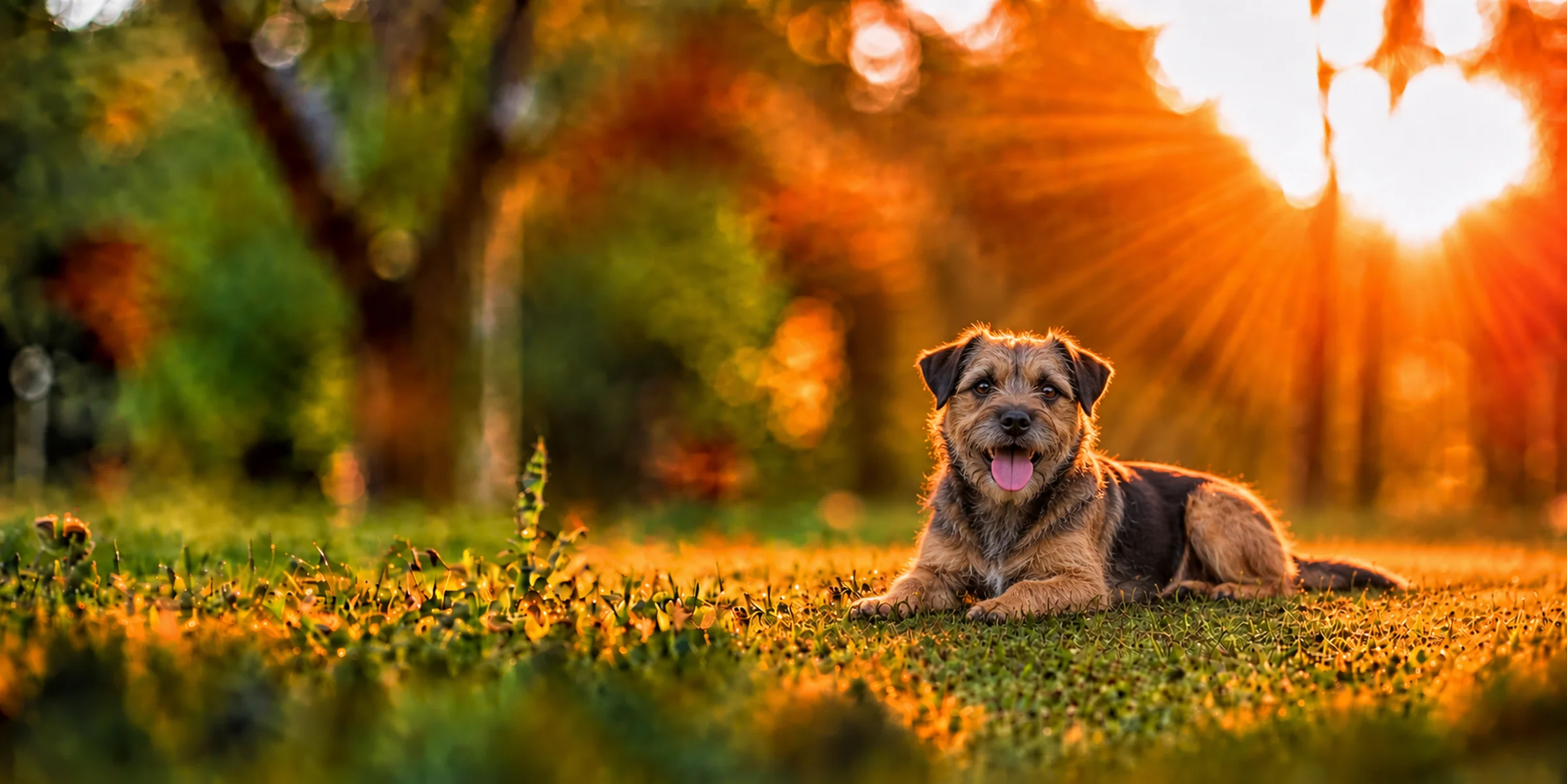
Border Terrier
A similar-sized working terrier with the same even temper and sociability with other dogs. The Border needs stripping and has more prey drive; the Farmdog is easier to groom and easier to train.