

small breed
Japanese Chin
Square in outline with a broad flat face, large wide-set eyes showing a little white at the inner corner, and a plumed tail carried over the back. Black and white, red and white, or black and white with tan points. Despite the name the Chin is Chinese or Korean in origin, given to the Japanese imperial court where they were bred for centuries as aristocratic companions - Japanese sources traditionally class them as a separate creature from a dog. Source: AKC breed standard.
A Japanese Chin is a seven-to-eleven-pound companion with no working past and no interest in acquiring one - happy on a lap, a windowsill or the back of the sofa, and quiet enough that neighbors rarely learn they exist. The flat face is the whole honest problem: airway trouble, eyes exposed enough to scratch on a shrub, and heat that stops being discomfort and becomes an emergency.

Pup Height
8-11 in

Pup Weight
7-11 lb

Pup Lifespan
12-14 years
Your pup, at a glance
What’s Life With This Pup Really Like?

The maximum, on their own terms. They want to be on a lap or against a person, and they choose when rather than waiting to be invited.

Reasonable with gentle, older children. A Chin is fragile enough that rough handling injures them, and toddlers are a poor match for the Chin's sake rather than theirs.

Very good. Sociable with dogs and notably easy with cats, with no prey drive and no territorial streak.

Low. A notably quiet dog who alerts rarely and settles again immediately.

Low - among the lowest here. Half an hour of gentle walking covers them completely.

Moderate. A silky single coat that sheds steadily year-round, with a heavier seasonal turn.

Gentle and brief, with a catlike quality - they bat at toys, climb, and stop when they have had enough.

Low. Some snuffling around the flat face rather than true drool.

Moderate. Bright and sensitive, cooperative with gentle handling, and slow to housetrain.

Low. They may announce a visitor once and then go back to their perch.

Moderate. Brushing several times a week plus daily face and eye care.

High indoors. Apartments and small homes suit them perfectly, and heat, humidity and exertion suit them badly.
Lifestyle fit
Could This Be Your Best Breed?
The Japanese Chin suits an apartment, a quiet household and an owner who wants company rather than a project - twenty to thirty minutes of gentle walking, a brush a few times a week, and a daily wipe of the face. Twelve to fourteen years at $1,300 to $2,200 a year is modest for a toy breed. A home without air conditioning in July is not one to bring a Chin into.

Living Space
Anywhere indoors, with air conditioning in summer. The Chin is a genuine lapdog with minimal exercise needs, and the flat face makes heat a welfare problem rather than a discomfort.

Pup Experience
Good for a first-time owner who has read the brachycephalic section honestly. They are gentle, quiet and undemanding to live with; the demands are veterinary rather than behavioral.

Daily Pup Time
Twenty to thirty minutes of gentle walking in cool parts of the day. Grooming is a brush a few times a week plus daily face care.

Allergies & Coat
The Japanese Chin scores 5/10 for shedding and 2/10 for drooling. No dog is truly hypoallergenic. The allergens come from dander and saliva, and a dog that sheds this much will leave plenty of hair behind - especially on your furniture, floors, and clothes.
Quirks & challenges
The Not-So-Easy Stuff

The Flat Face Is the Problem
Crowded airway means noisy breathing, poor heat tolerance and real anesthetic risk. It defines their health.
They Overheat Easily
Never a hot car, a hot room or a midday summer walk. Heat kills brachycephalic dogs quickly.
Prominent Eyes
Large and shallow-set, so scratches and ulcers are common. Any squint or discharge is a same-day appointment.
Heart Murmurs
Valve disease runs in the toy breeds. Annual listening from middle age, earlier if a breeder advises.
Fragile
Nine pounds with fine bones. Falls from furniture and rough handling are genuine risks.
They Climb
Catlike and surprisingly agile. They get onto high furniture and hurt themselves coming down.
The good, the bad & the hairy
Health, Care & Costs
Understanding the health risks and ongoing costs of a Japanese Chin helps you plan for a happy, healthy life together.

12-14 years
$50-$75
per groom (bath, brush-out, face, ears, nails), every 6-8 weeks ($350-$600/year)
$1,300-$2,200/year
all-in (food, routine vet, grooming, insurance, incidentals)

Health Risks
Conditions this breed is prone to.

The defining health problem. The muzzle is shortened without a matching reduction in soft tissue, so the airway is crowded - narrow nostrils and an over-long soft palate. It produces noisy breathing, poor exercise tolerance and dangerous heat sensitivity, and severe cases are improved surgically. It also means anesthesia carries more risk than in a normal-muzzled dog, which matters for every procedure they will ever have.
Large, prominent, shallow-set eyes are easily scratched, and corneal ulcers, dry eye and cataracts all appear. An ulcer is painful and can cost the eye if it is left - squinting, redness or discharge warrants a same-day appointment.
The valve between the left chambers of the heart leaks and the heart gradually fails. It is common across toy breeds and appears here at above-average rates. Annual auscultation from middle age catches it, and treatment is lifelong medication.
The kneecap slips out of its groove, causing a skipping gait and sometimes needing surgery. Common in small breeds and checked at routine vet visits.
A rare inherited metabolic disease found specifically in this breed, in which nerve cells cannot break down a fatty substance and young dogs develop progressive neurological decline. It is fatal, it is DNA testable, and a breeder who tests both parents removes it entirely.
A full set of teeth crammed into a shortened jaw means crowding, tartar and early loss. Daily brushing and regular cleanings are a recurring cost, and the anesthesia risk above makes each one a bigger decision than usual.

Insurance & Health Coverage
Read the brachycephalic wording before anything else. A growing number of insurers exclude conditions arising from the flat face entirely or charge a loading for it, and in this breed that exclusion covers the airway, the heat sensitivity and often the eyes - which is most of what you would actually claim for. Ask the question directly rather than assuming a general policy covers it.

Heart disease is the other large category, and it tends to announce itself as a murmur at a routine check - the moment it is on the record insurers exclude heart conditions, so cover taken out beforehand is worth a great deal more.

Dental work is excluded as routine by most policies, and each cleaning carries real anesthetic risk here, so budget for it as a planned cost. GM2 gangliosidosis is congenital and uncovered, but DNA testable in the parents.
 Get a Pet Insurance Quote
Care needs
The Daily Routine

Grooming
A single silky coat with a ruff, feathered ears and a plumed tail that needs a thorough brush three or four times a week - it mats behind the ears and in the trousers but is far less work than a double coat. The daily job is the face: wipe the nose fold and under the eyes, and check both eyes for redness or a scratch. No trimming beyond tidying the feet.

Exercise
Twenty to thirty minutes of gentle walking daily, split up and timed for the cool parts of the day. They are not built for exertion and pushing them is genuinely dangerous in warm weather.

Food & Weight
Two measured meals. They are small and sedentary and easy to overfeed, and extra weight makes the breathing meaningfully worse.
Similar breeds
If This Isn’t Quite the One

English Toy Spaniel
The closest match - another small flat-faced court companion with the same heat sensitivity, eye exposure and anesthetic considerations. The English Toy is stockier and heavier-coated; the Chin is lighter, more agile and distinctly more catlike.
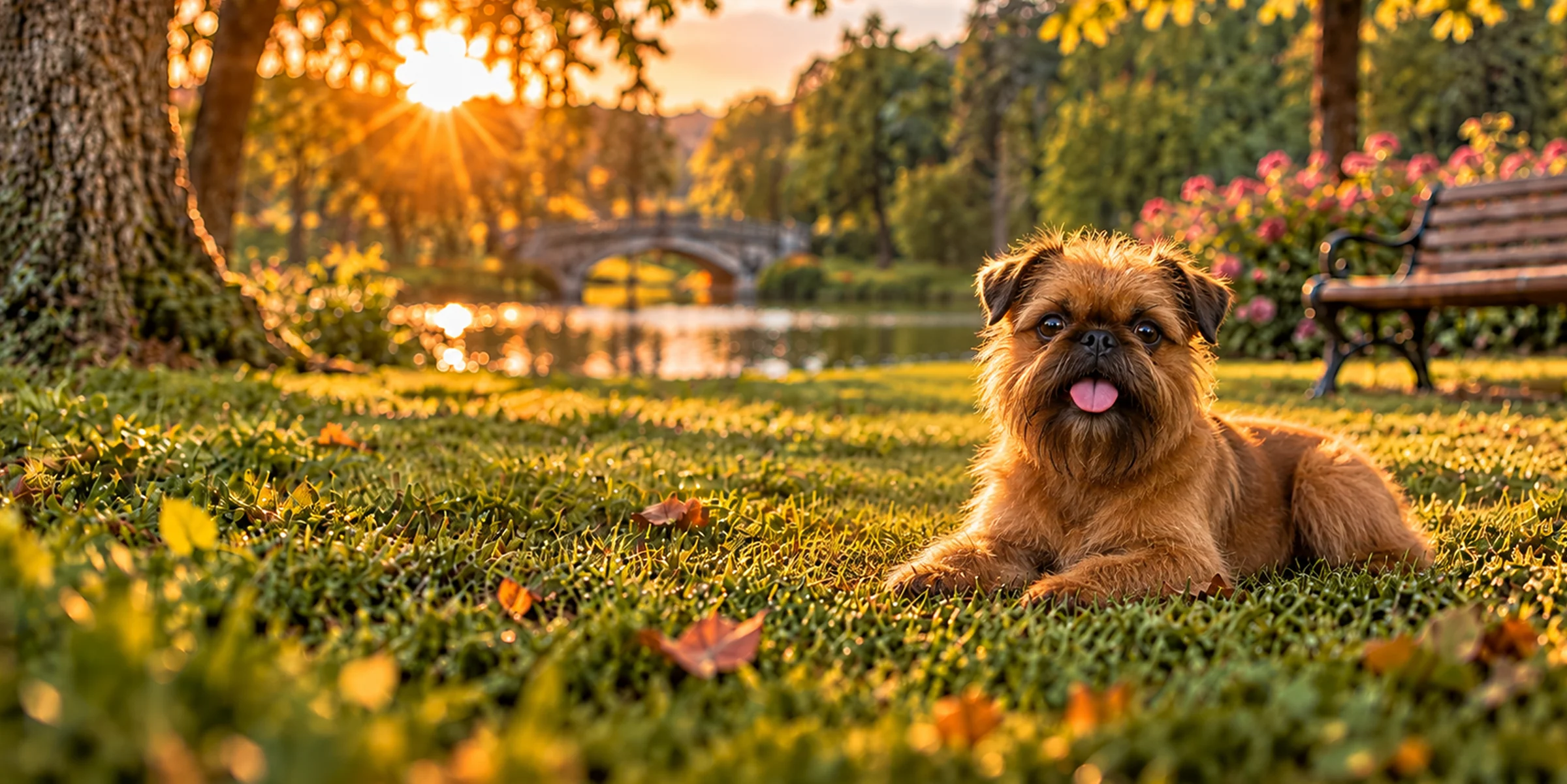
Brussels Griffon
A comparable small brachycephalic companion with similar health considerations. The Griffon is busier and more comic; the Chin is quieter, more dignified and more independent.