

medium breed
Kerry Blue Terrier
Puppies are born black and clear to blue gray over the first eighteen months, sometimes as late as two years - a dog still black at eighteen months is unusual rather than wrong. The coat is soft, dense and wavy rather than harsh, does not shed, and is clipped rather than stripped. Source: AKC breed standard.
Ireland's national terrier and one of the handsomest dogs going - a soft, dense, non-shedding blue coat over a bold and genuinely funny dog. Kerry Blues are devoted to their own people, alert enough to be a real watchdog, and capable of almost any job you set them. Two things decide the fit: a coat that mats out of sight and needs a clip for life, and a dog who does not like other dogs.

Pup Height
17.5-19.5 in

Pup Weight
30-40 lb

Pup Lifespan
12-15 years
Your pup, at a glance
What’s Life With This Pup Really Like?

High. A Kerry Blue is genuinely affectionate with their family and settles happily against them once the day's work is done.

Good with their own family's children - sturdy, playful and tolerant. The Kerry Blue's intensity and the dog aggression mean supervision around visiting pets matters more than around the children.

The weak point, and a serious one. Same-sex dog aggression is common and the prey drive toward cats and small animals is genuine.

Moderate to high. They announce arrivals with conviction and respond well to a trained quiet cue.

High. Ninety minutes with mental work, and they are calm indoors once it has happened.

The lowest on this site. The coat grows rather than sheds, which is exactly why it needs clipping.

Bold and inventive. They play hard, keep a mischievous streak for years, and are genuinely funny about it.

Low, though a wet beard drips across the floor.

Very good, and unusual for a terrier - Kerry Blues have done police work. Confident enough that consistency matters more than technique.

Strong. Alert, territorial and genuinely brave, with a bark that carries.

Very high - among the most demanding here. Brushing several times a week plus a professional clip every six to eight weeks for life.

Moderate. They suit houses and apartments alike on size, and the dog aggression constrains where and when they can be walked.
Lifestyle fit
Could This Be Your Best Breed?
A Kerry Blue suits an experienced terrier household with a fenced yard, time for an hour or more of work a day, and a walking route that is not a parade of other dogs. If $550 to $950 a year in grooming alone is not in the budget, stop here - the clip every six to eight weeks is not optional, and a coat left to mat gets shaved off rather than brushed out.

Living Space
A house with a securely fenced yard. They are adaptable enough for an apartment on size, and the dog aggression is the real constraint - walks past other dogs become the daily problem.

Pup Experience
Experienced terrier owners. A Kerry Blue is clever and trainable and genuinely scrappy with other dogs, and the grooming is a standing commitment most people underestimate before they commit.

Daily Pup Time
An hour to ninety minutes daily with mental work. Grooming is the larger item - brushing several times a week plus a professional clip every six to eight weeks for life.

Allergies & Coat
The Kerry Blue Terrier scores 1/10 for shedding and 3/10 for drooling. No dog is truly hypoallergenic. The allergens come from dander and saliva, and a coat like this one holds on to them rather than spreading them around your home - which is what a groomer is clearing out every six to eight weeks.
Quirks & challenges
The Not-So-Easy Stuff

Serious Dog Aggression
The defining practical issue. Same-sex conflict especially, and it is managed rather than trained away.
Grooming Is Expensive Forever
A professional clip every six to eight weeks for a decade, plus brushing between. Cost it before you commit.
Strong Prey Drive
Bred to kill vermin. Cats, rabbits and small pets are a genuine problem.
Strong-Willed
Clever and confident enough to test an inconsistent owner. Consistency beats repetition.
The Coat Mats
Soft and wavy, so it tangles rather than sheds. Brushing several times a week is not optional.
Slow to Mature
Boisterous adolescence until around two, and the coat color is still settling at the same time.
The good, the bad & the hairy
Health, Care & Costs
Understanding the health risks and ongoing costs of a Kerry Blue Terrier helps you plan for a happy, healthy life together.

12-15 years
$80-$120
per groom (full clip, bath, beard, ears, feet, nails), every 6-8 weeks ($550-$950/year)
$1,700-$2,800/year
all-in (food, routine vet, grooming, insurance, incidentals)

Health Risks
Conditions this breed is prone to.

A breed-specific inherited neurological disease in which cells in the cerebellum die off, causing progressive loss of coordination from around three to six months old. It is fatal and there is no treatment, but it is DNA testable - a breeder who tests both parents removes it entirely. Ask for the certificates.
An inherited clotting disorder causing excessive bleeding after surgery or injury. It is DNA testable, and it matters most as a surgical risk - tell your vet the breed before any procedure.
The hip joint develops loosely so the ball wears in the socket instead of gliding, leading to arthritis. Present at moderate rates and screened by scoring both parents.
Dry eye, entropion and cataracts all appear in the breed. Dry eye in particular is managed with daily drops for life rather than cured, and entropion is corrected surgically.
Spiculosis produces thick, bristly spines of abnormal hair, usually on the elbows and hocks; benign hair follicle tumors also occur more often than in most breeds. Both are cosmetic rather than dangerous and are worth showing a vet when they appear.
The thyroid under-produces, causing weight gain, lethargy and coat and skin problems that compound the grooming. Diagnosed by blood test and controlled with a daily tablet.

Insurance & Health Coverage
Grooming is the biggest predictable cost and no policy touches it - a clip every six to eight weeks for a dog who lives to fourteen runs into five figures over the life. Budget it as a fixed expense rather than an occasional one.

On the insurable side, two inherited conditions are worth the breeder conversation rather than the insurance one, because both are congenital and uncovered: progressive neuronal abiotrophy is fatal in young puppies, and factor XI deficiency is a surgical bleeding risk. Both are DNA testable in the parents.

Dry eye is the chronic condition to check the wording on, since it is managed with lifelong daily medication rather than a single claim. And if they get into fights, confirm your policy does not exclude injuries arising from altercations with other dogs.
 Get a Pet Insurance Quote
Care needs
The Daily Routine

Grooming
A soft, dense, wavy non-shedding coat that mats readily and needs brushing and combing right through three or four times a week - the surface looks fine while mats form underneath. A professional clip every six to eight weeks maintains the shape, the beard and the leg furnishings. Wipe the beard after meals and water, and check the ears weekly.

Exercise
An hour to ninety minutes daily with real variety. Agility, obedience, earthdog and long walks all suit them, and the mental half does as much to settle them as the physical.

Food & Weight
Two measured meals. A Kerry Blue is a lean, muscular dog who gains weight quietly when under-exercised, and the coat hides it completely - go by feel through the ribs.
Similar breeds
If This Isn’t Quite the One
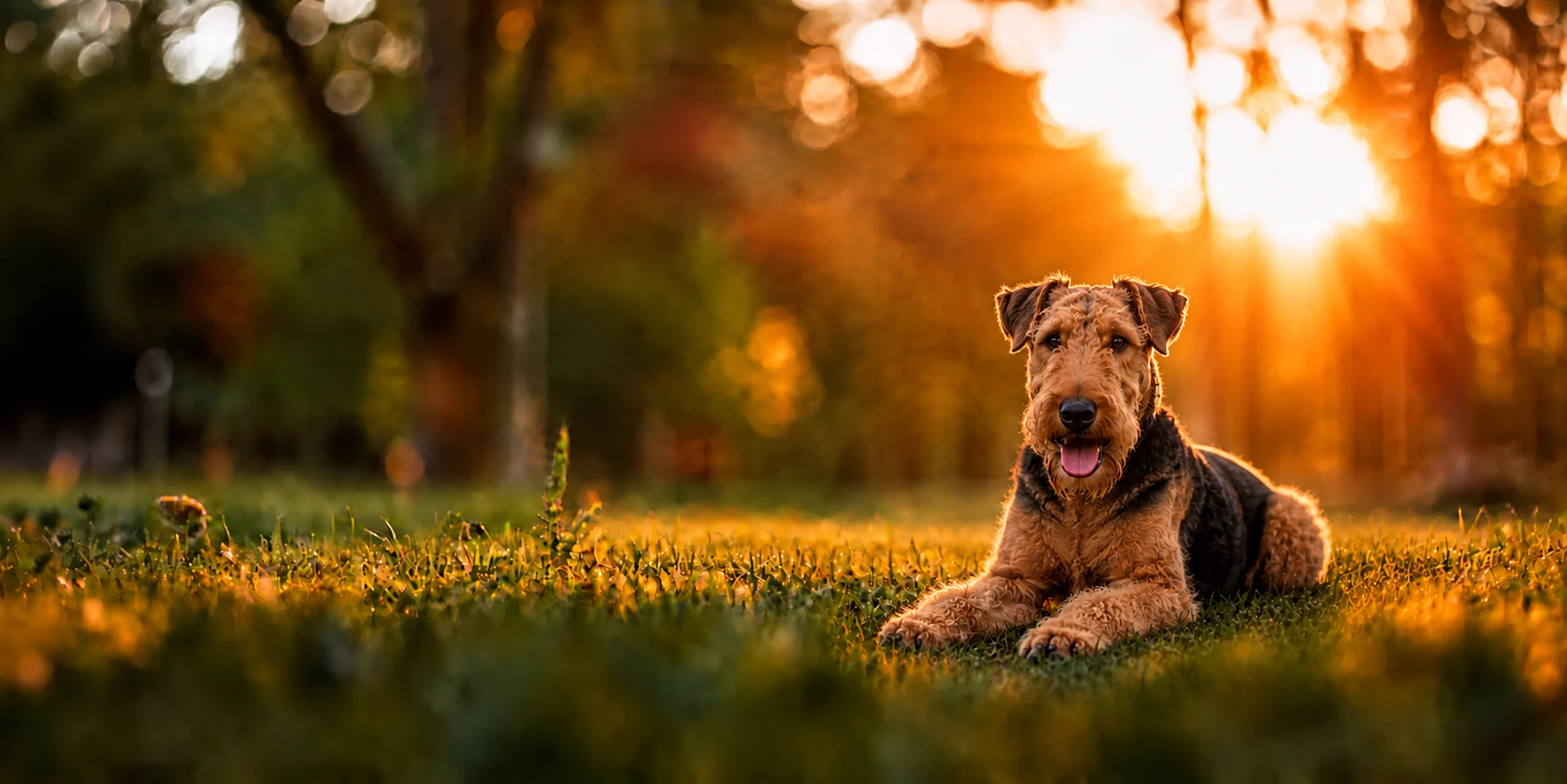
Airedale Terrier
The other large versatile terrier, and a useful contrast. The Airedale is bigger, wire-coated and needs stripping rather than clipping; the Kerry is non-shedding, more demanding to groom and rather scrappier with other dogs.
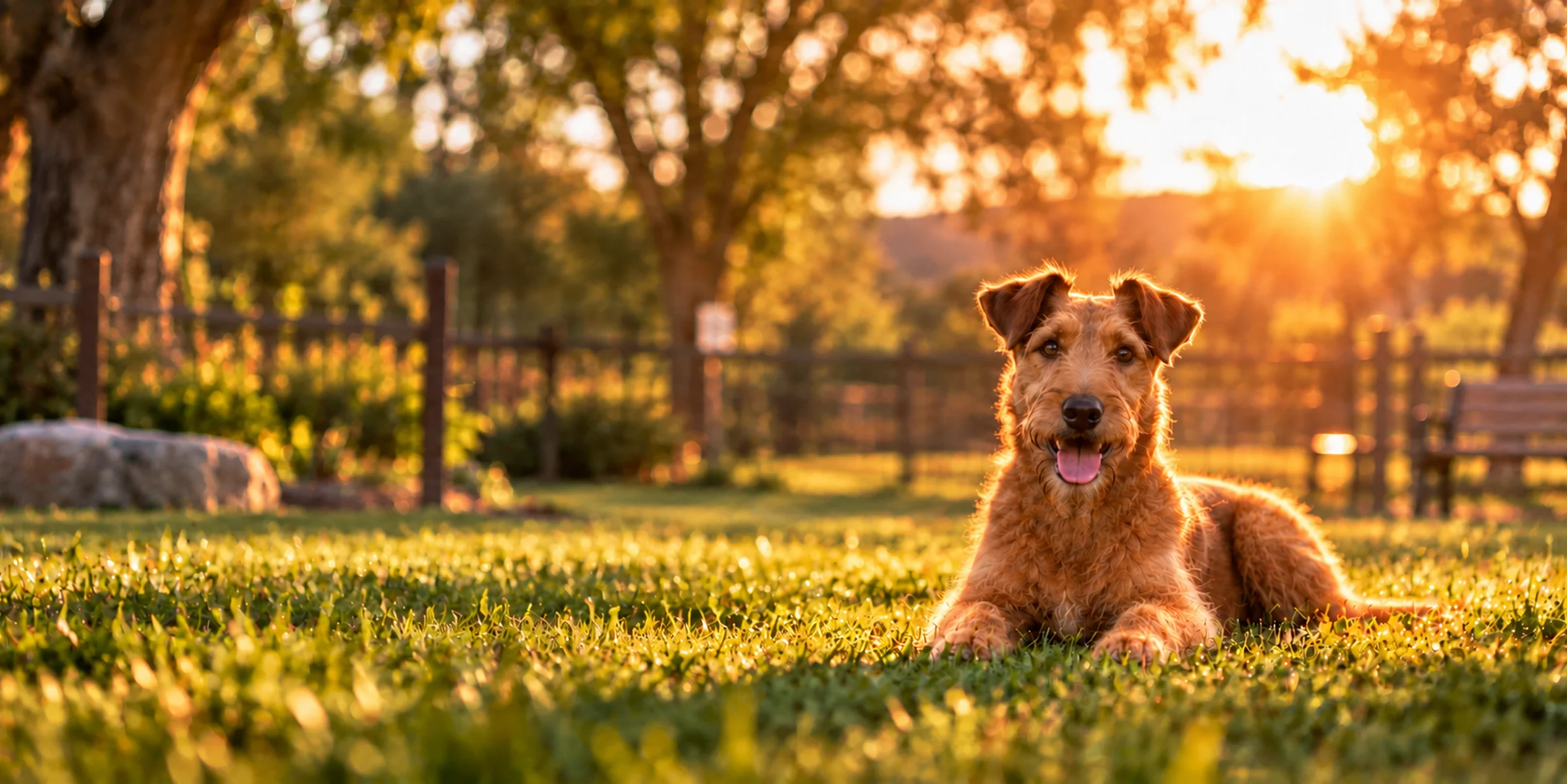
Irish Terrier
The other Irish terrier at a similar size, with the same boldness and the same dog-aggression problem. The Irish Terrier's wire coat is far cheaper to maintain; the Kerry is non-shedding and better for allergy households.

Soft Coated Wheaten Terrier
The softer Irish cousin, in coat and in temper. Wheatens are friendlier with strange dogs and people and need the same standing grooming appointment, but carry protein-losing kidney and gut disease that the breed club asks owners to screen for every year.