

medium-to-large breed
Treeing Walker Coonhound
A foxhound that learned to tree. The Treeing Walker comes off the Walker strain of English Foxhound in Kentucky, with one famous outcross in the 1850s that added the treeing instinct to foxhound speed, and nearly every one bred still goes to a hunting home. They are friendly, tidy and easy indoors. The honest headline is outdoors: a bawl that carries about a mile, and a nose that outranks every instruction given.

Pup Height
20-27 in
Males 22-27 in, females 20-25 in. Tricolor is preferred - white, black and tan - either a white dog with black spots and tan trim or a black dog with white and tan markings; bicolor white and black, or white and tan, is also allowed. The coat is smooth and glossy, short but dense enough to work in. Registered by the UKC since 1945 and recognized by the AKC in the Hound Group in 2012. Source: AKC breed standard.

Pup Weight
50-70 lb

Pup Lifespan
12-13 years
Your pup, at a glance
What’s Life With This Pup Really Like?

High. Affectionate and a committed sofa dog once the day's work is done, which is the standing surprise of every coonhound.

Very good. Tolerant, playful and sturdy without being heavy, though a hound at a flat run does not check what is in the way.

Good with dogs - the breed was made in packs and settles into one easily. Cats and small animals are another matter, because finding them and treeing them is the entire job.

At the top of the scale, and deliberately so. A long bawl on the trail and a chop at the tree, both bred to carry about a mile, and neither trainable away.

Very high. Built to run hard all night over rough country, and ninety minutes is a floor rather than a generous allowance.

Low to moderate. A short, hard coat that sheds steadily year-round and is easy to keep on top of.

Athletic and genuinely playful, more so than the heavier coonhounds. Anything involving running or a scent to follow holds them; fetch wears thin fast.

Low. A clean, dry foxhound mouth with little loose lip - one of the tidier hounds to live with.

Moderate, and better than the group's reputation for everything except recall. Treeing Walkers pick things up quickly and comply when a scent is not making the decision for them.

Moderate. Any arrival gets announced at volume, and then warmly greeted - the noise is all of it.

Low for the coat, real for the ears. Weekly ear cleaning is the difference between a cheap breed to keep and a permanent line in the vet budget.

Very low. The voice, the speed and the nose each rule out close neighbors on their own, and no amount of training changes any of the three.
Lifestyle fit
Could This Be Your Best Breed?
A Treeing Walker Coonhound wants country ground, a tall fence and an owner who will put in ninety minutes to two hours of hard running every day and clean the ears every week - $1,500 to $2,600 a year, across twelve or thirteen years. Anyone who needs a dog to come back when called, or who lives close enough for a neighbor to hear, should look at a different hound.

Living Space
Country ground with a tall fence, or at least no neighbor close enough to hear a hound open up - which is a good deal further off than most people estimate. Treeing Walkers are tidy, quiet, easy company inside a house and very hard to contain or to muffle outside one.

Pup Experience
Not a first dog, and the reason is speed rather than difficulty. Treeing Walkers are bright, friendly and pleasant to live with, and they are also the fastest of the American coonhounds - a hound who opens on a fresh trail is half a mile away before an owner has finished calling.

Daily Pup Time
Ninety minutes to two hours of hard exercise daily, on a long line or behind a real fence, plus weekly ear cleaning that is genuinely not optional.

Allergies & Coat
The Treeing Walker Coonhound scores 4/10 for shedding and 3/10 for drooling. No dog is truly hypoallergenic. The allergens come from dander and saliva, and a dog that sheds this much will leave plenty of hair behind - especially on your furniture, floors, and clothes.
Quirks & challenges
The Not-So-Easy Stuff

A Bawl That Carries a Mile
A long bawl on the trail and a ringing chop at the tree, both bred to be heard across open country. Neighbors hear the whole performance.
The Nose Outranks You
On a fresh line they stop hearing people altogether. Recall is not a gap in the training, it is what two centuries of selection produced.
Fast Enough to Vanish
Speed is the point of the Walker strain. A hound at full stretch is out of sight in seconds and miles off within the hour.
Fences Get Tested
Athletic, light-boned and strongly motivated by whatever is on the other side. Four feet of fence does not hold one.
The Ears Are the Real Job
Long drop ears on a dog who works wet cover at night. Weekly cleaning and thorough drying is what keeps infections from recurring for life.
Bred for Work, Not the Sofa
Almost all breeding is done by coonhunters for coonhunting. A Treeing Walker given no scent job will find an occupation, usually a loud one.
The good, the bad & the hairy
Health, Care & Costs
Understanding the health risks and ongoing costs of a Treeing Walker Coonhound helps you plan for a happy, healthy life together.

12-13 years
$40-$70
per groom (bath, nails and ears), every 8-12 weeks, or done at home ($0-$300/year)
$1,500-$2,600/year
all-in (food, routine vet, grooming, insurance, incidentals)

Health Risks
Conditions this breed is prone to.

An immune reaction that attacks the nerve roots, most often a week or two after contact with raccoon saliva. Weakness starts in the hind legs and climbs, sometimes as far as the muscles used to breathe. It is not inherited and most dogs recover with weeks of intensive nursing, but severe cases need hospital support and the same dog can get it again after another encounter.
Long, heavy drop ears seal warmth and moisture against the canal, and night work in wet cover makes that worse. Structural rather than inherited, and the most predictable recurring cost in the breed - weekly cleaning and drying is real prevention.
The hip joint develops loosely, so the ball grinds in the socket instead of gliding, ending in arthritis and sometimes surgery. Rates are lower than in the heavier coonhounds, and the parent club still asks for a hip evaluation on breeding stock.
Cataracts and eyelid faults turn up often enough that an ophthalmologist evaluation is one of the recommended health screens for the breed. Cataract surgery restores sight in most cases and runs into the thousands per eye.
The stomach fills with gas and twists, cutting off its own blood supply, and without emergency surgery it kills within hours. Deep-chested hounds carry real risk - split the day's food into two meals and keep hard work clear of them.
Not a disease but the likeliest reason for a vet bill. A light-boned hound running rough ground in the dark collects torn pads, deep cuts, ticks and ruptured cruciate ligaments, and a knee repair alone is several thousand dollars.

Insurance & Health Coverage
A hardy breed with no inherited disease panel to work through and no DNA test an owner has to chase, which tends to keep premiums sensible.

What costs money is the job. A hound bred for speed, running broken ground in the dark, tears cruciate ligaments, splits pads and picks up wounds from whatever gets cornered, and those claims arrive as a sequence rather than once. Coonhound paralysis is the other real bill, and it is an unusual one to be able to insure: the condition is acquired rather than congenital, so a policy in place beforehand does cover the weeks of nursing and hospital care a bad case needs.

Ears are the quiet drain underneath all of that. Infections start early, recur, and are the textbook thing an insurer excludes once they are in the notes - so taking out cover before the first vet visit, rather than after, is most of what decides whether a policy is worth anything.
 Get a Pet Insurance Quote
Care needs
The Daily Routine

Grooming
A short, glossy coat that a rubber curry brush deals with in a few minutes a week, and nothing more than that. The ears are the routine that matters - checked, cleaned and dried weekly, and again after any wet day out. Nails grow fast on a hound not working rough ground daily, and the feet are worth a look after every hard run.

Exercise
Ninety minutes to two hours daily, and running has to be part of it. Treeing Walkers need to stretch out and to use the nose - long-line tracking over varied ground, hiking, field work or actual hunting. A walk on the sidewalk leaves both halves of the dog idle and the second half gets noisy about it.

Food & Weight
Two measured meals rather than one large one, with hard exercise kept clear of mealtimes given the bloat risk. A hunted Walker burns an enormous amount and a retired one burns very little, so feed the dog in front of you. Light bone carries extra weight badly, and the ribs should stay easy to find.
Similar breeds
If This Isn’t Quite the One
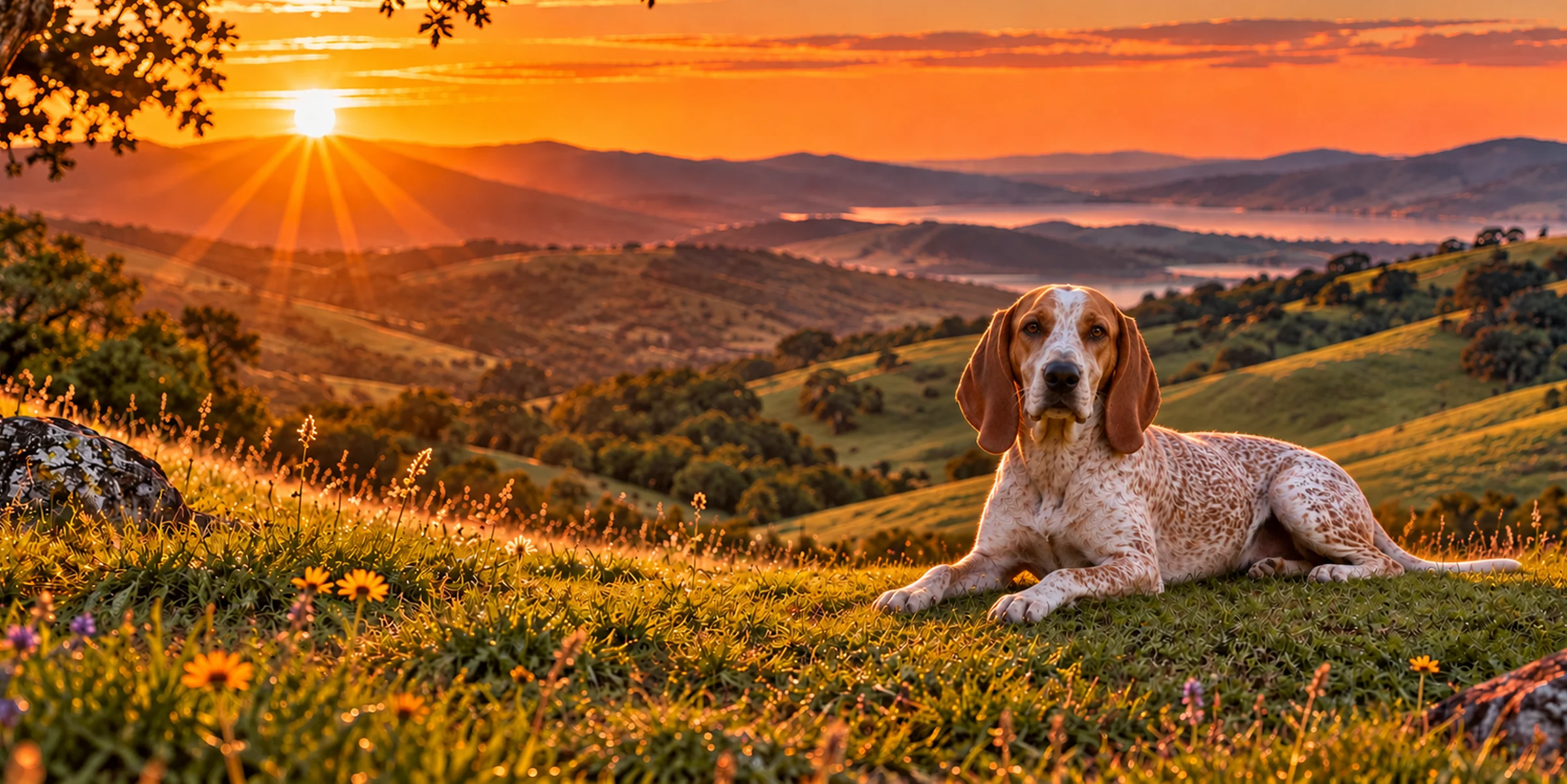
American English Coonhound
The registry the Treeing Walker was split out of in 1945, and the closest relative by some distance - both come from English Foxhound stock and both run a hot trail fast. The English kept a wider range of coat colors and a broader job; the Walker was bred narrowly for treeing and for competition, and wins far more of it.

English Foxhound
The ancestor. Same build, same stamina, same enormous voice, but a foxhound hunts in a pack of forty and does not tree, needs even more running than a Walker does, and is one of the rarest breeds in AKC registration rather than one of the most-hunted.
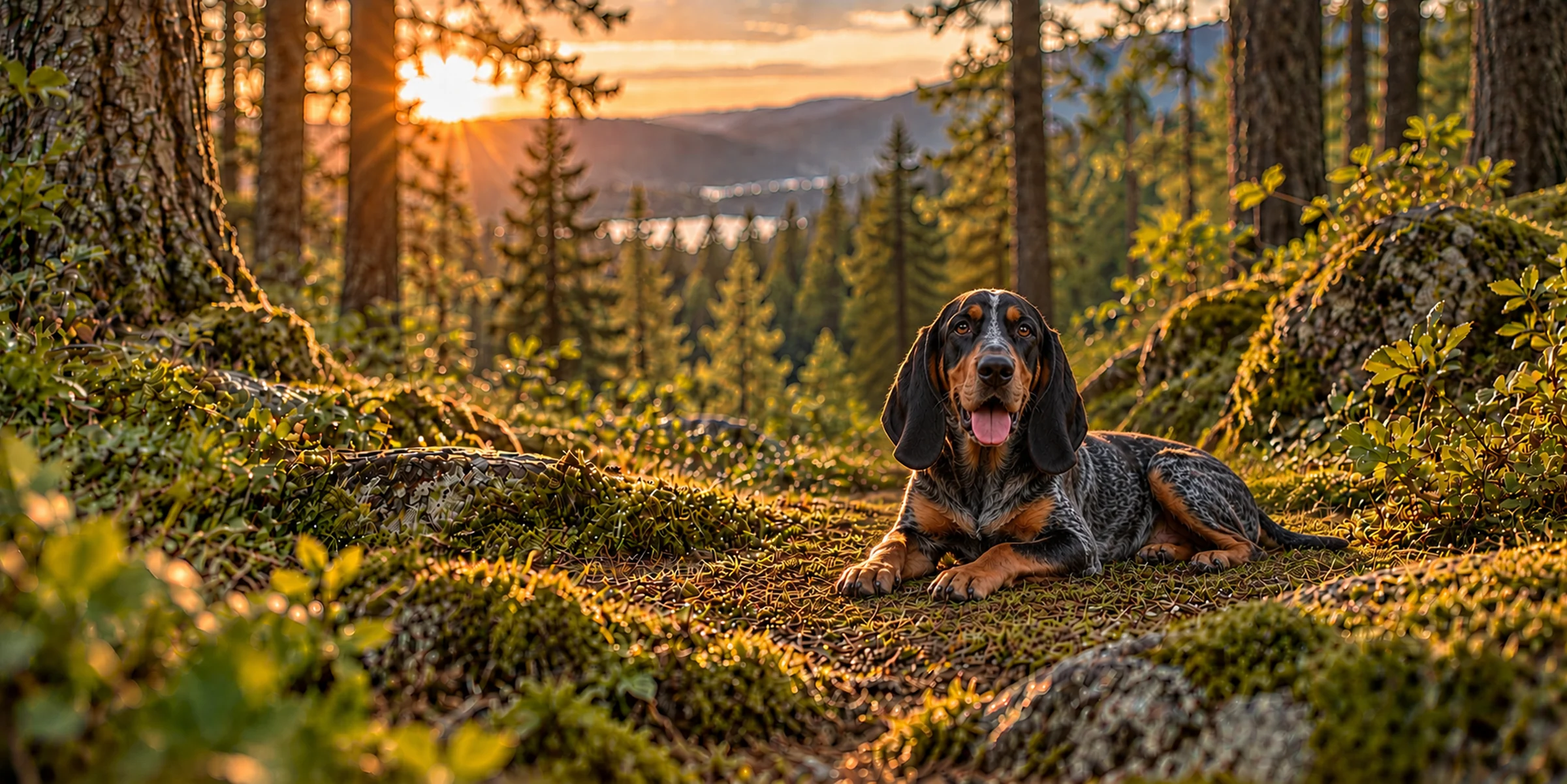
Bluetick Coonhound
The opposite trailing style in the same family. The Bluetick is heavier and cold-nosed, unpicking a day-old scent slowly and methodically; the Treeing Walker is lighter, faster and hot-nosed, built to run a fresh line and get to the tree first.

Treeing Tennessee Brindle
The brindle cur version of the same job, at half the weight. Treeing Tennessee Brindles come from cur rather than foxhound stock, work closer to the handler, and have been kept deliberately out of the show ring.