

medium breed
Basset Fauve de Bretagne
A small, hard-coated hound with a harsh, thorn-proof jacket and none of the sofa-bound slowness the word basset suggests to most people. Basset Fauves are cheerful, sociable and genuinely athletic, good with children and easy with other dogs. The trouble they cause is the ordinary hound kind: a nose that overrides instructions, a voice out of all proportion to the dog, and a real talent for digging under a fence.

Pup Height
12.5-15.5 in
The standard gives one height range for both sexes, with females at the lower end. Fauve means fawn, and the color runs from golden wheaten through to a deep brick red - the harsh, dense coat is the breed hallmark and the reason they could work through Breton gorse at all. Fully recognized in the AKC Hound Group from January 1, 2026. Source: FCI breed standard.

Pup Weight
27-35 lb

Pup Lifespan
11-14 years
Your pup, at a glance
What’s Life With This Pup Really Like?

Genuinely affectionate and sociable. They were bred to work in company and it shows at home - they want to be in the room, and preferably on the sofa in it.

Very good. Sturdy for their size, cheerful and tolerant, with the usual caution that a determined thirty-pound hound following a scent does not check what is in front of them.

Good with dogs - the breed was bred to work alongside them. Rabbits, rodents and anything small and fast are a different matter, since that is precisely what Basset Fauves were made for.

High. A carrying bay selected so a hunter could follow them through thick cover, and they use it freely. Early work reduces it; nothing eliminates it.

Higher than the short legs suggest. An hour a day is a floor rather than a generous allowance, and they have real stamina over rough ground.

Low. The harsh double coat holds most of what it drops, which is why it needs stripping out rather than vacuuming up.

Cheerful and game. They play enthusiastically and stay interested in it well into middle age, and scent games hold them far better than fetch.

Low. A tidy, dry-mouthed hound with none of the jowl a Basset Hound carries.

Moderate, and better than most scent hounds. They are willing and food-motivated, and the limit is the nose rather than their attitude - a scent outranks you, which is the breed working as designed.

Moderate. They will certainly announce a visitor, loudly, and then greet them warmly. The noise is the entire contribution.

Moderate and specific. Two brushings a week and a hand-strip every few months, plus weekly ears. The coat is low-shedding but it is not low-effort.

Reasonable. They settle into new homes and routines readily, and the real constraint is whether the neighbors can live with the voice.
Lifestyle fit
Could This Be Your Best Breed?
Basset Fauves suit a house with a fence they cannot go under, a family that wants a busy dog rather than a quiet one, and an owner willing to book a hand-strip every couple of months or learn to do it themselves. Budget $1,300 to $2,200 a year and expect eleven to fourteen years. Put one in an apartment or next to a close neighbor and the voice becomes everybody's problem, while the recall you were counting on never arrives.

Living Space
A house with a secure yard. Basset Fauves are small enough for an apartment on paper and loud enough to make it everyone else's problem in practice, and a dog with this much nose needs a fence they cannot go under.

Pup Experience
Manageable for a determined first-time owner. They are friendlier and more biddable than most scent hounds and considerably more energetic than their short legs suggest - the two things that need real work are the voice and the recall, and neither is unusual for the type.

Daily Pup Time
An hour or more of exercise daily, ideally with scent work in it, plus a brush twice a week and a hand-strip every few months. Ears weekly, without exception.

Allergies & Coat
The Basset Fauve de Bretagne scores 3/10 for shedding and 2/10 for drooling. No dog is truly hypoallergenic. The allergens come from dander and saliva, and a coat that sheds this little leaves far less of them on your furniture, floors, and clothes.
Quirks & challenges
The Not-So-Easy Stuff

The Nose Wins
On a trail they stop hearing you. Off-leash recall is unreliable in most individuals, and a long line is the honest answer rather than a training failure.
A Loud Voice for the Size
A carrying bay bred so a hunter could follow them through cover. It can be reduced with early work, never removed.
Strip It, Don't Clip It
Clipping the harsh coat softens it permanently, dulls the color and tends to bring on skin trouble. Hand-stripping every few months.
Ears Need Weekly Care
Drop ears trap warmth and moisture. Weekly checks and cleaning prevent infections that otherwise become a recurring bill.
A Determined Digger
They hunted things that go to ground and still mean to. A fence they can get under is not a fence, and a lawn is a suggestion.
Hard to Find Outside France
Few breeders, long waits and a small gene pool. Worth asking directly about health testing on both parents.
The good, the bad & the hairy
Health, Care & Costs
Understanding the health risks and ongoing costs of a Basset Fauve de Bretagne helps you plan for a happy, healthy life together.

11-14 years
$60-$90
per groom (hand-strip, tidy and ears), every 8-12 weeks - less if you learn to strip them yourself ($0-$550/year)
$1,300-$2,200/year
all-in (food, routine vet, grooming, insurance, incidentals)

Health Risks
Conditions this breed is prone to.

Drop ears seal in warmth and moisture, which is what bacteria and yeast want. Structural rather than inherited - weekly cleaning is genuine prevention, and neglect turns it into a recurring cost that follows them for life.
The hip joint develops loosely, so the ball and socket grind instead of gliding. It leads to arthritis and, in severe cases, surgery. A small breeding population makes parental hip scores more important here, not less.
An inherited disease that slowly destroys the retina. Night vision goes first, then daylight vision, usually ending in blindness. There is no treatment, but it is painless and gradual, and most dogs cope well in a home they already know.
Seizures with no other underlying cause, usually first appearing between one and five years old. It is controlled with daily medication rather than cured, and the drugs and monitoring are a lifelong cost.
The thyroid stops producing enough hormone, causing weight gain, lethargy and a coat that dulls or thins. A daily tablet manages it completely and the medication itself is inexpensive.
Itching, chewed paws and recurring hot spots, often tangled up with the ear trouble. Manageable rather than curable, and it is made noticeably worse by clipping the coat instead of stripping it.

Insurance & Health Coverage
A hardy little hound bred by people who worked them hard, and there is no catastrophic inherited condition hanging over the breed.

Ears are the line that actually costs money, and they are worth understanding as an insurance problem specifically. Infections here are recurring, they usually start young, and they are exactly what an insurer excludes as pre-existing once they appear in a clinical history - so the window for cover with a clean record is narrower than it looks.

Epilepsy is the other one to plan for. It typically appears in the first few years and then means daily medication and regular bloodwork for the rest of their life. The small breeding population is the reason to ask for the parents' hip and eye certificates directly rather than assuming they exist.
 Get a Pet Insurance Quote
Care needs
The Daily Routine

Grooming
Brush twice a week with a slicker and a comb, and hand-strip the harsh outer coat every few months rather than clipping it. Ears checked and cleaned weekly and dried thoroughly after wet walks. Nails and teeth on the usual schedule.

Exercise
An hour or more daily, with scent work in it wherever possible. Tracking games, long-line walks over varied ground and hound sports all suit them; a lap of the block leaves a working nose entirely unemployed.

Food & Weight
Two measured meals with training treats coming out of the ration. They are food-motivated in the usual hound way and will happily supplement whatever you provide, and extra weight sits badly on a long-bodied, short-legged frame.
Similar breeds
If This Isn’t Quite the One

Beagle
The same job in a smooth coat and a far more available breed - the same nose, the same voice and the same selective hearing on a trail, without the stripping knife or the waiting list.
Standard Dachshund
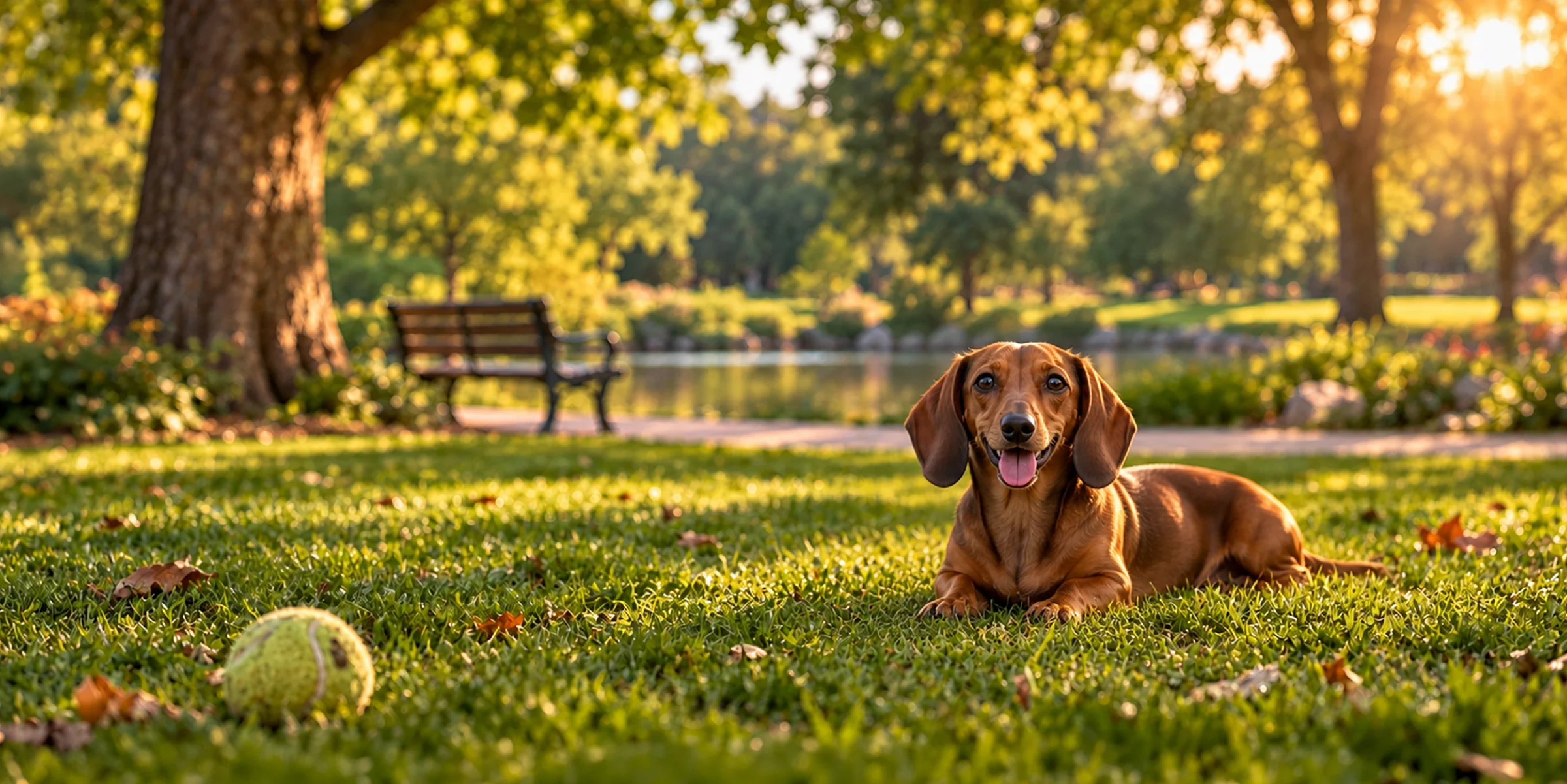
The other short-legged hound here, bred to go to ground rather than to trail through cover. Similar size and similar digging instinct, in a dog with a considerably more serious back to worry about.