

medium-to-large breed
Basset Hound
Mild, patient, funny and close to impossible to provoke - a Basset is easy company in a way few breeds manage, superb with children and other dogs, and content to sleep most of the day against you. The upkeep is the other half of the deal. Ears that need work twice a week, folds to wipe, a drool towel by the door, a bay that carries through walls, and a long back that punishes every extra pound.

Pup Height
13-15 in

Pup Weight
40-65 lb
The standard caps height at 15 in for both sexes and says nothing about weight, which is why a dog barely a foot tall can weigh as much as a Labrador - Bassets carry heavier bone for their size than any other breed. Source: AKC breed standard.

Pup Lifespan
12-13 years
Your pup, at a glance
What’s Life With This Pup Really Like?

Very high. They are heavy, warm, entirely unbothered dogs who would like to be asleep against you for most of the day, and they make a convincing case.

Excellent - among the best here. Patient, tolerant and almost impossible to rattle. The caution runs the other way: children need teaching not to pick a Basset up or let one jump down, because the breed's back cannot take it.

Very good. They were bred to work in packs and it shows, and they are generally relaxed about cats. Small pets are less safe, since the nose is still a hunting nose.

High, and unmistakable. A deep bay bred to be followed by ear across country, used freely and audible a long way off. Not trainable away.

Low indoors and steady outdoors. They are not lazy so much as built for a slow, tireless trail pace, and they will walk further than they look capable of.

Moderate and constant. The coat is short but it sheds year-round, and the hairs are stiff enough to weave into fabric.

Mild. They will join in briefly and then go back to sleep, and scent games hold them far better than anything involving running or jumping.

High. Loose jowls and heavy flews mean drool after every drink, and it travels further than you would think possible.

Low, and stubborn rather than stupid. They were selected to keep working a line regardless of instruction, and food is the only reliable currency.

Poor. They will bay at a visitor, at length, and then roll over for them. The noise is the whole of the deterrent.

Moderate, and concentrated in unusual places. The coat is easy; the ears, the facial folds and the eyes are the ongoing job, and skipping them turns into vet bills.

Good. They cope with apartments, new homes and quiet routines readily. The limits are stairs, heat and neighbors within earshot.
Lifestyle fit
Could This Be Your Best Breed?
Basset Hounds suit a ground-floor home without stairs to climb, tolerant neighbors, and an owner who will manage the weight actively rather than admire it. Expect $1,700 to $2,900 a year, much of it grooming and vet care, across twelve or thirteen years. If drool on the furniture makes you wince, or you were counting on quick housetraining and reliable obedience, that is your answer.

Living Space
One of the better large-bodied dogs for an apartment - Bassets are low, slow indoors and content to sleep most of the day. The two things that decide it are the voice, which carries through walls, and the stairs, which are genuinely bad for a dog built like this.

Pup Experience
Fine for a first-time owner who has read the health section and means it. They are gentle, tolerant and easy company; what catches people out is that they are one of the most stubborn breeds here, one of the slowest to housetrain, and a dog whose weight has to be managed actively rather than watched.

Daily Pup Time
Forty-five minutes to an hour of steady walking daily - not optional, because the weight is the whole health story - plus ears twice a week, folds wiped, and a drool towel by the door.

Allergies & Coat
The Basset Hound scores 6/10 for shedding and 8/10 for drooling. No dog is truly hypoallergenic. The allergens come from dander and saliva, and a dog that sheds and drools this much will leave plenty of both behind - especially on your furniture, floors, and clothes.
Quirks & challenges
The Not-So-Easy Stuff

They Gain Weight Watching You
Food-obsessed, low-energy and heavy-boned. Extra pounds land directly on the back and joints, and this is the breed's central health problem.
The Back Is the Weak Point
A long spine on very short legs. Stairs, sofas and jumping down all add up - ramps are worth buying before there is a problem.
Those Ears Need Weekly Work
The longest ears of any breed, dragging through everything and sealing in moisture. Weekly cleaning is not optional here.
Recall Is Mostly Theoretical
On a scent they are genuinely deaf to you and will follow it for miles at a steady walk. A secure fence and a long line are the honest answer.
The Drool Is Real
Loose jowls mean drool on furniture, walls and visitors, especially after drinking. A towel by the water bowl is standard equipment.
Housetraining Takes Longer
Widely reported as one of the slower breeds to housetrain. Patience and routine get there; frustration does not.
The good, the bad & the hairy
Health, Care & Costs
Understanding the health risks and ongoing costs of a Basset Hound helps you plan for a happy, healthy life together.

12-13 years
$50-$75
per groom (bath, deshedding, ears and folds), every 6-8 weeks ($350-$600/year)
$1,700-$2,900/year
all-in (food, routine vet, grooming, insurance, incidentals)

Health Risks
Conditions this breed is prone to.

The discs between the vertebrae degenerate early in short-legged, long-backed breeds and can rupture, pressing on the spinal cord. It ranges from pain to sudden paralysis, and surgery runs into several thousand dollars. Keeping them lean and off the stairs is the single most effective prevention there is.
The longest ears of any breed, dragging through grass and food and sealing in warmth and moisture. Structural rather than inherited, and the most predictable recurring cost in the breed - weekly cleaning is genuine prevention rather than maintenance.
Pressure builds inside the eye, which is acutely painful and destroys vision quickly if it is not treated within hours. This breed is over-represented, and sudden squinting or a cloudy eye is an emergency rather than a wait-and-see.
The loose eyelids either sag away from the eye or roll inward, and both leave the surface exposed or rubbed. Mild cases need drops; the rest are corrected surgically, usually in the first couple of years.
An inherited platelet defect documented specifically in this breed - the platelets are there but do not clot properly, so a routine spay or dental can bleed far more than it should. There is a DNA test, and knowing beforehand is the entire point.
The stomach fills with gas and twists, cutting off its own blood supply. Without surgery within hours it is fatal. Deep-chested dogs are most at risk, and feeding one large meal a day or exercising straight after eating makes it likelier.

Insurance & Health Coverage
This is a breed where the ordinary running costs and the catastrophic ones both matter, and they arrive in a predictable order.

Ears come first and never really stop. Recurring infections usually start young, and they are the textbook example of a condition an insurer writes into an exclusion the moment it appears in the notes - which means the window for arranging cover with a clean record is genuinely narrow here.

The expensive ones come later. Spinal surgery for a ruptured disc runs into several thousand dollars, emergency glaucoma treatment and bloat surgery are in the same range, and eyelid correction is a near-routine procedure in this breed. Thrombopathia is the odd one out and worth raising with a vet before any surgery rather than after - a DNA test on the parents settles it, and a Basset who bleeds unexpectedly during a routine spay is a preventable emergency.
 Get a Pet Insurance Quote
Care needs
The Daily Routine

Grooming
A short coat that sheds more than people expect - a weekly going-over with a rubber mitt or deshedding tool. The real work is the extremities: ears cleaned and dried twice a week, the folds around the face and neck wiped out, eyes checked, and nails kept short on a heavy dog.

Exercise
Forty-five minutes to an hour of steady walking daily, split into two if they will take it. Bassets are not athletes and should not be jogged or made to jump, but the walking is genuinely medical - the weight is what damages the back, and this is the main thing keeping it off.

Food & Weight
Measure everything, including what falls on the floor. They are heavy-boned, low-energy and permanently convinced they have not been fed, and a Basset carrying extra weight is a Basset heading for a spinal problem. Two smaller meals rather than one large one, with hard exercise kept clear of mealtimes, since they are deep-chested enough to carry real bloat risk.
Similar breeds
If This Isn’t Quite the One

Beagle
The same nose and the same voice in a lighter, faster, far more energetic dog. If the hound temperament appeals but the weight, the back and the drool do not, this is the version that goes for a run with you.
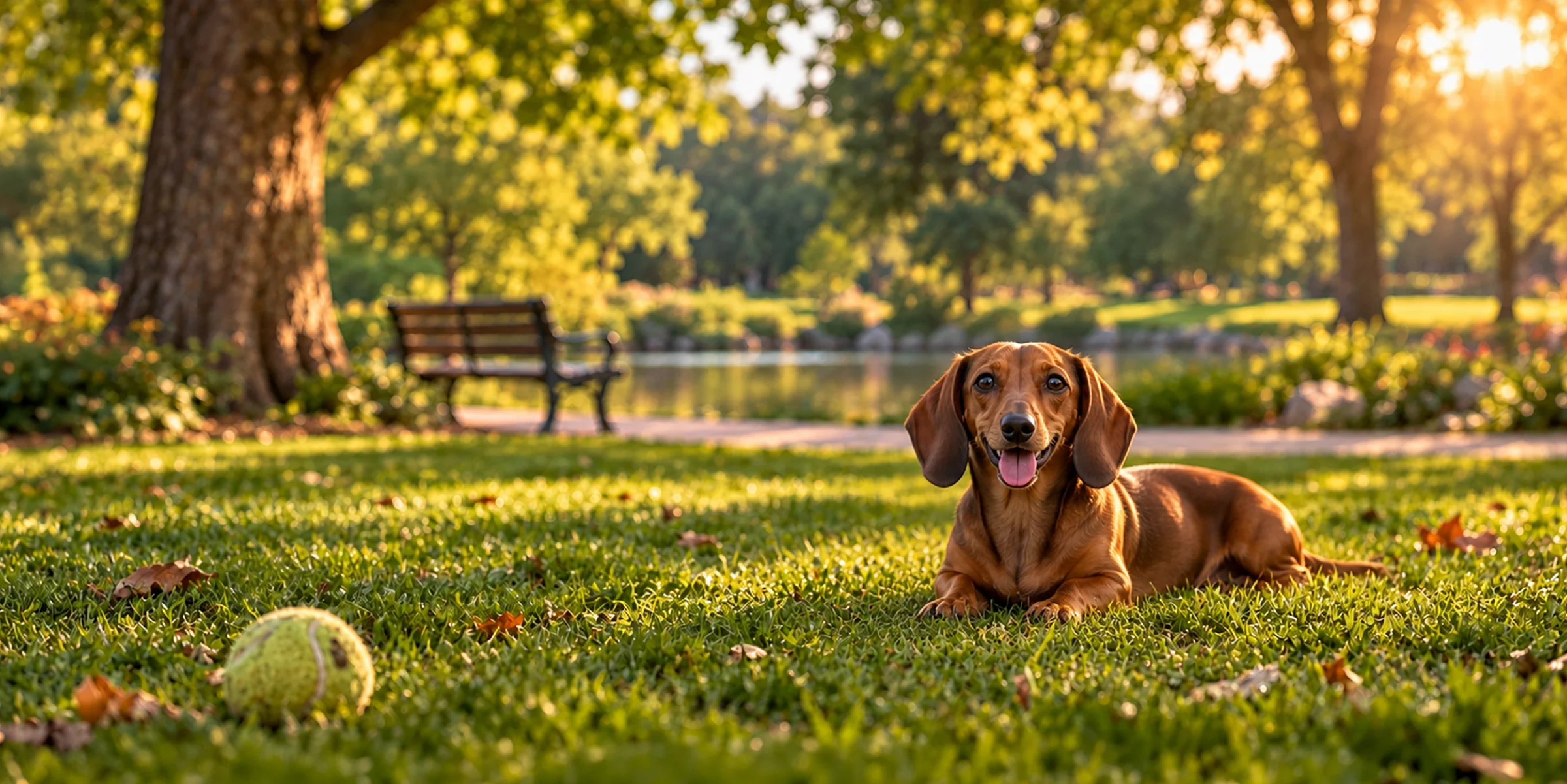
Standard Dachshund
The other long-backed, short-legged breed here, with the same disc disease risk and the same rule about ramps and lean weight - in a much smaller dog with a great deal more drive and a lot less patience.