

medium-to-large breed
Belgian Sheepdog
The black one, and outside America the name is Groenendael. Belgian Sheepdogs are elegant, quick and profoundly attached to their own people - the sort who follows you from room to room and would rather be handed a job than a cushion. They are watchful, fast to sound the alarm, and sensitive enough that heavy handling sets them back. Underemployed, they turn that intelligence inward and become anxious and noisy.

Pup Height
24-26 in

Pup Weight
55-75 lb
Figures are for males; females are 22-24 in and 40-60 lb. Known outside the United States as the Groenendael, the Belgian Sheepdog is one of four Belgian shepherd varieties - the AKC registers all four as separate breeds, most of the world as one breed in four coats. This is the long solid black one. Source: AKC breed standard.

Pup Lifespan
12-14 years
Your pup, at a glance
What’s Life With This Pup Really Like?

Very attached and physically close with their own people, and a committed follower between rooms. The bond is the best thing about the breed and the reason the reserve with strangers matters so little at home.

Good with children they are raised with. The herding instinct turns running into a job and occasionally into a nipped heel, and visiting children need supervision because of the reserve rather than any temper.

Fine with dogs they grow up alongside and workable with cats. Small fast animals meet a herding drive rather than a hunting one - easier to manage, but not nothing.

Fairly high. A genuine alarm dog who announces arrivals at length, and considerably noisier when bored or anxious than when properly worked.

High. Ninety minutes to two hours daily, with the mental half doing most of the work of settling them.

Heavy. A long black double coat that sheds year-round and blows out twice a year - and it shows on every light-colored surface in the house.

Athletic, quick and enthusiastic, and they stay that way well into middle age. Training and play are the same activity to them.

Very low. A clean, dry-mouthed dog.

Outstanding and conditional. Fast, willing and soft - the same firm session that would sharpen a Malinois will flatten this dog for a week.

Excellent. Watchful, territorial and reserved with strangers, and unlike the friendlier breeds here a Belgian Sheepdog actually means it.

Substantial and ongoing. Two or three brush-outs a week, daily during a coat blow, and real attention to the ruff and trousers. Never clipped.

Moderate. They settle into new homes and routines readily; what they do not adapt to is under-occupation, which they express as anxiety rather than mischief.
Lifestyle fit
Could This Be Your Best Breed?
Belgian Sheepdogs suit a house with a yard, an active household that is home a good deal, and an owner who trains with patience rather than pressure. The long black coat blows twice a year and pushes grooming toward $950 inside an all-in $1,800 to $3,000 a year, across twelve to fourteen years. Anyone who shares a wall, works long days, or wants a quiet dog should look elsewhere.

Living Space
A house with a yard and an active household. They are settled indoors once the work is done, but they are vocal, watchful herding dogs and the barking makes shared walls a poor idea.

Pup Experience
Not a first dog, though far more realistic than the Malinois. Belgian Sheepdogs are quick, willing and closely bonded; the work is in managing the wariness of strangers, the voice, and the fact that an under-employed Belgian shepherd turns their intelligence inward rather than simply getting bored.

Daily Pup Time
Ninety minutes to two hours daily with real mental work in it, plus brushing two or three times a week and daily during the twice-yearly coat blow.

Allergies & Coat
The Belgian Sheepdog scores 7/10 for shedding and 2/10 for drooling. No dog is truly hypoallergenic. The allergens come from dander and saliva, and a dog that sheds this much will leave plenty of hair behind - especially on your furniture, floors, and clothes.
Quirks & challenges
The Not-So-Easy Stuff

The Coat Blows Twice a Year
A long black double coat that sheds year-round and comes out in handfuls each spring and fall. Two or three brush-outs a week minimum.
A Real Alarm Voice
They announce arrivals with conviction and keep going. Early work shapes it into something reasonable; nothing makes them quiet.
Reserved With Strangers
Watchful and aloof by default, and slow to accept new people. Broad early socialization is what keeps it from becoming suspicion.
Sensitive to Correction
They take telling-off hard and stop offering behavior rather than pushing back. Reward-based work is what functions here.
They Circle and Herd
Gathering running children is instinct, not mischief - but it comes with nudging and the occasional nip at a heel.
Anxious When Unoccupied
An under-worked Belgian shepherd paces and worries rather than wrecking the sofa. Quieter than boredom, and harder to undo.
The good, the bad & the hairy
Health, Care & Costs
Understanding the health risks and ongoing costs of a Belgian Sheepdog helps you plan for a happy, healthy life together.

12-14 years
$75-$115
per groom (bath, blow-out and deshedding), every 6-8 weeks - more during the coat blow ($500-$950/year)
$1,800-$3,000/year
all-in (food, routine vet, grooming, insurance, incidentals)

Health Risks
Conditions this breed is prone to.

Seizures with no other underlying cause, usually first appearing between one and five years old. The Belgian shepherd varieties see more of it than most breeds and the clubs track it. It is controlled with daily medication rather than cured, and the drugs and monitoring are a lifelong cost.
The hip joint develops loosely, so the ball and socket grind instead of gliding. It leads to arthritis and, in severe cases, replacement surgery. Ask to see hip scores for both parents.
Similar to hip dysplasia but in the elbow joint - the bones do not fit together properly, causing pain and early arthritis. Treatment ranges from management to surgery depending on severity.
An inherited disease that slowly destroys the retina. Night vision goes first, then daylight vision, usually ending in blindness. There is no treatment, but it is painless and gradual, and most dogs cope well in a home they already know.
The thyroid stops producing enough hormone, causing weight gain, lethargy and a coat that thins or dulls. A daily tablet manages it completely and the medication itself is inexpensive.
The stomach fills with gas and twists, cutting off its own blood supply. Without surgery within hours it is fatal. Deep-chested dogs are most at risk, and feeding one large meal a day or exercising straight after eating makes it likelier.

Insurance & Health Coverage
A healthy, athletic breed with a good working life, and the same single condition that shapes the question across all four Belgian varieties.

Epilepsy is commoner here than in most breeds, typically arrives between one and five years old, and then means daily medication and regular bloodwork for the rest of a twelve to fourteen year life. It is the classic case of a chronic condition an insurer writes into an exclusion the moment it appears in the notes - and the first seizure is when that happens.

Joint surgery and bloat are the surgical risks, each several thousand dollars. There is also a liability point worth settling: a large, protective, vocal herding breed is treated differently by some home insurers than a retriever, and that is a conversation to have in writing before the dog arrives rather than after an incident.
 Get a Pet Insurance Quote
Care needs
The Daily Routine

Grooming
Brush two or three times a week with a slicker and a long-toothed comb, working down to the skin around the ruff, behind the ears and on the trousers where mats form first. Daily during the twice-yearly blow. Never clipped - the double coat regulates heat as well as cold, and black coats sun-bleach if the guard hair is cut.

Exercise
Ninety minutes to two hours daily with substantial mental work. Herding, agility, obedience, tracking and scent work all suit them; distance walking moves their legs and leaves the part that matters unoccupied.

Food & Weight
Two measured meals rather than one large one, with hard exercise clear of mealtimes given the bloat risk. A heavy coat hides weight completely, so judge by ribs rather than by eye, and keep them lean while they are still growing.
Similar breeds
If This Isn’t Quite the One
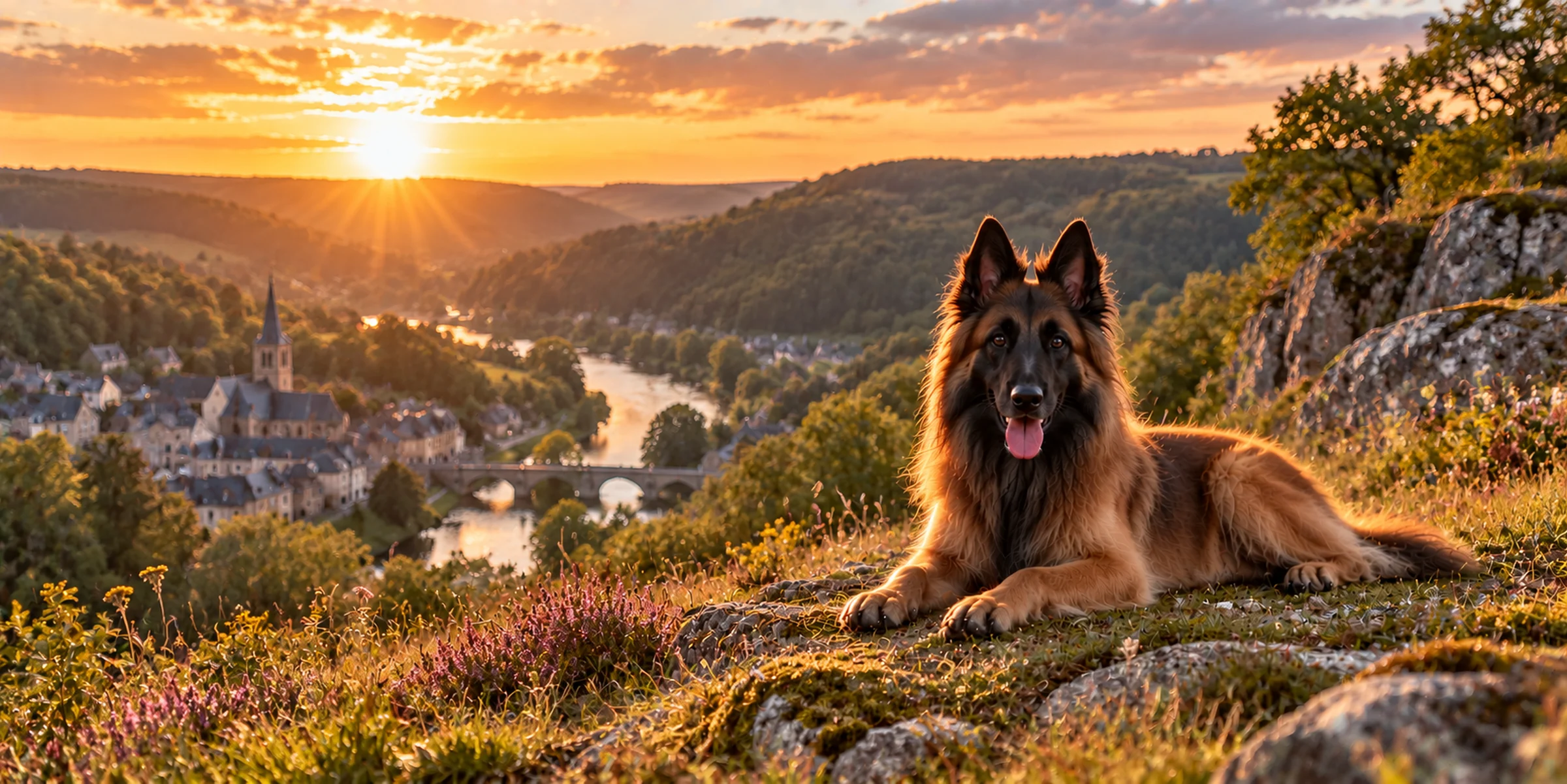
Belgian Tervuren
The same dog in fawn with a black overlay, and the honest answer is that the difference is mostly color - drive, grooming, temperament and health run almost identically. Choose on looks and on the individual breeder rather than expecting a different animal.
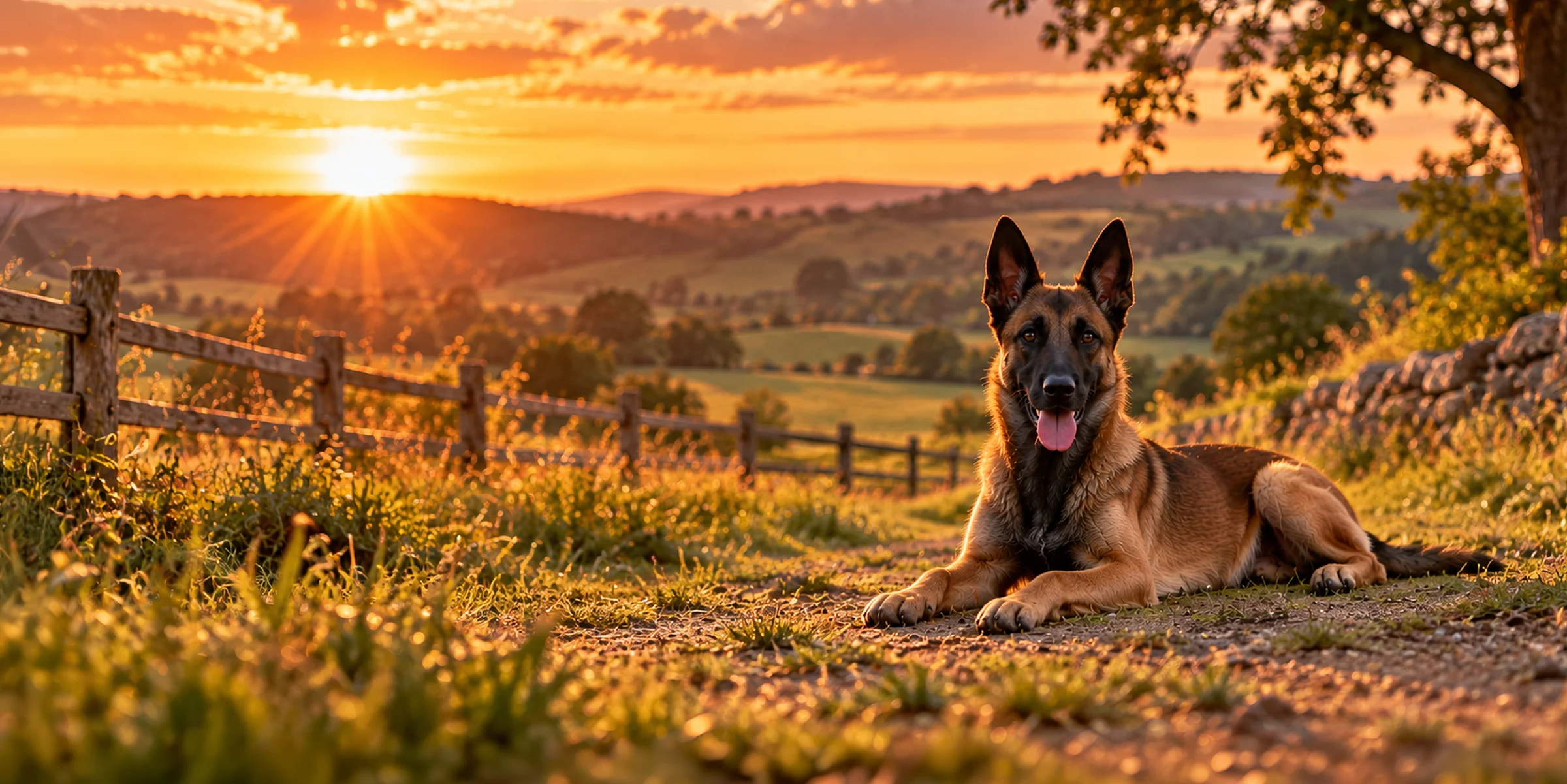
Belgian Malinois
The working variety of the same breed and a substantially harder dog to live with. The Malinois brings police-dog intensity and a training requirement to match; this is the version bred for families and the show ring.