

large breed
Bergamasco Sheepdog
The coat is the whole story here: three hair types weave into flat felted plates that hang like roof tiles, take about five years to reach full length, and then need essentially no brushing at all. Underneath is a calm, watchful, patient dog who treats an owner as a partner rather than a boss, who is superb with children, and who hates being left alone. Rare, expensive and unlike anything else.

Pup Height
22-24.5 in

Pup Weight
70-84 lb
Figures are for males; females are 20.5-23.5 in and 57-71 lb. The coat must carry some gray - solid black is only allowed if it is matte rather than glossy - and the flocks that define the breed are flat felted plates, not the round cords a Puli or Komondor grows. Recognized by the AKC in 2015. Source: AKC breed standard.

Pup Lifespan
13-15 years
Your pup, at a glance
What’s Life With This Pup Really Like?

Very attached and physically close, in a calm undemanding way. They want to be in the room with their people and are content simply to be there rather than needing attention.

Excellent - among the best here. Patient, tolerant and protective without edge, and steady enough that the usual caution about a seventy-pound dog barely applies.

Good with dogs and with livestock they are raised around, and generally fine with cats. The instinct is to gather rather than to chase down, which makes them easier around small animals than most herding breeds.

Low to moderate. They are watchful rather than noisy and give voice when something warrants it, which makes them a considerably easier neighbor than most guarding breeds.

Moderate, and unusually so for a herding dog. Real stamina over a day's work, and a genuine off switch at home - nothing like the Border Collie's restlessness.

Effectively none. The hair does not drop, it works into the flocks and stays there, which is why the coat grows into plates instead of ending up on the furniture.

Willing but composed. They will join in and are gentle about it, and a Bergamasco is not a dog who invents games or demands them.

Low. Some looseness to the lip, nothing that needs managing.

Good, on their terms. They are intelligent and cooperative and treat the relationship as a partnership, which means they respond to being asked and resist being ordered - a feature of the working history rather than a fault.

Excellent. Watchful, territorial and protective of their household, and they assess before they react rather than sounding off at everything.

Unusual in shape rather than in total. Close to zero for most of their life - no brushing once the flocks have formed - but the year they form takes hours of hand work, and every bath takes a day or two to dry out. Rated alongside the Komondor, whose corded coat works the same way on a larger dog.

Moderate. They settle into new homes and routines calmly, and the practical limits are the drying time and their dislike of being left alone rather than anything about their temperament.
Lifestyle fit
Could This Be Your Best Breed?
Bergamasco Sheepdogs suit a house with a yard, somewhere warm indoors where a bathed dog can take a day or two to dry through, and an owner content to ask rather than order. Running costs are modest for a large breed at $1,600 to $2,600 a year, and they live thirteen to fifteen years. Leave one home alone all day and none of the rest matters, and the coat takes its five years no matter how impatient you are.

Living Space
A house with a yard suits them, and they are calmer indoors than their size and job suggest. What rules places out is not the exercise but the drying: a bathed Bergamasco takes a day or two to dry through, and that needs somewhere warm they can occupy while it happens.

Pup Experience
Manageable for a committed first-time owner who has read about the coat and understood the first year. Bergamascos are even-tempered and genuinely easy to live with; the demands are the flocking work around a year old, and an independence that does not respond to being ordered about.

Daily Pup Time
An hour to ninety minutes of exercise and something to think about. Grooming is close to nothing most years - the exception is the months when the coat is separating, which is a real time cost paid once.

Allergies & Coat
The Bergamasco Sheepdog scores 1/10 for shedding and 2/10 for drooling. No dog is truly hypoallergenic. The allergens come from dander and saliva, and a coat that sheds this little leaves far less of them on your furniture, floors, and clothes.
Quirks & challenges
The Not-So-Easy Stuff

One Year of Real Work
Around ten to twelve months the coat starts to mat, and the flocks have to be torn apart by hand into the right sizes. It is hours, and it only happens once.
The Coat Takes Years
Flocks reach full length at about five. Until then a Bergamasco looks scruffy rather than striking, which surprises people who chose one for the photograph.
Drying Takes Days
Bathed two or three times a year, and a soaked flocked coat can take one to two days to dry through. A wet dog left damp gets skin trouble.
Not a Subordinate
Bred to make decisions alongside a shepherd, not to await them. They cooperate readily and comply reluctantly, and the difference matters.
Hates Being Left Alone
Deeply attached and poor with long solo days. They were bred to be with their person constantly and have not stopped expecting it.
Very Hard to Find
A few hundred exist outside Italy. Expect a long wait, a high price, and few breeders to choose between.
The good, the bad & the hairy
Health, Care & Costs
Understanding the health risks and ongoing costs of a Bergamasco Sheepdog helps you plan for a happy, healthy life together.

13-15 years
$0-$150/year
once the coat is established - a few baths and nails. The exception is the year it flocks, which is hours of hand work rather than money
$1,600-$2,600/year
all-in (food, routine vet, minimal grooming, insurance, incidentals)

Health Risks
Conditions this breed is prone to.

The hip joint develops loosely, so the ball and socket grind instead of gliding. It leads to arthritis and, in severe cases, replacement surgery. A small breeding population makes parental hip scores a requirement rather than a nicety - ask to see them.
The defining risk of the coat. Felted plates hold water against the skin for a long time, so a dog dried carelessly after a bath or a swim develops hot spots and infections underneath, where they are hard to see until they are established. Thorough drying is genuine prevention rather than fussiness.
Similar to hip dysplasia but in the elbow joint - the bones do not fit together properly, causing pain and early arthritis. Common in large, slow-maturing breeds.
The stomach fills with gas and twists, cutting off its own blood supply. Without surgery within hours it is fatal. Deep-chested dogs are most at risk, and feeding one large meal a day or exercising straight after eating makes it likelier.
An inherited disease that slowly destroys the retina. Night vision goes first, then daylight vision, usually ending in blindness. There is no treatment, but it is painless and gradual, and most dogs cope well in a home they already know.
The thyroid stops producing enough hormone, causing weight gain, lethargy and coat changes - which are harder to spot under flocks than under an ordinary coat. A daily tablet manages it completely.

Insurance & Health Coverage
One of the healthier breeds on this site and a long-lived one - thirteen to fifteen years is good going at seventy-plus pounds, and there is no cluster of inherited disease hanging over them.

The surgical risks are the usual large-breed ones. Joint surgery runs several thousand dollars, and bloat is an emergency in the same range on a deep-chested dog.

The breed-specific line is skin. Infections under the flocks are recurring rather than one-off, they are easy to miss until they are established, and they are exactly the kind of chronic condition an insurer writes into an exclusion once it appears in the notes. Careful drying prevents most of it, which makes this one of the few risks here that is genuinely in the owner's hands. The small breeding population is the reason to treat the parents' hip and eye certificates as a requirement.
 Get a Pet Insurance Quote
Care needs
The Daily Routine

Grooming
Almost nothing, for almost all of their life - and one intense stretch in the middle of the first year. The coat starts matting at around ten to twelve months and the mats have to be pulled apart by hand into flocks of the right size, which takes hours spread over weeks. After that: no brushing at all, ever, a bath two or three times a year, and thorough drying that can take a day or two. Nails, teeth and ears on the usual schedule.

Exercise
An hour to ninety minutes daily with something for the head. Herding, tracking, obedience and long walks over varied ground all suit them - they have real stamina but none of the frantic drive of a Border Collie, and they settle readily once the work is done.

Food & Weight
Two measured meals rather than one large one, with hard exercise kept clear of mealtimes given the bloat risk. A flocked coat hides condition completely, so go by hands on the ribs rather than by eye - this is a breed you cannot assess by looking at.
Similar breeds
If This Isn’t Quite the One
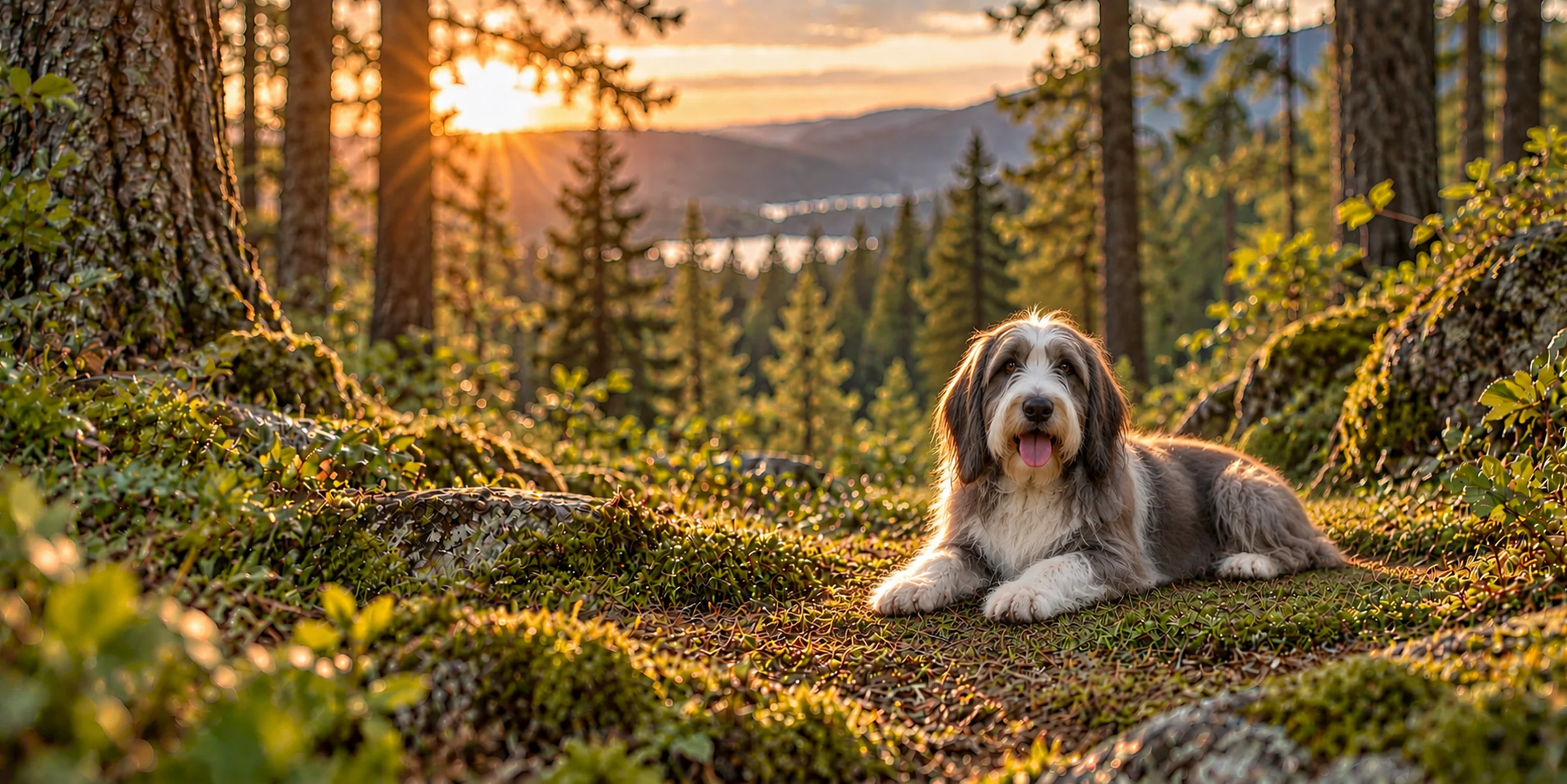
Bearded Collie
The same idea of a big shaggy herding dog and the exact opposite grooming bargain - a Beardie needs several long brush-outs a week for life, where the Bergamasco needs one hard year and then essentially nothing. The Beardie is also far bouncier and far easier to find.
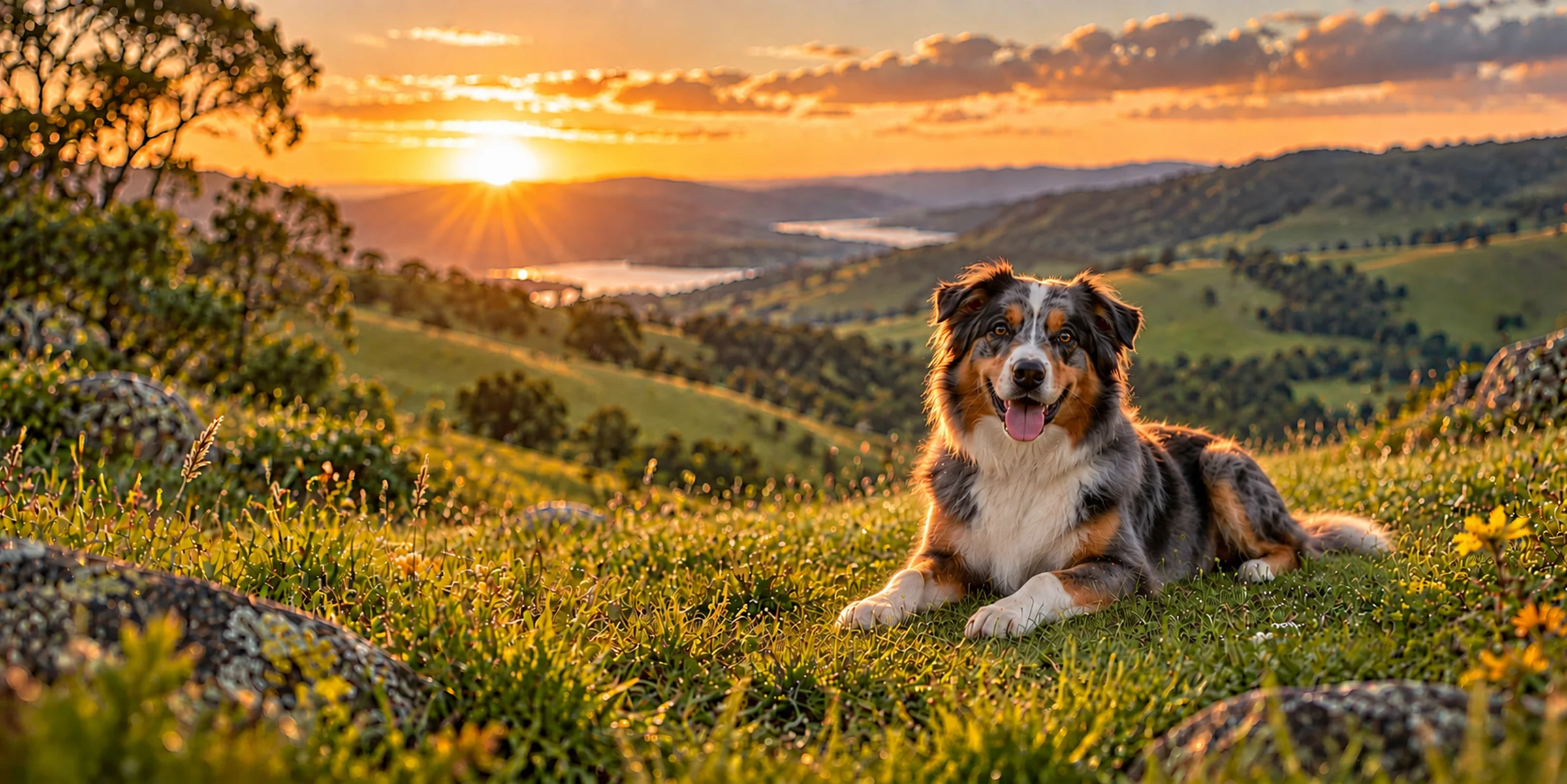
Australian Shepherd
If the appeal is a clever, family-oriented herding dog you can actually find, an Aussie delivers it with a much higher exercise requirement, a coat that sheds heavily, and none of the Bergamasco's calm.