

medium-to-large breed
Australian Shepherd
One of the best all-round working dogs there is - clever, athletic, endlessly willing, and far more people-oriented than the Cattle Dog or the Kelpie. Aussies are affectionate with their family, good with children, and happiest with a job and an audience for it. The catch is the volume: ninety minutes to two hours most days, a coat that wants brushing several times a week, and an intelligence that goes somewhere whether you direct it or not.

Pup Height
20-23 in

Pup Weight
50-65 lb
Figures are for males; females are 18-21 in and 40-55 lb. The Miniature American Shepherd is a separate AKC breed rather than a small Australian Shepherd, and dogs advertised as "mini" or "toy Aussies" are usually that breed or an undersized crossbreed. Source: AKC breed standard.

Pup Lifespan
12-15 years
Your pup, at a glance
What’s Life With This Pup Really Like?

Genuinely affectionate and closely bonded to the whole family rather than one person. They want to be involved in whatever is happening, and lying against you counts as involvement.

Very good, and one of the better herding breeds for it - playful, patient and tolerant. The caveat is the herding instinct, which turns running children into a job and occasionally into a nipped heel.

Sociable with dogs and generally fine with cats they are raised alongside. The drive is to gather rather than to chase down, which makes them easier with small animals than most herding breeds.

Moderate. They announce visitors and will bark at activity outside, and a bored Aussie barks considerably more than a busy one.

High. Ninety minutes to two hours daily, with the head engaged - they are athletes, but the mental side is what actually settles them.

Heavy. A medium double coat that sheds year-round and blows out twice a year, and the hair is long enough to be visible on everything.

One of the most fun dogs here. Athletic, inventive and slightly theatrical - the rodeo history is not an accident - and they stay that way well into middle age.

Very low. A clean, dry-mouthed dog.

Outstanding. Fast, willing and handler-focused, with a ceiling well above what most homes will ask of them. The only real limit is how much you give them to do.

Good. Watchful and reserved with strangers, and quick to announce them - a reliable alarm rather than any kind of deterrent.

Substantial and ongoing. Two or three brush-outs a week, daily during a coat blow, and real attention to the places that mat. Never clipped.

Moderate, and the best of the herding breeds here. They adjust to new homes and routines readily; what they do not adjust to is being under-occupied.
Lifestyle fit
Could This Be Your Best Breed?
An Australian Shepherd suits a house with a yard and an owner who is out in it - more forgiving than most serious herding breeds, and still not a low-effort dog. Budget $1,700 to $2,900 a year over twelve to fifteen years, and ask any breeder about MDR1 drug sensitivity first. A sedentary household with a long working day is where this comes undone, because the ninety minutes was never the optional part.

Living Space
A house with a yard and an owner who is out in it. Aussies are the most apartment-tolerant of the serious herding breeds, which is a low bar - the exercise still has to happen, and a bored Aussie is loud, busy and inventive about it.

Pup Experience
Manageable for a determined first-time owner, and the most forgiving of the herding dogs here. They genuinely want to work with you rather than around you, which makes the training straightforward; what catches people out is the sheer amount of it they expect.

Daily Pup Time
Ninety minutes to two hours of activity most days with real mental work in it, plus brushing two or three times a week and considerably more during the seasonal shed.

Allergies & Coat
The Australian Shepherd scores 7/10 for shedding and 2/10 for drooling. No dog is truly hypoallergenic. The allergens come from dander and saliva, and a dog that sheds this much will leave plenty of hair behind - especially on your furniture, floors, and clothes.
Quirks & challenges
The Not-So-Easy Stuff

The Coat Is a Commitment
A medium double coat that mats behind the ears and under the legs, and blows out heavily twice a year. Two or three brush-outs a week, minimum.
Herds the Family
Circling, gathering and nudging children into groups is instinct, not naughtiness - but nipping heels goes with it and needs redirecting early.
Merle to Merle Is Dangerous
Two merle parents can produce deaf and blind puppies. Ask any breeder directly what color both parents are.
Drug Sensitivity Is Real
A common gene fault in this breed makes ordinary doses of some medicines dangerous. Test for it before they ever need treating.
Needs a Job, Not a Walk
Ninety minutes of walking leaves the head untouched. Training, herding, agility and scent work are what actually settle them.
Reserved With Strangers
Warm with their own people and watchful with everyone else. Early, wide socialization keeps that from hardening into suspicion.
The good, the bad & the hairy
Health, Care & Costs
Understanding the health risks and ongoing costs of a Australian Shepherd helps you plan for a happy, healthy life together.

12-15 years
$70-$110
per groom (bath, blow-out and deshedding), every 6-8 weeks - more during the seasonal blow ($450-$900/year)
$1,700-$2,900/year
all-in (food, routine vet, grooming, insurance, incidentals)

Health Risks
Conditions this breed is prone to.

A gene fault carried by a large share of this breed that stops the brain clearing certain drugs, so a normal dose of some worming, sedative and chemotherapy medicines can cause severe neurological harm. There is a cheap DNA test and the result belongs on the file before they ever need treatment - this is the single most useful thing to know about an Aussie.
The merle gene that produces the marbled coats affects the inner ear and the developing eye. One merle parent is fine; two can produce double-merle puppies that are deaf, blind or both. It is a breeding decision, which is why it belongs in the first conversation with a breeder.
A developmental defect of the back of the eye, ranging from mild and harmless to retinal detachment and blindness. Present at birth, identifiable by a puppy eye examination and by DNA test in the parents, so it is avoidable rather than a matter of luck.
The hip joint develops loosely, so the ball and socket grind instead of gliding. It leads to arthritis and, in severe cases, replacement surgery. Ask to see hip scores for both parents.
Seizures with no other underlying cause, usually first appearing between one and five years old. It is controlled with daily medication rather than cured, and the monitoring and drugs are a lifelong cost.
The lens clouds and vision goes with it, and this breed sees it earlier than most. Surgery restores sight in most cases but runs into thousands per eye. Breeding stock should carry a current eye certificate.

Insurance & Health Coverage
A healthy, athletic breed with a long life ahead of them, and two considerations that are specific enough to be worth naming.

The first is not really insurance at all. MDR1 drug sensitivity is common in this breed and the DNA test is inexpensive, and knowing the result prevents a veterinary emergency rather than paying for one. Do it early and make sure it is on the file at your practice.

The second is that the expensive conditions here are chronic rather than sudden. Epilepsy is managed with daily medication for the rest of their life, and cataract surgery is thousands per eye. Both typically appear in the first few years, which is exactly when an owner who has not yet arranged cover discovers that the condition is now pre-existing. The merle-related deafness and eye defects are congenital and would be excluded outright, so the protection against those is asking a breeder about both parents' coats.
 Get a Pet Insurance Quote
Care needs
The Daily Routine

Grooming
Brush two or three times a week with a slicker and a comb, paying attention behind the ears, under the legs and around the trousers where the coat mats first. Daily during the twice-yearly blow. No clipping - the double coat regulates heat as well as cold.

Exercise
Ninety minutes to two hours daily with something in it for the head. Herding, agility, disc, obedience and scent work all suit them; they are working dogs with a showman's streak and they do noticeably better with an activity than with a route.

Food & Weight
Two measured meals with training treats coming out of the ration. A heavy coat hides weight gain easily, so judge by ribs rather than by eye, and keep them lean while they are growing - fast weight on developing joints causes problems that last.
Similar breeds
If This Isn’t Quite the One
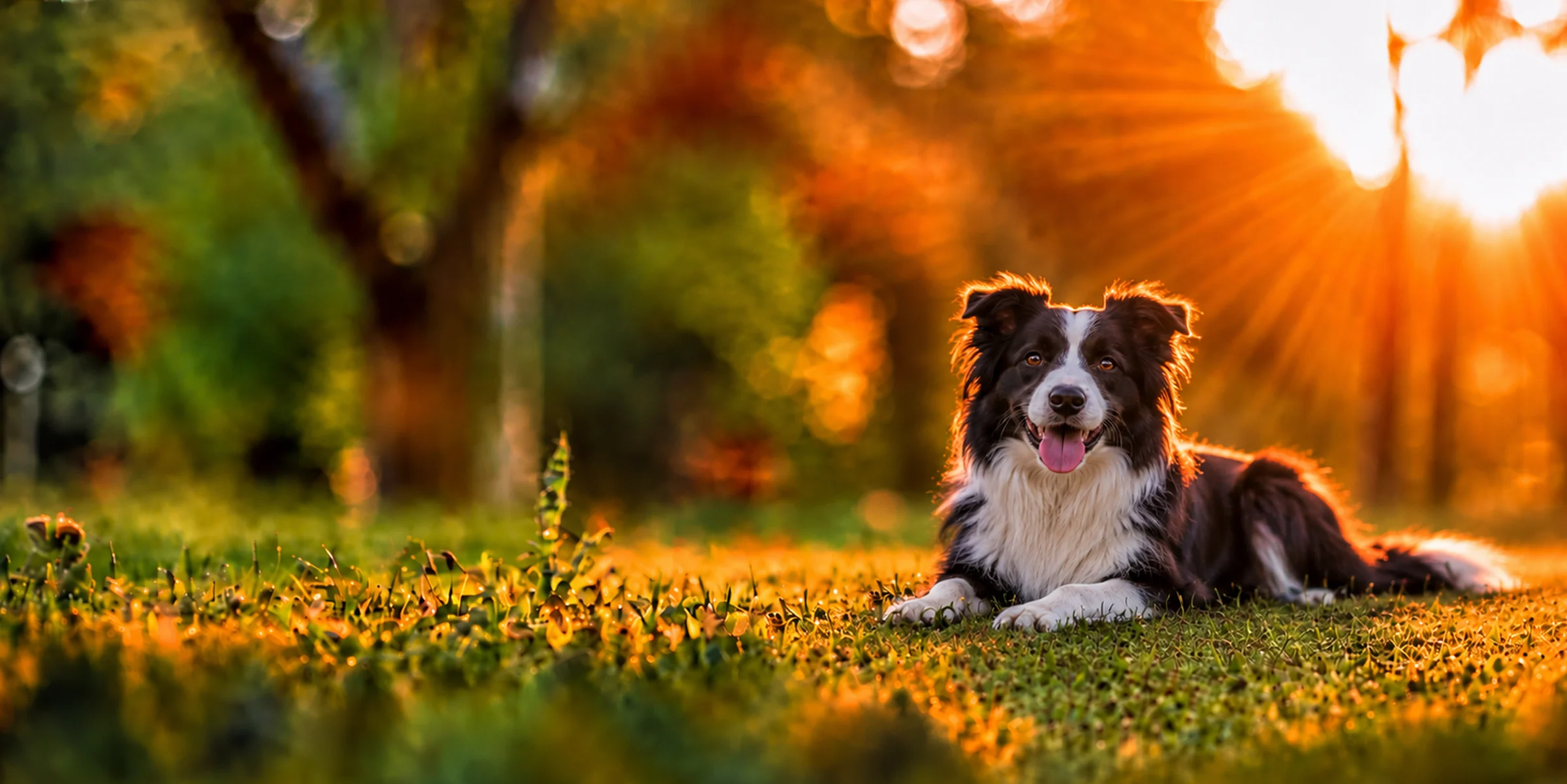
Border Collie
The closest match on brains and drive, and the sharper of the two. A Border Collie is more intense, more sensitive and more single-minded about work; the Aussie is the more sociable, more family-oriented dog with a slightly lower ceiling on obsession.
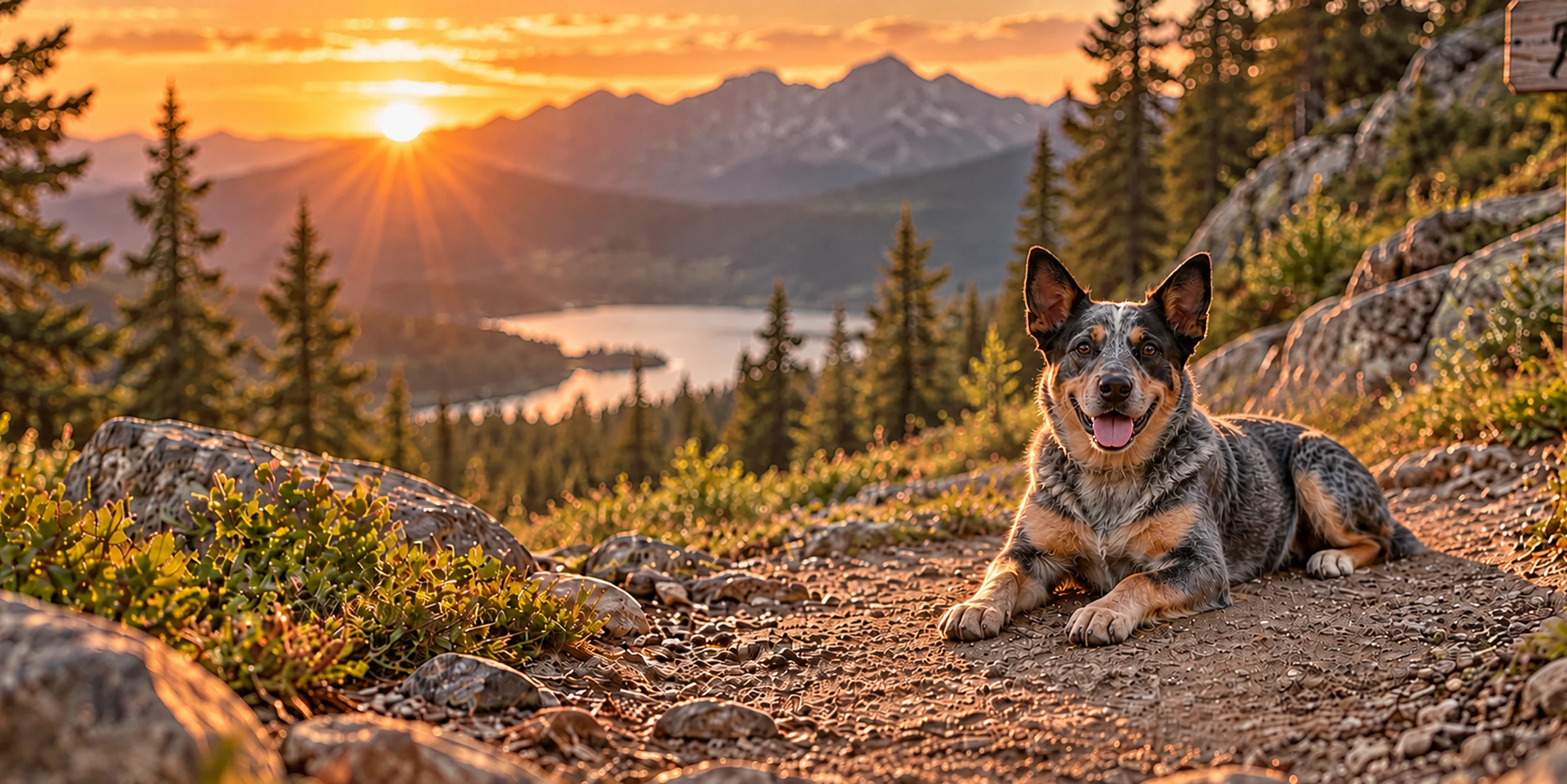
Australian Cattle Dog
Despite the names, the opposite temperament. The Cattle Dog is harder, more suspicious of strangers and bonded to one person; the Australian Shepherd is a family dog first and considerably more forgiving of a normal household.
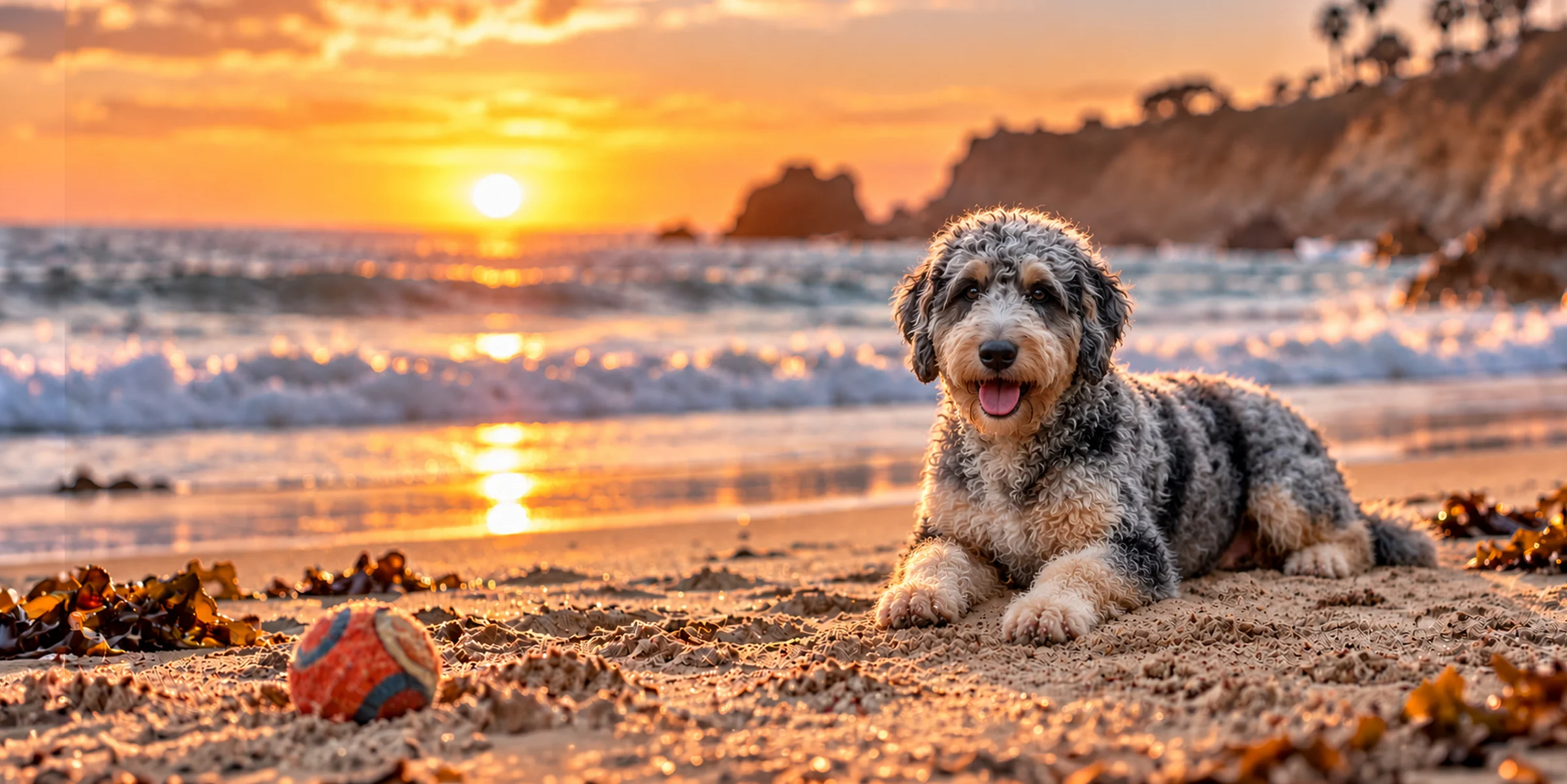
Aussiedoodle
The Poodle cross, and a reminder that crossing a herding dog does not dilute the drive. Aussiedoodles still want a job and still herd children, with a coat that mats and has to be paid for every six to eight weeks on top.