

large-to-giant breed
Black Russian Terrier
A purpose-built guard dog - a hundred-plus pounds of black coat and nerve, calm indoors, quiet by the standards of protective breeds, and utterly committed to their own household while aloof to the point of indifference with everyone else. They are easier to live with than the history suggests and much harder to own well, because the instinct to control who comes onto the property is the thing that needs managing for the life of the dog.

Pup Height
27-30 in
Figures are for males; females are 26-29 in. Black is the only color, and the coarse double coat with its beard and eyebrows is required rather than optional. Despite the name Black Russians are not terriers in any working sense - the AKC places them in the Working group, which is where the job actually sits. Source: AKC breed standard.

Pup Weight
80-130 lb

Pup Lifespan
10-12 years
Your pup, at a glance
What’s Life With This Pup Really Like?

Affectionate with their own household in a heavy, undemonstrative way. They want to be in the room and preferably against your legs, and they have no interest at all in anyone else's lap.

Good with their own family's children and protective of them, which is the complication - a guarding breed misreading a visiting child's rough game is serious at this size. Supervision is not optional.

Manageable with animals they are raised with. Strange dogs meet a confident, territorial animal, and same-sex pairings are often difficult.

Low, which surprises people. Black Russian Terriers are not noisy guards - they watch, and when they do speak it means something.

Moderate to high, and steadier than the herding breeds. Ninety minutes covers them, and the mental half does most of the work.

Low to moderate. The coarse double coat holds much of what it drops, which is why it needs combing out rather than vacuuming up.

Serious with a streak of goofiness that comes out with their own people. They play willingly and are not dogs who invent games.

Moderate, and mostly the beard - it arrives at the water bowl and leaves with a good deal of it. Budget for the towel rather than the drool.

Very good. Bred deliberately for biddability, handler-focused, and quick to learn - and soft enough that heavy correction sets them back rather than sharpening them.

The joint highest on this site. Territorial, physically imposing and entirely willing to act, with a protective instinct that arrives at maturity whether it was asked for or not.

High and ongoing. Two or three brush-outs a week, a professional trim every six to eight weeks, and a beard that needs daily attention.

Low. They need space, a boundary, consistent handling and a household prepared for a guarding breed, and none of those four is negotiable.
Lifestyle fit
Could This Be Your Best Breed?
A Black Russian Terrier needs land, a real fence, distance from a busy sidewalk, and an experienced owner who will socialize relentlessly for the first two years. Budget $2,200 to $3,500 a year - the beard and coat alone run $650 to $1,100 - across a ten to twelve year life. The homes that go wrong wanted the calm indoor giant and kept a steady stream of visitors coming through the door; an apartment and a first dog make it worse.

Living Space
A house with land and a real fence. Black Russian Terriers are quiet indoors and less demanding on exercise than their size suggests, but they are purpose-built guard dogs with genuine territorial instinct, and that needs space and distance from a busy sidewalk.

Pup Experience
Not a first dog, and not a second. They are highly trainable and want to work with their handler, and they are also a hundred-plus pounds of dog whose instinct is to control access to their property. Owners need real experience with protective breeds and the discipline to socialize relentlessly for two years.

Daily Pup Time
An hour to ninety minutes of exercise with real mental work in it, plus brushing two or three times a week and a professional trim every six to eight weeks. The training never stops being a daily item.

Allergies & Coat
The Black Russian Terrier scores 3/10 for shedding and 5/10 for drooling. No dog is truly hypoallergenic. The allergens come from dander and saliva, and a coat like this one holds on to them rather than spreading them around your home - which is what a groomer is clearing out every six to eight weeks.
Quirks & challenges
The Not-So-Easy Stuff

Bred to Guard, Not Greet
Territorial instinct is the point of them, not a side effect. Wide, relentless socialization is what decides whether that reads as steady or as a problem.
Three Years to Grow Up
Physically enormous well before they are mentally settled. Expect a long adolescence in a dog who is already stronger than you.
Ask About JLPP
A fatal inherited neurological disease with a reliable DNA test. A breeder who cannot show both parents' results is the wrong breeder.
Coat Needs a Groomer
A coarse double coat with beard and furnishings, trimmed every six to eight weeks and brushed through twice a week between.
The Beard Delivers Water
It collects half the bowl at every drink and carries it to the nearest sofa. A daily wipe, not a grooming-day job.
Insurance and Housing
A very large guarding breed is treated differently by some home insurers and landlords. Settle that in writing before the puppy.
The good, the bad & the hairy
Health, Care & Costs
Understanding the health risks and ongoing costs of a Black Russian Terrier helps you plan for a happy, healthy life together.

10-12 years
$85-$130
per groom (bath, trim, beard and feet), every 6-8 weeks ($650-$1,100/year)
$2,200-$3,500/year
all-in (food, routine vet, grooming, insurance, incidentals)

Health Risks
Conditions this breed is prone to.

Known as JLPP, and the condition this breed's clubs campaign hardest on. An inherited nerve disease that appears in the first months - the larynx stops opening properly and the limbs weaken - and it is fatal. There is a reliable DNA test, it is inherited simply, and a puppy from two tested parents cannot be affected. This is the single question to ask a breeder first.
The joints develop loosely so the surfaces grind rather than glide, causing arthritis and, in severe cases, surgery on a dog who may weigh a hundred and thirty pounds. Both are screened, and both parents should have scores.
An inherited disease that slowly destroys the retina. Night vision goes first, then daylight vision, usually ending in blindness. There is no treatment, but it is painless and gradual, and there is a DNA test for the form that runs here.
A gene fault that causes excess uric acid in the urine, which forms bladder stones - painful, sometimes obstructive, and often needing surgery. There is a DNA test, so like the others on this list it is avoidable at the point of choosing a puppy.
The stomach fills with gas and twists, cutting off its own blood supply. Without surgery within hours it is fatal. Deep-chested dogs are most at risk, and feeding one large meal a day or exercising straight after eating makes it likelier.
Itching, chewed paws and recurring ear trouble, usually from environmental allergens and harder to spot early under a dense black coat. Managed rather than cured, and the costs recur for life.

Insurance & Health Coverage
An unusual breed in that most of its serious inherited problems are testable, which shifts the emphasis away from insurance and onto the breeder.

JLPP, retinal atrophy and hyperuricosuria all have DNA tests. All three are congenital, so no policy pays for them, and all three are avoidable by choosing a puppy from tested parents. JLPP in particular is fatal and appears in puppyhood - a breeder who cannot produce those certificates is asking you to take a risk that costs nothing to eliminate.

What cover is genuinely for is the joints and bloat. Orthopedic surgery on a dog this size is at the top of the range, and bloat is an emergency in the thousands. There is also the liability question a health policy does not touch: a very large protective breed is a different proposition for a home insurer than a retriever, and that is worth confirming in writing before the dog arrives.
 Get a Pet Insurance Quote
Care needs
The Daily Routine

Grooming
Brush two or three times a week with a slicker and a comb, working through the furnishings on the legs and the beard where it mats first, and a professional trim every six to eight weeks to keep the outline and the feet manageable. The beard needs wiping daily and after every meal. Ears, teeth and nails on the usual schedule.

Exercise
An hour to ninety minutes daily with substantial mental work. Protection sport, obedience, tracking, carting and long walks all suit them; they have real stamina without the frantic drive of the herding breeds, and the head needs occupying more than the legs.

Food & Weight
Two or three measured meals rather than one large one, with hard exercise kept clear of mealtimes given the bloat risk. Grow puppies slowly on large-breed food - pushing weight onto developing joints in a dog headed past a hundred pounds causes problems that last a lifetime.
Similar breeds
If This Isn’t Quite the One
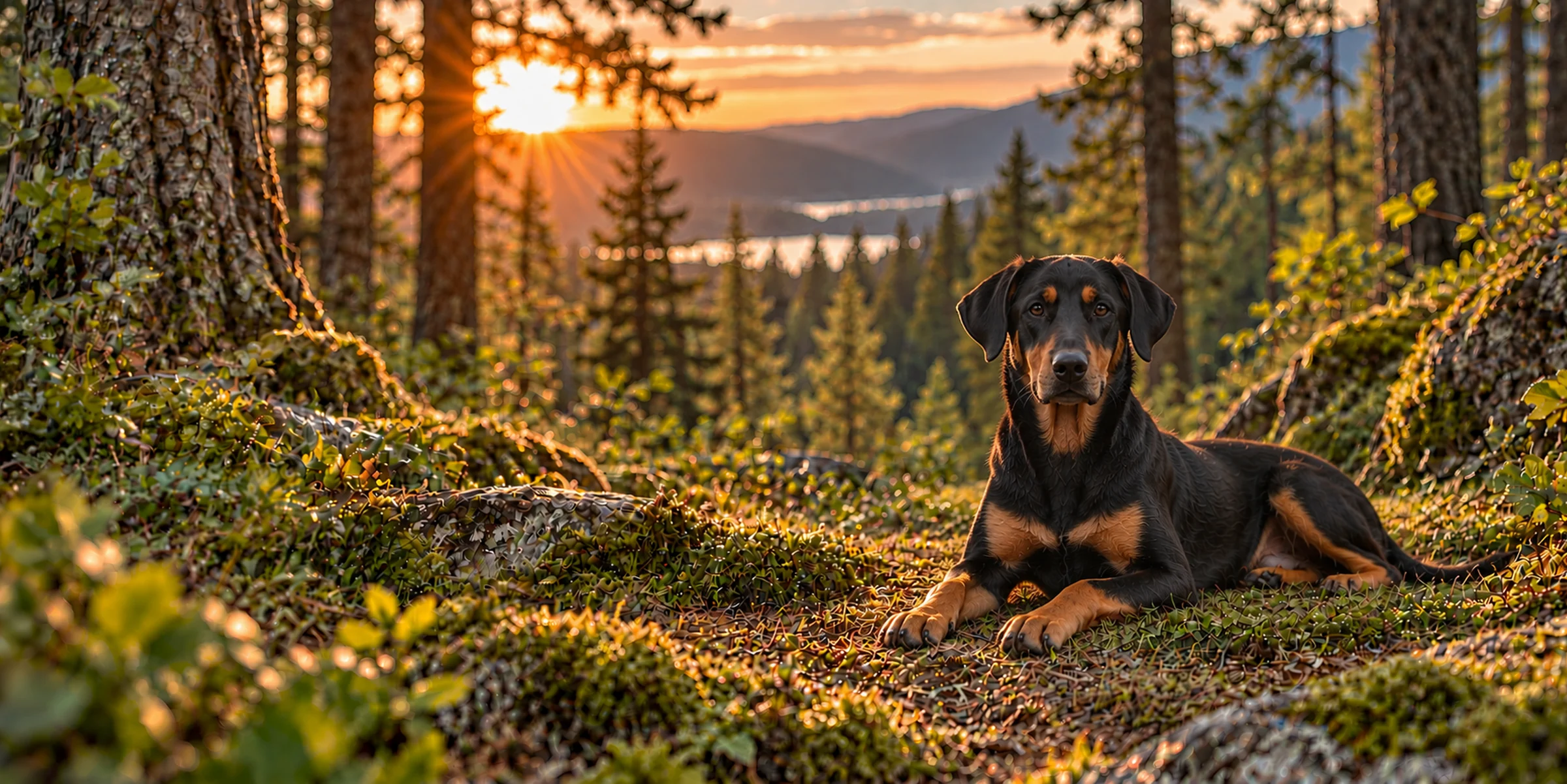
Beauceron
The closest match here on scale, seriousness and the combination of high trainability with a real guarding instinct. The Beauceron is the more athletic and needs considerably more exercise; the Black Russian is calmer, heavier and higher-maintenance on coat.

German Shepherd
The far more available version of the same idea - protective, biddable, and backed by an enormous support network of trainers and clubs. A German Shepherd is lighter, sheds a great deal more, and matures a good deal sooner.