

large-to-giant breed
Bloodhound
The best nose in the animal kingdom attached to one of the most stubborn temperaments in dogdom - Bloodhound evidence is accepted in court across much of the United States, which tells you how good the tracking is and nothing at all about the recall. At home they are mild, patient, wonderful with children and enormously affectionate. They also drool more than any breed here, bay like a foghorn, and will walk twenty miles behind a scent.

Pup Height
25-27 in

Pup Weight
90-110 lb
Figures are for males; females are 23-25 in and 80-100 lb. Three colors are recognized - black and tan, liver and tan, and red. The loose skin, the deep wrinkles and the extraordinarily long ears are all working equipment rather than decoration: they trap and hold scent around the nose. Source: AKC breed standard.

Pup Lifespan
10-12 years
Your pup, at a glance
What’s Life With This Pup Really Like?

Very affectionate and physically heavy about it. They lean, they lie across feet, and they would like to be on the sofa with you, drool and all.

Excellent. Patient, gentle and hard to rattle, and one of the more tolerant large breeds here. The cautions are their size and the fact that a scent will move them through whatever is in front of them.

Good with dogs - Bloodhounds were bred to work in packs and have little inclination to argue. Cats are usually fine indoors, though anything that runs outside is a trail to be followed.

High and unmistakable. A deep, resonant bay designed to be heard across country, used freely, and not something training reduces much.

Moderate and misleading. They are slow and lazy-looking, and they will walk for hours without tiring once their nose is engaged.

Moderate and constant. The coat is short but it sheds year-round, and the hairs are stiff enough to work into fabric.

Mild. They will join a game briefly and then find something to smell. Scent work holds them where fetch never will.

Top of the scale, matched only by the Dogue de Bordeaux. Loose flews and heavy jowls mean drool everywhere, and a head shake sends it up the walls.

The lowest here, and it is single-mindedness rather than stupidity. They are doing sophisticated work when they ignore you, and food plus patience is the only approach that gets anywhere.

Poor, and endearingly so. They may bay at an arrival and will then lead the visitor to the biscuits.

Moderate, and concentrated in unusual places. The coat is nothing; the ears, the wrinkles and the eyes are a several-times-a-week routine that turns into vet bills when skipped.

Low. They need a fence they cannot go under, floors that tolerate drool, and neighbors out of earshot, and none of the three is negotiable.
Lifestyle fit
Could This Be Your Best Breed?
Bloodhounds suit a house with a tall solid fence, wipeable floors, and an owner who finds slow stubbornness funny rather than infuriating. Expect $2,000 to $3,300 a year across a ten to twelve year life, with ears and facial folds cleaned two or three times a week throughout. The walk with no leash at all is the one thing a Bloodhound can never give you, and a tidy house and close neighbors go the same way.

Living Space
A house with a tall, solid fence and floors you do not mind wiping. Bloodhounds are calm and slow-moving indoors, so space is not the issue - containment is, and so is the fact that everything within four feet of the ground ends up with drool on it.

Pup Experience
Not a first dog. Bloodhounds are gentle and affectionate and almost impossible to provoke, and they are also the most single-minded animal on this site. An owner who expects instructions to work will spend years being quietly ignored by a very large, very slow, very determined dog.

Daily Pup Time
An hour of steady exercise daily, always on a leash or behind a fence, plus ears and facial folds cleaned two or three times a week and a towel permanently within reach.

Allergies & Coat
The Bloodhound scores 5/10 for shedding and 10/10 for drooling. No dog is truly hypoallergenic. The allergens come from dander and saliva, and a dog that sheds and drools this much will leave plenty of both behind - especially on your furniture, floors, and clothes.
Quirks & challenges
The Not-So-Easy Stuff

The Drool Is Constant
The heaviest slobber on this site by a distance. It gets on walls, ceilings and visitors, and shaking their head redistributes it widely.
They Follow It for Miles
Once on a trail they are genuinely oblivious - not disobedient. Bloodhounds have been recovered twenty miles from home.
Training Is a Long Game
One of the least biddable breeds anywhere. Food and patience get somewhere; repetition and firmness get nothing at all.
Bloat Is the Big Risk
This breed has one of the highest rates of gastric torsion of any. Split meals, no exercise near feeding, know the signs.
Ears and Folds Need Work
The longest ears and the deepest wrinkles come with infections if they are not cleaned and dried several times a week.
A Deep, Carrying Bay
Bred to be followed by ear across country. Enormous volume, used freely, and no amount of training reduces it much.
The good, the bad & the hairy
Health, Care & Costs
Understanding the health risks and ongoing costs of a Bloodhound helps you plan for a happy, healthy life together.

10-12 years
$55-$85
per groom (bath, nails, ears and folds), every 6-8 weeks ($400-$700/year)
$2,000-$3,300/year
all-in (food, routine vet, grooming, insurance, incidentals)

Health Risks
Conditions this breed is prone to.

The stomach fills with gas and twists, cutting off its own blood supply, and without surgery within hours it is fatal. This breed has one of the highest rates of it recorded in any dog, and it is a leading cause of death here rather than a background risk. Split meals, no hard exercise around feeding, and a serious conversation with your vet about a preventive gastropexy.
The longest ears of any breed, dragging through everything and sealing warmth and moisture against the canal. Structural rather than inherited, and a permanent recurring cost unless they are cleaned and dried two or three times a week.
The loose eyelids roll inward or sag away from the eye, and many Bloodhounds have both at once on different lids. It leaves the surface rubbed or exposed, and the corrective surgery is close to routine in this breed.
The deep facial wrinkles trap moisture, food and bacteria against the skin. It smells before it looks like anything, and it becomes a recurring infection unless the folds are wiped out and dried several times a week.
The hip joint develops loosely, so the ball and socket grind instead of gliding. It leads to arthritis and, in severe cases, replacement surgery on a dog who may weigh a hundred and ten pounds. Ask to see hip scores for both parents.
Similar to hip dysplasia but in the elbow joint - the bones do not fit together properly, causing pain and early arthritis. Common in heavy, fast-growing breeds.

Insurance & Health Coverage
The lifespan here is short for a reason, and the reason is mostly one thing.

Bloat kills more Bloodhounds than anything else. It is sudden, it is fatal within hours untreated, and emergency surgery runs several thousand dollars at whatever hour it happens. This is the breed where a preventive gastropexy - tacking the stomach in place, often done at the same time as a spay or neuter - is worth discussing with a vet rather than filing away, because the procedure is far cheaper planned than performed as an emergency.

The recurring costs are the ears, the folds and the eyes, and all three start early. Eyelid surgery is close to routine in this breed. Those are exactly the conditions an insurer excludes once they appear in the notes, and on a dog with ears this long the record starts building in the first year.
 Get a Pet Insurance Quote
Care needs
The Daily Routine

Grooming
The coat is easy - a weekly rub-down with a rubber mitt. Everything else is the job. Ears cleaned and dried two or three times a week, facial folds wiped out and dried on the same schedule, eyes checked, and nails kept short on a very heavy dog. A towel by the water bowl is standard equipment rather than a joke.

Exercise
An hour of steady walking daily, on a leash or behind a fence. They are not fast and not athletic, but they have enormous endurance at a walking pace. Tracking and scent games are what they are for and what settles them.

Food & Weight
Two or three measured meals rather than one large one, with hard exercise kept well clear of mealtimes - bloat is the single likeliest thing to kill this dog and feeding practice is the part you control. A slow feeder helps. Keep them lean; extra weight on this frame is hard on hips already carrying a lot.
Similar breeds
If This Isn’t Quite the One
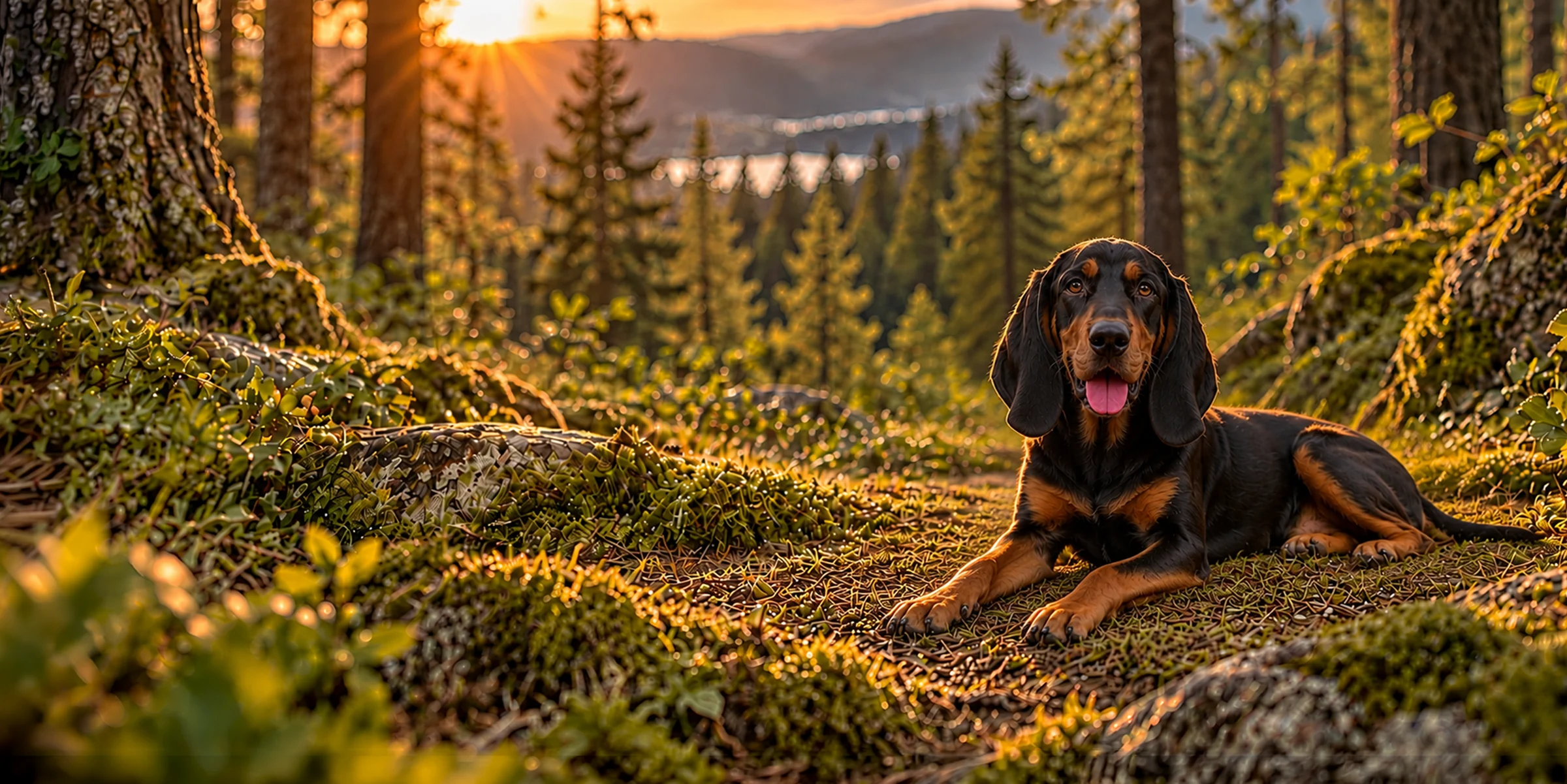
Black and Tan Coonhound
Descended directly from the Bloodhound and built for the same work in lighter form - similar nose, similar ears, similar voice, in a faster dog with a fraction of the drool and a rather more manageable size.
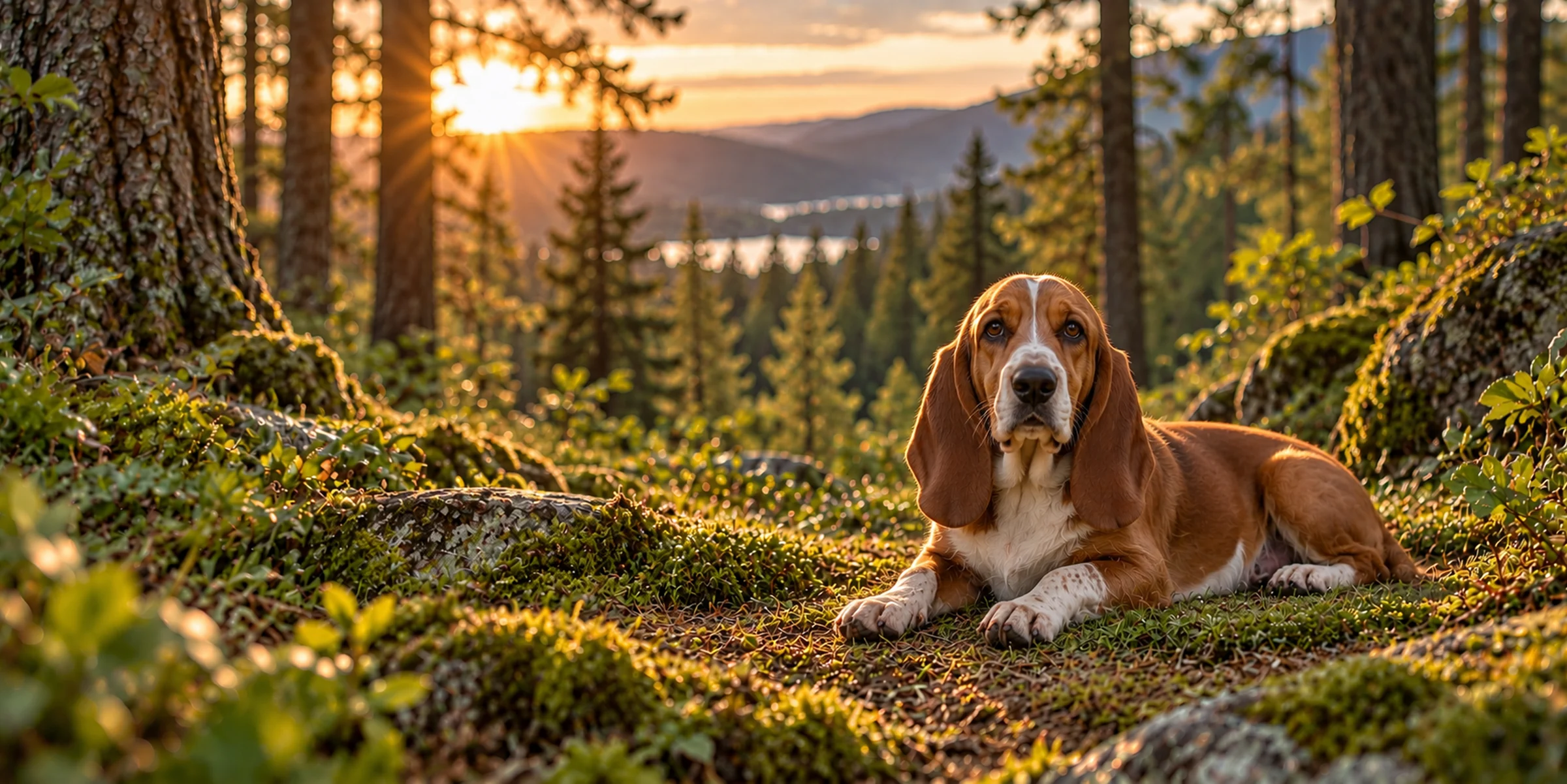
Basset Hound
The same St. Hubert ancestry at a third of the weight, with the same long ears, the same nose and the same magnificent stubbornness. If the temperament appeals but a hundred-pound drooling dog does not, this is the version that fits a normal house.