

medium-to-large breed
Bohemian Shepherd
Regularly mistaken for a small long-coated German Shepherd, and in practice a lighter, healthier, markedly friendlier dog - alert without suspicion, protective without sharpness, and genuinely good with children and other dogs. Bohemian Shepherds are one of the few guarding herders a sensible first-time owner can manage. The costs are a heavy double coat that blows twice a year and an exercise requirement that does not negotiate.

Pup Height
20-22 in
Figures are for males; females are 19-21 in. The coat is always black with rust markings - no other color is recognized - and the heavy ruff around the neck is a breed hallmark. The Bohemian Shepherd predates the German Shepherd by centuries and is not a variety of one, despite being mistaken for a small long-coated version constantly. Source: FCI breed standard.

Pup Weight
40-55 lb

Pup Lifespan
12-15 years
Your pup, at a glance
What’s Life With This Pup Really Like?

Very affectionate with their own household and closely involved in it - they want to be in the room and near you, without the neediness of the more anxious herding breeds.

Excellent - among the best working breeds here for it. Playful, patient and sturdy enough for the rough end of family life, with the usual herding-dog caveat about heels.

Very good. Sociable with dogs and generally fine with cats they are raised alongside, and noticeably less sharp with strange dogs than most guarding breeds.

Moderate to high. They announce arrivals with conviction - six centuries of border work - and early training shapes it into something proportionate.

High. Ninety minutes daily with the head engaged, and then a real off switch, which is what separates them from the Border Collie end of the spectrum.

Heavy. A thick double coat that sheds year-round and blows out twice a year, and the black hair shows on everything light.

One of the more fun breeds here. Genuinely playful, inventive and good-humored, and they stay that way well into middle age.

Very low. A clean, dry-mouthed dog.

Very good. Willing, quick and handler-focused, and soft enough that reward-based work gets far more out of them than pressure.

Excellent. Alert, territorial and quick to announce, without the suspicion or the bite risk that comes with the heavier guarding breeds.

Moderate to high. Two or three brush-outs a week, daily during a coat blow, and no clipping. Less than a Bearded Collie, considerably more than a short-coated herder.

Good, and unusually so for a working breed. They settle into new homes, routines and even smaller spaces readily - the requirement is exercise rather than acreage.
Lifestyle fit
Could This Be Your Best Breed?
Bohemian Shepherds suit an active household with a yard, and at forty to fifty-five pounds an apartment can genuinely work if the walking happens and the barking gets early attention. They are cheap for a working breed at $1,400 to $2,300 a year, and they live twelve to fifteen years. Skip this one if the household is sedentary, if the house has to stay spotless, or if you want a puppy soon.

Living Space
A house with a yard suits them, and at forty to fifty-five pounds they are one of the few working breeds here that an apartment could genuinely hold - provided the exercise happens and the barking gets early work.

Pup Experience
Manageable for a committed first-time owner, which is unusual for a guarding herder. They are biddable, sociable and forgiving of mistakes; what they need is an active household rather than an experienced handler.

Daily Pup Time
An hour to ninety minutes of activity daily with something for the head, plus brushing two or three times a week and considerably more during the twice-yearly coat blow.

Allergies & Coat
The Bohemian Shepherd scores 7/10 for shedding and 2/10 for drooling. No dog is truly hypoallergenic. The allergens come from dander and saliva, and a dog that sheds this much will leave plenty of hair behind - especially on your furniture, floors, and clothes.
Quirks & challenges
The Not-So-Easy Stuff

Mistaken for a Shepherd
A Bohemian Shepherd is not a small German Shepherd and predates one by centuries. Expect to explain it, and expect vets to reach for GSD assumptions.
The Coat Blows Twice a Year
A thick double coat that sheds year-round and comes out in handfuls each spring and fall. Two or three brush-outs a week minimum.
They Need a Real Job
Ninety minutes with the head engaged. Under-exercised they get noisy and busy rather than destructive, but they do not settle.
A Vocal Watchdog
Six centuries of announcing people at a border. They alert readily, and early work is what keeps it proportionate.
They Circle and Herd
Gathering running children is instinct rather than mischief, and it comes with nudging and the occasional nipped heel.
Hard to Find Outside Europe
Still rare beyond the Czech Republic, with few breeders and a small gene pool. Expect a wait and ask about coefficients.
The good, the bad & the hairy
Health, Care & Costs
Understanding the health risks and ongoing costs of a Bohemian Shepherd helps you plan for a happy, healthy life together.

12-15 years
$65-$100
per groom (bath, blow-out and deshedding), every 8-10 weeks - more during the coat blow ($350-$650/year)
$1,400-$2,300/year
all-in (food, routine vet, grooming, insurance, incidentals)

Health Risks
Conditions this breed is prone to.

The hip joint develops loosely, so the ball and socket grind instead of gliding. Rates in this breed are low by working-dog standards - it is one of the soundest here - but a small breeding population makes parental scores worth seeing rather than assuming.
Similar to hip dysplasia but in the elbow joint - the bones do not fit together properly, causing pain and early arthritis. Also uncommon here, and also worth checking.
An inherited disease that slowly destroys the retina. Night vision goes first, then daylight vision, usually ending in blindness. There is no treatment, but it is painless and gradual, and eye clearances on both parents are the protection.
The lens clouds and vision goes with it. Surgery restores sight in most cases but runs into thousands per eye, and breeding stock should carry a current eye examination certificate.
The thyroid stops producing enough hormone, causing weight gain, lethargy and a coat that thins or dulls - harder to spot under a heavy double coat than under a short one. A daily tablet manages it completely.
Itching, chewed paws and recurring ear trouble, usually from environmental allergens. Manageable rather than curable, and the costs recur for life. Less common here than in most breeds, but it is the thing owners most often meet.

Insurance & Health Coverage
One of the healthiest breeds on this site, and worth saying plainly rather than padding the list above - there is no signature disease here, hip scores are good by working-dog standards, and twelve to fifteen years is a long life for a dog of this size.

What that means for cover is that the case is weaker than for most breeds and rests on the ordinary risks: joint surgery in the low thousands, cataract surgery at thousands per eye, and the chronic skin and thyroid conditions that turn into lifelong medication.

The one genuine caveat is the gene pool. The modern breed was rebuilt from a small number of dogs in the 1980s, and published health data on a population this size is thin. That is not a reason to expect problems, but it is a reason to ask a breeder direct questions about testing and inbreeding coefficients rather than relying on breed-level statistics.
 Get a Pet Insurance Quote
Care needs
The Daily Routine

Grooming
Brush two or three times a week with a slicker and an undercoat rake, working down to the skin through the ruff and the trousers where the coat mats first. Daily during the twice-yearly blow. Never clipped - the double coat regulates heat as well as cold. Ears, teeth and nails on the usual schedule.

Exercise
An hour to ninety minutes daily with real mental work in it. Herding, agility, obedience, tracking and long walks over varied ground all suit them, and they settle well at home once the work is done - better than most of the herding breeds here.

Food & Weight
Two measured meals with training treats coming out of the ration. A heavy coat hides weight gain, so judge by ribs rather than by eye, and keep them lean while they are growing.
Similar breeds
If This Isn’t Quite the One

German Shepherd
The comparison everyone makes, and the honest version of it: the Bohemian is smaller, lighter, longer-lived and considerably sounder in hip and temperament, while the German Shepherd is more powerful, more trainable at the top end, and vastly easier to find.
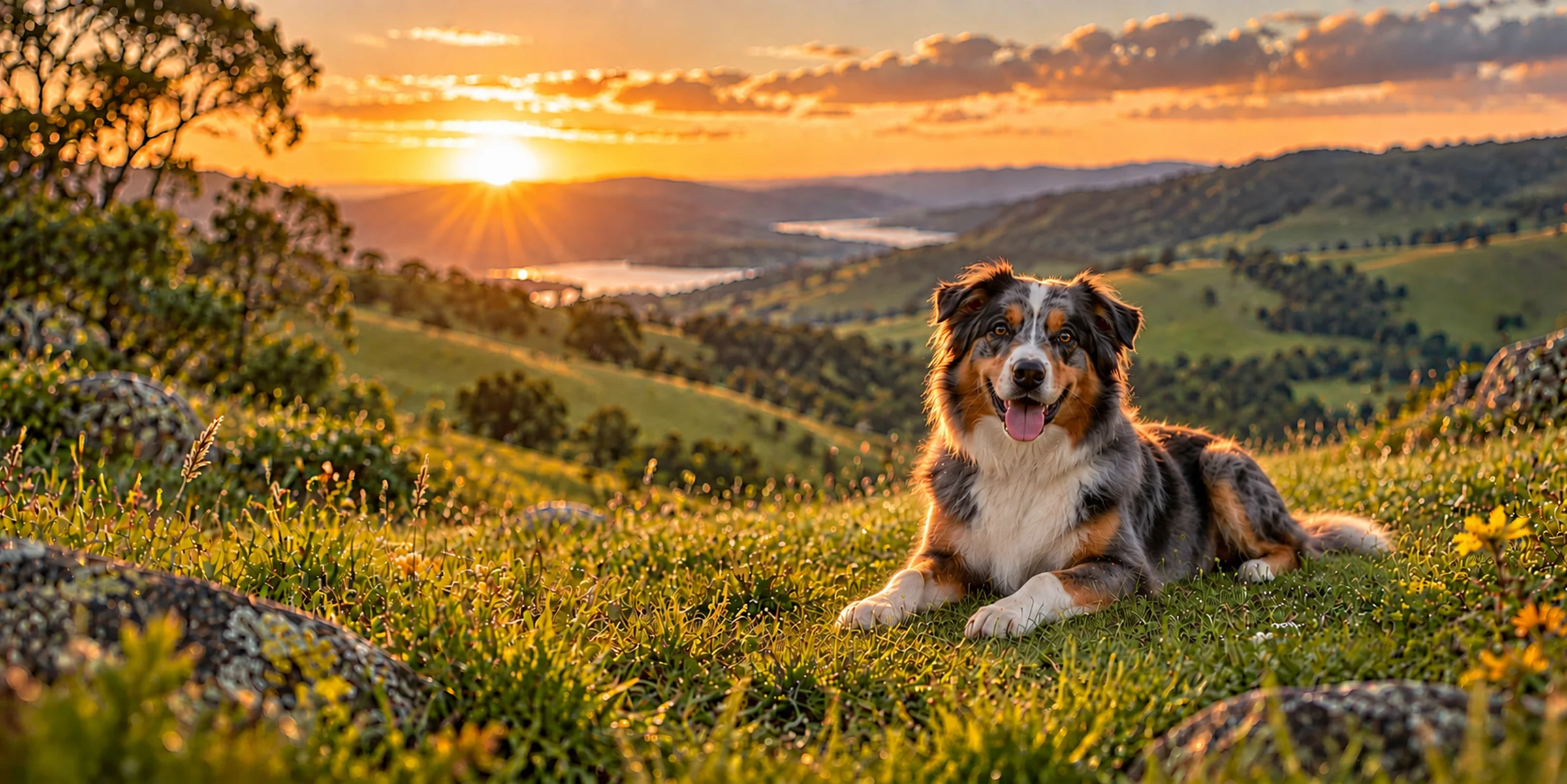
Australian Shepherd
A similar package for a family that wants a clever, sociable, long-coated herding dog - the Aussie is more available and rather more driven, where the Bohemian has a genuine off switch and a stronger guarding streak.