

medium breed
Bulldog
One of the sweetest-natured dogs there is, and the one here where the gap between temperament and health is widest. Bulldogs are patient, comic, devoted, superb with children, and ask almost nothing of an owner in exercise or training - twenty minutes of gentle walking covers it. The other half of the sentence is that breathing, cooling, moving and breeding are all compromised by the shape, and they live eight to ten years.

Pup Height
14-15 in

Pup Weight
40-50 lb
Figures are 50 lb for males and 40 lb for females, at much the same height - the Bulldog is built wide rather than tall. Brindle, white, red, fawn, fallow and piebald are all accepted. The modern dog is a very different animal from the athletic bull-baiter the name comes from; the entire type was rebuilt after the sport was banned in 1835. Source: AKC breed standard.

Pup Lifespan
8-10 years
Your pup, at a glance
What’s Life With This Pup Really Like?

The joint highest on this site. A Bulldog is a fifty-pound dog with lap ambitions, minimal interest in moving, and total commitment to being against someone.

Excellent. Famously patient, almost impossible to provoke, and sturdy enough to absorb the rough end of family life. One of the genuinely best temperaments here.

Good. Little prey drive and not much inclination to argue, though same-sex pairings can occasionally be difficult.

Low. They are quiet dogs who rarely bark without reason - the noise you hear from a Bulldog is mostly breathing rather than barking.

Low, and necessarily so. Twenty to thirty minutes is right, and pushing them further is a health risk rather than good exercise.

Moderate. The coat is short and fine and it sheds steadily year-round, more than most people expect from a dog this smooth.

Comic in short bursts. They enjoy a game and run out of breath quickly, which is exactly what you would expect and worth planning around.

High. Loose flews and a heavy jaw mean drool after every drink, and a head shake distributes it widely.

Moderate. Stubborn rather than slow, and genuinely food-motivated, which is the lever. They need very little formal obedience for the life they actually lead.

Poor. They look formidable and have almost no guarding instinct - they may bark once and will then lean on the visitor.

Moderate, and all of it in the folds rather than the coat. Daily cleaning of the face, nose rope and tail pocket is the routine, and skipping it is the commonest avoidable vet bill in the breed.

Good on space and routine, poor on climate. Apartments and quiet households suit them; heat does not, and there is no adapting them to it.
Lifestyle fit
Could This Be Your Best Breed?
A Bulldog suits an apartment, a quiet household and an owner who will clean and dry every fold daily, watch them constantly in warm weather, and budget $2,200 to $4,000 a year for a dog that may only be here eight years. Read the health section before anything else. If $2,200 to $4,000 a year is not in the budget, stop here - and stop here too if the summers are hot, or if what you wanted was a walking companion.

Living Space
An apartment suits them on size, noise and exercise - they are quiet, slow and content indoors. What decides it is climate: a dog who cannot cool down properly needs air conditioning in summer, and that is not a comfort but a safety requirement.

Pup Experience
Easy on temperament and demanding on care. They are affectionate, tolerant and undemanding to live with, and they need an owner who will do daily fold cleaning, watch them constantly in warm weather, and go in expecting real veterinary bills rather than hoping to avoid them.

Daily Pup Time
Twenty to thirty minutes of gentle walking, always in cool conditions, plus daily cleaning and drying of every fold, daily teeth, and a towel wherever they drink.

Allergies & Coat
The Bulldog scores 4/10 for shedding and 8/10 for drooling. No dog is truly hypoallergenic. The allergens come from dander and saliva, and a dog that sheds and drools this much will leave plenty of both behind - especially on your furniture, floors, and clothes.
Quirks & challenges
The Not-So-Easy Stuff

Breathing Is the Whole Story
The most extreme flat face in common ownership. Snoring, snorting and struggling after mild exertion are the breed, not a fault in your individual dog.
Heat Can Kill Them
They cannot pant efficiently enough to cool down. A warm day, a car, or a walk at the wrong hour is a genuine emergency risk.
Folds Need Daily Cleaning
Face, nose rope and tail pocket all trap moisture and bacteria. Skipped for a week, this becomes an infection rather than a chore.
The Worst Hip Scores There Are
This breed screens worse for hip dysplasia than any other. Ask for parental scores and expect them to be unimpressive even so.
Most Litters Are C-Sections
Heads too wide for the birth canal mean planned cesareans are near-universal, which is part of why puppies cost what they do.
Restricted in Some Countries
Breeding has been curtailed or banned in parts of Europe on welfare grounds. Worth knowing that the debate is live rather than fringe.
The good, the bad & the hairy
Health, Care & Costs
Understanding the health risks and ongoing costs of a Bulldog helps you plan for a happy, healthy life together.

8-10 years
$45-$75
per visit (bath, nails, folds and ears), every 6-8 weeks ($350-$600/year)
$2,200-$4,000/year
all-in (food, routine vet, grooming, insurance, incidentals)

Health Risks
Conditions this breed is prone to.

The defining condition of the breed and the most severe example of it in common ownership. A drastically shortened skull compresses normal soft tissue into far less space - narrowed nostrils, an overlong soft palate, a narrowed windpipe - so breathing is hard work at rest and much harder after exertion. Corrective surgery on the nostrils and palate is common, effective and runs into the low thousands. Noisy breathing at rest, or gums going blue, is an emergency.
Dogs shed heat by panting, and a compromised airway does it badly, which makes heatstroke a leading cause of death in this breed rather than a background risk. Walk early and late, never leave them in a car for any length of time, and treat heavy panting at rest as a reason to cool them immediately.
The hip joint develops loosely, so the ball and socket grind instead of gliding. This breed screens worse for it than any other dog - the great majority of Bulldogs assessed are dysplastic to some degree. Many cope surprisingly well because they are light and inactive, but arthritis in middle age is common.
The facial wrinkles, the nose rope and the tail pocket all trap moisture, food and bacteria against the skin. It smells before it looks like anything, and it becomes a recurring infection unless every fold is wiped out and dried daily. This is the single most preventable cost in the breed.
The screw tail is malformed vertebrae, and the same developmental fault can appear further up the spine - usually harmless, occasionally pressing on the spinal cord and causing weakness or incontinence in a young dog. Reputable breeders x-ray for it.
The third eyelid gland prolapses and sits as a red lump in the corner of the eye, and entropion and ectropion both appear here too. All three are corrected surgically, and all three are common enough to budget for rather than hope against.

Insurance & Health Coverage
Insure this breed, and insure it from the week the puppy arrives. That is a stronger recommendation than this site makes for almost anything else, and the reason is that the expensive problems here are not possibilities but near-certainties.

Airway surgery is the big one - low thousands, transformative for a dog who needs it, and usually done between one and three years old. Eyelid and cherry eye correction is close to routine. Skin infections recur for life once established. Every one of those is exactly what an insurer writes into an exclusion the moment it appears in the notes, and on a Bulldog the notes start filling up in the first year.

Also check the anaesthetic position with your vet before any procedure. A compromised airway makes sedation riskier here than in most breeds, which is worth planning around rather than discovering.
 Get a Pet Insurance Quote
Care needs
The Daily Routine

Grooming
The coat is trivial - a weekly rub-down with a rubber mitt. Everything else is daily and non-negotiable: wipe out and thoroughly dry the facial folds, the rope over the nose and the tail pocket, check the eyes, and brush the teeth, which are badly crowded in a shortened jaw. Nails need regular attention because a Bulldog moves too little to wear them down.

Exercise
Twenty to thirty minutes of gentle walking daily, split into short outings and always in cool conditions. They are not built for exertion and a session that leaves them struggling for breath was too much regardless of length. Swimming is dangerous - the body shape means many Bulldogs cannot swim at all.

Food & Weight
Measure everything and keep them genuinely lean. Extra weight presses on an airway already working hard and on hips that are already compromised, and weight loss is the single most effective non-surgical improvement available for a struggling Bulldog. A slow feeder helps with the swallowed air that causes the gas they are known for.
Similar breeds
If This Isn’t Quite the One
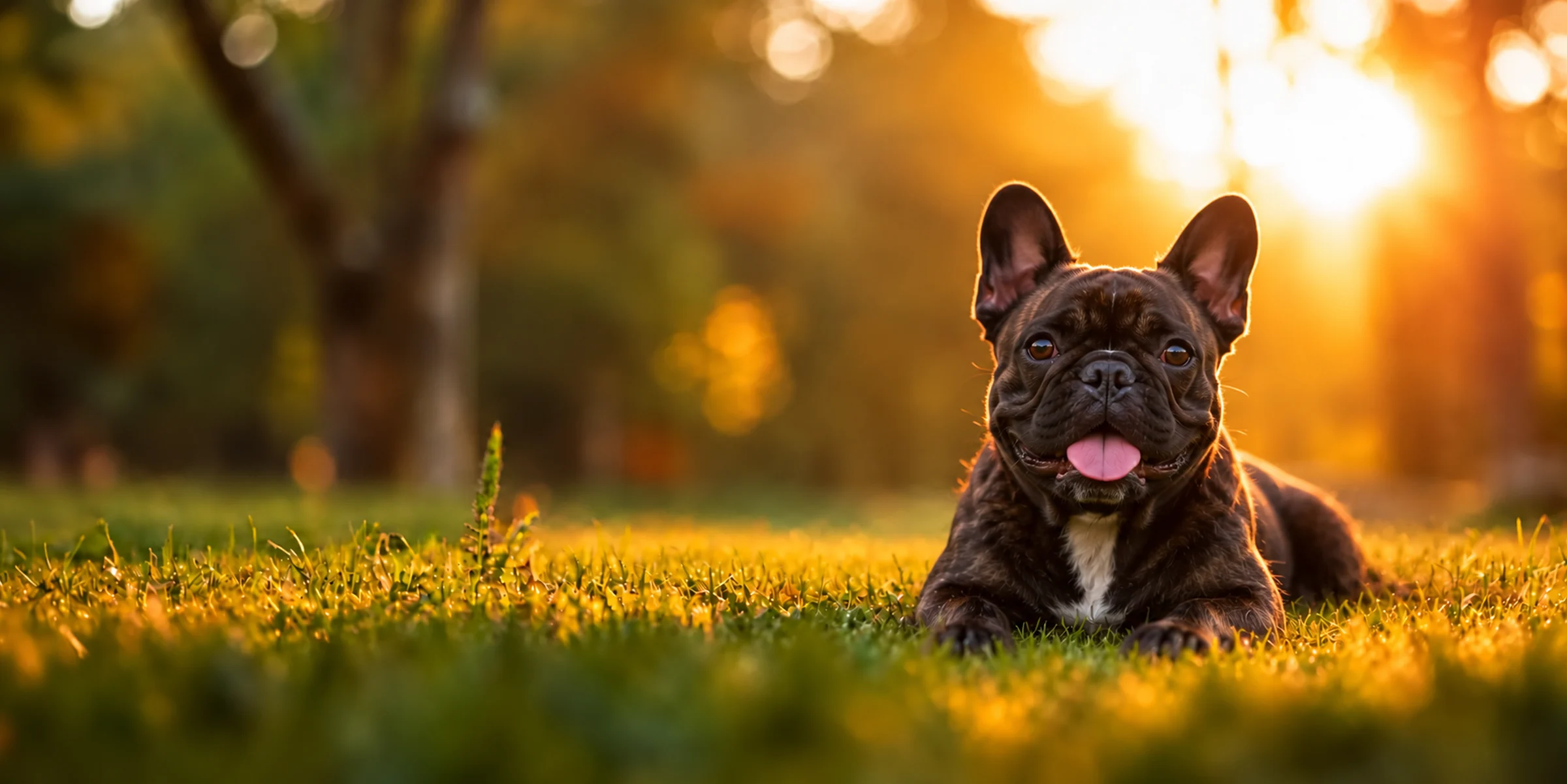
French Bulldog
The smaller, lighter version of much the same proposition - the same flat face, folds and heat intolerance in a dog half the weight and rather more active. Neither escapes the breathing question, but the Frenchie carries less of it.
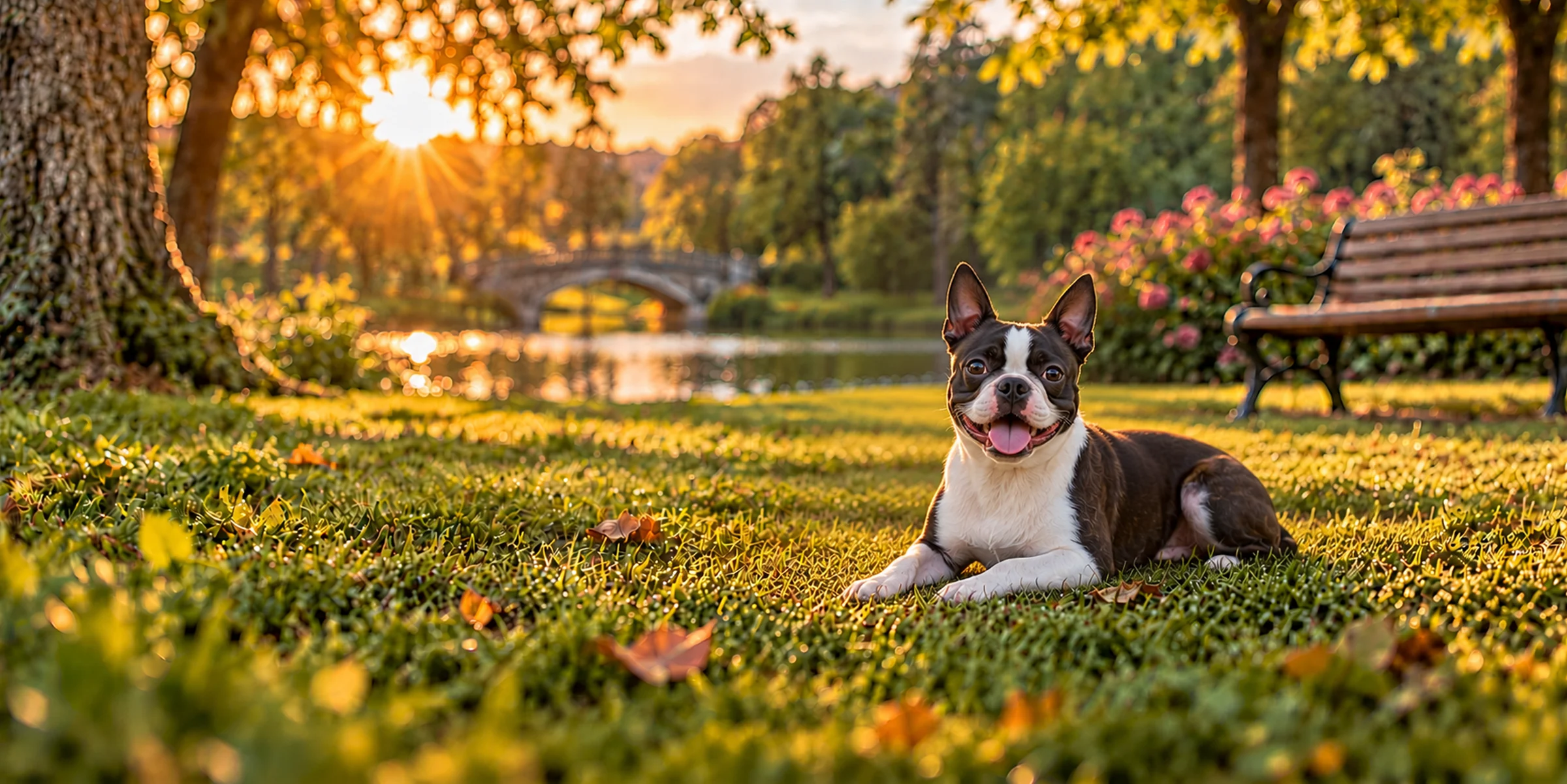
Boston Terrier
The furthest step in the same family toward a functional dog - longer in the muzzle and the leg, cooler-running, more energetic, and several years longer-lived, while keeping the tuxedo charm and the good temperament with children.
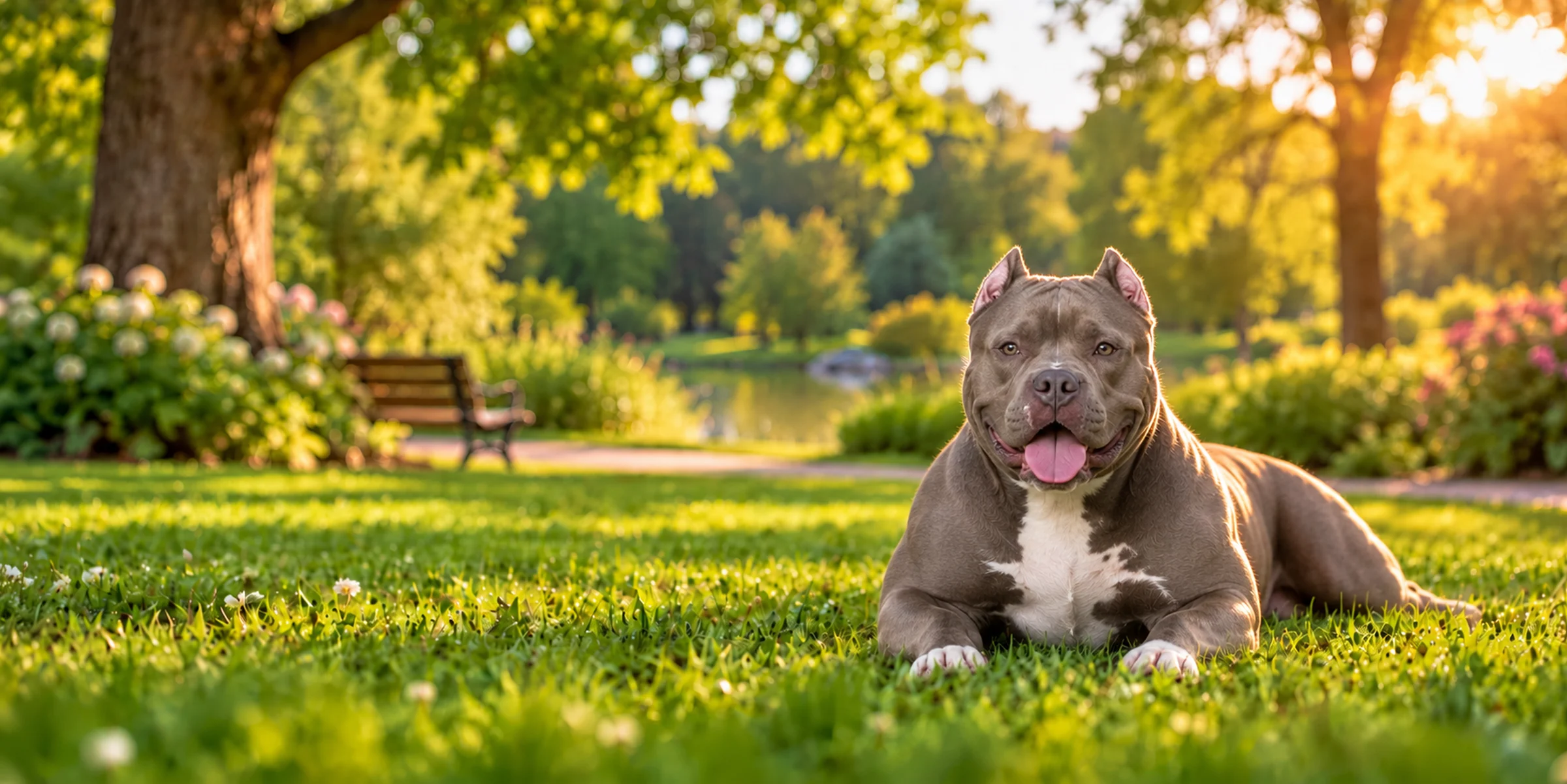
American Bully
A far more athletic dog with a similar breadth of chest, and a reminder of what exaggeration costs. Moderately built Bullies breathe and move much better than a Bulldog, though the most extreme lines head back toward the same trouble.