

large breed
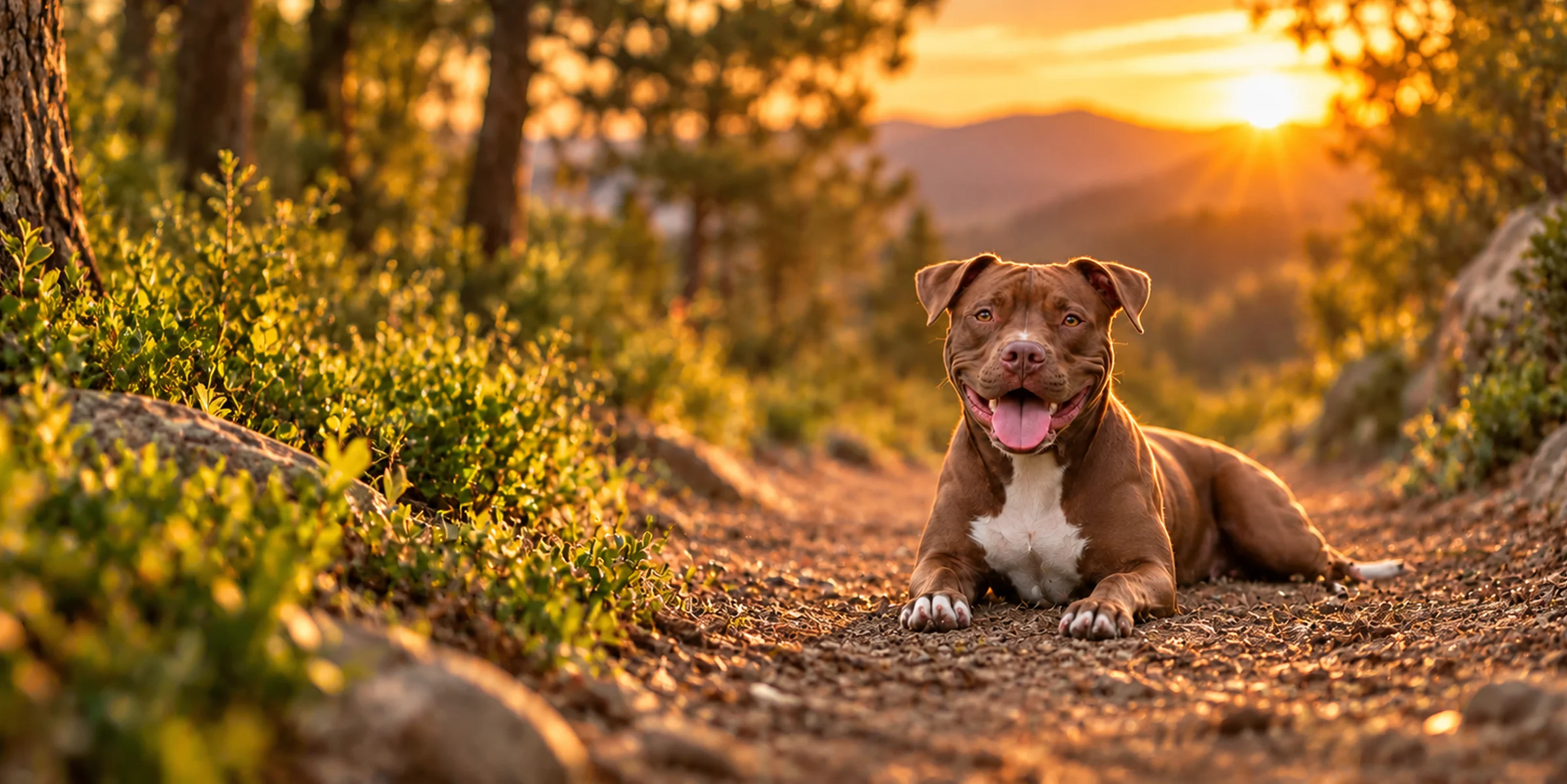
American Bully
A separate breed from the American Pit Bull Terrier, not a nickname for one. American Bullies were built in the United States through the 1980s and 90s from APBT and AmStaff stock crossed toward bulldog type, deliberately away from the fighting dog and toward a shorter, wider, heavier companion whose own standard treats aggression toward people as a disqualifying fault. That temperament is real. The cost of the build is health.

Pup Height
16-20 in

Pup Weight
65-85 lb
Figures above are for the Standard variety: males 17-20 in, females 16-19 in. The ABKC recognizes four varieties separated by height - Pocket (males under 17 in, females under 16 in), Standard, Classic and XL (males 20-23 in, females 19-22 in) - with the Classic set apart by a lighter, less bulky frame at Standard heights rather than by size. The standard fixes height and asks for weight in proportion rather than naming a figure, so the weight range above is typical rather than required. Any color or pattern is accepted except merle. Recognized by the ABKC in 2004 and by the UKC in 2013. Source: ABKC breed standard.

Pup Lifespan
10-12 years
Your pup, at a glance
What’s Life With This Pup Really Like?

Very high. An eighty-pound dog with every intention of sitting on you, and no interest in a compromise position.

Excellent, and one of the breed's real strengths - patient, sturdy and fond of children. The caution is weight and enthusiasm around a toddler, nothing more.

The weak spot. Interest in other dogs runs through the bully lines and often arrives at maturity; cats are a gamble. Management works, optimism does not.

Low. American Bullies are quiet dogs who snore more than they bark, which makes them easy neighbors.

Moderate to low. Half an hour to an hour of easy work covers the day, and the rest is spent asleep on something soft.

Moderate. The coat is short but the hairs are stiff and they settle into upholstery and car seats year-round.

Goofy, bouncy and enthusiastic well into middle age. Keep the games flat and low - this build is not made for twisting and landing.

Moderate. Loose lips and a wide muzzle mean some drool around food and water, and more of it in heat.

Good. Willing, food-motivated and eager to please, with a soft streak that responds to rewards and shuts down under pressure.

Imposing to look at and rarely more than that. An American Bully may announce a visitor and will then demand to be petted by them.

Low for the coat, higher for the skin. Folds, allergies and nails are where the time actually goes.

Fair. The dog settles almost anywhere, including an apartment; heat and the rules written around bully-type dogs are what narrow the options.
Lifestyle fit
Could This Be Your Best Breed?
An American Bully suits a household that wants an affectionate, low-mileage dog and will choose moderate structure over an extreme front - and that settles tenancy, home insurance and local rules in writing first, because those are written around the look rather than the papers. Figure $1,800 to $3,200 a year across ten to twelve years. Anyone drawn to the widest, heaviest lines should read the health section before choosing.

Living Space
An apartment works for the dog - American Bullies are quiet, undemanding indoors and no great walker. What decides the question is the paperwork around them: tenancy clauses, condo rules, home and renter policies and a few local ordinances all reach this breed because those rules describe a look rather than a pedigree. Get the answers in writing first. Air conditioning matters too, since a heavy, short-muzzled dog overheats fast.

Pup Experience
Workable for a committed first-time owner, with two conditions. The first is choosing a moderately built dog from a breeder who screens hips, elbows and hearts, because an exaggerated one hands a novice a medical project. The second is being ready to manage a strong dog around other dogs without pretending the risk away.

Daily Pup Time
Thirty to sixty minutes of easy exercise split across the cooler parts of the day, plus daily training and something to chew on. Grooming is minutes, but the folds and skin want checking every day.

Allergies & Coat
The American Bully scores 4/10 for shedding and 5/10 for drooling. No dog is truly hypoallergenic. The allergens come from dander and saliva, and a dog that sheds this much will leave plenty of hair behind - especially on your furniture, floors, and clothes.
Quirks & challenges
The Not-So-Easy Stuff

Built Heavy, Breathes Hard
The shorter the muzzle and the wider the chest, the more the breathing costs. Snoring, snorting and quitting early on a walk are worth a vet's opinion, not a shrug.
The Look Writes the Rules
Housing clauses, insurance exclusions and local ordinances are generally enforced on appearance. ABKC registration papers do not exempt a dog who reads as a pit bull to a leasing agent.
Skin Folds and Itching
Allergies and damp facial or neck folds are the most common recurring vet cost in the breed. Daily wiping and drying prevents most of the trouble.
Heat Stops Play Early
A dense, heavy body and a short airway are a bad combination above about 75 degrees. Summer exercise belongs at dawn and dusk, indoors on the worst days.
Other Dogs Need Managing
Sociable with people, less reliably so with dogs, and strong enough that a scuffle is never minor. Dog parks are usually the wrong place to find out.
Fashion Drives the Breeding
Fashion rewards wider and shorter, so some lines are bred past what the joints and airway can carry. Health testing and moderate structure are the questions to ask about.
The good, the bad & the hairy
Health, Care & Costs
Understanding the health risks and ongoing costs of a American Bully helps you plan for a happy, healthy life together.

10-12 years
$40-$70
per groom (bath, folds, nails and ears), every 6-8 weeks or done at home ($0-$450/year)
$1,800-$3,200/year
all-in (food, routine vet, grooming, insurance, incidentals)

Health Risks
Conditions this breed is prone to.

In the shorter-muzzled lines, narrowed nostrils and an overlong soft palate make every breath harder work. Signs are noisy breathing, snoring, exercise intolerance and collapse in heat. Corrective surgery is effective and expensive, and the surest prevention is choosing a dog with a genuine muzzle.
The joints develop loosely and wear into arthritis under a heavy, wide-fronted body that already loads the front end hard. Both parents should have scored hips and elbows - ask to see the certificates rather than a verbal assurance.
The likeliest recurring cost. Environmental allergies bring itching, chewed paws and repeat ear infections, while damp skin folds on the face, neck and tail set up rubbing and infection. Managed with washes, wipes and sometimes lifelong medication rather than cured.
A skin mite carried by most dogs that only causes hair loss and crusting when the immune system lets go. Young bully breeds are more prone than average; localized patches often resolve, widespread cases take months of treatment.
A wide, heavy frame on relatively short legs puts steady load through the knees, the elbows and the lower spine. Cruciate tears usually need surgery running into the thousands, and dogs who go one side often go the other later. Keeping the dog lean is the cheapest medicine available.
Subaortic stenosis and other congenital defects turn up in the bully breeds, which is why a cardiac clearance on both parents is a fair thing to ask for - a vet usually hears the murmur at the puppy check. Cherry eye and entropion also appear, both fixable surgically and both worth spotting early.

Insurance & Health Coverage
Start with the cover that has nothing to do with veterinary bills. Home and renter liability policies, tenancy agreements and a scattering of local ordinances restrict bully-type dogs, and the wording almost always describes a build and a head shape rather than a registry. That is the trap specific to this breed: an ABKC pedigree proves the dog is not an American Pit Bull Terrier, and it does not help at all when the rule was written around what the dog looks like. Ask the insurer and the landlord in writing, name the breed exactly as the paperwork does, and keep the reply.

Pet health cover is a separate product and rarely refuses the breed. What it does is fix what is already in the notes. Skin disease and breathing trouble both tend to show up in the first two years, and both are exactly the kind of chronic finding that becomes a permanent exclusion the moment a vet records it - so the policy wants to be in place before the first itchy summer, not after.

One thing no policy covers is conformation. Airway surgery on a dog whose nostrils were always too narrow is often argued as congenital, and a claim can be declined on that basis. Moderate structure is the only protection there, and it is chosen at the breeder rather than at the insurer.
 Get a Pet Insurance Quote
Care needs
The Daily Routine

Grooming
A short, glossy coat that needs a weekly going-over with a rubber curry brush and nothing more. The real routine is skin: wipe and dry any facial, neck or tail folds daily, check between the toes and under the elbows, and keep nails short so the toes are not splayed under the weight. Ears and teeth on the usual schedule.

Exercise
Thirty to sixty minutes a day of steady, flat walking and short bursts of play - enough to keep condition without pounding the joints. Swimming suits some, though a heavy, deep-chested dog is a poor natural swimmer and needs a life jacket and supervision. Skip the repetitive jumping and hard turning that chews through cruciates, and move everything to the cool end of the day in summer.

Food & Weight
Lean is the whole game. Extra pounds on this frame land straight on the hips, the knees and the airway, and half the internet will call a dog carrying them "thick" and mean it as a compliment. Two measured meals a day, treats counted out of the ration, and a waist you can see from above.
Similar breeds
If This Isn’t Quite the One

American Staffordshire Terrier
One of the foundation breeds, and the honest comparison. The AmStaff is taller, lighter and far more athletic, with a real muzzle and fewer conformation problems; the American Bully trades that athleticism for bulk and a gentler default temperament, and pays for the bulk in joints and breathing.

American Bulldog
Similar power and a similar set of housing and insurance headaches, from a working farm background rather than a companion one. American Bulldogs are leggier, far more driven and naturally protective, where the American Bully is bred to like everybody.

Staffordshire Bull Terrier
The English ancestor further back the line, and much the smaller dog at 14-16 in and 24-38 lb. Staffords are lighter, faster and sounder in build, with the same devotion to people and the same need for honest management around other dogs.

Bulldog
Where the exaggeration argument ends up. The Bulldog is shorter-faced, slower and considerably more compromised in breathing and birthing; a moderately built American Bully sits well on the sound side of that line, and an extreme one is heading toward it.
American Pit Bull Terrier
One of the breeds the American Bully was built from, and the leaner working original. Pit Bulls run 30-60 lb against a Standard Bully's 65-85, ask for far more exercise and carry real dog-directed reactivity, but they are the sounder dog structurally.