

small cross
Cavachon
A cross rather than a breed - Cavalier King Charles Spaniel to Bichon Frise, two companion dogs with nothing working in their background and no standard behind the result. What comes out is usually gentle, cheerful and glued to whoever is home, which is the reason people want one. The catch is inherited: the Cavalier side brings heart disease and syringomyelia, the Bichon side brings itchy skin and a coat that felts, and neither is priced into the puppy.

Pup Height
10-13 in

Pup Weight
12-20 lb
No kennel club recognizes the Cavachon, so there is no breed standard, no official size and no measured average. Both parents are small and similar - Cavaliers run about 13 to 18 lb and Bichons about 12 to 18 lb - so most adults land somewhere between 12 and 20 lb, with later generations no more predictable than first-cross litters. Height lands between the parents too, at about 10-13 in at the shoulder - the Bichon stands 9.5-11.5 in and the Cavalier 12-13 in. Coat is the variable rather than size: some inherit the Bichon's tight curl, some the Cavalier's silky feathering, and most sit between the two. The parents standing in front of you are the only useful guide to either.

Pup Lifespan
12-15 years
Your pup, at a glance
What’s Life With This Pup Really Like?

The maximum, from both sides at once. Neither parent breed has any ambition beyond contact, and a Cavachon will be against someone's leg within a minute of the sofa filling up.

Very good. Gentle from the Cavalier side, playful from the Bichon side, and no edge from either - the supervision needed is to protect a fifteen-pound dog from a toddler, not the reverse.

Easy, and one of the least complicated small crosses to add to a full house. No territorial streak from either parent and a prey drive that barely exists.

Moderate, and the least predictable of the temperament traits. Cavaliers are quiet, Bichons announce everything, and littermates land anywhere between - though boredom and being left push any Cavachon toward the noisy end.

Low to moderate, thirty to forty-five minutes. Two companion breeds with no working ancestry between them; nobody in this pedigree was bred to cover ground.

Low, and not a promise. A curl-leaning Cavachon drops almost nothing like the Bichon parent, a silkier one sheds noticeably more like the Cavalier, and a single litter can produce both. Low shedding is not the same as hypoallergenic.

Cheerful and silly, mostly from the Bichon side, and still game at ten. Short bursts indoors suit them better than long sessions.

Nothing to mention. A neat, dry-mouthed little dog from both parents.

Good rather than exceptional. Willing and food-motivated, soft enough that correction backfires, and slower to housetrain than the trainability score suggests - that part comes from the Bichon.

Low. A Cavachon may sound off at the door and will then want to be introduced. Alert noise is the entire contribution.

High, and the cost people underestimate most. Daily combing to the skin plus a professional groom every four to eight weeks for fourteen years, and how curly the coat came out decides which end of that range you pay.

High on places, low on hours. Apartment, house, city or country all suit a Cavachon equally, and the rating assumes a first-cross adult in the twelve-to-twenty-pound range; what does not adapt is a long empty day.
Lifestyle fit
Could This Be Your Best Breed?
A Cavachon suits a household where someone is around most of the day - a retired owner, a family with a parent home, a person who works from a desk with a dog under it - at roughly $1,700 to $2,900 a year, of which $500 to $1,100 is grooming that never lets up. Two companion breeds crossed together makes an unusually dependent dog. If the house is empty from morning to evening, that dependence is the problem, and no amount of training fully fixes it.

Living Space
An apartment works, and not as a compromise - Cavachons are small, undemanding about space and content with indoor play between walks. What the home has to supply is company, because empty hours are the one condition this cross handles badly.

Pup Experience
Easy for a first-time owner to live with and harder than average to choose well. Nothing about the temperament is demanding. The demanding part happens before the puppy comes home, in working out what the Cavalier parent was screened for and whether there is paperwork to prove it.

Daily Pup Time
Thirty to forty-five minutes of walking and play, plus ten minutes of combing that actually reaches the skin, most days. Budget a professional groom every four to eight weeks for the whole of the dog's life.

Allergies & Coat
The Cavachon scores 3/10 for shedding and 1/10 for drooling. No dog is truly hypoallergenic. The allergens come from dander and saliva, and a coat like this one holds on to them rather than spreading them around your home - which is what a groomer is clearing out every six to eight weeks.
Quirks & challenges
The Not-So-Easy Stuff

Two Velcro Breeds, Doubled
Separation distress runs in both parents, so a Cavachon inherits it from either side. Alone-time practice belongs in week one, not after the first chewed door frame.
Ask Before, Not After
The heart and spinal risks come entirely from the Cavalier parent and are invisible in a puppy. The only moment you have any leverage is before you commit.
Neck Scratching Means Vet
Air-scratching at the neck, flinching at the collar, a yelp when lifted - these are syringomyelia signs, not quirks, and they need an appointment.
Itching Starts Early
Chewed paws, pink belly and repeat ear trouble often begin before the first birthday on the Bichon side. Chronic, manageable, and expensive over a lifetime.
Felted Coat, Shaved Coat
A curl-leaning Cavachon mats against the skin within days. Once mats are tight the groomer clips them off; brushing them out would hurt.
Slow to Housetrain
A small bladder from both sides and the Bichon's reputation for taking their time. Routine and patience work; frustration only slows the process.
The good, the bad & the hairy
Health, Care & Costs
Understanding the health risks and ongoing costs of a Cavachon helps you plan for a happy, healthy life together.

12-15 years
no study covers this cross; the range is inferred from the two parent breeds, where the Bichon side runs long and the Cavalier side's heart disease can end things early
$60-$95
per professional groom, every 4-8 weeks depending on how curly the coat came out ($500-$1,100/year)
$1,700-$2,900/year
all-in (food, routine vet, grooming, insurance, incidentals)

Health Risks
Conditions this breed is prone to.

The heart's left valve stops sealing, blood leaks backward, and the heart enlarges trying to keep up until it fails. Cavaliers meet it far younger than other breeds, with around half carrying a murmur by five, and it kills more of them than anything else does. There is no DNA test, only a cardiologist listening to breeding stock every year, so the question to put to a breeder is which cardiologist saw the Cavalier parent and on what date. Crossing to a Bichon, who does not carry the breed's concentration of this risk, plausibly shortens the odds - but no one has studied the cross, and where the Cavalier parent was never examined the odds arrive intact.
The back of the skull is too small for the brain behind it, spinal fluid cannot flow properly, and fluid-filled cavities open inside the spinal cord. The result is pain, often lifelong. An MRI of the breeding parents is the only screening that exists - a normal vet exam, a clear-looking pedigree and a confident answer are all worth nothing here. A Bichon parent brings none of this, which may help, and an unscreened Cavalier parent hands it on regardless.
The Bichon's signature recurring cost, and the condition most likely to shape the vet bills of an average year. Environmental allergy shows as itching, chewed feet, hot spots and ears that keep flaring, usually starting in the first year or two. Treatment is lifelong management - medication, diet, repeat visits - not a cure.
Bichons form calcium oxalate stones far more often than most breeds and tend to form them again after treatment. Surgery runs into the low thousands and prevention afterward means a prescription diet for life. Straining to urinate, frequent squatting or blood in the urine is a same-day problem.
The kneecap slips out of its groove, producing a skip in the gait or a hind leg carried for a stride. Both parent breeds are prone, so the cross does not dilute this one. Mild cases are managed with weight control and muscle; severe cases are surgical.
Bichons cloud their lenses younger than most small breeds, and surgery runs into thousands per eye. Breeding stock on that side should hold a current eye certificate. From the Cavalier side there is a genuine DNA test for dry eye and curly coat syndrome, which is worth asking about by name because the answer is a document rather than an opinion.
Muscles lock during exercise or excitement and the dog collapses while staying fully conscious. A DNA test exists and is inexpensive, so the Cavalier parent's status is a fact a breeder either has on paper or has chosen not to obtain.

Insurance & Health Coverage
Two parent breeds, two different clocks, and both of them start running early.

The Bichon clock runs fastest. Allergic skin disease frequently appears before a Cavachon's first birthday, and skin is the classic condition an insurer writes out of the policy the moment a vet records itching. That exclusion can be in place while the dog is still a puppy, which makes the gap between bringing a puppy home and arranging cover the expensive part.

The Cavalier clock runs longer but ends higher. A heart murmur picked up at a routine appointment in early middle age closes off heart cover permanently, and syringomyelia costs over a thousand dollars in imaging before treatment even starts.
What you cannot do is predict which clock matters for your dog. A Cavachon may take the Bichon's skin, the Cavalier's heart, both or neither, and there is no test on a puppy that tells you. Cover arranged while the record is still blank is the only version of this that works. Grooming, which is the largest guaranteed cost of the three, is not insurable at all.
 Get a Pet Insurance Quote
Care needs
The Daily Routine

Grooming
Comb to the skin most days and check with a steel comb afterward - a slicker skates over the surface while the layer underneath felts. Professional grooming every four to eight weeks, closer to four for a curly coat and six to eight for a silkier one. Ears want cleaning and drying weekly, the face wants wiping daily to keep tear staining off a pale coat, and teeth want brushing daily at this size.

Exercise
Thirty to forty-five minutes a day between a walk and some indoor play, plus something to chew on or work out. Neither parent is athletic and a Cavachon is easy to satisfy, but a bored one gets vocal and starts inventing jobs.

Food & Weight
With no standard behind the cross, adult weight lands anywhere from about twelve to twenty pounds and the feeding chart on the bag is guesswork. Portion to the dog you have: ribs easy to find, waist visible from above. Keeping a Cavachon lean matters more than in most small dogs, because extra weight loads both a heart that may be compromised and knees that may already slip.
Similar breeds
If This Isn’t Quite the One
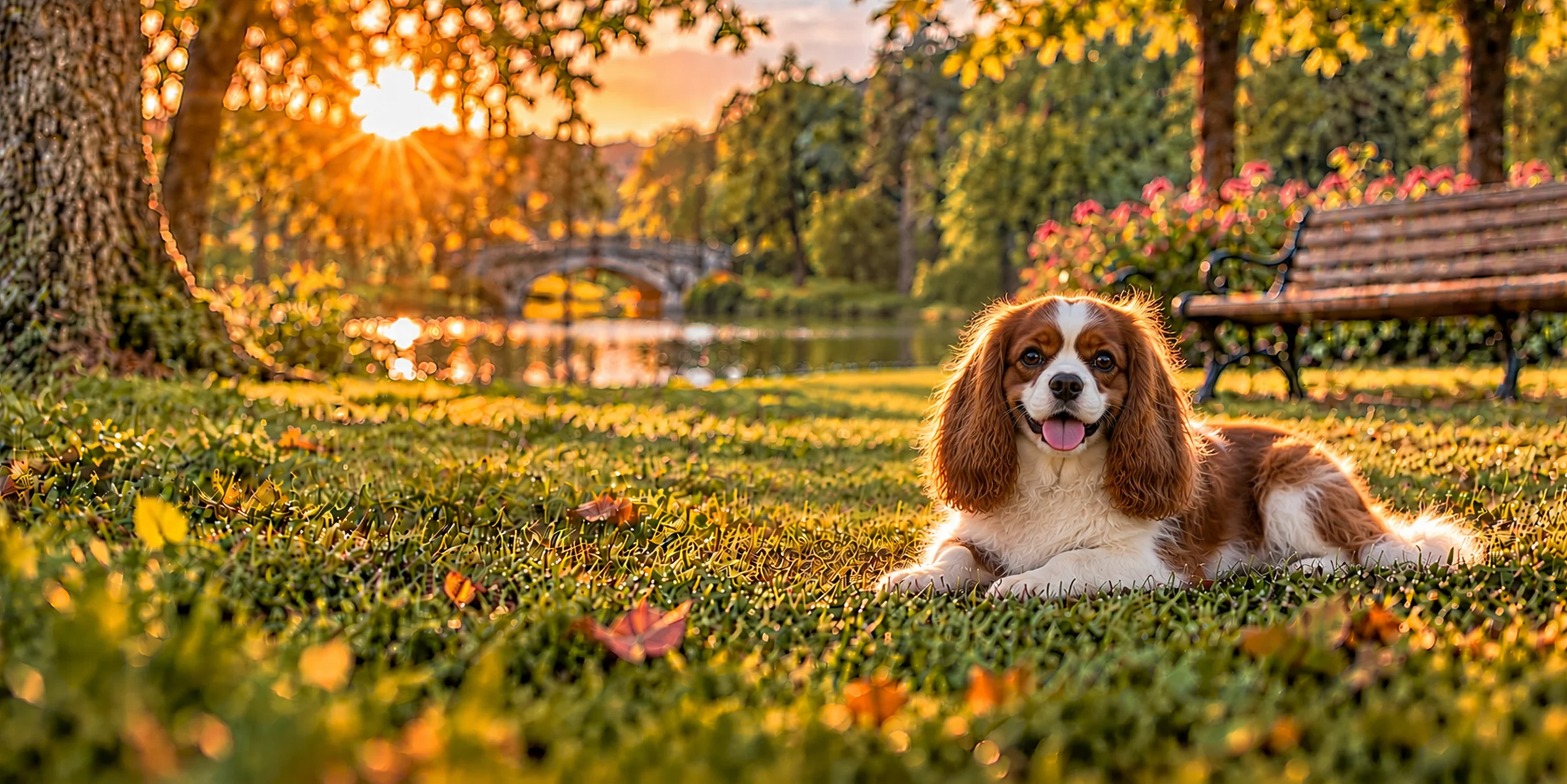
Cavalier King Charles Spaniel
One parent, and the record to read before any other - the same sweetness a Cavachon is chosen for, with a measured lifespan, a written standard and the heart and syringomyelia risks laid out at full strength rather than at unknown odds.
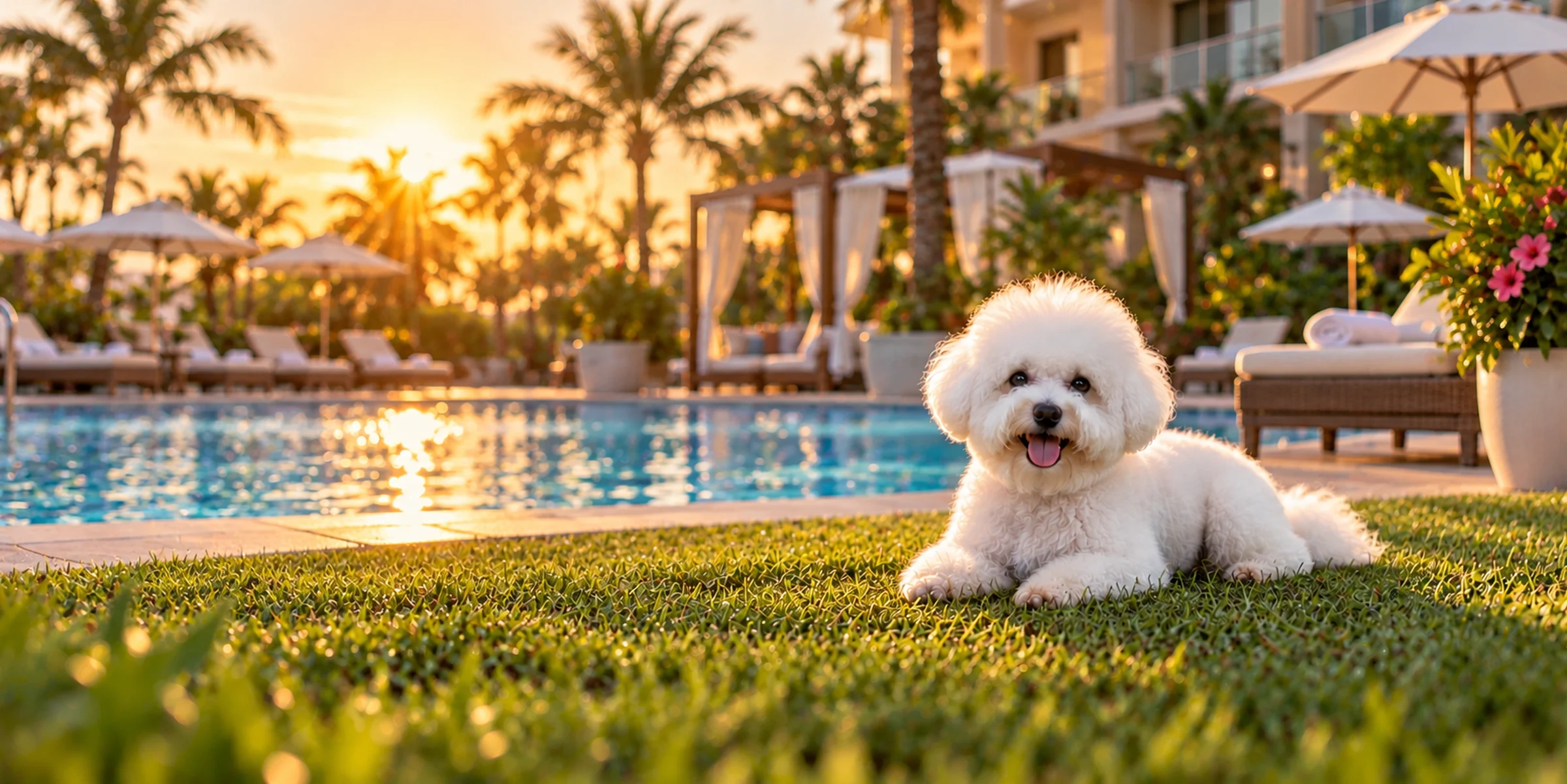
Bichon Frise
The other parent, and the more predictable dog of the two - a known adult size, a coat that reliably drops nothing, and the skin and bladder problems the cross may inherit set out with a century of breed evidence behind them.

Cavapoo
The other Cavalier cross on this site, and the closer comparison in temperament than either parent. The Poodle side brings more brain and more drive to the mix; the Bichon side brings a sillier, softer dog with a heavier allergy risk attached.

Maltipoo
A similar small, low-shedding, deeply attached companion cross with no Cavalier heart or spinal risk in the background - at the cost of a sharper, more reactive dog who barks considerably more.