

small breed
Bichon Frise
The standard gives one size for both sexes. White is the only color for an adult, though puppies may carry cream, apricot or buff shadings that fade. The rounded powder-puff outline is a trim - the natural coat is a soft undercoat under a coarse curly outer one, and the shape comes entirely from scissoring. Source: AKC breed standard.
A small white companion dog bred for nothing but being good company, and very good at it - cheerful, playful, sociable with everyone including other dogs, and about as affectionate as a dog gets. Bichons fit an apartment, shed essentially nothing and live into their mid teens. The two costs are real: a coat that mats within days without daily attention, and a dog who was made to be with people and cannot cope alone.

Pup Height
9.5-11.5 in

Pup Weight
12-18 lb

Pup Lifespan
14-15 years
Your pup, at a glance
What’s Life With This Pup Really Like?

The joint highest here. They were bred for laps and have no other ambitions - affectionate with everyone, and happiest pressed against someone.

Very good. Playful, tolerant and fond of children, with the usual caution that a twelve-pound dog is easily hurt by a toddler who has not been taught how to handle them.

Very good. Sociable with other dogs by default and no meaningful prey drive, which makes them one of the easier small breeds to add to a household that already has animals.

Fairly high. They announce arrivals enthusiastically and a bored or lonely Bichon barks considerably more - it is the main complaint from neighbors.

Moderate. Thirty to forty-five minutes covers them, and a good deal of it can be indoor play rather than a walk.

Effectively none, which is the whole appeal. The hair grows rather than drops - which is exactly why it needs cutting and combing instead of vacuuming.

One of the merriest dogs on this site. Bouncy, silly and endlessly game, and still playing like a puppy at ten.

None to speak of. A neat, dry-mouthed little dog.

Reasonable. Bright and food-motivated, soft enough that correction backfires, and genuinely slower to housetrain than most - which is a bladder-size problem more than an intelligence one.

Moderate at best. They will announce a visitor and then demand to be introduced to them. The noise is the whole contribution.

Among the highest here, and the real cost of the breed. Daily brushing to the skin plus a professional scissor every four to six weeks, for a life that runs to fifteen years.

High. Apartment or house, city or country, new routines - they settle quickly. The one thing they do not adapt to is being left alone all day.
Lifestyle fit
Could This Be Your Best Breed?
Bichons suit an apartment, a household with someone home much of the day, and an owner who treats the groomer as a fixed monthly bill - $700 to $1,300 a year of the $1,700 to $2,800 all-in, across fourteen or fifteen years. If $700 to $1,300 a year of grooming is not in the budget, stop here - and stop here as well if the house is empty all day, because no small white coat looks after itself.

Living Space
An apartment suits them as well as anything does - Bichons are small, shed nothing and need no yard. The two things to plan for are the barking, which shared walls make everyone's business, and the fact that they do badly on their own.

Pup Experience
Good for a first-time owner, with one condition: the grooming is not optional and it is not cheap. They are cheerful, sociable and easy to live with, and the two things that catch people out are a coat that mats within days and a dog who genuinely cannot cope with long days alone.

Daily Pup Time
Thirty to forty-five minutes of walking and play, plus daily brushing that actually reaches the skin and a professional groom every four to six weeks.

Allergies & Coat
The Bichon Frise scores 1/10 for shedding and 1/10 for drooling. No dog is truly hypoallergenic. The allergens come from dander and saliva, and a coat like this one holds on to them rather than spreading them around your home - which is what a groomer is clearing out every six to eight weeks.
Quirks & challenges
The Not-So-Easy Stuff

Groomer Every Four Weeks
The powder-puff shape is entirely scissored and grows out fast. This is a permanent line in the budget for a dog who lives fifteen years.
Mats Form in Days
A soft undercoat under a curly one felts near the skin. Brushing the surface hides the problem rather than solving it - it has to go to the roots.
Allergies Are the Norm
Itching, chewed paws and recurring ear trouble are common enough here to expect rather than to hope against.
Bladder Stones Recur
The breed forms them more than most, and they tend to come back. Sudden straining or blood in the urine is a same-day vet visit.
Hates Being Left Alone
Bred purely for company and never adapted out of it. A household out for ten hours a day is the wrong home for this breed.
Housetraining Takes Longer
A small bladder and a well-earned reputation for being slow to get the idea. Routine and patience work; frustration does not.
The good, the bad & the hairy
Health, Care & Costs
Understanding the health risks and ongoing costs of a Bichon Frise helps you plan for a happy, healthy life together.

Life expectancy 14-15 years - the figure published by the AKC, and the one this record follows
American Kennel Club, Bichon Frise breed page. A breed-club supplied figure rather than a study (2026)
Median survival 12.5 years (95% CI 12.3-12.7, n=5,902) for the Bichon Frise - level with the all-breed median of 12.5 years. Recorded as contrary evidence. The site publishes the AKC figure above; this is what the largest survival study of UK dogs found, and it is kept here so the disagreement is on the record rather than rediscovered in a later audit.
14-15 years
$70-$110
per groom (bath, full scissor and ears), every 4-6 weeks ($700-$1,300/year)
$1,700-$2,800/year
all-in (food, routine vet, grooming, insurance, incidentals)

Health Risks
Conditions this breed is prone to.

The commonest thing that goes wrong in this breed by a distance. Environmental allergies produce itching, chewed paws, hot spots and repeat ear infections, usually starting young. It is managed rather than cured, and the medication, diet and vet visits recur for life.
The breed forms calcium oxalate stones far more often than most, and they recur. Surgery to remove them runs into the low thousands, and prevention afterward means a prescription diet and monitoring rather than a one-off fix. Straining, frequent squatting or blood in the urine is urgent.
The kneecap slips out of its groove, producing a skipping step or a leg held up for a stride or two. Mild cases are managed; severe ones need surgery. Common across small breeds and worth a vet checking at the puppy visit.
The lens clouds and vision goes with it, and this breed sees them earlier than most. Surgery restores sight in most cases but runs into thousands per eye, and breeding stock should carry a current eye certificate.
A small mouth with crowded teeth, which traps food and builds tartar quickly. Left alone it means extractions under anesthetic in middle age. Daily brushing is the single highest-value habit for a dog this size.
The blood supply to the head of the femur fails and the bone dies back, causing a painful hind leg in a young dog. Surgery is usually the answer, and it shows up in the first year rather than later.

Insurance & Health Coverage
A long-lived breed with no catastrophic inherited condition, and a set of chronic ones that add up over fifteen years.

Skin is the line that matters most and the one that decides the timing. Allergic disease usually starts young, recurs for life, and is the textbook condition an insurer writes into an exclusion the moment it appears in the notes - which on this breed is often before the first birthday. Cover arranged while the skin is clear is worth considerably more here than the premium difference suggests.

Bladder stones are the recurring surgical cost, in the low thousands each time and prone to coming back. Cataract surgery is thousands per eye. And the grooming is the honest number nobody quotes: at four to six weekly for fifteen years it is one of the largest lifetime costs on this site, and no policy covers it.
 Get a Pet Insurance Quote
Care needs
The Daily Routine

Grooming
Brush daily with a slicker and follow with a comb to prove you reached the skin - the curly outer coat mats against the soft undercoat, and a surface brush leaves it forming underneath. A professional groom every four to six weeks for the scissored outline. Ears cleaned weekly, eyes wiped daily to keep tear staining off a white face, and teeth brushed daily.

Exercise
Thirty to forty-five minutes daily, split between a walk and indoor play. They are lively rather than athletic and are easily satisfied - much of it can happen in a living room, which is part of why they suit city life so well.

Food & Weight
Measure the meals; at twelve to eighteen pounds a few extra treats show quickly and weight sits badly on knees prone to slipping. If bladder stones have ever been found, diet becomes part of the treatment and should be set with a vet rather than guessed at.
Similar breeds
If This Isn’t Quite the One
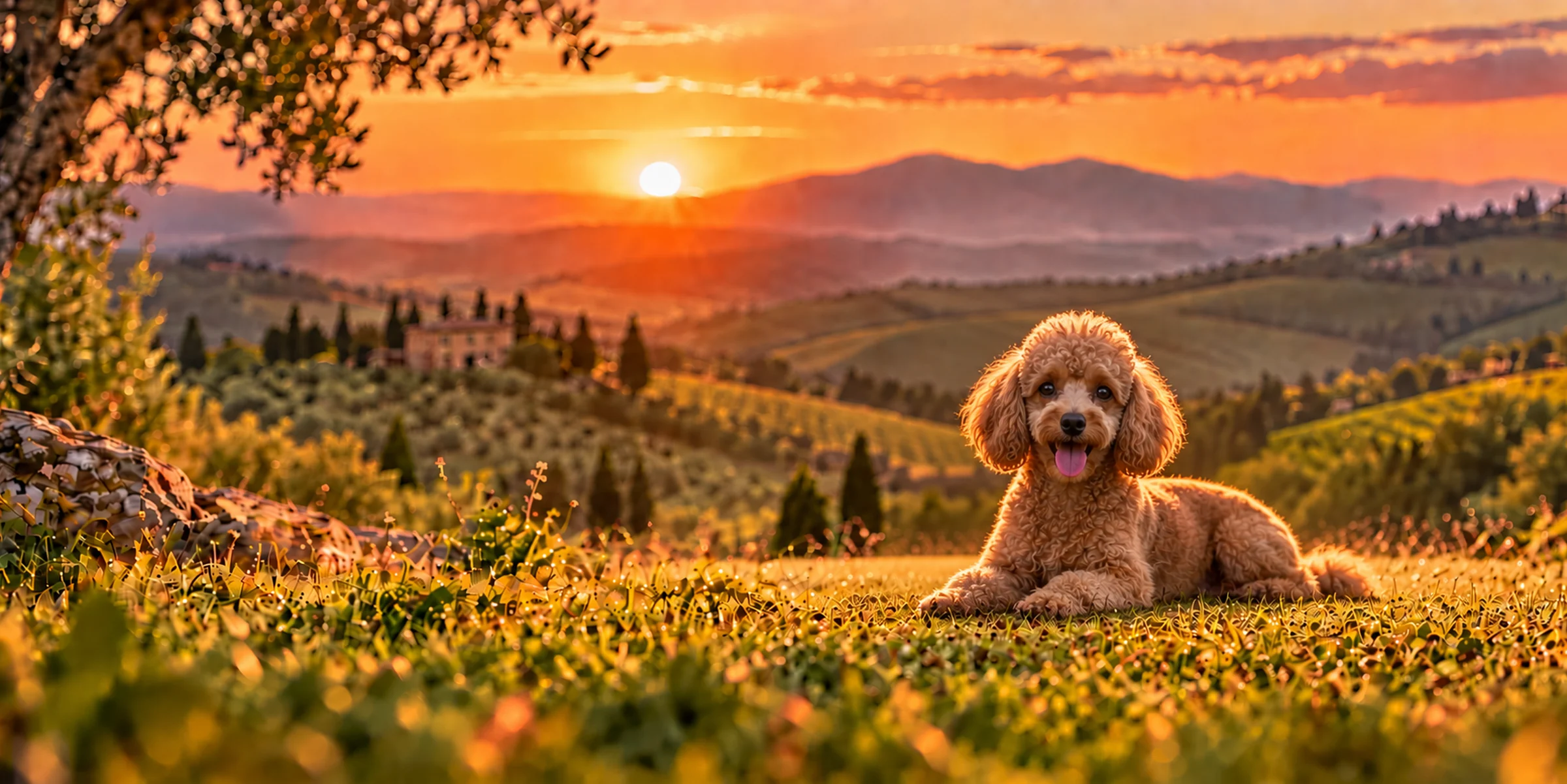
Miniature Poodle
The closest match on this site - the same non-shedding curly coat, the same four-to-six-week clipping schedule, the same sociability. The Poodle is markedly more trainable and more energetic; the Bichon is the softer, sillier, more purely companionable of the two.
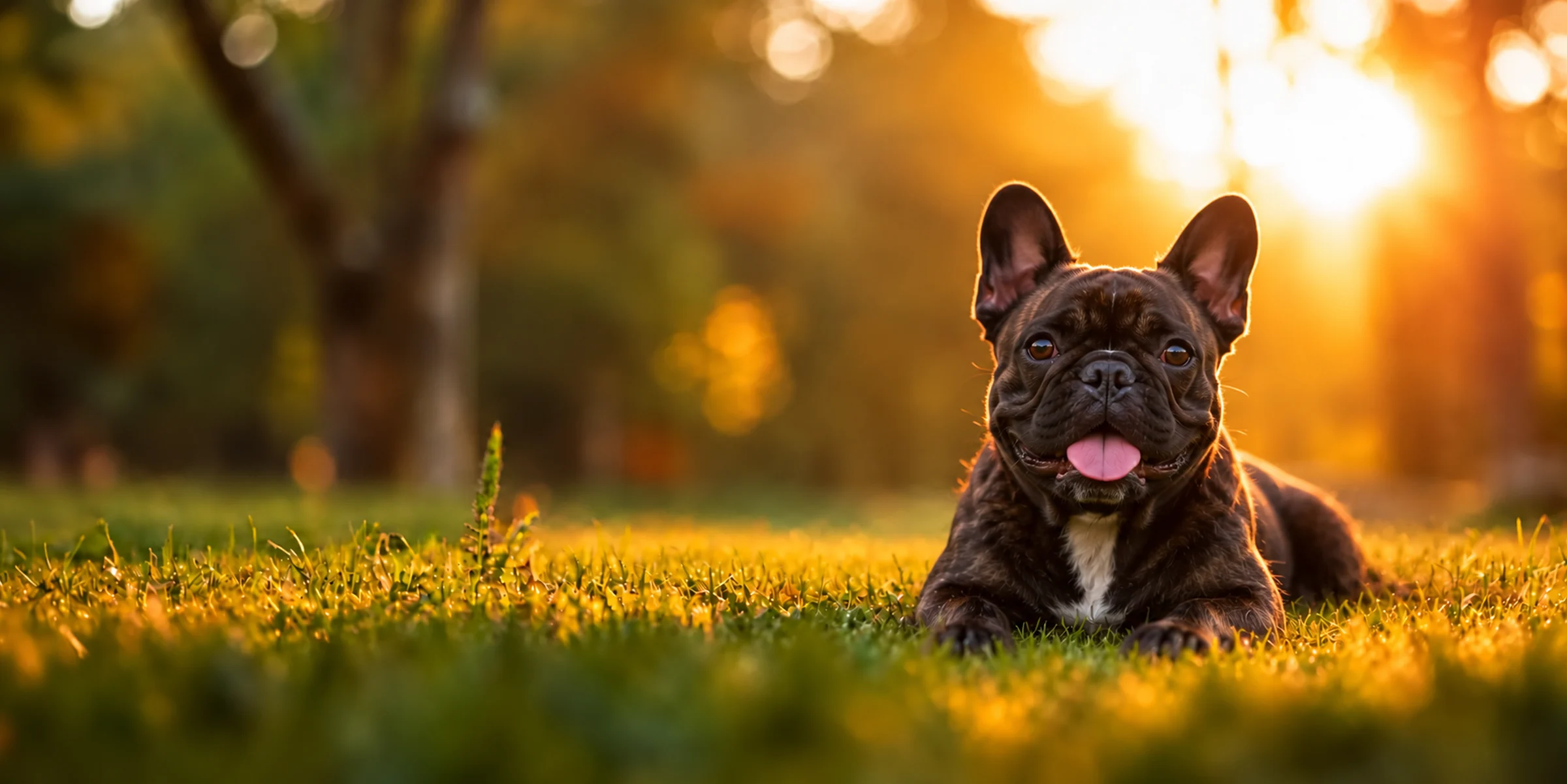
French Bulldog
If the appeal is a small affectionate companion for an apartment but the grooming bill is not, a Frenchie needs almost none of it - at the cost of breathing, heat tolerance and a considerably shorter life.
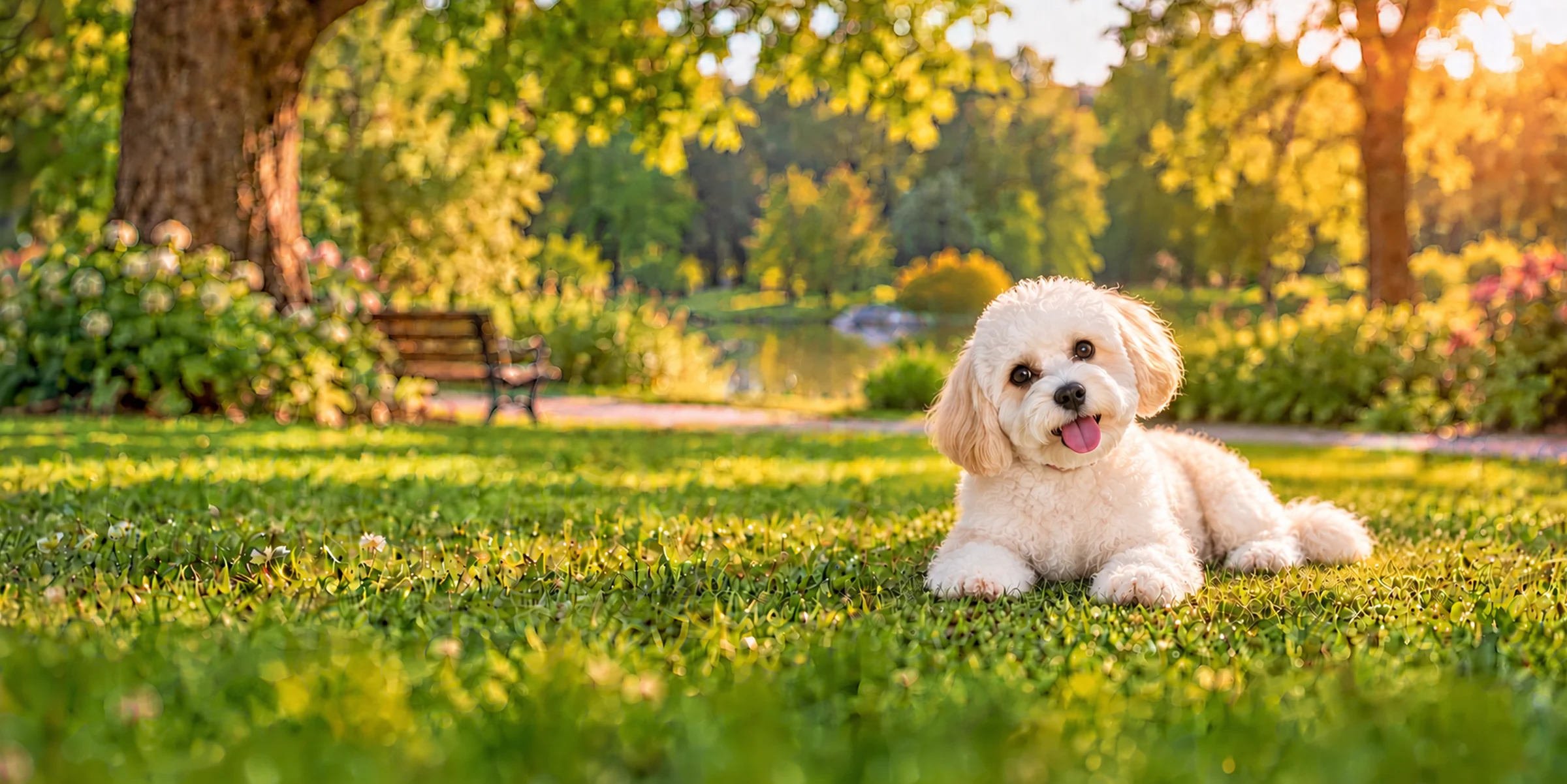
Cavachon
The Cavalier cross, and a softer, slightly sturdier dog than either parent alone. The Bichon skin and the Cavalier heart both come along, on different timetables, and neither is settled by the crossing.
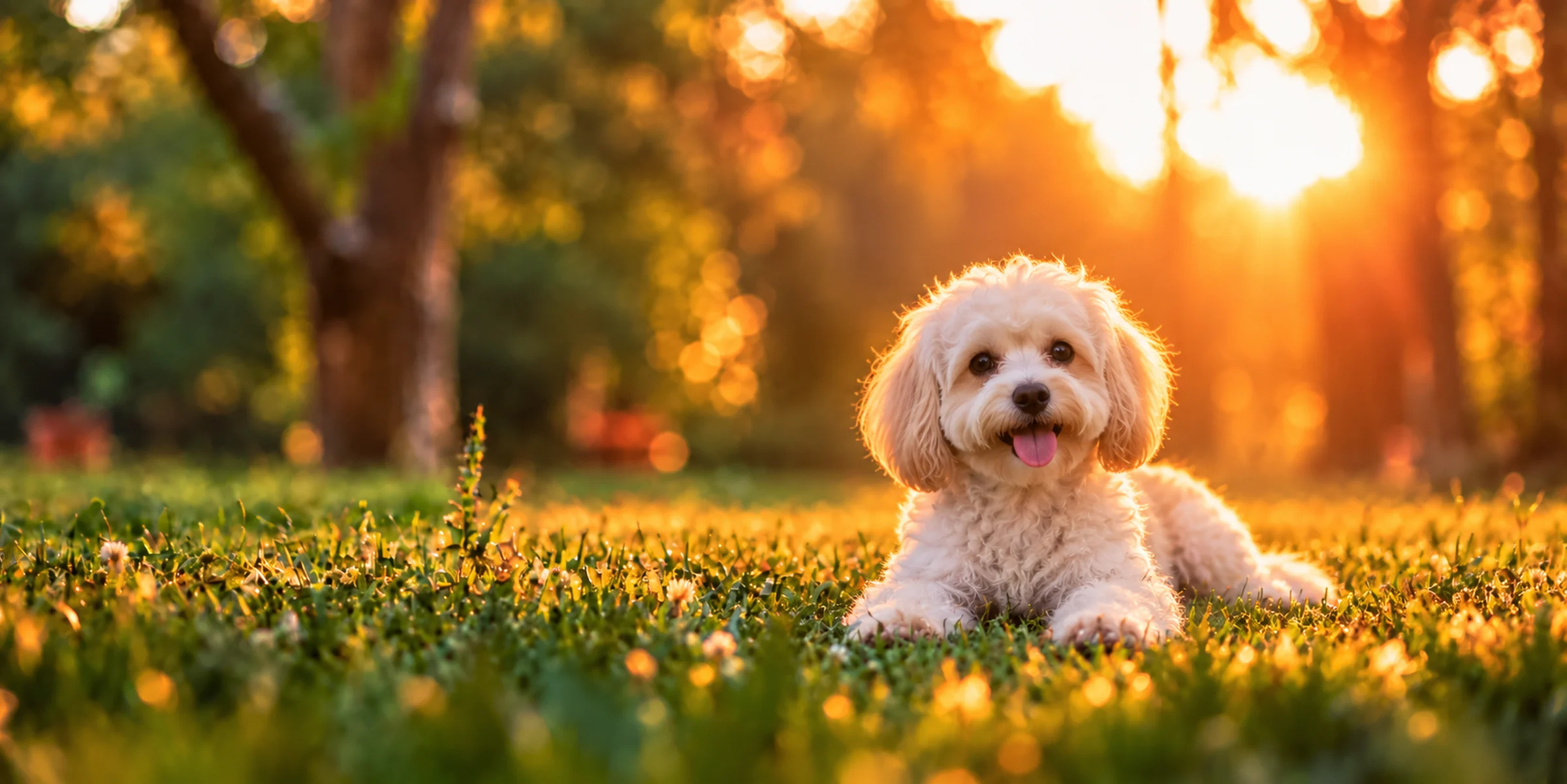
Maltipoo
A comparable small white companion from a different pairing - Maltese to Toy Poodle. Much the same grooming bill and the same devotion, with toy-breed dental disease in place of the Bichon's skin.