

medium-to-large breed
Chesapeake Bay Retriever
America's own retriever, bred on the Chesapeake to break ice and bring back a hundred ducks in a day. Chessies are tough, powerful and serious, devoted to their own family and watchful about strangers. The mismatch that catches people is the word retriever: this is not a Labrador's temperament, and the job needs ninety minutes to two hours of hard exercise daily, ideally swimming or retrieving, for a decade or more.

Pup Height
21-26 in

Pup Weight
55-80 lb
Males 23-26 in and 65-80 lb, females 21-24 in and 55-70 lb. The coat is the breed's signature - short, harsh, oily and wavy over a dense woolly undercoat, engineered to shed icy water. Colors run brown, sedge and deadgrass, all meant to disappear against marsh cover. The eyes are yellow or amber. Source: AKC breed standard.

Pup Lifespan
10-13 years
Your pup, at a glance
What’s Life With This Pup Really Like?

Affectionate with their own family but not effusive about it. A Chessie is a companionable dog who leans and follows rather than one who climbs into laps.

Good with their own family's children, especially raised with them. A Chessie's size, strength and protective streak mean supervision matters more than with a Golden.

Mixed. Dominance with other dogs is common, particularly between males, and the prey drive is real. Manageable with early socialization rather than automatic.

Low to moderate. They are not noisy, though they will alert seriously when something warrants it.

Very high. Two hours of hard work daily, and they are one of the breeds most often surrendered for being exactly as energetic as advertised.

Heavy. A dense oily double coat that sheds year-round and blows out substantially twice a year.

Enthusiastic and physical, especially in water. They will retrieve until you stop, and then look at you about it.

Low. A reasonably dry mouth.

Good but on their own terms. Highly capable in the field and considerably more independent-minded than the other retrievers.

Strong, and unique among retrievers. Chessies guarded boats and game for market hunters and still take property seriously.

Low. A weekly brush and minimal bathing - the oil in the coat is doing a job and should be left alone.

Low to moderate. They tolerate cold and water superbly and adapt poorly to apartments, heat and households that cannot supply two hours a day.
Lifestyle fit
Could This Be Your Best Breed?
A Chesapeake Bay Retriever wants a house with a yard, water within reach, and an owner who has handled a working dog before and stays consistent. Running costs are $1,700 to $2,800 a year, the coat needs only a weekly brush, and ten to thirteen years is typical. Anyone who wants retriever softness in an apartment, with strangers through the door all day, should read the Golden Retriever page instead.

Living Space
A house with a yard, and ideally water within reach. Chessies are hard-working gundogs with the stamina to match, and an apartment with two short walks makes them miserable and destructive.

Pup Experience
Not a beginner's retriever. Chessies are more independent, more protective and considerably more strong-willed than a Labrador or a Golden, and they will test an owner who is inconsistent. Experience with working dogs helps a great deal.

Daily Pup Time
Ninety minutes to two hours of hard exercise daily, with swimming and retrieving preferred. The coat needs only a weekly brush - the time goes into the work.

Allergies & Coat
The Chesapeake Bay Retriever scores 7/10 for shedding and 3/10 for drooling. No dog is truly hypoallergenic. The allergens come from dander and saliva, and a dog that sheds this much will leave plenty of hair behind - especially on your furniture, floors, and clothes.
Quirks & challenges
The Not-So-Easy Stuff

Not a Labrador
More independent, more protective, more strong-willed. People who choose a Chessie expecting an easy retriever are the ones who struggle.
Serious Exercise Needs
Two hours of real work daily. Under-exercised they become destructive, and they are powerful enough to make that expensive.
They Guard
Protective of family, property and possessions. Early socialization decides whether that stays proportionate.
Same-Sex Dog Issues
Dominance with other dogs, particularly male to male. Introductions need managing rather than assuming.
The Coat Is Oily
Waterproofing means a distinct smell and an oil residue. Over-bathing strips it and ruins the function.
Slow to Mature
Two to three years of adolescence in a seventy-pound frame, testing which rules are actually rules.
The good, the bad & the hairy
Health, Care & Costs
Understanding the health risks and ongoing costs of a Chesapeake Bay Retriever helps you plan for a happy, healthy life together.

10-13 years
$50-$75
per groom (bath, nails, ears), every 10-12 weeks or done at home ($0-$300/year)
$1,700-$2,800/year
all-in (food, routine vet, grooming, insurance, incidentals)

Health Risks
Conditions this breed is prone to.

The joints develop loosely or unevenly, wearing into arthritis and sometimes needing surgery. Common across large sporting breeds and made worse by a working life. Both parents should have scored hips and elbows.
The retina degenerates gradually until the dog is blind, usually beginning with night vision. There is no treatment but there is a DNA test, so it is entirely avoidable through tested parents.
A genetic condition where the dog's hind legs weaken and give way after intense exercise, then recover after rest. It affects retrievers particularly, is DNA testable, and matters a great deal in a breed asked to work this hard.
A progressive spinal cord disease that causes painless but irreversible weakness in the hind legs, usually in older dogs. DNA testable in both parents.
An inherited clotting disorder that causes excessive bleeding after injury or surgery. It is DNA testable and worth knowing before any procedure - tell your vet.
The stomach fills with gas and twists, cutting off circulation, and it kills within hours without emergency surgery. Deep-chested and worth planning around: split meals and keep hard exercise clear of them.

Insurance & Health Coverage
Two categories of claim on this breed, and the working ones come first. A powerful dog swimming in cold water and running rough ground tears cruciate ligaments, cuts pads and picks up ear infections, and a cruciate repair runs into the thousands. Accident cover earns its keep here more than in most breeds.

On the illness side, hip and elbow dysplasia are the expensive ones, and joint surgery on a seventy-pound dog is not cheap. Bloat is the emergency to have a plan for rather than a policy alone.

Several of the serious conditions - progressive retinal atrophy, exercise-induced collapse, von Willebrand disease and degenerative myelopathy - are congenital and no policy covers any of them. All four are DNA testable, so the breeder's paperwork settles them before you bring one home. Ask for it.
 Get a Pet Insurance Quote
Care needs
The Daily Routine

Grooming
A weekly brush and very little else. The coat's oil is the waterproofing, so bathe them only when they genuinely need it - frequent shampooing strips the function and leaves them cold in the water. Ears want checking and drying after every swim, and the seasonal shed is heavy.

Exercise
Ninety minutes to two hours daily of real work. Swimming and retrieving are what they were built for; hiking, dock diving and field work all suit them. Walking around the block does not begin to cover it.

Food & Weight
Two measured meals with hard exercise kept clear of them given the bloat risk. A working Chessie burns a great deal and a suburban one burns far less than their appetite suggests, so feed the dog in front of you rather than the breed average.
Similar breeds
If This Isn’t Quite the One

Boykin Spaniel
Another American water dog bred for wetland work, in a considerably smaller and more biddable package. The Boykin is easier to live with; the Chessie is tougher, more independent and built for far colder water.
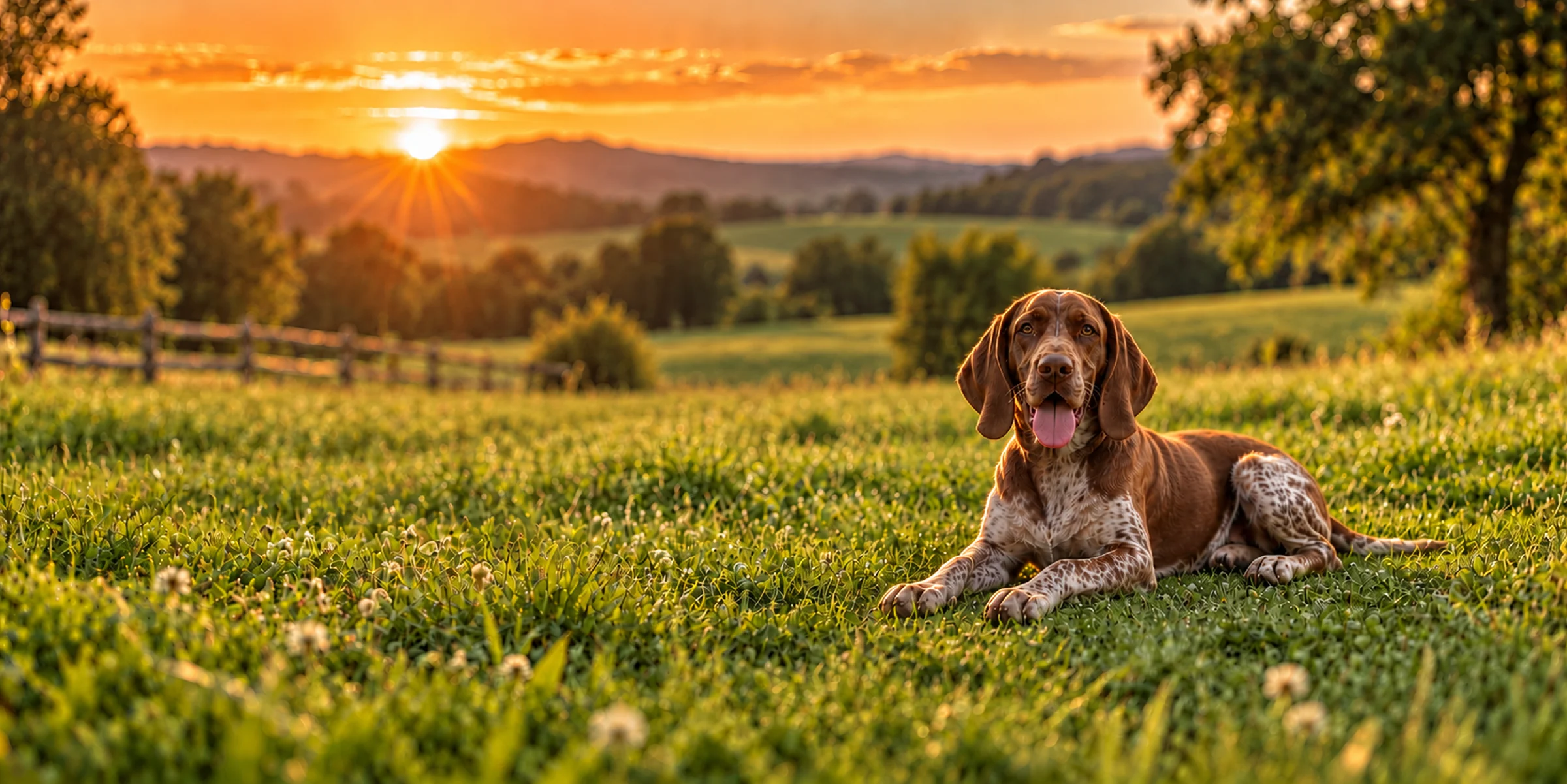
Bracco Italiano
A large working gundog with a similarly independent, thoughtful approach to a task rather than a retriever's eagerness. Both need real work and both suit an owner who wants a partner rather than a pupil.