

medium-to-large breed
Clumber Spaniel
The heaviest of the spaniels by a wide margin - long, low and rectangular rather than the compact build of a Springer or Cocker, with a massive head and a deep chest on short legs. The coat is white with lemon or orange markings, which was the point: a pale dog was easy to see in dense cover. One of the AKC's original nine breeds, registered in 1878, and rare today. Source: AKC breed standard.
A gundog built for walking rather than running, and by some distance the calmest spaniel there is - slow, deliberate, enormously affectionate and famously mellow indoors. The Clumber also drools, sheds and eats with real commitment, and a long back on a heavy frame means stairs and sofa jumps need managing. Rare enough that a waiting list is normal, and ten to twelve years is a short run for a dog this easy to love.

Pup Height
17-20 in

Pup Weight
55-85 lb

Pup Lifespan
10-12 years
Your pup, at a glance
What’s Life With This Pup Really Like?

Very high. A Clumber is a leaner and a lap-claimer despite the weight, and they want to be in physical contact with their people most of the time.

Very good. Gentle, patient, slow to react and sturdy enough for family life - one of the more reliable sporting breeds around children.

Very good. Sociable with other dogs and generally fine with cats, with no territorial streak to manage.

Low. A quiet dog who rarely speaks without reason.

Low to moderate. An hour of walking suits them and they are genuinely calm indoors afterward.

Heavy. A dense coat that sheds year-round, and white hair shows on everything.

Gentle and unhurried. They enjoy a retrieve and a scent game and have no interest at all in frantic play.

High. Heavy flews mean real drool, worst around food and water.

Good. Willing and highly food-motivated, though they think things over first - slow is not the same as difficult.

Low. They may announce a visitor and will then greet them warmly. Not a guarding breed.

Moderate to high. Brushing several times a week, plus daily face and ear care that is the part most owners underestimate.

Moderate. Their low energy suits most homes; heat, stairs and a household that cannot tolerate hair and drool suit them badly.
Lifestyle fit
Could This Be Your Best Breed?
A Clumber Spaniel suits a house or a ground-floor apartment, somewhere cool, and a first-time owner who wants a calm dog and is honest about the mess. Forty-five minutes to an hour of walking does it, plus daily face and eye wiping, at $1,800 to $3,000 a year. Skip this one if the summers are hot, the house is kept immaculate, or the counters are where food lives.

Living Space
A house or a ground-floor apartment. Their needs are modest, but stairs are worth planning around on a long-backed dog, and a Clumber is happier somewhere cool - the coat and the build both work against them in heat.

Pup Experience
Good for a first-time owner who wants a calm dog and is honest about the mess. They are easygoing and willing; the drool, the shedding and the food obsession are the parts people are not ready for.

Daily Pup Time
Forty-five minutes to an hour of steady walking with some sniffing in it. Grooming is a couple of proper sessions a week, plus wiping the face and eyes daily.

Allergies & Coat
The Clumber Spaniel scores 7/10 for shedding and 7/10 for drooling. No dog is truly hypoallergenic. The allergens come from dander and saliva, and a dog that sheds and drools this much will leave plenty of both behind - especially on your furniture, floors, and clothes.
Quirks & challenges
The Not-So-Easy Stuff

They Drool
Heavy flews mean real drool, particularly around food and water. Cloths in every room is the normal arrangement.
Serious Shedding
A dense white coat that sheds year-round onto everything dark. Brushing reduces it; nothing stops it.
Food Obsession
They will eat what they find and what they can reach. Weight gain is the default outcome without measured meals.
Entropion and Ectropion
Loose lids roll in or droop out, both irritating the eye. Common enough to expect rather than hope against.
Long Back, Short Legs
Repeated stairs and sofa jumps ask more of a Clumber's spine than a square dog's. Ramps are worth it.
They Overheat
Heavy coat, heavy body, low clearance. Summer walks belong in the cool parts of the day.
The good, the bad & the hairy
Health, Care & Costs
Understanding the health risks and ongoing costs of a Clumber Spaniel helps you plan for a happy, healthy life together.

10-12 years
$65-$95
per groom (bath, feathering trim, ears, nails), every 6-8 weeks ($450-$800/year)
$1,800-$3,000/year
all-in (food, routine vet, grooming, insurance, incidentals)

Health Risks
Conditions this breed is prone to.

The hip joint develops loosely so the ball grinds in the socket instead of gliding, leading to arthritis and sometimes surgery. Rates in this breed are among the highest of any registered with the AKC, and the heavy body on short legs makes it worse. Both parents should have scored hips, and ask for the numbers rather than a reassurance.
The eyelids roll inward so lashes scrape the cornea, or droop outward exposing the inner lid to dirt and drying. Both are common in this breed because of the loose facial skin, both cause chronic irritation, and both are corrected surgically.
The discs between the vertebrae bulge or rupture and press on the spinal cord, causing pain and sometimes sudden hind-leg paralysis. A long back carrying a heavy body is built for it. Keeping them lean and limiting repeated jumping does most of the prevention.
Worth listing as a health condition rather than a habit. They are exceptionally food-driven with modest exercise needs, and every extra pound feeds directly into the hip and back problems above.
Long heavy ears trap warmth and moisture against the canal, so infection is frequent and becomes chronic if it is ignored. Weekly checking and drying is the whole prevention.
A genetic condition where the hind legs weaken and give way after intense exercise, with recovery after rest. It affects retrievers and spaniels, and there is a DNA test so both parents' status can be known.

Insurance & Health Coverage
Hips are the reason to insure this breed, and the reason to do it early. Dysplasia rates here are among the worst in the AKC, a replacement or corrective surgery runs into the thousands, and the first note of a limp or a stiff rise on a vet record turns hips into a permanent exclusion.

Eye surgery is the other likely bill. Entropion and ectropion are common enough to plan for rather than hope against, and they usually appear in the first two years.

Underneath both sits the ear and skin maintenance, which never produces a large claim but never stops either. Read the hereditary-condition wording carefully - a breed with documented high rates of a specific problem is exactly where insurers write the tightest exclusions.
 Get a Pet Insurance Quote
Care needs
The Daily Routine

Grooming
A dense straight coat with feathering on the legs, chest and ears that needs a thorough brush two or three times a week to stay clear of mats. The daily work is the face: wipe the flews and the folds, check the eyes for redness or a visible lid margin, and clean and dry the ears. Feet and hocks are usually tidied every couple of months.

Exercise
Forty-five minutes to an hour of steady walking daily, with scent games and gentle retrieving to occupy the gundog brain. They are built for a walking pace rather than a run, and long high-impact work is bad for both the hips and the back.

Food & Weight
Measured meals and honest treat accounting, with the bin secured. They are one of the most food-driven breeds on this site and one of the least able to carry extra weight - the ribs should be easy to feel, and if they are not, the hips and spine are already paying for it.
Similar breeds
If This Isn’t Quite the One

Basset Hound
The closest match on build and manner - long, low, heavy, deliberate and food-obsessed, with the same back and ear considerations. The Basset is a scent hound with a hound's recall problem; the Clumber is far more biddable.

Boykin Spaniel
A working spaniel of similar size with a completely different tempo. The Boykin is fast, athletic and needs real exercise; the Clumber gives you the spaniel affection and nose in a dog content with an hour's walk.
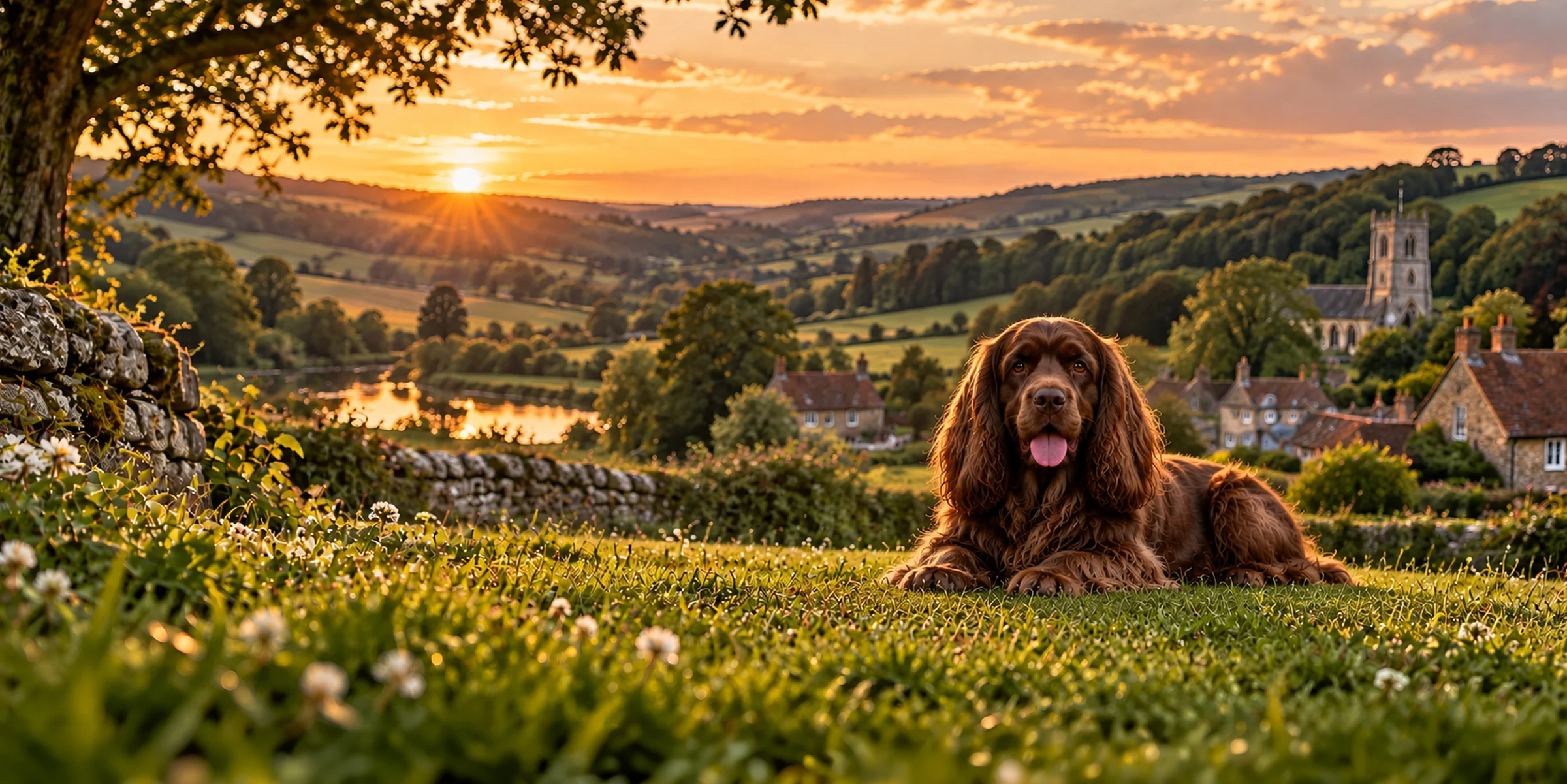
Sussex Spaniel
The other slow, heavy, low-built spaniel, and the rarer of the two. Sussex are smaller at 35-45 lb, drool far less, and give tongue on a scent - the only spaniel that does.