

large breed
Curly-Coated Retriever
The oldest of the retrievers and the least common, bred in England to work heavy cover and cold water for wildfowlers. Curly-Coated Retrievers are athletic, intelligent and self-possessed - affectionate at home, politely uninterested in strangers. The coat of tight curls is almost no work, which is unusual for something this distinctive. The exercise is what people underestimate: up to two hours of hard work daily, for ten to twelve years.

Pup Height
23-27 in
Males 25-27 in, females 23-25 in. The coat is unmistakable and unlike any other retriever - a mass of small, tight, crisp curls covering the body, with short smooth hair on the face and the front of the legs. Black or liver only. Curly-Coated Retrievers are the tallest of the retrievers and one of the oldest, shown in England from the 1860s. Source: AKC breed standard.

Pup Weight
60-95 lb

Pup Lifespan
10-12 years
Your pup, at a glance
What’s Life With This Pup Really Like?

Affectionate with their own family without being demonstrative about it. A Curly is a companionable dog who settles nearby rather than a leaner or a lap-seeker.

Very good with their own family's children, particularly raised with them. Sturdy and patient, though a Curly's size and bounce warrant supervision with toddlers.

Good. Sociable with dogs and generally fine with cats raised alongside them, with a moderate prey drive that suits early socialization.

Low. A quiet dog who alerts seriously when something warrants it and otherwise says very little.

High. Two hours of real work daily, and they are one of the retrievers most often surrendered for being exactly as energetic as advertised.

Low to moderate. The curls trap loose hair rather than dropping it, with a heavier seasonal shed.

Athletic and enthusiastic, especially in water. They retrieve and swim tirelessly and have a puppyish streak that lasts for years.

Very low.

Good but independent. Highly capable in the field and quick to switch off under repetition - short and varied gets far more than drilling.

Strong for a retriever, and unusual in the group. They are watchful, reserved with arrivals and take the property seriously.

Very low. Wet and air-dry rather than brush, occasional trimming, and regular ear care after swimming.

Moderate to low. They handle cold and water superbly and adapt poorly to apartments, heat and households that cannot supply two hours a day.
Lifestyle fit
Could This Be Your Best Breed?
A Curly-Coated Retriever wants a house with a yard, water within reach, and an owner who reads independence as character rather than disobedience. Costs are moderate at $1,700 to $2,800 a year, with grooming a few minutes a week. Anyone who wants a retriever who is biddable at eighteen months and content with two short walks should read the Labrador Retriever page instead.

Living Space
A house with a yard and water within reach if possible. Curlies are serious working retrievers with the stamina to match, and an apartment with two short walks makes them restless and destructive.

Pup Experience
Not the beginner's retriever. They are more independent, more reserved with strangers and slower to mature than a Labrador or a Golden, and they need an owner who reads that as character rather than disobedience.

Daily Pup Time
Ninety minutes to two hours of hard exercise daily, ideally including swimming or retrieving. The coat is the easiest of any retriever - a few minutes a week.

Allergies & Coat
The Curly-Coated Retriever scores 4/10 for shedding and 2/10 for drooling. No dog is truly hypoallergenic. The allergens come from dander and saliva, and a dog that sheds this much will leave plenty of hair behind - especially on your furniture, floors, and clothes.
Quirks & challenges
The Not-So-Easy Stuff

Not a Labrador
More independent, more reserved, quicker to get bored. Owners expecting an easy retriever are the ones who struggle.
Serious Exercise Needs
Two hours daily including real work. Under-exercised they become destructive on a ninety-pound scale.
Reserved With Strangers
Aloofness is correct for the breed; fearfulness is not. Heavy early socialization decides which you get.
Bored by Repetition
Drilling the same exercise makes them switch off. Short, varied sessions or you lose them.
Slow to Mature
Two to three years of adolescence in a large, powerful frame. Consistency has to outlast it.
Rare and Hard to Find
One of the least common AKC breeds. Expect a waiting list and a breeder who screens you carefully.
The good, the bad & the hairy
Health, Care & Costs
Understanding the health risks and ongoing costs of a Curly-Coated Retriever helps you plan for a happy, healthy life together.

10-12 years
$50-$75
per groom (bath, nails, ears), every 10-12 weeks or done at home ($0-$300/year)
$1,700-$2,800/year
all-in (food, routine vet, grooming, insurance, incidentals)

Health Risks
Conditions this breed is prone to.

The joints develop loosely or unevenly and wear into arthritis, sometimes needing surgery - which on a ninety-pound dog sits at the upper end of orthopedic costs. Standard across large sporting breeds, and both parents should have scored hips and elbows.
A genetic condition in which the hind legs weaken and give way after intense exercise, with recovery after rest. It matters a great deal in a breed asked to work this hard, and there is a DNA test so both parents' status can be known.
The retina degenerates gradually until the dog is blind, usually beginning with night vision. No treatment, but a DNA test exists and tested parents remove the risk entirely.
A rare inherited metabolic disorder found specifically in this breed, in which puppies cannot process glycogen properly. It is fatal in affected puppies, and it is DNA testable - a responsible breeder will have tested and will tell you.
The stomach fills with gas and twists, cutting off its own circulation, and it kills within hours without emergency surgery. Deep-chested and at real risk - split meals and keep hard exercise clear of them.
Patchy hair loss affecting the curly coat, usually cosmetic rather than harmful but occasionally leaving skin exposed and prone to irritation. It appears in the breed and has no reliable treatment.

Insurance & Health Coverage
Accident cover is the piece that earns its keep, as with any hard-working retriever. A powerful dog swimming in cold water and running rough ground tears cruciate ligaments, cuts pads and picks up ear infections, and a cruciate repair runs into the thousands.

On the illness side, hip and elbow dysplasia are the expensive ones and joint surgery at ninety pounds is not cheap. Bloat is the emergency to have a plan for rather than a policy alone.

Three of the serious conditions here - progressive retinal atrophy, exercise-induced collapse and glycogen storage disease - are congenital, so no policy covers any of them. All three are DNA testable, and glycogen storage disease in particular is specific to this breed and fatal in affected puppies. Ask the breeder for the paperwork rather than a reassurance.
 Get a Pet Insurance Quote
Care needs
The Daily Routine

Grooming
The easiest coat of any retriever. Do not brush it - brushing pulls the curls apart and leaves a Curly frizzy. Wet the coat down and let it dry naturally to reset the curl, bathe occasionally, and trim the tail and ear feathering if it gets untidy. Ears want checking and drying after every swim, and the curls hide skin problems, so run your hands over them regularly.

Exercise
Ninety minutes to two hours daily of genuine work. Swimming and retrieving are what they were built for; hiking, dock diving and field work all suit. Walking around the block does not begin to cover it.

Food & Weight
Two measured meals with hard exercise kept well clear of them given the bloat risk. A working Curly burns a great deal and a suburban one burns far less than their enthusiasm suggests.
Similar breeds
If This Isn’t Quite the One
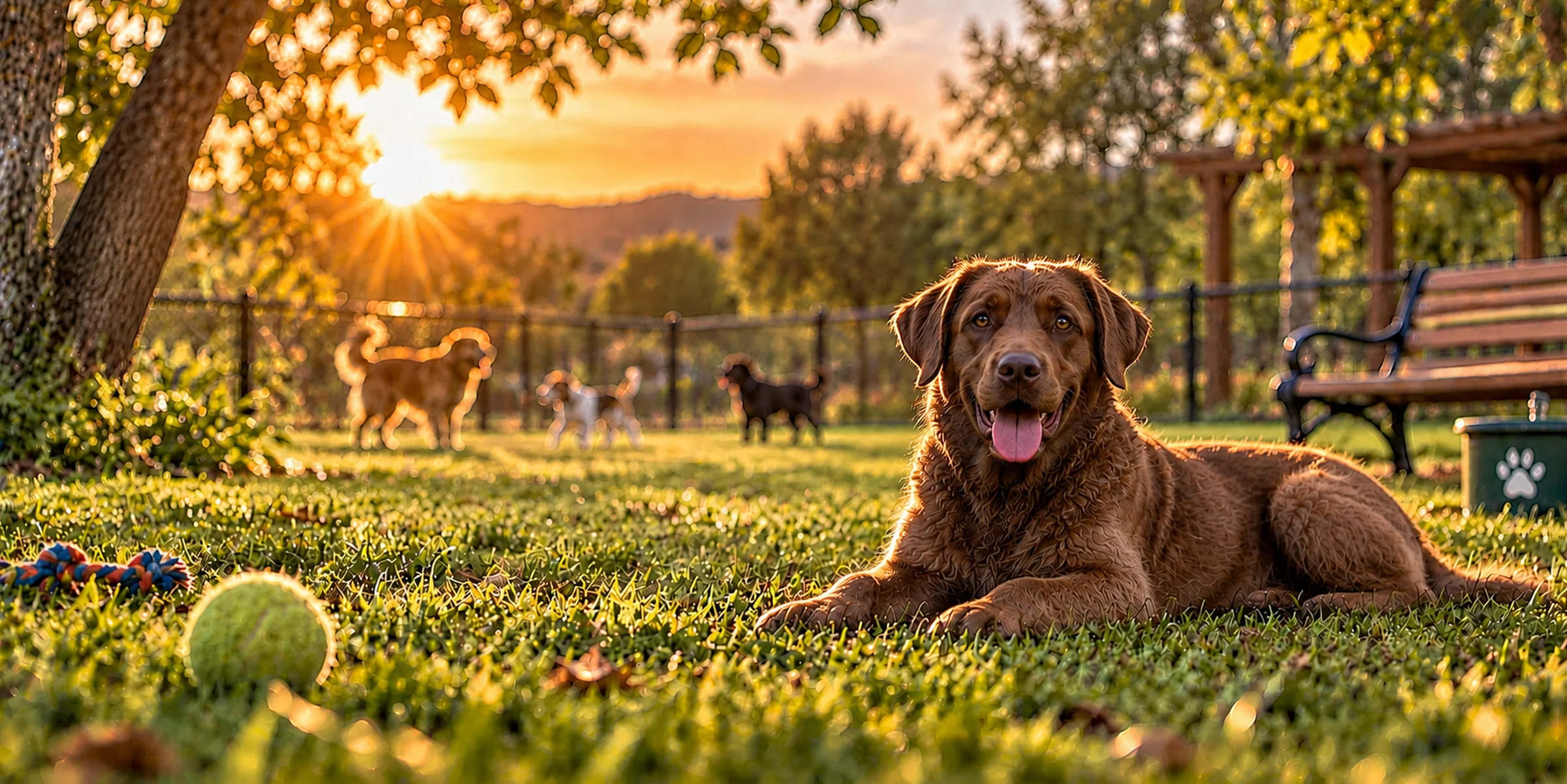
Chesapeake Bay Retriever
The closest temperament match among retrievers - both are independent, reserved with strangers and carry a guarding streak the others lack. The Chessie is tougher and built for colder water; the Curly is taller and a touch more athletic.
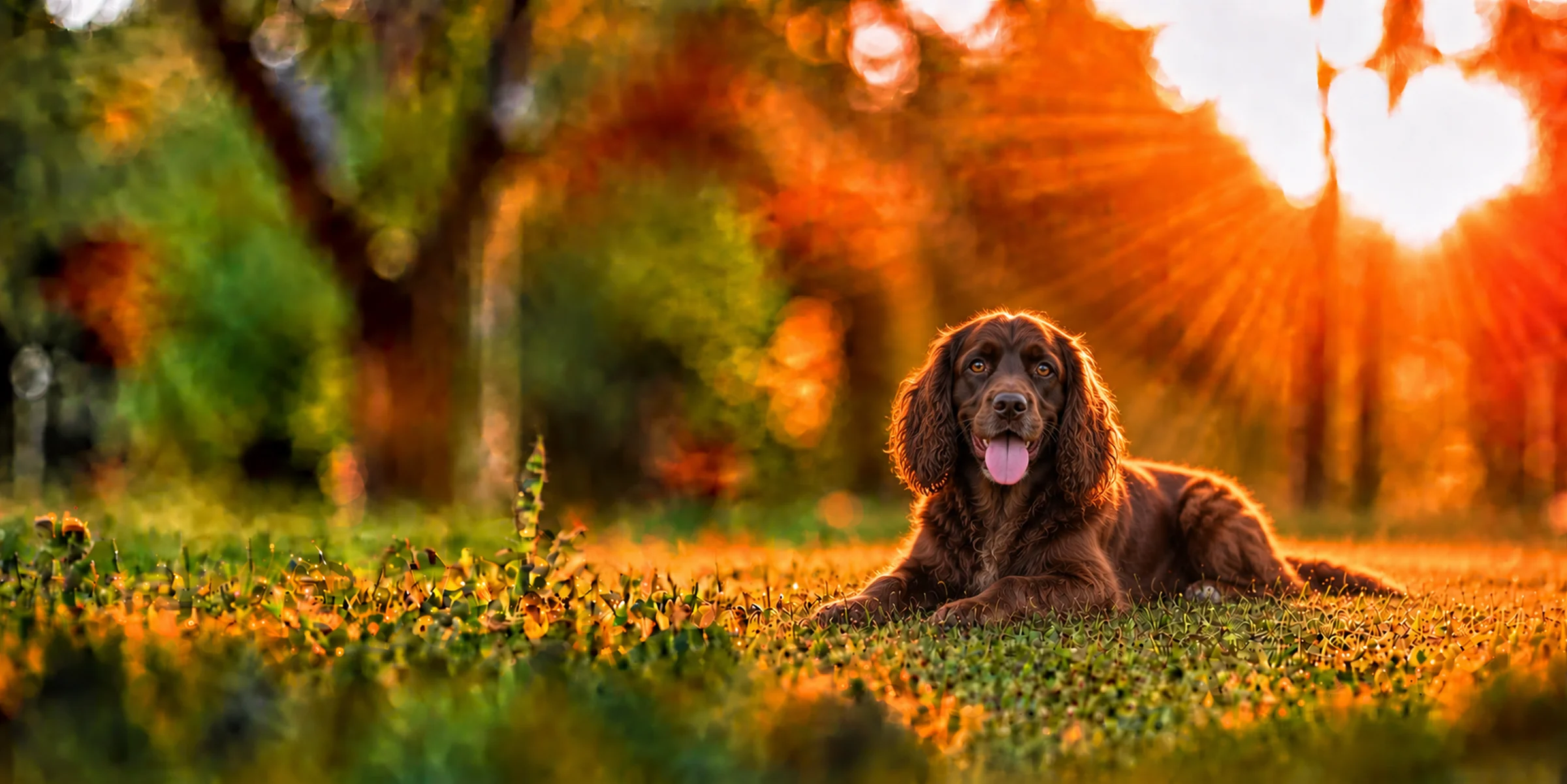
Boykin Spaniel
Another wetland working dog with real drive, in a much smaller and more biddable package. The Boykin is easier to satisfy and far more eager to please; the Curly is the more independent thinker.