

medium breed
Field Spaniel
The quietest of the working spaniels and by some way the rarest - a sober, grave, deeply attached dog with a spaniel's nose and none of a Springer's bounce. Field Spaniels are calm indoors in a way their cousins are not, reserved with strangers, and notably sensitive; correction-based training sets them back rather than forward. The gene pool is small, only a few dozen are registered most years, and long days alone are out.

Pup Height
17-18 in
Slightly longer than tall, and noticeably more substantial than a Cocker without being as leggy as a Springer. Solid black, liver or golden liver, sometimes with roan or tan points - the solid dark coat is part of what nearly finished the breed, since Victorian fanciers bred them long and low for the ring until Field Spaniels could barely work. One of the rarest AKC breeds, with only a few dozen registered in most years. Source: AKC breed standard.

Pup Weight
35-50 lb

Pup Lifespan
12-14 years
Your pup, at a glance
What’s Life With This Pup Really Like?

Very high. They are devoted to their own household, follow their people from room to room, and settle against them once the day's work is done.

Very good with their own family's children - gentle, patient and sturdy. A Field Spaniel's sensitivity means chaotic, noisy handling suits them less well than it does a Springer.

Very good. Sociable with dogs and generally fine with cats, with a prey drive aimed mostly at birds.

Low. A notably quiet spaniel who alerts occasionally and has little else to say.

Moderate to high. An hour with scent work suits them, and they are genuinely calm indoors afterward.

Moderate. The feathering sheds steadily and shows on furniture; regular trimming keeps it manageable.

Cheerful but measured. They retrieve and play willingly without the relentless bounce of the other working spaniels.

Very low.

Excellent. Quick, willing and food-motivated, with a softness that makes gentle methods essential rather than preferable.

Moderate as an alarm. They notice arrivals and announce them quietly, with no guarding instinct behind it.

Moderate. Twice-weekly brushing, a trim every couple of months, and weekly ear care that is the part people skip.

Good. They suit houses and smaller homes alike thanks to their calm indoor manner, and adapt badly to long days alone.
Lifestyle fit
Could This Be Your Best Breed?
A Field Spaniel suits a gentle, patient household with a yard, or a smaller home if the hour of daily walking genuinely happens, and an owner who is around rather than out all day. Costs run $1,400 to $2,400 a year, and twelve to fourteen years is typical. A noisy house or a raised voice sets this dog back rather than forward, and with only a few dozen registered most years, anyone in a hurry is not getting one anyway.

Living Space
A house with a yard suits them, though they adapt to smaller homes better than most gundogs because they are genuinely calm indoors. What they cannot do is spend long days alone.

Pup Experience
Good for a first-time owner who is home a lot. Field Spaniels are biddable and gentle, and the one thing they need handled properly is their sensitivity - this is not a dog to be trained by correction.

Daily Pup Time
An hour of walking and play daily with scent work in it. Grooming is a thorough brush twice a week plus weekly ear care and a trim every couple of months.

Allergies & Coat
The Field Spaniel scores 5/10 for shedding and 2/10 for drooling. No dog is truly hypoallergenic. The allergens come from dander and saliva, and a dog that sheds this much will leave plenty of hair behind - especially on your furniture, floors, and clothes.
Quirks & challenges
The Not-So-Easy Stuff

Genuinely Sensitive
They take a raised voice badly and remember it. Reward-based work and a calm house, or you get a withdrawn dog.
Reserved With Strangers
Aloofness is correct; timidity is not. Wide early socialization decides which one you end up with.
Separation Anxiety
Bonded hard to their household. Long days alone go badly for this breed specifically.
The Ears Need Weekly Work
Long feathered drop ears on a dog who works wet cover. Neglect turns infection chronic.
Extremely Rare
A few dozen registered a year. Expect a long waiting list, travel, and a very small gene pool.
Longer Back Than a Cocker
Not extreme, but stairs and repeated jumping still ask more of their spine than a square dog's.
The good, the bad & the hairy
Health, Care & Costs
Understanding the health risks and ongoing costs of a Field Spaniel helps you plan for a happy, healthy life together.

12-14 years
$55-$85
per groom (bath, feathering trim, ears, feet, nails), every 8-10 weeks ($300-$550/year)
$1,400-$2,400/year
all-in (food, routine vet, grooming, insurance, incidentals)

Health Risks
Conditions this breed is prone to.

The hip joint develops loosely so the ball wears in the socket instead of gliding, leading to arthritis and sometimes surgery. Present at moderate rates and screened by scoring both parents - ask for the numbers.
Long feathered drop ears trap warmth and moisture against the canal, and a dog working wet cover makes it worse. Weekly checking, cleaning and drying is the whole prevention; ignored it becomes chronic and occasionally surgical.
The retina degenerates gradually until the dog is blind, usually starting with night vision. There is no treatment and a DNA test exists, so tested parents remove the risk entirely.
The thyroid under-produces, causing weight gain, lethargy and coat and skin problems. Diagnosed by blood test and controlled with an inexpensive daily tablet for life.
The breed carries higher rates than most of immune-mediated disease, which is a recognized consequence of a very small gene pool. These are managed with medication over the dog's life rather than cured.
Worth listing on its own. With only a few dozen puppies registered a year, genetic diversity is among the narrowest of any AKC breed - which makes the individual breeder's testing far more informative than breed-level statistics.

Insurance & Health Coverage
Ears are the most likely claim, and the wording matters. Chronic otitis is common enough in drop-eared spaniels that some insurers exclude ear conditions after a couple of claims, or from the start once any infection is on the record. Get cover before the first ear appointment rather than after.

Hip dysplasia is the expensive orthopedic risk, and once a limp is noted joints become a permanent exclusion - so insure young.

Progressive retinal atrophy is congenital and no policy covers it, but it is DNA testable in the parents. Given how small this breed's gene pool is, the breeder's full testing record is worth more to you than any policy - ask for it in writing.
 Get a Pet Insurance Quote
Care needs
The Daily Routine

Grooming
A single, glossy, moderately long coat with feathering on the ears, chest, belly and legs that needs a thorough brush twice a week - mats form fastest behind the ears and under the elbows. A trim every couple of months keeps the feet, hocks and ear fringes tidy. Ears want checking, cleaning and drying weekly, and after any outing in cover pick grass seeds out of the feathering and between the toes.

Exercise
About an hour daily with scent work in it. They are happy with long walks, field work and nose games, and they settle genuinely well indoors afterward - considerably calmer than a Springer on the same amount of exercise.

Food & Weight
Two measured meals. They are food-keen and carry weight quietly under the feathering, and the longer back means extra pounds land where they do the most harm.
Similar breeds
If This Isn’t Quite the One
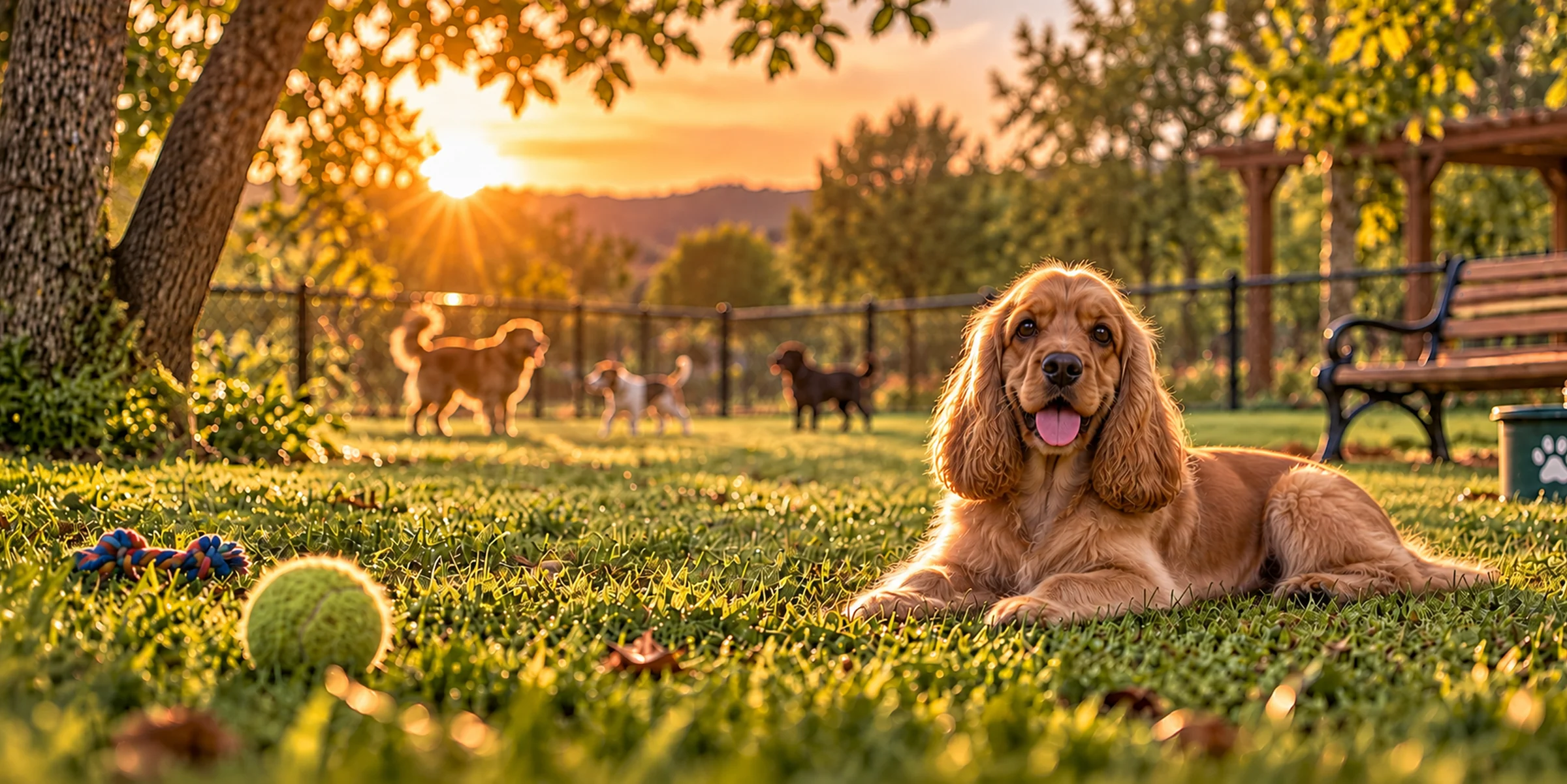
English Cocker Spaniel
The closest relative and the natural comparison - both are flushing spaniels of similar size with the same ear care. The Cocker is merrier and far easier to find; the Field is calmer, graver and considerably more sensitive.
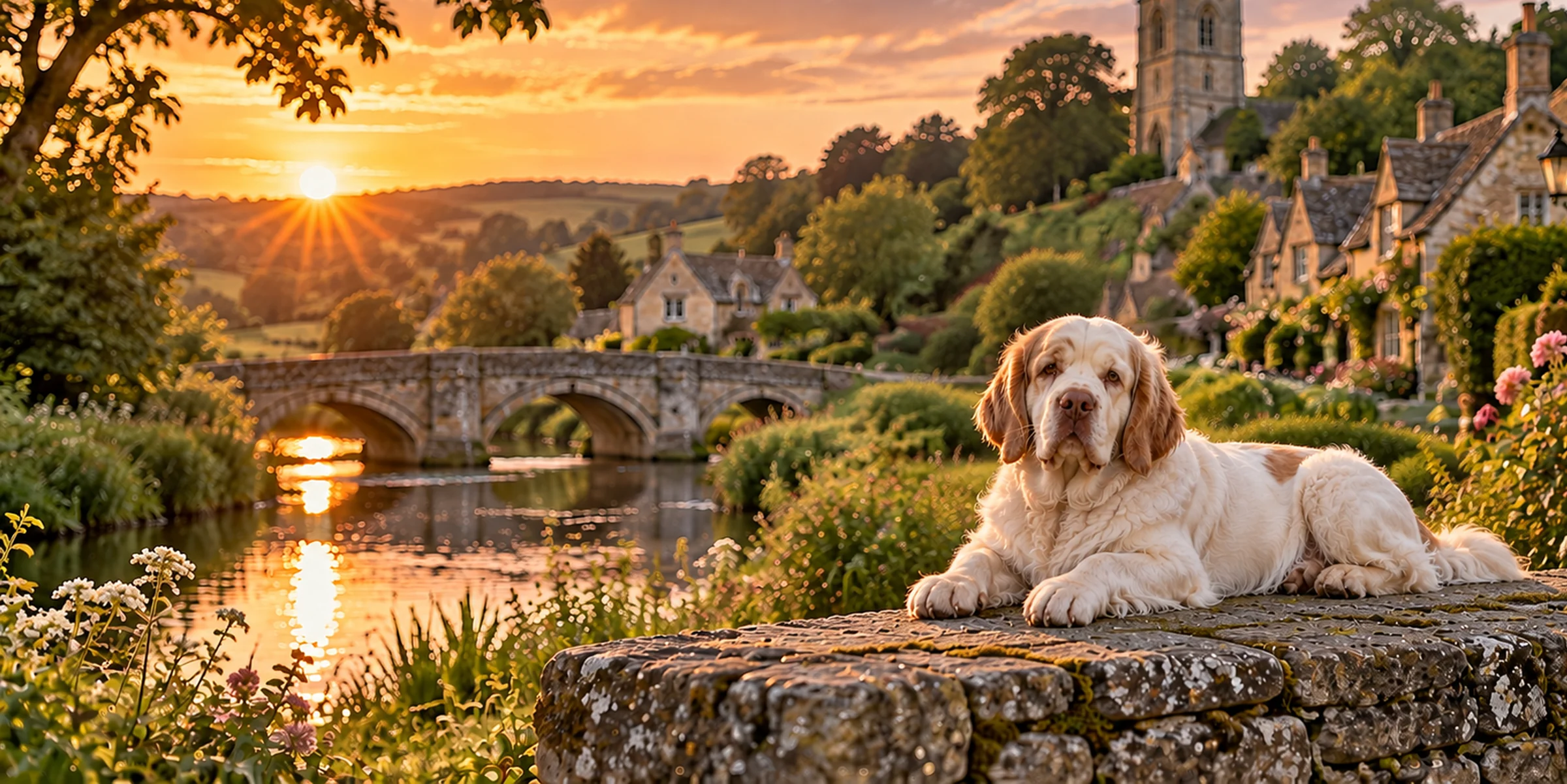
Clumber Spaniel
Another rare, low-key British spaniel bred to work at a walking pace rather than a run. The Clumber is much heavier and drools; the Field is more athletic and needs a bit more exercise.
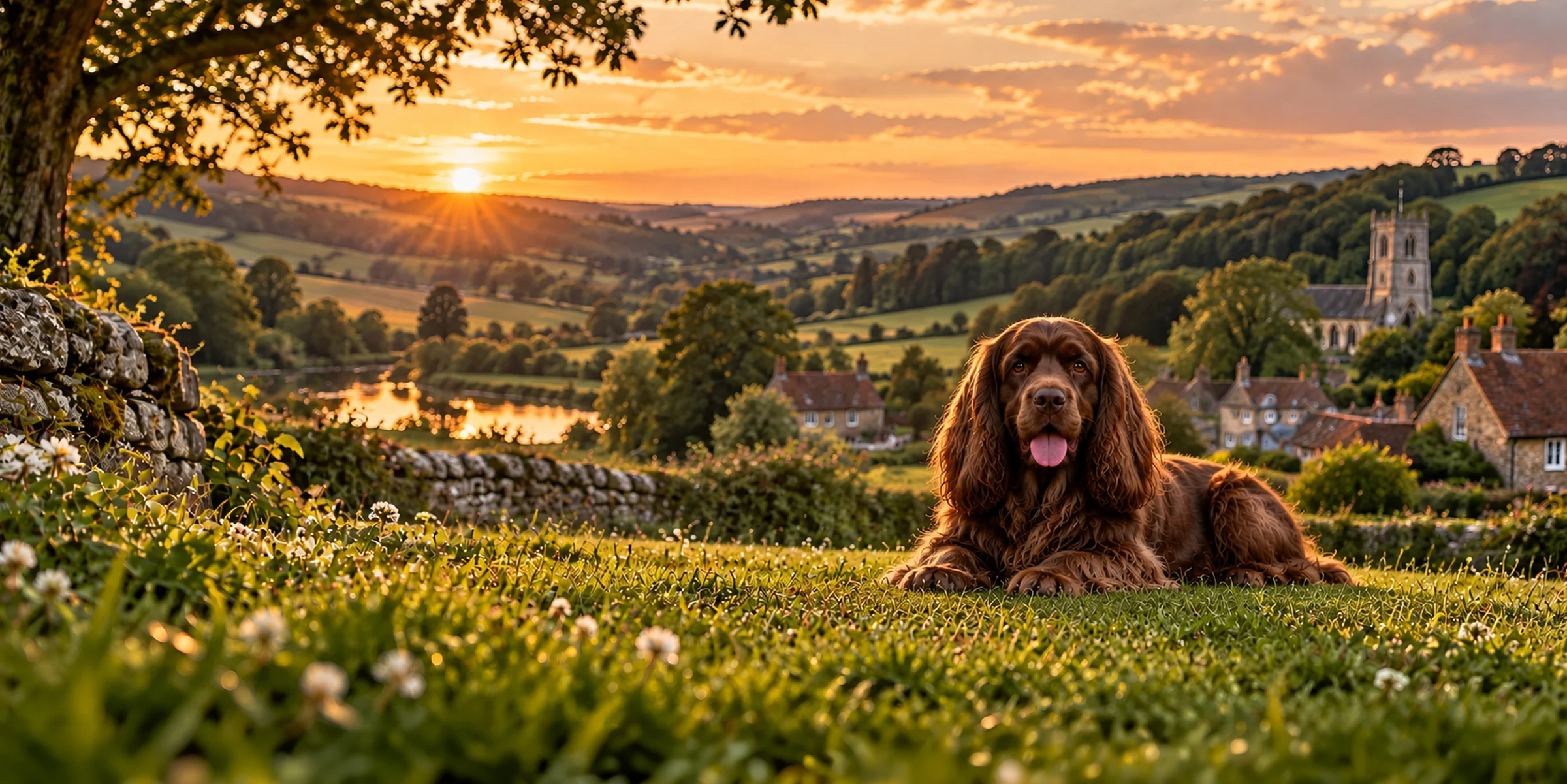
Sussex Spaniel
The same rarity and roughly the same weight, built lower and heavier. Sussex Spaniels are slower and noisier on a trail; the Field Spaniel is the quieter, more athletic of the pair.