

large breed
Greyhound
The fastest dog there is and one of the laziest to live with - a 45 mph sprinter who spends most of the rest of the day asleep on the sofa. Greyhounds are gentle, quiet, clean and remarkably easy indoors. Two things genuinely matter: their physiology differs enough that a vet can misread a Greyhound's bloodwork and overdose the anesthetic, and their prey drive toward small animals is not trainable away.

Pup Height
27-30 in

Pup Weight
60-70 lb
Males 28-30 in and 65-70 lb, females 27-28 in and 60-65 lb. Built on a deep chest, a flexible spine and almost no body fat. Any color is permitted. Racing-bred dogs run smaller and more heavily muscled than show lines, and most Greyhounds in homes are retired racers adopted at two to five years old. Source: AKC breed standard.

Pup Lifespan
10-14 years
Your pup, at a glance
What’s Life With This Pup Really Like?

Very high. They seek out soft surfaces and warmth constantly, and they will take the whole sofa given the chance.

Very good. Gentle, tolerant and quiet, though their thin skin means rough handling hurts them rather than the other way round, and many retired racers have never met a child.

The weak point. Excellent with other Greyhounds and a genuine risk to cats, rabbits and small dogs. Adoption groups test individual dogs for cat tolerance - use that rather than assuming.

Very low. One of the quietest breeds here; they rarely speak at all.

Low. Two walks and an occasional sprint, and they sleep for most of the rest of the day.

Low. A very short single coat that sheds lightly and needs no management.

Bursts of sudden, joyful speed followed by immediate collapse. They play in thirty-second increments.

Very low.

Moderate. Gentle and cooperative with reward-based work, and entirely unreachable once they are chasing something.

Low. They may lift their head at a knock. There is no guarding instinct at all.

The lowest on this site for coat. Teeth, pads and nails are the actual routine.

High. They suit apartments, houses, city and country equally well - warmth, soft bedding and secure fencing matter far more than space.
Lifestyle fit
Could This Be Your Best Breed?
Greyhounds suit an apartment as readily as a house, a soft bed for a dog with no padding, and a securely fenced space to sprint in. They are cheap to keep at $1,300 to $2,200 a year, take five minutes of grooming a week, and live ten to fourteen years. A home with cats or small pets, and a walk off leash, are the two things a Greyhound can never give you.

Living Space
Apartment or house, both work well. Greyhounds sleep eighteen hours a day and need a sprint rather than a marathon - the requirement is a securely fenced space to run in, not acreage. A soft bed matters more than square footage on a dog with no padding.

Pup Experience
Good for a first-time owner, with two things to learn: the anesthesia and bloodwork differences that catch vets out, and that recall is not achievable. Retired racers often arrive never having seen stairs, glass doors or a house.

Daily Pup Time
Two walks and a chance to sprint - forty-five minutes to an hour total. Grooming takes five minutes a week, the least of any breed here.

Allergies & Coat
The Greyhound scores 3/10 for shedding and 2/10 for drooling. No dog is truly hypoallergenic. The allergens come from dander and saliva, and a coat that sheds this little leaves far less of them on your furniture, floors, and clothes.
Quirks & challenges
The Not-So-Easy Stuff

Anesthesia Sensitivity
Almost no body fat changes how they handle anesthetic. Tell every vet the dog is a sighthound, every time.
Their Bloodwork Looks Abnormal
Higher red cells, lower platelets and thyroid than other breeds. Normal for them, alarming to an unfamiliar vet.
Recall Is Not Achievable
45 mph and hunting by sight. Fenced space or a long line, with no exceptions.
Prey Drive Toward Small Pets
Cats and small dogs are a genuine risk. Some are cat-safe; it needs testing, not hoping.
No Padding
No fat and thin skin. They need thick bedding, a winter coat, and their skin tears easily.
Retired Racers Start From Zero
Many have never met stairs, glass doors, mirrors or being alone. Expect a few months of teaching.
The good, the bad & the hairy
Health, Care & Costs
Understanding the health risks and ongoing costs of a Greyhound helps you plan for a happy, healthy life together.

10-14 years
$35-$55
per groom (bath, nails, ears), every 10-12 weeks or done at home ($0-$220/year)
$1,300-$2,200/year
all-in (food, routine vet, grooming, insurance, incidentals)

Health Risks
Conditions this breed is prone to.

The single most important thing to know. Almost no body fat and a different liver metabolism mean standard anesthetic dosing can be dangerous, and some drugs used routinely in other breeds should be avoided entirely. Tell every vet the dog is a sighthound before any procedure, including a dental - a vet who has not treated the breed may not know.
Not a disease, but it causes real misdiagnoses. Greyhounds normally run higher red cell counts and lower platelets, white cells and thyroid values than other dogs. An unfamiliar vet reading those against standard ranges may treat a perfectly healthy dog for a condition they do not have.
Osteosarcoma appears in the breed at rates far above average, usually in a limb and usually in middle age. Any persistent lameness or swelling in a leg warrants prompt investigation rather than watchful waiting.
The stomach fills with gas and twists, cutting off its own circulation, and it kills within hours without emergency surgery. The deep chest puts them at real risk - split meals and keep hard exercise well clear of them.
Greyhounds have unusually poor dental health as a breed, and retired racers often arrive with significant existing disease. Daily brushing and regular cleanings matter more here than in most breeds - complicated by the anesthesia considerations above.
Painful hard growths on the foot pads are far more common in Greyhounds than other breeds and cause persistent lameness. The thin skin also tears easily, and minor scrapes that would be nothing on another dog often need stitches.

Insurance & Health Coverage
Start with something insurance cannot fix: find a vet who knows sighthounds before you need one. The anesthesia and bloodwork differences are the most consequential health facts about this breed, and neither is a claim - they are a competence question.

On the insurable side, bone cancer is the expensive one and tends to arrive in middle age, so insure young and read the per-condition and lifetime caps rather than buying the cheapest premium. Bloat is the emergency to plan for.

Dental is the predictable recurring cost and most policies exclude it as routine - which matters more here than usual, because this breed's teeth are genuinely poor and every cleaning carries the anesthetic consideration. Adopting a retired racer often means inheriting existing dental disease, so budget for work in the first year.
 Get a Pet Insurance Quote
Care needs
The Daily Routine

Grooming
A very short single coat that needs a weekly wipe with a rubber mitt and nothing else. What does need routine attention is the rest: check the foot pads for corns, watch for skin tears after any run, brush the teeth daily, and keep nails short. They have no undercoat, so a winter coat is function rather than decoration.

Exercise
Two short walks plus a chance to genuinely sprint in a securely fenced space a few times a week. They have explosive speed and almost no endurance - long runs suit them far less than a thirty-second burst.

Food & Weight
Two measured meals with hard exercise kept clear of them given the bloat risk. A Greyhound should look lean with the last two or three ribs faintly visible and the hip bones just showing - that is correct condition for the breed, not underweight, and a vet unfamiliar with sighthounds may say otherwise.
Similar breeds
If This Isn’t Quite the One
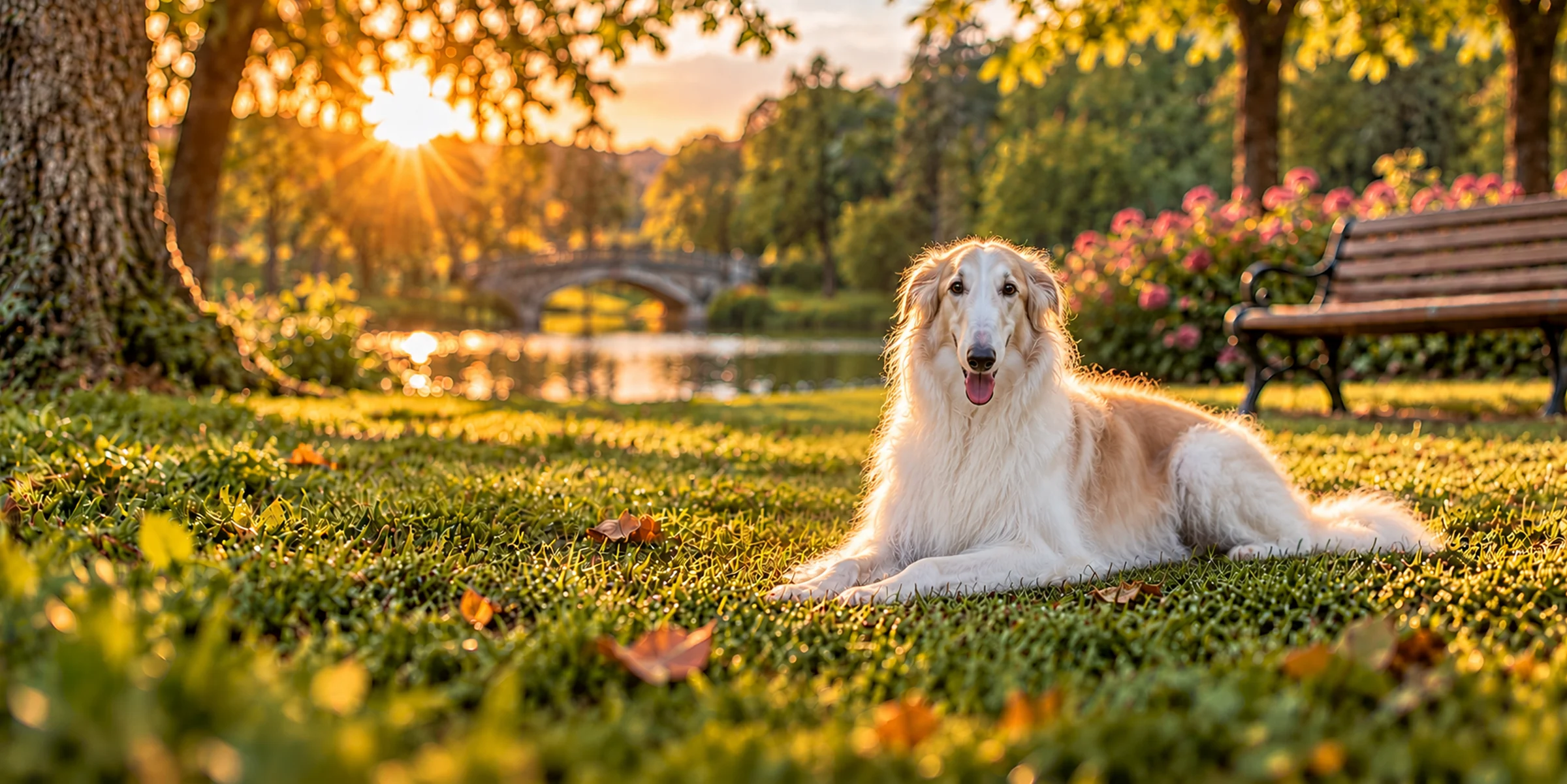
Borzoi
The same sighthound build and temperament in a long-coated Russian version - identical recall limits, anesthesia considerations and indoor laziness. The Borzoi needs real grooming; the Greyhound needs almost none.

Cirneco dell'Etna
A much smaller primitive sighthound with the same chase instinct and unreliable recall. The Cirneco packs the temperament into twenty-five pounds and is far rarer; the Greyhound is easy to adopt and usually free of inherited disease.

Whippet
The same outline at roughly half the weight, and the easier one for most homes. Whippets cost less to feed and need less room, though they are more fragile and quicker to chase; a retired racing Greyhound arrives adult, kennel-trained and famously idle.