

large-to-giant breed
Borzoi
Borzoi are the great contradiction of the sighthound group: a thirty-inch dog who sprints at thirty-five miles an hour outdoors and spends the rest of the day asleep on the largest piece of furniture available. They are quiet, elegant, faintly catlike and undemanding indoors. The dealbreakers are firm - recall is not realistic, small animals are genuinely unsafe around them, and harsh handling makes them shut down rather than comply.

Pup Height
28-32 in

Pup Weight
75-105 lb
Figures are for males; females are 26-30 in and 60-85 lb. The standard sets a minimum height rather than a range, so a well-grown male often exceeds it. Any color or combination is allowed, which is unusual. The Borzoi was registered as the Russian Wolfhound until 1936, when the name was changed to the Russian word for swift. Source: AKC breed standard.

Pup Lifespan
9-14 years
Your pup, at a glance
What’s Life With This Pup Really Like?

Affectionate with their own people in a quiet, undemanding way, and a committed occupier of sofas. They are not effusive about it, and they will lean against you for as long as you allow.

Acceptable with older, calm children. A Borzoi is gentle rather than tolerant, dislikes rough handling, and at ninety pounds and thirty inches they knock small children over without noticing.

Very low. Cats, small dogs and anything that bolts are at genuine risk - this is a breed that was slipped at wolves, and the drive fires on movement rather than on species.

Very low. They are one of the quietest breeds on this site and rarely give voice at all, which makes them a far better neighbor than their size suggests.

Moderate in total and extreme in bursts. A few minutes at full gallop satisfies them more than an hour of walking, and they sleep most of the rest of the day.

Moderate to heavy. A long silky coat that sheds year-round with a heavier seasonal turn, and the hair is long enough to be visible on everything.

Reserved and elegant. They enjoy running and coursing games and have limited interest in fetch or roughhousing.

Very low. A clean, dry-mouthed dog with a narrow muzzle and no loose lip.

Low, and independent rather than unintelligent. They were bred to make decisions at speed with nobody nearby, and they work for a relationship rather than for praise or pressure.

Poor. They may notice a visitor and will rarely say anything about it. Nothing in their history involved guarding.

Moderate. Two or three brush-outs a week through the feathering, more during the shed, and no clipping - considerably less work than an Afghan and considerably more than a smooth sighthound.

Moderate. They settle into houses and routines calmly and cope badly with two things: unfenced space, and a household containing a cat.
Lifestyle fit
Could This Be Your Best Breed?
A Borzoi suits a house with a tall solid fence, a soft place to sleep, and an owner who wants a calm companion rather than an obedient one. Budget $2,000 to $3,200 a year - the coat is the running cost, at $450 to $800 in grooming alone - and expect nine to fourteen years. Without a tall solid fence you genuinely trust, do not - and not at all if there is a cat in the house, or a recall you were counting on.

Living Space
A house with a tall, solid fence - and a large soft place to lie down, which is where they will spend most of the day. They are startlingly quiet and calm indoors for their size, so the constraint is the fencing rather than the square footage.

Pup Experience
Not a first dog. They are gentle, quiet and undemanding at home, and none of the usual assumptions apply: they will not come when called, they are genuinely dangerous to small animals, and they respond to firmness by shutting down rather than complying.

Daily Pup Time
Forty-five minutes to an hour of walking daily plus two or three chances a week to sprint in a securely fenced space, and brushing two or three times a week with more during the seasonal shed.

Allergies & Coat
The Borzoi scores 6/10 for shedding and 2/10 for drooling. No dog is truly hypoallergenic. The allergens come from dander and saliva, and a dog that sheds this much will leave plenty of hair behind - especially on your furniture, floors, and clothes.
Quirks & challenges
The Not-So-Easy Stuff

Recall Is Not Realistic
Bred to run down prey at speed, out of earshot, deciding for themselves. Off-leash in unfenced ground is how Borzoi are lost.
Cats Are Not Safe
The prey drive is the entire point of the breed and it fires on movement. Small dogs and cats are a genuine risk, not a caution.
A Sprinter, Not a Jogger
Enormous speed and modest endurance. They want a few minutes flat out in a safe space, not a five-mile run.
Anesthesia Needs a Warning
Sighthounds carry little body fat and standard doses can be dangerous. Tell any vet who has not treated one before.
Bloat Is a Live Risk
Very deep-chested and large. Split meals, no hard exercise around feeding, and know the signs before you need them.
Sensitive to Harsh Handling
Correction shuts them down rather than sharpening them. They are soft under the dignity and slow to forget a bad session.
The good, the bad & the hairy
Health, Care & Costs
Understanding the health risks and ongoing costs of a Borzoi helps you plan for a happy, healthy life together.

9-14 years
$80-$125
per groom (bath, blow-out and feathering on a very large coat), every 8-10 weeks ($450-$800/year)
$2,000-$3,200/year
all-in (food, routine vet, grooming, insurance, incidentals)

Health Risks
Conditions this breed is prone to.

Sighthounds carry very little body fat, so drugs normally stored in fat stay in circulation and standard doses can be dangerous. Any vet treating one should know Borzoi are sighthounds before sedating them for anything, including a routine dental.
Sighthounds naturally run a higher red cell count and different thyroid figures than other breeds, so a standard reference range makes a healthy Borzoi look abnormal - and leads to treatment for conditions they do not have. Worth raising before bloodwork rather than after the results.
The stomach fills with gas and twists, cutting off its own blood supply. Without surgery within hours it is fatal. This breed is among the deepest-chested there is, which puts it at real risk - split the meals and keep hard exercise clear of them.
The heart muscle thins and stretches until it pumps poorly, showing as exercise intolerance, coughing or collapse. It appears in the large sighthounds more than most, is managed with medication rather than cured, and a cardiac clearance on both parents is reasonable to ask for.
An aggressive bone cancer that the tall, heavy-boned breeds see far more of than average. It usually presents as a persistent lameness in a middle-aged or older dog, and any limp that does not resolve deserves an x-ray rather than rest.
An inherited disease that slowly destroys the retina. Night vision goes first, then daylight vision, usually ending in blindness. There is no treatment, but it is painless and gradual, and most dogs cope well in a home they already know.

Insurance & Health Coverage
A reasonably sound breed whose risks are sudden and expensive rather than chronic and cheap.

Bloat is the one to plan for. They are among the deepest-chested dogs there is, the surgery runs several thousand dollars at an emergency clinic, and it is worth discussing a preventive gastropexy with a vet rather than filing it away - the procedure is far cheaper planned than performed at two in the morning. Osteosarcoma and cardiomyopathy are the other significant costs, and both arrive in middle age rather than early.

The anesthesia and bloodwork points are not insurance questions at all, but they are the two things most likely to go wrong in an ordinary veterinary setting. Make sure whoever treats them knows Borzoi are sighthounds, and if your practice has never seen one, say so before any procedure rather than after.
 Get a Pet Insurance Quote
Care needs
The Daily Routine

Grooming
Brush two or three times a week with a pin brush and a comb, working through the feathering on the chest, legs and tail where it mats first, and daily during the seasonal shed. No clipping. Nails matter on a dog this tall, and the teeth want regular attention.

Exercise
Forty-five minutes to an hour of walking daily plus two or three chances a week to run flat out in a securely fenced space. The Borzoi is a sprinter - a few minutes at full gallop does more for them than an hour of trotting - and off-leash in open ground is not an option at any age.

Food & Weight
Two or three measured meals rather than one large one, with hard exercise kept well clear of mealtimes given the bloat risk. A slow feeder helps a fast eater. They should carry visible ribs and a deep tuck - that is correct condition for a sighthound rather than a dog in poor shape.
Similar breeds
If This Isn’t Quite the One
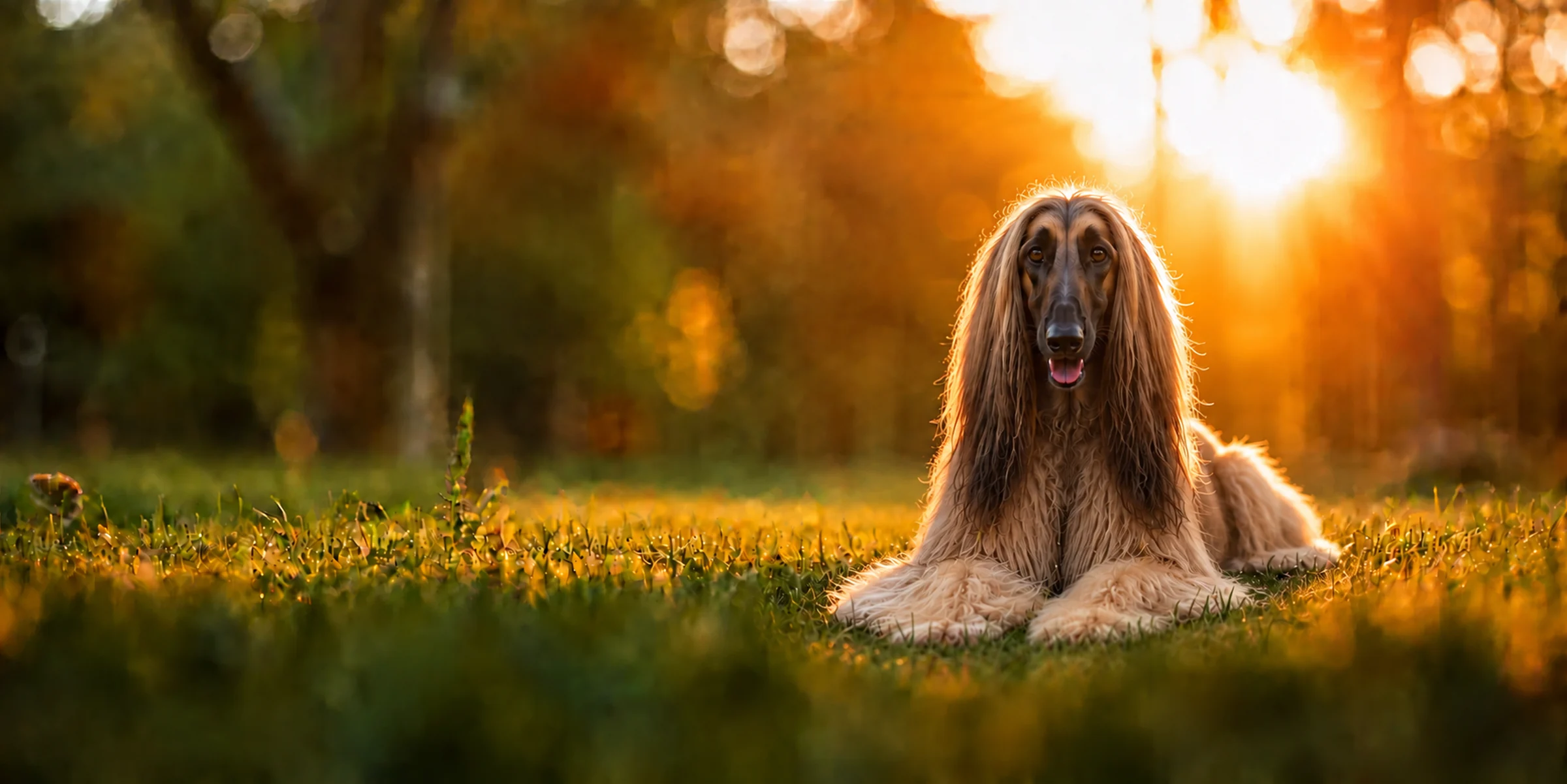
Afghan Hound
The other great long-coated sighthound, and the closest comparison on temperament - aloof, dignified, independent and entirely uninterested in obedience. The Afghan's coat is a considerably heavier commitment; the Borzoi is calmer indoors and quieter.
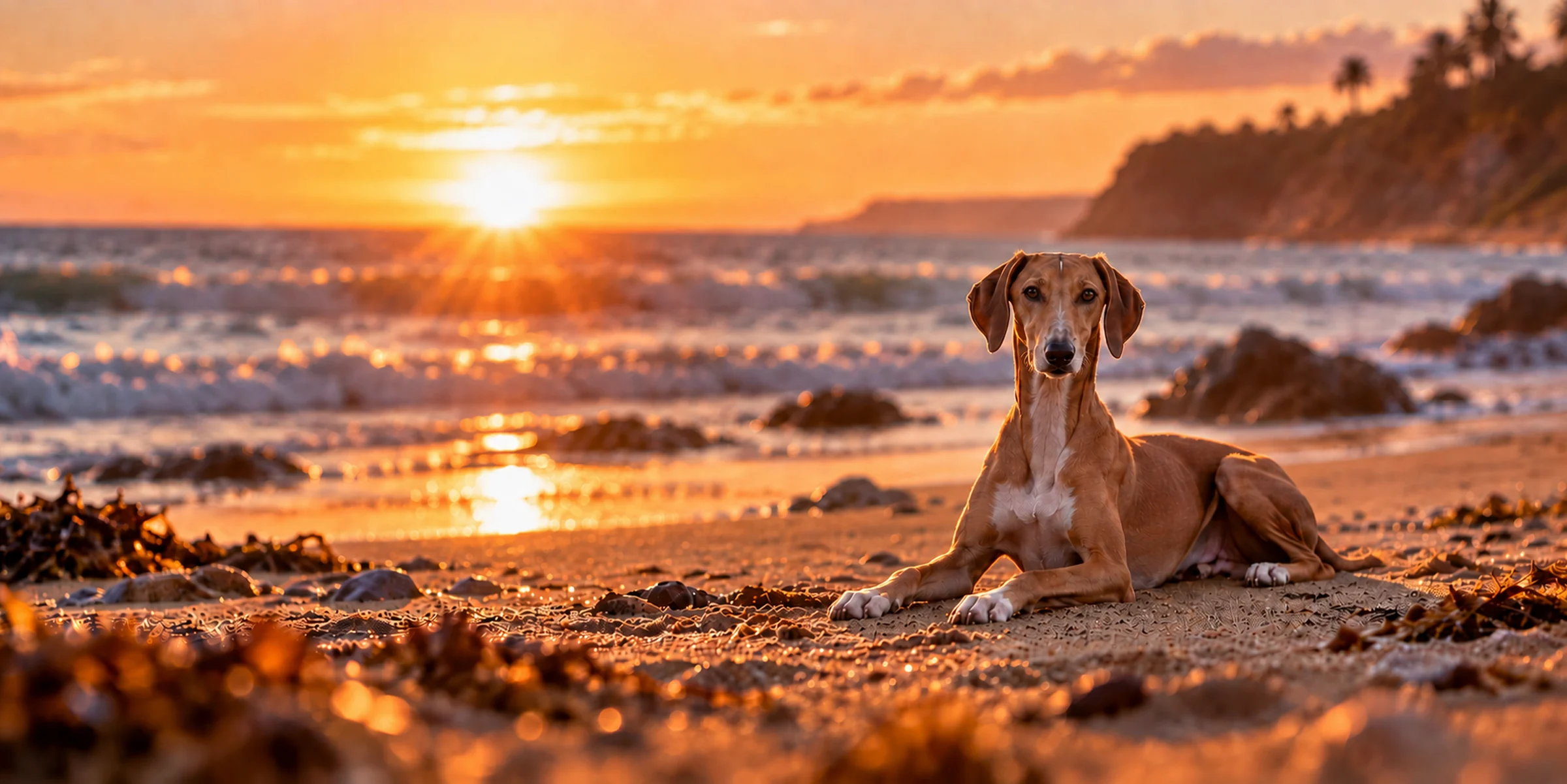
Azawakh
The same independence and the same enormous prey drive in a far leaner, far shorter-coated dog. The Azawakh adds a guarding instinct the Borzoi has no interest in, and needs a warm climate where the Borzoi is built for a Russian winter.
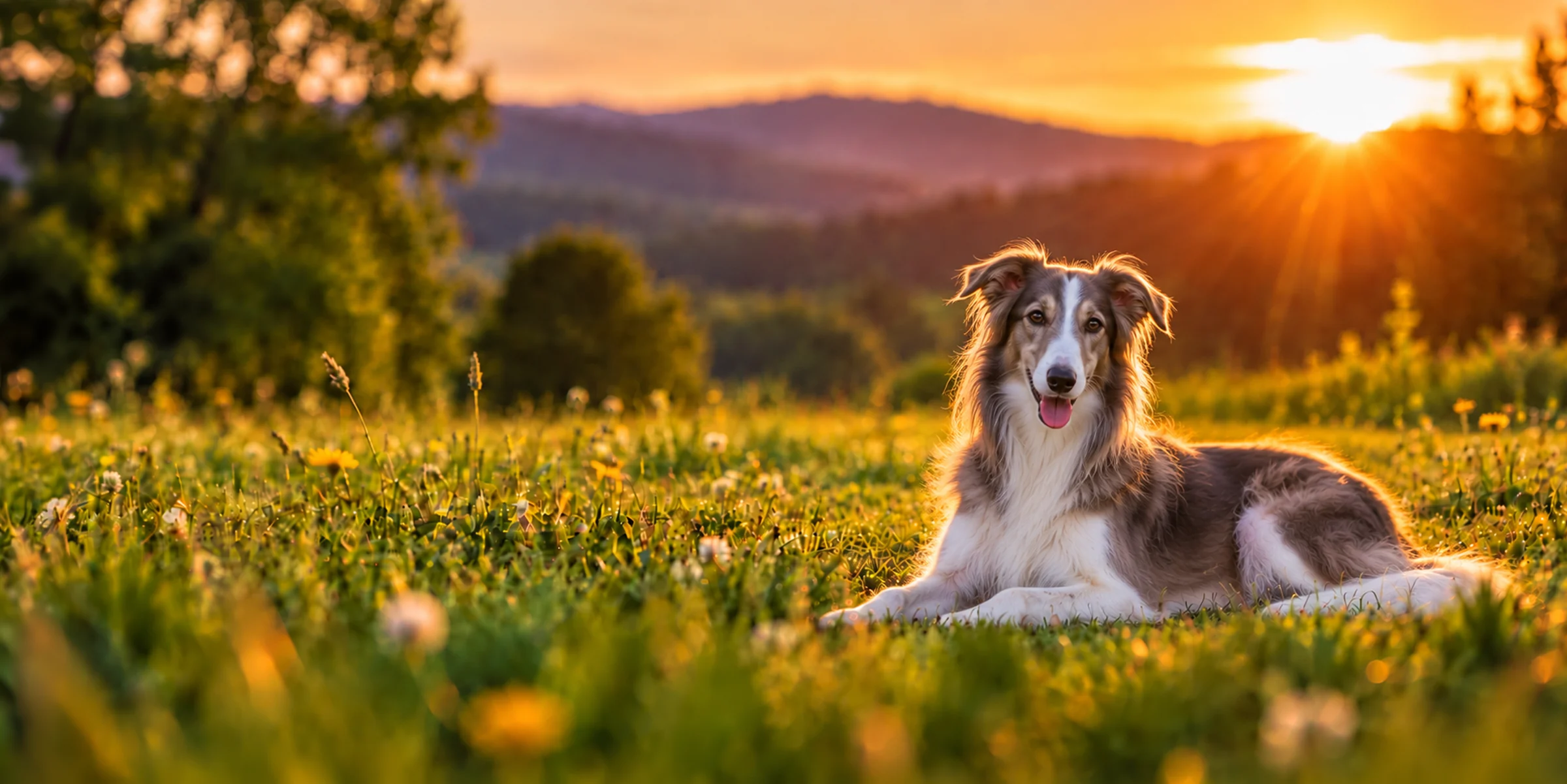
Silken Windhound
A small modern breed built partly from Borzoi, at a third to half the weight. Silken Windhounds keep the coat and the sighthound reserve in a dog one person can lift, with MDR1 testing as the health job the Borzoi does not have.