

small breed
Japanese Terrier
Dutch traders landed Smooth Fox Terriers in Japan's ports, local crosses followed, and the type was fixed around Kobe in the 1930s as the Nihon Teria. What came out is a terrier in outline only - ten to twelve pounds, smooth-coated, warm-seeking and easily bruised by a sharp voice. The coat is single with no undercoat underneath, so cold weather calls for a sweater rather than stoicism.

Pup Height
10-13 in

Pup Weight
10-12 lb
Both sexes run the same: 10-13 in and 10-12 lb, on light bone rather than the stocky frame most terriers carry. The head is black, tan or white - often black and tan - and the body is predominantly white, with or without black spots or ticking. The AKC records two colors for the breed, black tan and white, or white. The coat is short, smooth and single, with no undercoat at all. Small V-shaped ears fold forward. Listed in the AKC's Foundation Stock Service, which records the breed and opens companion events to them but gives no route to a conformation championship. Source: AKC Foundation Stock Service breed standard.

Pup Lifespan
13-15 years
Your pup, at a glance
What’s Life With This Pup Really Like?

Very high. Japanese Terriers are openly affectionate and, with that thin coat, genuinely motivated to find the warmest lap in the room.

Good with considerate ones. Affectionate and playful with children who have been taught to be gentle, but too light in bone for a grabbing toddler.

Mixed. Usually fine with dogs they grow up alongside, while the terrier prey drive makes small pets and unfamiliar cats a real gamble.

Moderate. Alert enough to announce a knock or a delivery, and more inclined to stop afterward than most terriers.

Moderate. Lively in bursts and happy to settle on the couch between them - noticeably less driven than a Fox Terrier.

Low. A short single coat with no undercoat sheds lightly and year-round, and a weekly curry catches most of it.

Bouncy and inventive, with a terrier taste for chase games. Best matched with toys and a flirt pole rather than wrestling with larger dogs.

Very low.

Good. Quick, willing and keen on obedience, rally and agility, with a stubborn streak that answers to rewards and not at all to pressure.

Good as an alarm. Sharp-eared and ready to announce a visitor, with nothing behind the noise on a 12-pound dog.

Very low. A weekly curry and an occasional bath; the daily job is teeth, not coat.

Good on space, poor on climate. Japanese Terriers settle into apartments and city life easily, but a coat with no undercoat makes cold regions hard work.
Lifestyle fit
Could This Be Your Best Breed?
A Japanese Terrier suits an apartment, a household that is home most of the day, and an owner who trains with rewards rather than corrections. Upkeep is genuinely cheap at $900 to $1,600 a year across thirteen to fifteen years. The hard part is supply: litters are scarce in Japan and rarer still elsewhere. If a long wait and an import is not something you can sit with, do not start here.

Living Space
An apartment suits Japanese Terriers well - small, quiet by terrier standards, and satisfied with a couple of good walks. What the home has to supply is warmth and a secure fence. A single coat with no undercoat feels the cold badly, and a terrier who spots a squirrel will be through a gap in the fence before you finish calling.

Pup Experience
Fine for a first-time owner, with one caveat: this is a sensitive dog. Japanese Terriers shut down under shouting or heavy-handed corrections and need someone who works with rewards and patience. The hard part is not the training anyway - it is the search, because very few litters happen outside Japan.

Daily Pup Time
Around 45 minutes to an hour of walking and play daily, plus something to think about. Grooming is a few minutes a week.

Allergies & Coat
The Japanese Terrier scores 3/10 for shedding and 1/10 for drooling. No dog is truly hypoallergenic. The allergens come from dander and saliva, and a coat that sheds this little leaves far less of them on your furniture, floors, and clothes.
Quirks & challenges
The Not-So-Easy Stuff

Almost Impossible to Find
Numbers are tiny even in Japan and North American litters are close to nonexistent. Expect a long wait and an import, or neither.
Feels the Cold
A thin single coat with no undercoat over light bone. Below about 50 degrees they want a sweater, and winter walks get short.
Sensitive to Rough Handling
Shouting and heavy corrections shut a Japanese Terrier down rather than teaching anything. Reward-based work is not optional with this breed.
Fine-Boned, Not Tough
Light bone on a small frame. Japanese Terriers are not built for rough games with big dogs or for toddlers who grab.
Chase Instinct Is Real
Terrier enough to bolt after a squirrel and stop listening halfway. A leash and a fence, not trust.
Not a Dog for Long Days Alone
Bred as a companion and genuinely attached to their people. Long stretches alone bring on barking and chewing.
The good, the bad & the hairy
Health, Care & Costs
Understanding the health risks and ongoing costs of a Japanese Terrier helps you plan for a happy, healthy life together.

13-15 years
$25-$45
per groom (bath, nails, ears, teeth), rarely needed and easily done at home ($0-$200/year)
$900-$1,600/year
all-in (food, routine vet, dental care, insurance, incidentals)

Health Risks
Conditions this breed is prone to.

Worth saying first. There are too few Japanese Terriers anywhere for a breed-wide health survey, so the known list is short and rests on what the AKC and the Japanese club name plus what individual vets have seen. A short list is not a clean bill of health - treat the gaps as unknown rather than as absence, and ask a breeder what has actually turned up in their line.
The kneecap slips sideways out of the groove at the knee, and the dog skips a step or holds a hind leg up for a stride before carrying on. One of the two conditions the AKC names for the breed and common across small dogs generally. Mild cases are managed with weight control and muscle; bad ones need surgery, and both parents should have a patella evaluation on record.
The blood supply to the head of the femur fails, the bone collapses, and a young dog between roughly four and eleven months goes lame on one hind leg. The other condition the AKC names here. Surgery to remove the damaged head usually gives a very good outcome on a dog this light, and most go on to run normally.
The whole population is small enough that genetic diversity is the underlying concern, whatever the individual conditions turn out to be. Ask what a breeder does about coefficient of inbreeding, pedigree depth and outcrossing, and treat a vague answer as an answer.
Small jaws crowd teeth and crowded teeth hold tartar, which is why the AKC's own guidance on the breed keeps returning to toothbrushing. Daily brushing from puppyhood plus scaling under anesthesia when the vet asks for it is the difference between keeping a full mouth and losing teeth at eight.
Not an inherited disease, but the most likely reason a Japanese Terrier gets into trouble. A single coat with no undercoat over light bone loses heat fast. Winter walks need a coat on the dog and a time limit, and a shivering dog needs to go back inside rather than push on.

Insurance & Health Coverage
Insure early, while the record is clean. A 10-pound dog with a short known-problem list is about as inexpensive as pet insurance gets, and at 13 to 15 years of life expectancy a premium locked in young is worth a great deal by the end.

The two conditions the AKC names - patellar luxation and Legg-Calve-Perthes - both tend to appear in the first year or two, which is exactly the window where a note on the record becomes a permanent exclusion. Orthopedic repair on a small dog runs $1,500-$5,000 per side, so cover wants to be in place well before the first limp, not after.

The import question is the one specific to this breed. If the dog arrives from Japan, ask in writing how the insurer treats conditions noted by an overseas vet before the dog landed, and get the pre-existing definition settled before the policy starts rather than at the first claim.
 Get a Pet Insurance Quote
Care needs
The Daily Routine

Grooming
About as easy as a coat gets. A weekly going-over with a rubber curry or a hound glove lifts the dead hair and puts a shine on the short single coat, and a bath only when a Japanese Terrier has rolled in something. The real work sits elsewhere: teeth brushed daily, nails kept short on light bone, ears checked for wax, and a sweater within reach once the weather turns.

Exercise
Two decent walks a day plus play, roughly 45 minutes to an hour all told, and something for the mind on top - obedience, rally, agility and trick training all suit a small quick dog who likes to work. Keep the winter version short and covered up, and do recall work on a long line rather than trusting a terrier around squirrels.

Food & Weight
Two measured meals, weighed rather than scooped, because a spare pound on an 11-pound dog is close to a tenth of the body. Treats come out of the daily ration during training. A lean Japanese Terrier puts less load on knees and hips that are already the breed's two named weak points.
Similar breeds
If This Isn’t Quite the One

Smooth Fox Terrier
The breed on the other side of the Japanese Terrier's pedigree - the Fox Terriers Dutch traders brought in are where the outline and the white body came from. The Smooth is heavier, harder, louder and far more of a working earth dog, and litters are not difficult to find.

Toy Fox Terrier
The closest thing actually available in North America: a small, smooth, white-bodied terrier with a sharp mind and the same dislike of cold. Toy Fox Terriers are smaller at 4-9 lb, more of a lap dog, and bred in real numbers on this side of the Pacific.

Toy Manchester Terrier
Another fine-boned, thin-coated, sensitive small terrier who feels the cold and hates rough handling. The Toy Manchester is black and tan rather than white-bodied, more reserved with strangers, and straightforward to find by comparison.
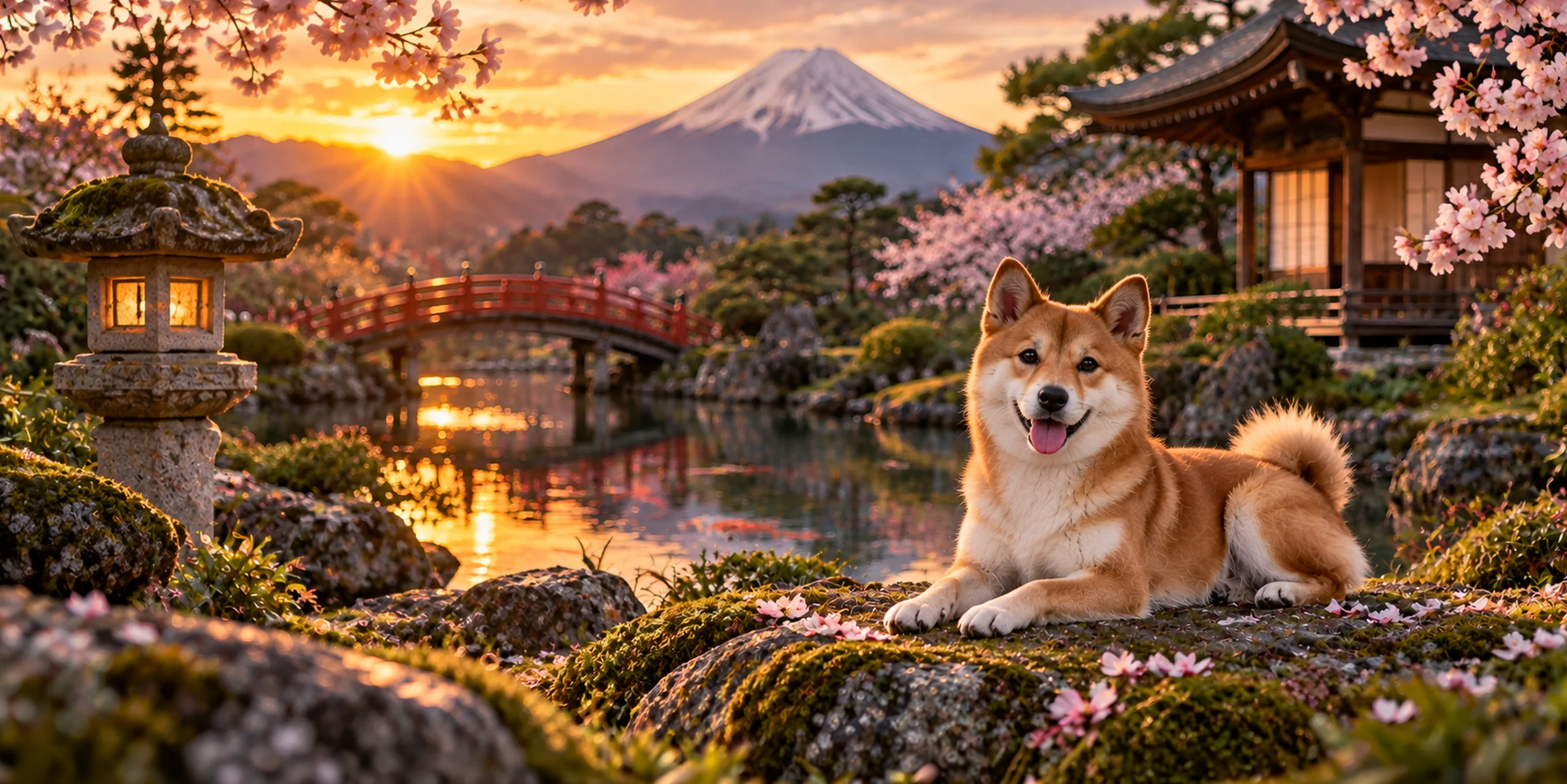
Shiba Inu
The Japanese breed most people land on instead, and the temperaments are nothing alike. Shibas are aloof, independent and famously unreliable off leash; Japanese Terriers are affectionate, biddable and want to be on the couch with their person.