

medium-to-large breed
Kishu Ken
Predominantly white today, though red and sesame are permitted and were once common - hunters favored white because it was easier to distinguish from quarry in cover, and the colored dogs have largely been bred out. A medium Japanese spitz with prick ears and a curled or sickle tail. Designated a Japanese Natural Monument in 1934 and named for the Kishu region. In the AKC's Foundation Stock Service. Source: AKC Foundation Stock Service breed standard.
A white boar hound off the mountains of Kishu, still scarce outside Japan and still bred close to the working type. Kishu are clean, undemanding indoors, and loyal in a way that asks for very little back. What they need is ground: ninety minutes to two hours a day over varied terrain, fencing that holds an athlete, and a cool climate for a coat built for northern winters.

Pup Height
17-22 in

Pup Weight
30-60 lb

Pup Lifespan
11-15 years
Your pup, at a glance
What’s Life With This Pup Really Like?

High with their own family and undemonstrative about it. They show attachment by staying near you rather than by enthusiasm.

Reasonable with children in their own household when raised with them. A Kishu is reserved with visiting children and has limited patience for rough handling.

Difficult. Strong prey drive toward cats and small animals, and same-sex dog aggression is common.

Low - among the quietest here. They were bred to stalk silently rather than bay, and it carries into the house.

High. Two hours with real terrain and mental work, and they settle well indoors once it has happened.

Heavy. A dense double coat that sheds year-round and blows out completely twice a year.

Moderate and self-contained. They play with their own people and treat most things seriously.

Very low.

Moderate. Intelligent and independent - they cooperate when convinced and never become reliable under distraction.

Strong. Alert, territorial and watchful, with a warning that comes as posture rather than noise.

Moderate. A weekly brush most of the year and daily work through the blowouts, with no trimming.

Low to moderate. They handle cold and rough country superbly, and adapt badly to heat, to small pets and to households without secure fencing.
Lifestyle fit
Could This Be Your Best Breed?
The Kishu Ken suits an experienced owner in a cool climate with real ground to work, and no cats, rabbits or same-sex dogs in the household. They are inexpensive for their size at $1,200 to $2,100 a year and often reach fifteen. If you want a self-contained dog who shares a house on equal terms, this is the breed; if you want one who recalls off a deer in open country, look at a gundog.

Living Space
A house with secure fencing and cool conditions. A Kishu is a boar hunter with real prey drive and a thick northern coat, and neither suits apartments or hot climates.

Pup Experience
Experienced owners, ideally with primitive or Japanese breeds. A Kishu is quiet, clean and dignified, and is also independent, reserved and hardwired to hunt - they comply when convinced rather than when asked.

Daily Pup Time
Ninety minutes to two hours daily with mental work and rough ground if possible. Grooming is a weekly brush and daily work during the twice-yearly blowouts.

Allergies & Coat
The Kishu Ken scores 7/10 for shedding and 2/10 for drooling. No dog is truly hypoallergenic. The allergens come from dander and saliva, and a dog that sheds this much will leave plenty of hair behind - especially on your furniture, floors, and clothes.
Quirks & challenges
The Not-So-Easy Stuff

Serious Prey Drive
Bred to hunt boar and deer. Cats, small pets and livestock are a genuine problem.
Independent by Design
They weigh requests rather than obeying them. Repetition without reward gets very little.
Dog Aggression
Same-sex conflict is common. Often best as the only dog, or with a carefully chosen companion.
Reserved With Strangers
Aloofness is correct; fearfulness is not. Heavy early socialization decides which you get.
Heavy Seasonal Shedding
A dense double coat that blows out twice a year in sheets.
Very Rare
Few outside Japan and a small American population. Expect a wait, an import and a narrow gene pool.
The good, the bad & the hairy
Health, Care & Costs
Understanding the health risks and ongoing costs of a Kishu Ken helps you plan for a happy, healthy life together.

11-15 years
$50-$80
per groom (bath, full blow-out, de-shed, nails, ears), every 8-12 weeks ($250-$450/year)
$1,200-$2,100/year
all-in (food, routine vet, grooming, insurance, incidentals)

Health Risks
Conditions this breed is prone to.

Worth stating first. Long isolation in the Kishu mountains and functional selection rather than fashion left this one of the soundest breeds on this site, with very few documented inherited problems and a long working life.
The thyroid under-produces, causing weight gain, lethargy and coat and skin problems. It is the most commonly reported health issue in the breed, diagnosed by blood test and controlled with an inexpensive daily tablet for life.
The hip joint develops loosely so the ball wears in the socket instead of gliding, leading to arthritis. Present at low rates and screened by scoring both parents.
The eyelid rolls inward so the lashes rub the cornea, causing pain and ulceration. It appears at low rates in the breed and is corrected surgically.
Not inherited, but a likely reason they see a vet. A dog bred to work close to boar takes punctures and lacerations from the quarry as well as from the terrain.
Worth listing on its own. The American population descends from a small number of imports, so an individual breeder's pedigree knowledge matters more than breed-level statistics.

Insurance & Health Coverage
One of the healthier and cheaper breeds on this site, so the case for cover is largely the ordinary one and premiums should be reasonable.

What you are mostly insuring is accident. A driven hunting dog with escape ability meets roads, fences and other animals, and if you actually hunt a Kishu the injuries can come from the quarry - check whether the policy excludes injuries sustained while working, because several do.

Hypothyroidism is the one condition likely to need lifelong management, and the medication is cheap. Insure young for the standard reason: a thyroid or joint note on a record becomes a permanent exclusion for everything downstream of it.
 Get a Pet Insurance Quote
Care needs
The Daily Routine

Grooming
A dense double coat that needs a thorough brush weekly most of the year and daily attention for several weeks in spring and fall when the undercoat lets go completely. The coat is largely self-cleaning and needs no trimming, and it should never be shaved - it regulates temperature in both directions. The white coat shows dirt and little else.

Exercise
Ninety minutes to two hours daily with variety and mental work. Hiking, scent work and rough terrain suit them far better than flat walks; a Kishu is a problem-solver rather than a fetch dog.

Food & Weight
Two measured meals. A Kishu is a lean, efficient dog built for hard country and needs less than their energy suggests; the coat hides weight gain, so go by feel through the ribs.
Similar breeds
If This Isn’t Quite the One
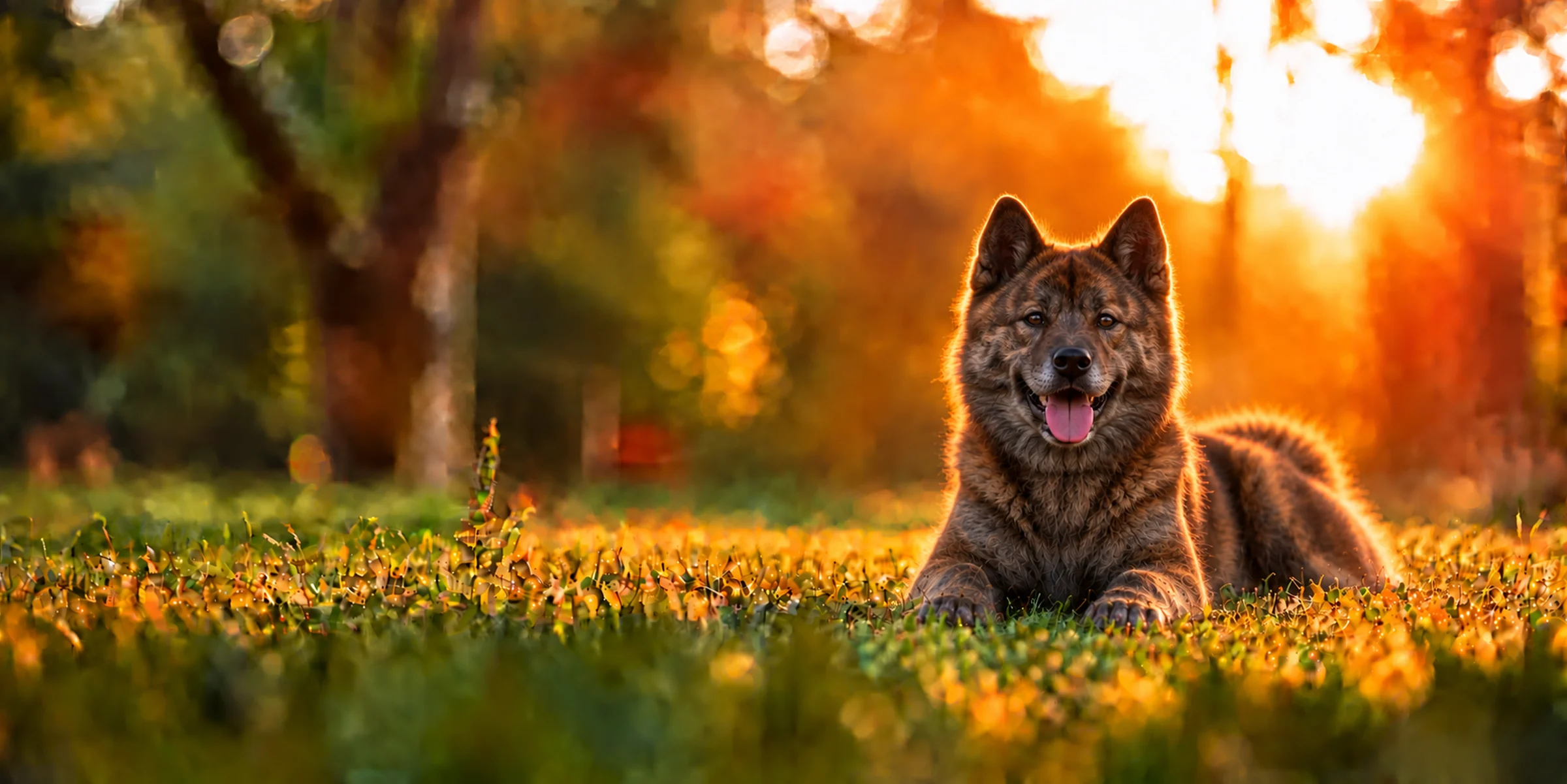
Kai Ken
The closest match among the Japanese natives - a medium boar-hunting spitz of the same size with the same independence and prey drive. The Kai is brindle and a notable climber; the Kishu is white, quieter still, and stalks rather than bays.
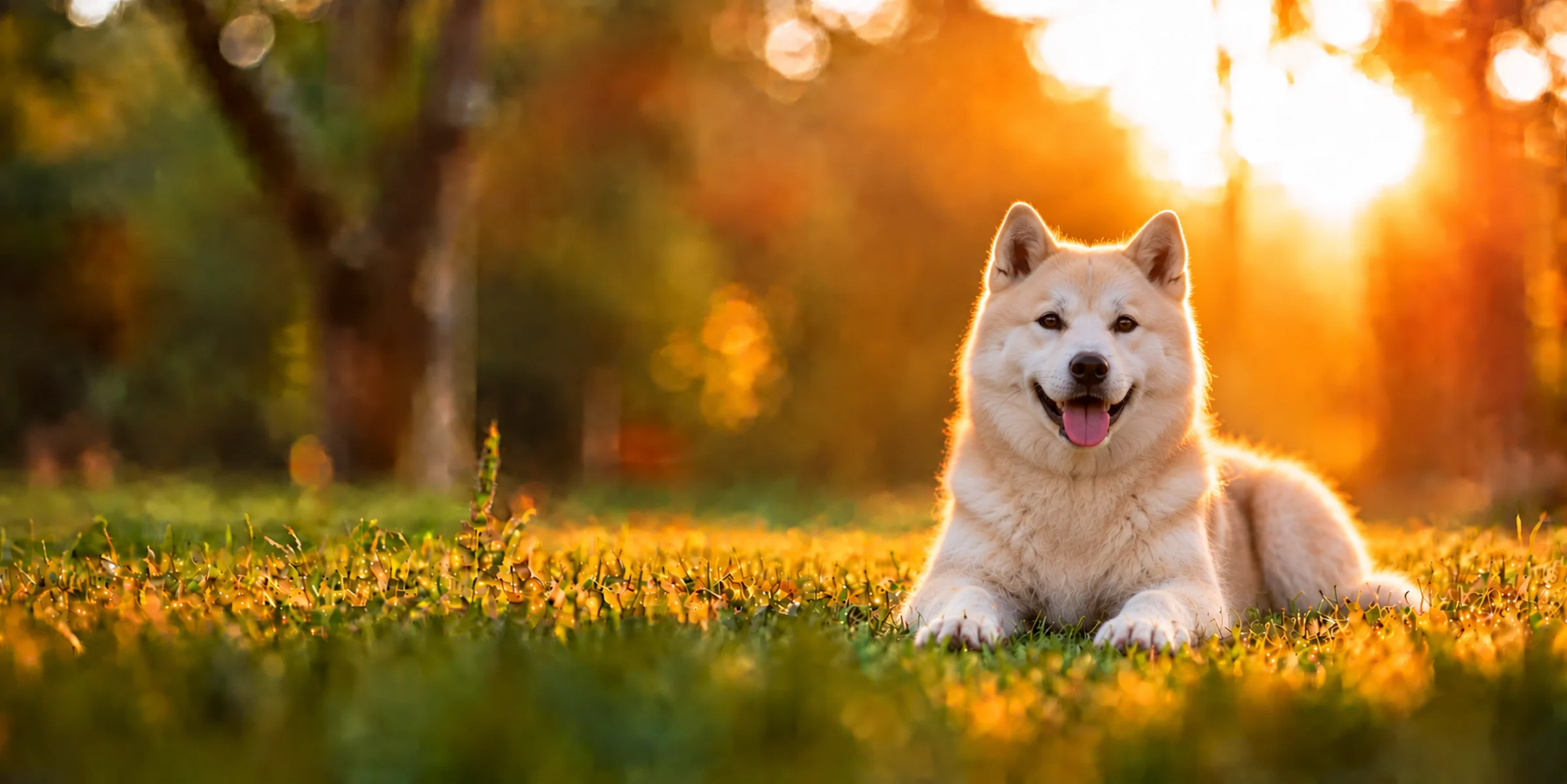
Hokkaido
Another medium Japanese hunting spitz with comparable loyalty and reserve. The Hokkaido is more territorial and more vocal; the Kishu is the quieter and more self-contained of the two.