

medium-to-large breed
Hokkaido
A medium Japanese spitz - prick ears, a thick double coat and a tail curled or sickled over the back. Red, white, black, black and tan, brindle or sesame. Many have a blue-black or spotted tongue, which is unusual outside the Chow family. In the AKC's Foundation Stock Service. Source: AKC Foundation Stock Service breed standard.
A medium Japanese spitz kept by the Ainu for a thousand years to face bear and boar - forty-five pounds of nerve under a thick arctic coat. Hokkaidos are fiercely attached to their own family, alert and hardy, and they are not biddable in the way a gundog is. The constraints are real: serious prey drive, sharpness with strange dogs, poor tolerance of heat, and a dramatic twice-yearly shed.

Pup Height
18-22 in

Pup Weight
45-65 lb

Pup Lifespan
12-15 years
Your pup, at a glance
What’s Life With This Pup Really Like?

High with their own family, on their own terms. The loyalty is the breed's defining trait and it is intense rather than demonstrative.

Good with children they live with and raised alongside. Hokkaidos have limited patience for rough handling from visiting children and are watchful rather than welcoming with them.

Difficult. Same-sex dog aggression is common and the prey drive toward cats and small animals is genuine rather than manageable.

Moderate. They alert deliberately rather than constantly, and are quieter than most spitz breeds.

High. Two hours with mental work daily, and they are calm indoors once it has happened.

Heavy. A dense arctic double coat that sheds year-round and blows out completely twice a year.

Lively and physical with their own people, with a strong chase instinct and limited interest in fetch.

Very low.

Low to moderate. Intelligent and thoroughly independent - they cooperate when convinced and never become reliable under distraction.

Very strong. Territorial, alert, courageous well beyond their size, and genuinely prepared to act.

Moderate. A weekly brush most of the year and daily work through the blowouts, with no trimming needed.

Low to moderate. They handle cold superbly, heat badly, and need secure fencing and an experienced handler.
Lifestyle fit
Could This Be Your Best Breed?
A Hokkaido suits a cool climate, a house with dig-proof and climb-proof fencing, and an experienced owner who finds an independent dog interesting rather than infuriating. Costs are ordinary at $1,300 to $2,200 a year, the breed is generally healthy, and twelve to fifteen years is typical. Anyone in a hot region, anyone with a houseful of other pets, and any first-time owner who wants obedience should look at something else.

Living Space
A house with serious fencing and cool conditions. Hokkaidos are a primitive northern hunting breed with real prey drive and escape ability, and a thick arctic coat that makes hot summers genuinely hard on them.

Pup Experience
Experienced owners, ideally with primitive or Japanese breeds. They are intensely loyal and independent in equal measure, and they do not comply simply because they were asked - that is the breed working as designed rather than a training failure.

Daily Pup Time
Ninety minutes to two hours daily with real mental work. Grooming is a weekly brush and daily work during the dramatic twice-yearly blowouts.

Allergies & Coat
The Hokkaido scores 8/10 for shedding and 2/10 for drooling. No dog is truly hypoallergenic. The allergens come from dander and saliva, and a dog that sheds this much will leave plenty of hair behind - especially on your furniture, floors, and clothes.
Quirks & challenges
The Not-So-Easy Stuff

Independent by Design
A primitive hunting breed. They weigh requests and repetition without reward gets almost nothing.
Serious Prey Drive
Bred to hunt bear and boar. Cats, small pets and livestock are a genuine problem.
Dog Aggression
Same-sex conflict is common and they do not back down. Dog parks are usually a mistake.
Heavy Seasonal Shedding
A dense arctic double coat that blows out twice a year in sheets.
Poor in Heat
Built for Hokkaido winters. Summer exercise at dawn and dusk, and never shave the coat.
Rare Outside Japan
Very few American breeders. Expect an import, a long wait and careful screening.
The good, the bad & the hairy
Health, Care & Costs
Understanding the health risks and ongoing costs of a Hokkaido helps you plan for a happy, healthy life together.

12-15 years
$55-$85
per groom (bath, full blow-out, de-shed, nails, ears), every 8-12 weeks ($250-$450/year)
$1,300-$2,200/year
all-in (food, routine vet, grooming, insurance, incidentals)

Health Risks
Conditions this breed is prone to.

Worth stating first. A thousand years of functional selection in a harsh climate, without the closed studbook and fashion pressure that concentrate disease, left this breed unusually sound with a long working life.
An inherited malformation of the tissues at the back of the eye, unexpected in a Japanese spitz but genuinely present in this breed. Most affected dogs see well enough for a normal life; severe cases cause retinal detachment and blindness. It is DNA testable, so ask a breeder for results.
The hip joint develops loosely and wears into arthritis, sometimes needing surgery. Present at low to moderate rates and screened by scoring both parents.
The kneecap slips out of its groove, producing a skipping gait and occasionally needing surgery. Present at low rates and checked at routine vet visits.
A practical rather than a pathological problem, and a real one. A dense arctic double coat means they overheat easily, and the coat must never be shaved because it insulates against heat as well as cold.
Worth listing on its own. Hokkaidos are scarce outside their homeland, so an American litter may come from a narrow base - the individual breeder's testing and pedigree matter more than breed-level statistics.

Insurance & Health Coverage
A sound, inexpensive breed, so the case for cover is largely the ordinary one and premiums should be reasonable.

Insure young for the usual reason - a joint or eye note on a record becomes a permanent exclusion, and both categories tend to surface in young adults.

What you are mostly insuring is accident: a driven hunting dog with escape ability and real prey drive meets roads, fences and other animals, and trauma is where the claims come from.
Collie eye anomaly is congenital, so no policy pays for it, and it is DNA testable in the parents. On that one the breeder's paperwork is the protection rather than the insurer - and it is worth asking about specifically, since most people choosing one would not think to look for it in a Japanese breed.
 Get a Pet Insurance Quote
Care needs
The Daily Routine

Grooming
A dense double coat that needs a thorough brush weekly most of the year and daily attention for several weeks in spring and fall when the undercoat lets go completely. The coat is largely self-cleaning and needs no trimming, and it should never be shaved - it regulates temperature in both directions.

Exercise
Ninety minutes to two hours daily with real variety and mental work. Hiking, scent work and long walks in a secure area suit them; they are independent rangers rather than fetch dogs.

Food & Weight
Two measured meals. Hokkaidos are lean, efficient dogs built for a hard climate and need less than their energy suggests; the coat hides weight gain, so go by feel through the ribs.
Similar breeds
If This Isn’t Quite the One
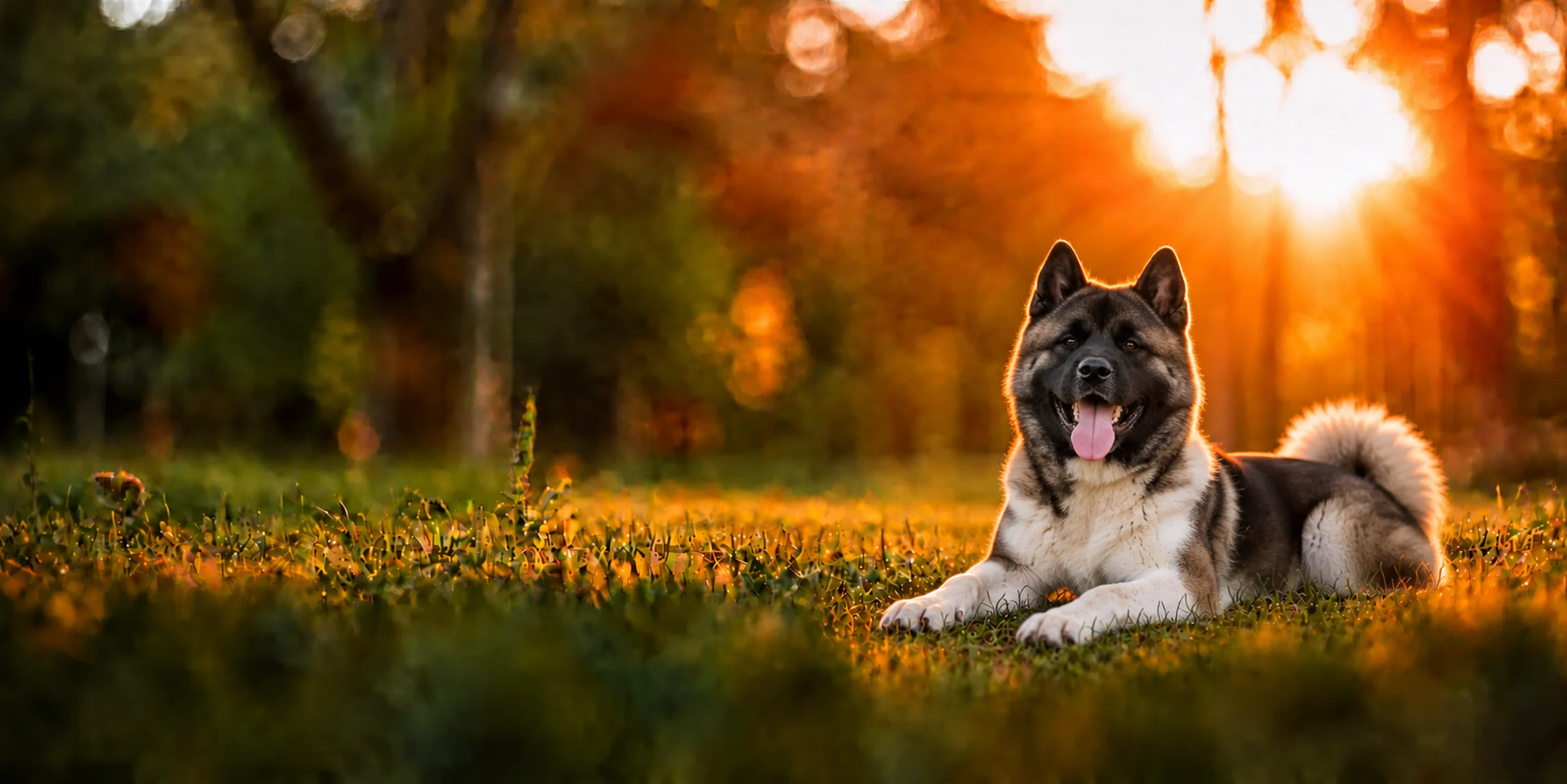
Akita
The closest match - another Japanese hunting spitz with the same loyalty, independence and sharpness toward other dogs. The Akita is much larger and more aloof; the Hokkaido is more energetic and more openly affectionate with their family.
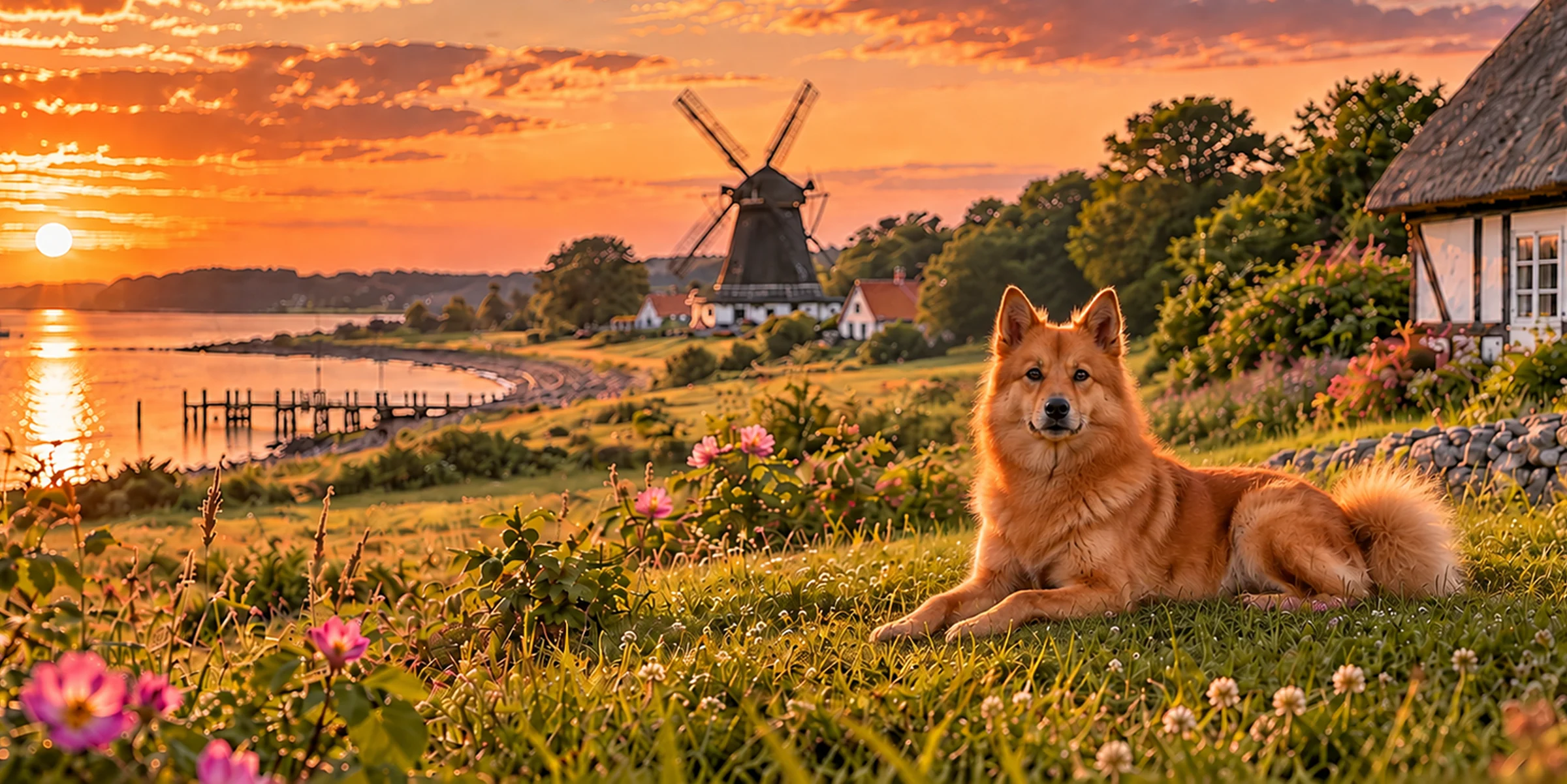
Finnish Spitz
A comparable northern hunting spitz of similar size with the same primitive independence and prey drive. The Finkie hunts by barking and is far louder; the Hokkaido is quieter and considerably more territorial.