

small-to-medium breed
Kromfohrlander
Two coat varieties judged as one breed: rough-haired with a beard, and smooth-haired without. Always white with tan to reddish-brown markings, and a distinctive blaze up the face. In the AKC's Foundation Stock Service. Source: AKC Foundation Stock Service breed standard.
One of the youngest breeds anywhere, and one bred from the start for the sofa rather than the field. Kromfohrlanders come in a rough coat and a smooth one, shed very little, and are bright enough to make training a game instead of a chore. The long-term worry is the gene pool: everything traces to a single 1945 pairing, and cystinuria, epilepsy and von Willebrand disease all run in the breed.

Pup Height
15-18 in

Pup Weight
20-35 lb

Pup Lifespan
13-15 years
Your pup, at a glance
What’s Life With This Pup Really Like?

Very high. They are affectionate and physically close, follow their people from room to room, and settle readily on a lap.

Very good. Playful, patient and sturdy for their size, with none of the sharpness the terrier ancestry might suggest.

Good. Sociable with dogs and generally fine with cats - the prey drive was deliberately bred down.

Moderate. They alert readily and train down easily, and they are not persistently noisy dogs.

Moderate. An hour with some mental work suits them, and they settle well indoors afterward.

Low. Neither coat variety sheds much, and the rough coat holds what it drops.

Lively and inventive. They play enthusiastically well into adulthood and enjoy learning tricks.

Very low, though a wet beard drips on the rough variety.

Excellent. Bright, willing and food-motivated - terrier intelligence without terrier stubbornness.

Strong as an alarm. Alert and quick to announce, with nothing behind it at thirty pounds.

Moderate for the rough coat, low for the smooth. Brushing twice a week and occasional tidying.

High. Apartment or house, city or country - they adapt easily, provided they are not left alone for long.
Lifestyle fit
Could This Be Your Best Breed?
A Kromfohrlander suits an apartment or a house, a first-time owner, and a household where somebody is usually in - forty-five minutes to an hour a day covers the exercise, and $1,100 to $1,900 a year covers the rest across thirteen to fifteen years. The thing that reliably goes wrong here is the empty house. A nine-to-five with nobody home undoes this dog faster than any training mistake will.

Living Space
Apartment or house, either works. They are small, adaptable and quieter than a terrier despite the ancestry - the constraint is that they take being left alone badly rather than anything about space.

Pup Experience
Good for a first-time owner. They are bright, biddable and genuinely easy-tempered, and the main practical difficulty is finding one - the gene pool is very small and the waiting lists are long.

Daily Pup Time
Forty-five minutes to an hour of walking and play with training in it. Grooming is a brush twice a week plus tidying every couple of months.

Allergies & Coat
The Kromfohrlander scores 3/10 for shedding and 2/10 for drooling. No dog is truly hypoallergenic. The allergens come from dander and saliva, and a coat that sheds this little leaves far less of them on your furniture, floors, and clothes.
Quirks & challenges
The Not-So-Easy Stuff

Very Small Gene Pool
Every dog traces to one 1945 pairing. Inherited conditions concentrate, so the breeder's testing matters.
Poor Alone
Bred purely for company and strongly attached. Long days by themselves go badly.
Genuinely Rare
Few breeders outside Germany. Expect a long waiting list and possibly an import.
Alarm Barking
Alert and quick to announce. Easily trained down, and worth doing early.
Sensitive
They shut down under harsh handling and remember it. Reward-based work only.
Epilepsy in Some Lines
Documented in the breed. Worth asking a breeder about directly rather than assuming.
The good, the bad & the hairy
Health, Care & Costs
Understanding the health risks and ongoing costs of a Kromfohrlander helps you plan for a happy, healthy life together.

13-15 years
$50-$80
per groom (bath, tidy, beard for rough coats, ears, nails), every 8-12 weeks ($250-$450/year)
$1,100-$1,900/year
all-in (food, routine vet, grooming, insurance, incidentals)

Health Risks
Conditions this breed is prone to.

Listed first because it underlies everything else. Every Kromfohrlander descends from a single 1945 pairing, and a founder population that small concentrates whatever inherited conditions were present. German breed clubs manage this actively with outcross programs, and an individual breeder's testing and pedigree knowledge matter far more here than breed-level statistics.
A kidney defect that lets cystine leak into the urine, where it forms stones. In male dogs a stone can block the urethra completely, which is an emergency. It is DNA testable and managed with diet and medication.
Seizures with no other underlying cause, usually first appearing between one and five years old. It is documented in the breed, controlled with daily medication rather than cured, and the drugs and monitoring are a lifelong cost.
The kneecap slips out of its groove, producing a skipping gait and sometimes needing surgery. Common in small breeds and screened by examining the parents.
An inherited condition in which the footpads thicken, crack and become painful. It is DNA testable, appears in this breed, and is managed with ointments and trimming rather than cured.
An inherited clotting disorder causing excessive bleeding after injury or surgery. It is DNA testable and worth knowing before any procedure - tell your vet.

Insurance & Health Coverage
The gene pool shapes the insurance question more than any single condition does. Four of the breed's known problems - cystinuria, hyperkeratosis, von Willebrand disease and the hip and eye screens - are congenital or DNA testable, which means no policy pays for them and the breeder's paperwork is the real protection. Ask for the full test panel rather than a reassurance.

What insurance does cover is epilepsy, which is managed for life rather than cured. Check how a policy handles ongoing conditions across renewal years rather than just the first claim, because a dog who lives to fifteen on daily medication is exactly where annual limits and per-condition caps start to matter.

Otherwise the Kromfohrlander is a cheap, healthy dog to keep.
 Get a Pet Insurance Quote
Care needs
The Daily Routine

Grooming
The rough coat needs a brush twice a week plus light tidying every couple of months and a daily beard wipe; the smooth coat needs a weekly brush and little else. Neither sheds much. Ears want checking weekly, nails trimming regularly, and the footpads are worth a look given the hyperkeratosis risk.

Exercise
Forty-five minutes to an hour daily with some thinking in it. Agility, trick training and scent games suit them as well as walking, and they are content with considerably less than a working terrier demands.

Food & Weight
Two measured meals. A Kromfohrlander is a compact dog who gains weight quietly when under-exercised, so go by feel through the ribs and count the training treats.
Similar breeds
If This Isn’t Quite the One
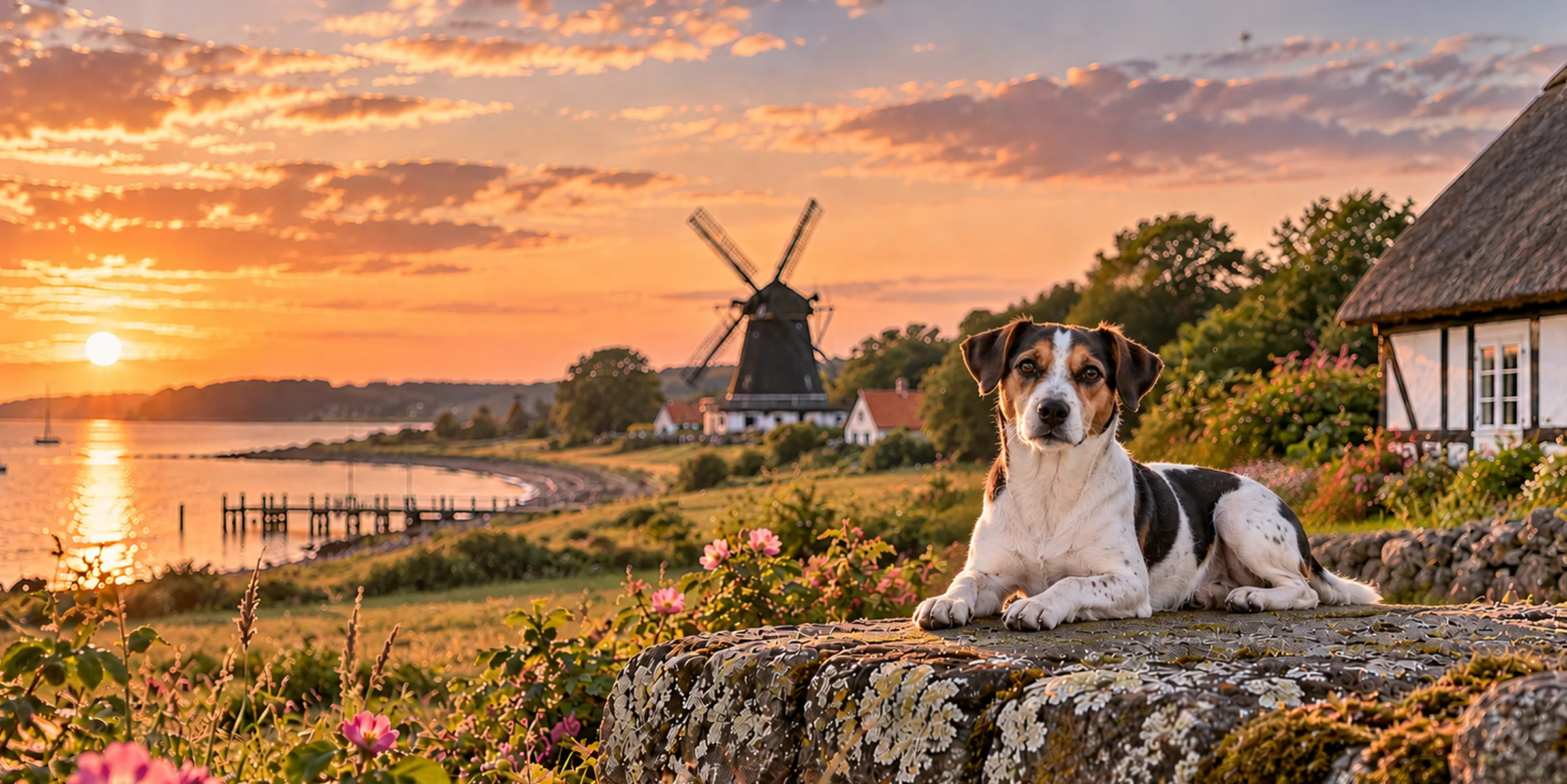
Danish-Swedish Farmdog
A similar-sized white-and-patched companion with terrier ancestry and an unusually even temperament. The Farmdog has more working drive and needs more exercise; the Kromfohrlander is the calmer housemate.

Border Terrier
Another even-tempered small terrier-type that gets on with other dogs. The Border keeps real prey drive and needs stripping; the Kromfohrlander was bred away from the work and is easier to live with.