

small breed
Lakeland Terrier
Squarely built and narrow through the chest. A harsh wiry double coat with a beard and leg furnishings, in blue, black, liver, red, wheaten, or those colors with a saddle. Source: AKC breed standard.
A fell terrier from the Lake District, built narrow and tireless for following a fox into rock on a hillside. Fifteen pounds of nerve, comedy and stamina that outlasts most small dogs, under a wiry coat that barely sheds but wants hand-stripping three or four times a year to hold the texture and color. The terrier package arrives whole: a voice they enjoy using, a nose that overrules you, and firm views about other dogs.

Pup Height
13.5-15 in

Pup Weight
15-17 lb

Pup Lifespan
12-16 years
Your pup, at a glance
What’s Life With This Pup Really Like?

High once the day's work is done. They are genuinely affectionate with their family, and an unexercised one is too busy to settle.

Good with older children who respect a Lakeland Terrier. Lakelands are sturdy and playful, and have limited patience for rough handling.

The weak point. Confrontational with unfamiliar dogs, particularly same-sex, and a real risk to cats and small animals.

High. They alert, demand and comment, and respond to a trained quiet cue without ever becoming quiet.

High. Ninety minutes with mental work, and they have more stamina than most small terriers.

Very low. The wiry coat sheds minimally, which is why it needs stripping instead.

Among the most playful here. They play with total commitment, show off deliberately, and keep it up for years.

Very low, though a wet beard drips.

Moderate to good. Bright and more biddable than most terriers, and independent enough to need a reason.

Strong as an alarm. Alert, fearless and loud, with nothing behind it at sixteen pounds.

Moderate. Twice-weekly brushing, stripping a few times a year, and daily beard care.

Good. Apartments and houses suit them alike, provided the exercise happens and other dogs can be managed.
Lifestyle fit
Could This Be Your Best Breed?
A Lakeland Terrier suits an owner who has kept a terrier before, sets rules early and can supply an hour to ninety minutes of varied work a day - earthdog, agility, scent games, long walks. They are cheap and long-lived at $1,200 to $2,000 a year and twelve to sixteen years. A resident cat, a rabbit, shared walls or a low tolerance for barking are each on their own reason to choose differently.

Living Space
Apartment or house, either works on size. The constraints are the barking and the other dogs - Lakelands announce things and they are confrontational well above their weight.

Pup Experience
Better for an owner with terrier experience. Lakelands are clever, bold and genuinely funny, and they will run a household that does not set rules and hold them.

Daily Pup Time
An hour to ninety minutes daily with real mental work. Grooming is a brush twice a week plus hand-stripping a few times a year.

Allergies & Coat
The Lakeland Terrier scores 2/10 for shedding and 2/10 for drooling. No dog is truly hypoallergenic. The allergens come from dander and saliva, and a coat that sheds this little leaves far less of them on your furniture, floors, and clothes.
Quirks & challenges
The Not-So-Easy Stuff

Confrontational With Dogs
Bold well above their weight, especially same-sex. Management rather than optimism.
Serious Prey Drive
Bred to go to ground after fox. Cats, rabbits and small pets are a genuine problem.
They Bark
Alerting and demanding both. Trainable down to manageable, never a quiet dog.
The Coat Needs Stripping
Hand-stripping a few times a year keeps the harsh texture and the color. Clipping softens both.
They Dig and Climb
An earth terrier with real athleticism. Fencing needs to account for both.
Clever and Bored Easily
They invent their own entertainment, and it is rarely what you had in mind.
The good, the bad & the hairy
Health, Care & Costs
Understanding the health risks and ongoing costs of a Lakeland Terrier helps you plan for a happy, healthy life together.

12-16 years
$60-$90
per groom (hand-strip or tidy, bath, beard, ears, nails), every 8-12 weeks ($300-$550/year)
$1,200-$2,000/year
all-in (food, routine vet, grooming, insurance, incidentals)

Health Risks
Conditions this breed is prone to.

Worth stating first. The Lakeland has stayed a working terrier rather than a fashionable one, and they carry one of the shortest inherited-disease lists in the group with a long average life.
The lens of the eye slips out of position, which is acutely painful and causes glaucoma and blindness if it is not treated quickly. It is common across working terrier breeds, it is an emergency when it happens, and it is DNA testable - a breeder who tests both parents removes the risk.
The blood supply to the head of the femur fails, the bone dies and the hip joint collapses. It appears in young small-breed dogs, causes progressive lameness, and is usually treated surgically.
The kneecap slips out of its groove, producing a skipping gait and sometimes needing surgery. Common in small breeds and screened by examining the parents.
An inherited clotting disorder causing excessive bleeding after injury or surgery. It is DNA testable and worth knowing before any procedure - tell your vet.
Not inherited, but a likely reason they see a vet. A terrier with no sense of self-preservation goes down holes, takes on larger dogs and jumps from heights they should not.

Insurance & Health Coverage
A healthy, cheap breed to keep, so the case for cover is mostly accidents rather than illness - and a fearless terrier generates more of those than their size suggests.

Primary lens luxation is the medical one to understand. It is an emergency, treatment is expensive, and untreated it costs the eye. It is also congenital, so no policy pays for it - the protection is a DNA test on both parents, and the same applies to von Willebrand disease.

Legg-Calve-Perthes usually appears in young dogs and ends in surgery, so insure early - once a limp is on the record, hips become a permanent exclusion. If they get into fights, confirm the policy does not exclude injuries arising from altercations with other dogs.
 Get a Pet Insurance Quote
Care needs
The Daily Routine

Grooming
A harsh wiry double coat that needs a thorough brush twice a week and hand-stripping three or four times a year to keep its texture and color - clipping is easier and permanently softens the coat and fades the markings. The daily job is the beard: wipe it after meals and water. Ears and nails as usual, and check them over for cuts after any session in cover.

Exercise
An hour to ninety minutes daily with real variety. Earthdog, agility, scent games and long walks all suit them - they have fell-terrier stamina and considerably more endurance than most small terriers.

Food & Weight
Two measured meals. Lakelands are lean, hard-muscled dogs who gain weight quietly when under-exercised, and the coat hides it - go by feel through the ribs.
Similar breeds
If This Isn’t Quite the One

Border Terrier
The other fell terrier, and the easier dog by some margin. The Border is notably more sociable with other dogs and just as hardy; the Lakeland is bolder, more confrontational and more of a showman.
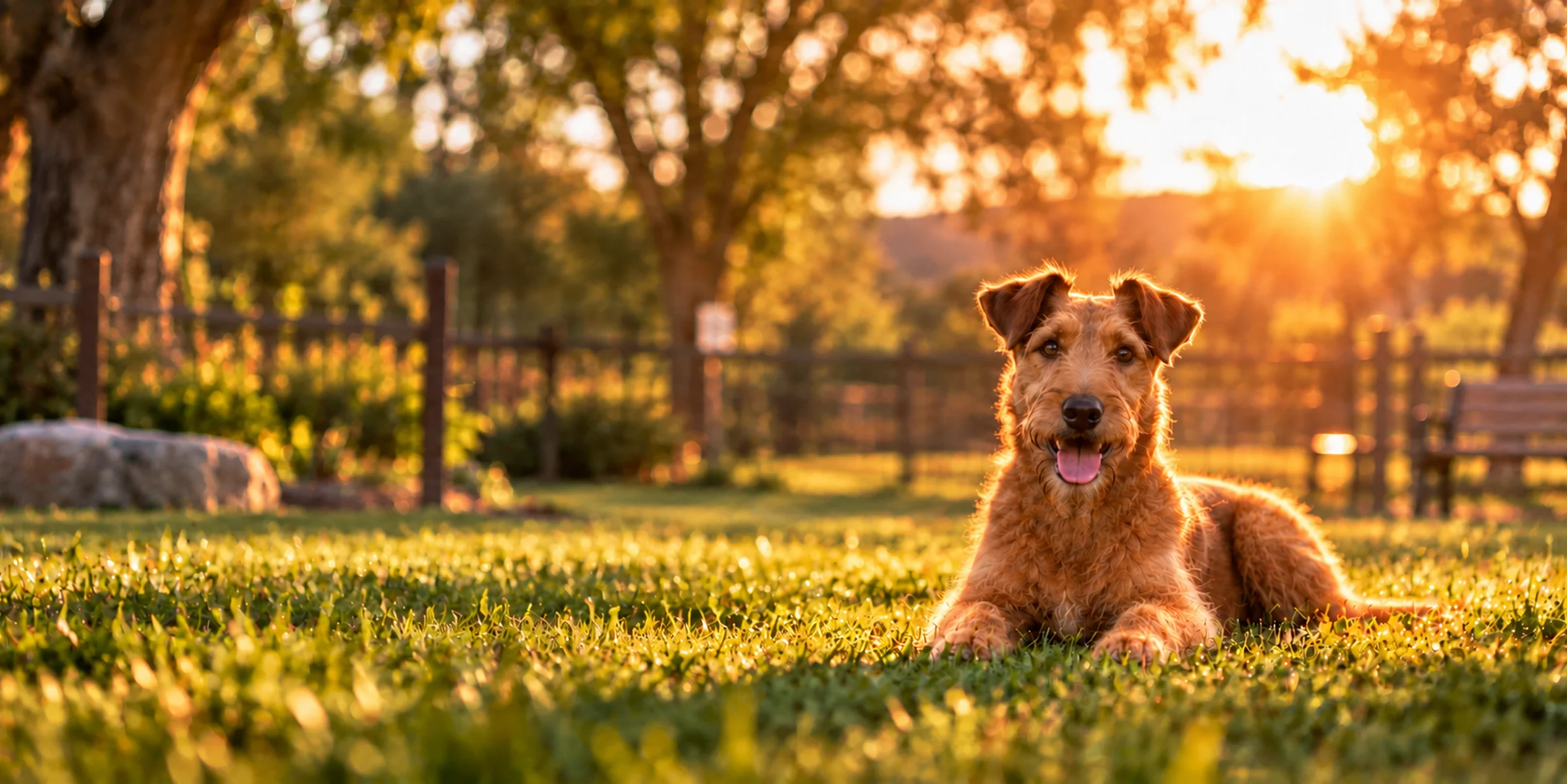
Irish Terrier
A larger wiry terrier with the same courage and the same dog-aggression problem. The Irish Terrier is roughly twice the size; the Lakeland packs the same temperament into sixteen pounds.

Welsh Terrier
The closest look-alike on this site, and the older breed. Welsh Terriers are a little heavier and broader in chest, come only in black and tan or grizzle and tan, and are usually the easier of the two with other dogs.