

small breed
Welsh Terrier
An old black-and-tan Welsh hunting terrier, bred to go underground after fox and badger alongside hounds in the hills of north Wales. Everyone who meets one says small Airedale, which is backwards - the Welsh Terrier is the older of the two. What you get is a cheerful, game, sturdy terrier with a noticeably more even temper than most of the group, wrapped in a harsh coat that wants hand-stripping and a prey drive nobody has bred out.

Pup Height
15-15.5 in

Pup Weight
18-22 lb
Males stand 15-15.5 in at the withers with females proportionally smaller, and 20 lb is treated as an average weight, varying a few pounds with height and density of bone. The jacket is black, spreading onto the neck, tail and upper thighs, over clear tan legs, quarters and head; a grizzle jacket is equally correct and should not be intermixed with black. The coat is hard, wiry and dense over a short soft undercoat, with dense furnishings on muzzle, legs and quarters. Rectangular outline, rectangular head, small V-shaped ears folded forward. Recognized by the AKC in the Terrier Group since 1888. Source: AKC breed standard.

Pup Lifespan
12-15 years
Your pup, at a glance
What’s Life With This Pup Really Like?

High. Affectionate and physically demonstrative with their people, and still a terrier who would rather be doing something than lying down.

Very good. Sturdy, playful and patient enough for family life, and better suited to children old enough to leave a sleeping dog alone.

Mixed. Easier with other dogs than most of the terrier group, though same-sex friction happens, and cats and small pets sit squarely in the prey drive.

Moderate to high. Welsh Terriers alert and comment, and a trained quiet cue takes the edge off without making them a silent dog.

High. An hour a day with real variety in it, and a young one will happily take more.

Very low. The wire jacket sheds minimally when it is stripped, which is why stripping exists; a clipped coat sheds more.

Delightfully silly, and they stay that way for years after most breeds have grown out of it. Games with a chase in them win every time.

Very low, though a wet beard finds a lap.

Good. Bright, food-motivated and more cooperative than most terriers, and quick to quit on a drill with no payoff.

Good as an alarm. Alert and quick to announce a visitor, then usually pleased to meet them - there is no guarding instinct behind the noise.

High. Twice-weekly brushing, hand-stripping every eight to twelve weeks, and daily beard and furnishing care.

Moderate. Apartment life works if the exercise and the grooming genuinely happen; dig-proof fencing and secure ground matter more than the size of the home.
Lifestyle fit
Could This Be Your Best Breed?
A Welsh Terrier does fine in an apartment or a house, provided the fence is solid at the base and an hour of real exercise happens every day, and suits an owner who actually wants a terrier. Budget $1,200 to $2,200 a year, $300 to $600 of that on stripping the coat. Anyone picturing a small, quiet, wash-and-go dog should look elsewhere.

Living Space
An apartment or a house both work on size - Welsh Terriers are tidy 20-pound dogs who shed very little. The constraint is the ground outside rather than the square footage: fencing needs to be solid at the base, because a terrier bred to go to ground will test it, and an hour of real exercise has to happen somewhere every day.

Pup Experience
Workable for a first-time owner who actually wants a terrier. Welsh Terriers are friendlier and more even-tempered than most of the group and they take training well, but the independence, the prey drive and the voice are all still there. The coat is the trap first-timers miss - hand-stripping is either a skill you learn or a standing appointment you keep.

Daily Pup Time
About an hour of real exercise daily with something to think about in it, plus a brush twice a week, a beard wipe most days, and hand-stripping every couple of months.

Allergies & Coat
The Welsh Terrier scores 2/10 for shedding and 2/10 for drooling. No dog is truly hypoallergenic. The allergens come from dander and saliva, and a coat like this one holds on to them rather than spreading them around your home - which is what a groomer is clearing out every six to eight weeks.
Quirks & challenges
The Not-So-Easy Stuff

Hand-Stripping, Not Clipping
The harsh jacket needs stripping every eight to twelve weeks to hold its texture and color. Clipping is easier and permanently softens the coat and dulls the black.
Real Prey Drive
Bred to go to ground on fox and badger, and squirrels, rabbits and cats all read the same way. Recall is unreliable once a scent is on.
They Dig
An earth terrier doing the job they were made for. Fence lines, raised beds and fresh mulch are the usual casualties unless there is a legal place to dig.
Selective With Other Dogs
Easier than most of the group, but same-sex scuffles still happen and early socialization does most of the work of preventing them.
An Alert Barker
Welsh Terriers announce arrivals and disagreements with the neighborhood. Trainable down to reasonable, never silent.
Not Easy to Find
Listed by The Kennel Club as a Vulnerable Native Breed in Britain and uncommon in North America. Expect a wait and a breeder worth waiting for.
The good, the bad & the hairy
Health, Care & Costs
Understanding the health risks and ongoing costs of a Welsh Terrier helps you plan for a happy, healthy life together.

12-15 years
$60-$100
per groom (hand-strip or tidy, bath, beard, ears, nails), every 8-12 weeks ($300-$600/year)
$1,200-$2,200/year
all-in (food, routine vet, grooming, insurance, incidentals)

Health Risks
Conditions this breed is prone to.

Worth saying first. The breed never became fashionable enough to be bred carelessly, the inherited-disease list is short, and 12-15 years is a realistic expectation with good care.
The lens slips out of position, which is acutely painful and leads to glaucoma and loss of the eye if it is not treated within hours. It runs through the working terrier breeds and it is the one test the national breed club and the AKC specifically ask for - a DNA test on both parents removes the risk.
Pressure builds inside the eye and damages the optic nerve, sometimes secondary to a luxating lens and sometimes on its own. A red, cloudy or painful eye is an emergency, not a wait-and-see; annual eye examinations by an ophthalmologist catch the quiet cases.
An underactive thyroid showing up as weight gain, low energy, a dull or thinning coat and recurrent skin trouble. A blood panel diagnoses it and an inexpensive daily tablet manages it for life.
Atopy to pollen, grass and dust mites is common in the breed and shows as itching, chewed feet and inflamed skin. The dense wire coat holds allergens against the skin, which is one more reason the grooming routine is not only cosmetic.
Idiopathic seizures usually begin between one and five years old. There is no DNA test, most affected dogs are controlled well on daily medication, and a breeder should be willing to talk about seizures in the line.

Insurance & Health Coverage
A small, hardy, long-lived breed, so premiums are at the cheaper end and the case for cover is mostly about the few expensive things that do happen.

The eyes are the reason to hold a policy. Lens luxation and glaucoma are emergencies handled by a specialist, and surgery, follow-ups and long-term medication run into four figures quickly. A luxating lens traced to the inherited form is congenital and no policy pays for it, so the DNA results on both parents are the protection that matters - but glaucoma that appears later in a dog with clear test results is exactly what cover is for.

The steady costs underneath are skin and thyroid. Allergy workups, diet trials and year-round medication add up over a decade, and most policies treat allergies as one lifelong condition against a single annual limit, so read that limit rather than the headline premium. Insure while the dog is young: a first itchy season noted in the record becomes a permanent exclusion on any policy taken out afterward.
 Get a Pet Insurance Quote
Care needs
The Daily Routine

Grooming
A hard wiry jacket over a soft undercoat, which needs a thorough brush twice a week and hand-stripping every eight to twelve weeks to keep the texture and the black. A pet clip is the practical alternative and it is a one-way trade: the coat comes back softer, the black fades toward gray, and shedding goes up. The daily job is the beard and leg furnishings - wipe them after meals and water, and comb the trousers out before they mat.

Exercise
An hour a day, and variety matters more than distance. Long walks, a securely fenced space to sprint in, earthdog, agility and scent games all suit them; a Welsh Terrier who only gets a lap around the block goes looking for a job in your flower beds.

Food & Weight
Two measured meals. Welsh Terriers train beautifully on food and gain weight quietly on it, and the wire coat hides the evidence until the ribs disappear - go by feel, and count training treats into the day's total.
Similar breeds
If This Isn’t Quite the One
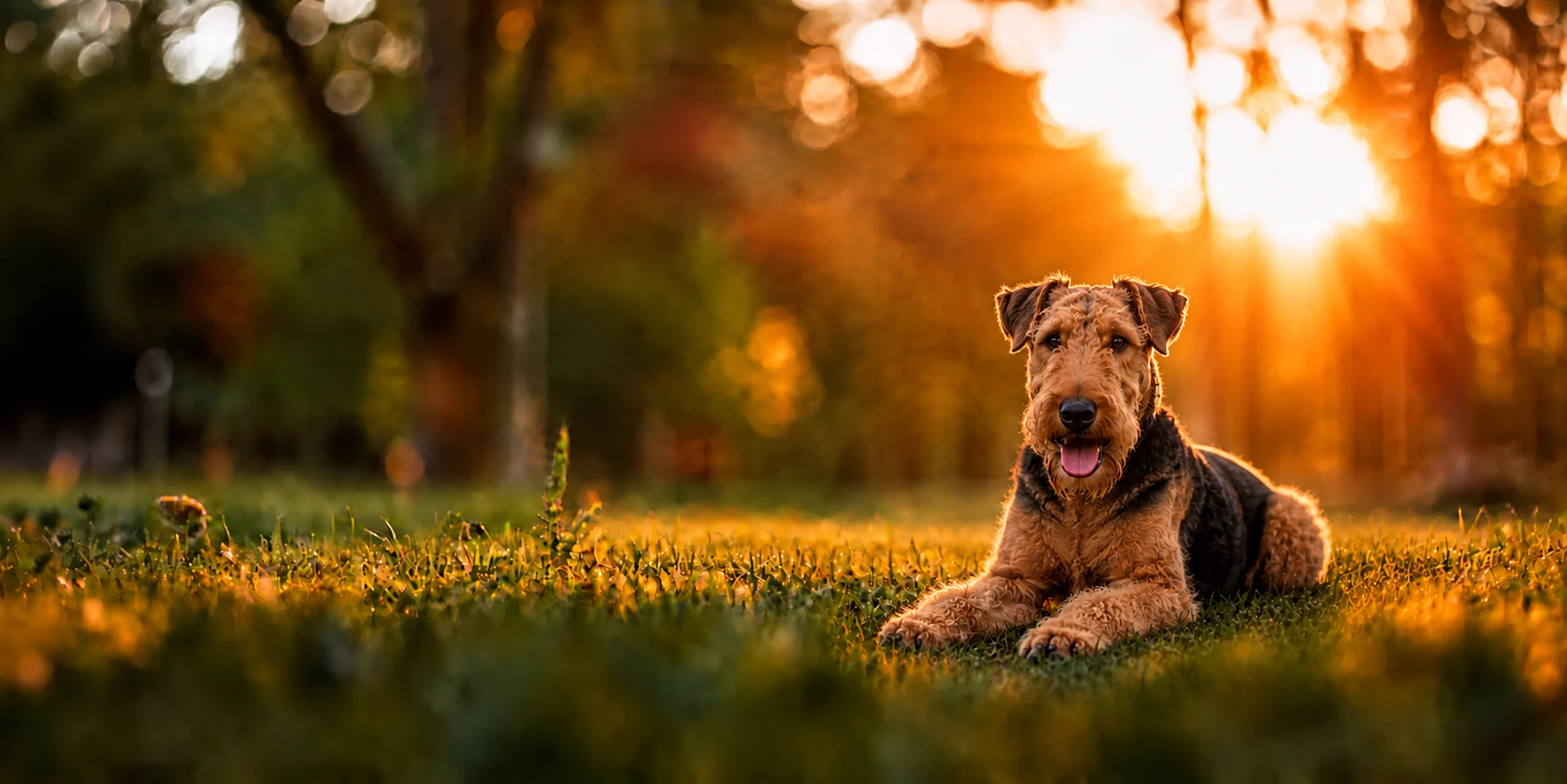
Airedale Terrier
The comparison everyone reaches for, and the one to get right: not a bigger Welsh Terrier or a smaller Airedale, but two separate breeds that landed on the same black-and-tan wire coat. The Airedale is a different animal in practice at 22-23 in and 50-70 lb, more commanding, more protective and more stubborn; the Welsh Terrier is a 20-pound dog who is easier to live with and easier to teach.

Lakeland Terrier
The closest look-alike of all, and the two get confused constantly. The Lakeland is a little smaller and narrower through the chest, comes in blue, black, liver, red or wheaten as well as black and tan, and is bolder and more confrontational with other dogs; the Welsh Terrier is steadier and more consistently friendly with strangers.
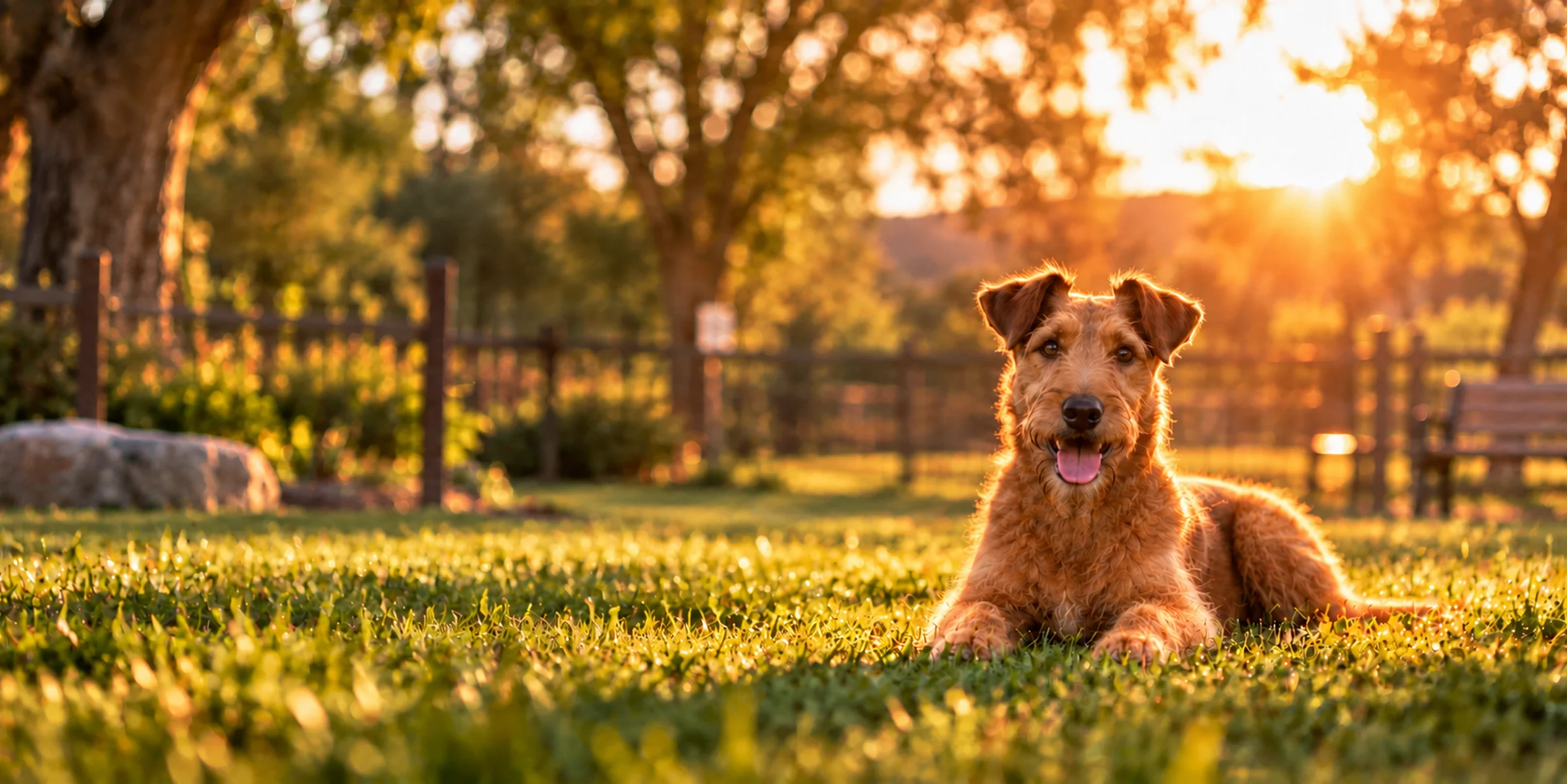
Irish Terrier
A longer-legged wiry terrier with the same working history and a solid red coat instead of black and tan. The Irish Terrier is taller at 18 in, more intense and notably harder with other dogs; the Welsh Terrier is smaller and considerably more relaxed about the world.

Wire Fox Terrier
The other black-and-tan wire terrier of the same size, and the sharper of the two. Wire Fox Terriers carry more drive and more bark, with the same stripping bill.