

small-to-medium breed
Nederlandse Kooikerhondje
A small Dutch sporting dog with a strange old job: flicking a white-plumed tail along reed screens to draw curious ducks up a netted canal toward the hidden decoyman. Kooikerhondjes nearly disappeared in the Second World War and were rebuilt from very few dogs, which is why the screening list matters so much here - von Willebrand disease, an inherited spinal cord disorder and a muscle disease all have tests or clearances attached.

Pup Height
15-16 in
Ideal height at the withers is 16 in for males and 15 in for females, and a dog more than 1.5 in above or below the ideal is disqualified. The standard sets no weight. Distinct orange-red patches on white, with a white blaze down the face, and black-tipped ears (the "earrings") highly desirable. A medium-length, straight or slightly wavy coat with a weather-resistant undercoat, feathered legs and a plumed white tail. Black and white or tricolor dogs are disqualified. Recognized by the AKC in the Sporting Group in 2018. Source: AKC breed standard.

Pup Weight
20-30 lb

Pup Lifespan
12-15 years
Your pup, at a glance
What’s Life With This Pup Really Like?

High. Affectionate and close with their own family, though usually not the lap dog a Cavalier is.

Moderate. Good with calm, respectful older children, but sensitive dogs who dislike rough handling and loud chaos.

Moderate. Usually fine with dogs they know; birds, rodents and some cats set off the hunting instinct.

Moderate. Alert barkers who announce arrivals, but not usually nuisance barkers when their needs are met.

Fairly high. Lively and athletic outdoors, and able to settle in the house once exercised.

Moderate. Steady light shedding with heavier seasonal sheds.

Very playful. Quick, bouncy and clever, with a love of games that involve thinking and chasing.

Minimal. A tidy mouth and very little drool.

Good. Quick learners who thrive on gentle, reward-based training and disengage under pressure.

Fairly high. Watchful and wary of strangers, and quick to let the household know someone is there.

Moderate-low. A weekly brush plus attention to the feathering and feet.

Moderate. The size travels and fits many homes, but sensitivity to noise and new people makes change harder.
Lifestyle fit
Could This Be Your Best Breed?
Kooikerhondjes suit a calm, active household with older children or none, and an owner who will put real work into socialization in the first year, because a poorly socialized one turns fearful rather than merely shy. Twelve to fifteen years at $1,500 to $3,000 a year. People who want a dog that greets every visitor at the door with a wagging welcome should look at a Golden Retriever instead.

Living Space
Adapts to a house or a roomy apartment as long as the exercise happens. A fenced yard helps, and a quiet household suits the breed better than a loud, chaotic one - Kooikers can be sensitive to noise and commotion.

Pup Experience
Workable for a first-time owner who is patient, consistent and willing to put real effort into puppy socialization. The breed is soft and can turn wary or shy without it, and heavy-handed training backfires.

Daily Pup Time
About an hour of exercise and play daily, plus short training or scent games, and a weekly brush that becomes more frequent while the coat sheds.

Allergies & Coat
The Nederlandse Kooikerhondje scores 6/10 for shedding and 1/10 for drooling. No dog is truly hypoallergenic. The allergens come from dander and saliva, and a dog that sheds this much will leave plenty of hair behind - especially on your furniture, floors, and clothes.
Quirks & challenges
The Not-So-Easy Stuff

Reserved With Strangers
Wariness of new people is part of the breed. Without early, ongoing socialization it can harden into fear.
Sensitive Temperament
Harsh corrections, shouting and chaos make a Kooiker shut down. Calm, reward-based handling works far better.
Noise Sensitivity
Some startle at thunder, fireworks or sudden household noise. Gradual exposure in puppyhood helps.
Not for Rough Play
Many tolerate gentle older children well but dislike being grabbed or chased. Toddler homes need close supervision.
Needs a Job
A bored Kooiker invents entertainment. Scent work, agility or trick training keeps the brain busy.
Small-Animal Instinct
Birds, squirrels and sometimes cats get noticed and chased. Recall needs real work before off-leash freedom.
The good, the bad & the hairy
Health, Care & Costs
Understanding the health risks and ongoing costs of a Nederlandse Kooikerhondje helps you plan for a happy, healthy life together.

12-15 years
$50-$80
per groom (bath, brush-out, nails, feet tidied), every 8-12 weeks, or mostly done at home ($0-$400/year)
$1,500-$3,000/year
all-in (food, routine vet, grooming, insurance, incidentals)

Health Risks
Conditions this breed is prone to.

An inherited bleeding disorder in which the blood lacks a clotting protein, so surgery or an injury can bleed dangerously. The breed carries a severe form, but a DNA test has existed for decades and responsible breeding has made affected puppies very rare - still ask for both parents' results.
An inherited disease of the spinal cord that causes progressive weakness and loss of coordination, starting in young dogs. There is a DNA test, and tested parents mean a puppy will not be affected.
An inflammatory muscle disease that can cause weakness, difficulty swallowing and regurgitation. It is under active study in the breed; ask breeders what testing or research participation they use, and see a vet promptly about any trouble eating or swallowing.
The kneecap slips out of place, from an occasional skip in the stride to lameness that needs surgery. It is fairly common in the breed, and both parents should have had their knees checked.
Cataracts and other inherited eye conditions appear in the breed. Parents should have a current eye examination by a veterinary ophthalmologist, repeated through the breeding years.
Idiopathic epilepsy, usually starting between one and five years old, and inherited kidney disorders such as renal dysplasia are both reported. Neither has a screening test, so ask about the family history.

Insurance & Health Coverage
The Kooikerhondje is a small, long-lived dog, and most of the claims that matter are the ordinary ones - a knee surgery for patellar luxation, an eye problem, a swallowed toy - spread over a life that often reaches the teens. Insure young, before a limp or a vet's note about the knees turns into a pre-existing exclusion.

Epilepsy is the chronic cost to plan for. Daily medication and regular blood monitoring can run for years, so look at annual limits and whether the policy covers ongoing conditions year after year.

The DNA-testable diseases, von Willebrand disease and ENM, are inherited and would not be covered. Test results on both parents are the real protection, so ask the breeder for them before you commit.
 Get a Pet Insurance Quote
Care needs
The Daily Routine

Grooming
A medium-length, water-resistant coat that is easier than it looks. A good brush once or twice a week keeps it tidy, with more frequent work during seasonal shedding. The feathering behind the ears and on the legs tangles first. Trim the hair between the pads, check the ears after swimming, and bathe only when needed.

Exercise
About an hour a day of walks, play and something for the brain. Kooikers love to run and many enjoy swimming, but they are happiest when exercise includes a game - fetch, scent work, agility or tricks. A secure fence or a long line matters until recall is reliable.

Food & Weight
A quality small-to-medium breed diet in measured meals. Kooikers are athletic and usually stay lean if they get their exercise, but training treats add up quickly, so count them into the daily ration. Keep the dog slim to protect the knees.
Similar breeds
If This Isn’t Quite the One

Nova Scotia Duck Tolling Retriever
The other duck-luring specialist - the Toller draws ducks in by playing along an open shoreline, where the Kooiker worked the reed-screened decoy pipes. The Toller is bigger and a true retriever, with far more drive and stamina and a famous scream; the Kooiker is smaller, calmer indoors and more sensitive.

Brittany
Another compact, orange-and-white sporting dog with a quick mind. The Brittany is bigger, far higher-energy and friendlier with strangers; the Kooiker is calmer indoors but more reserved and sensitive.
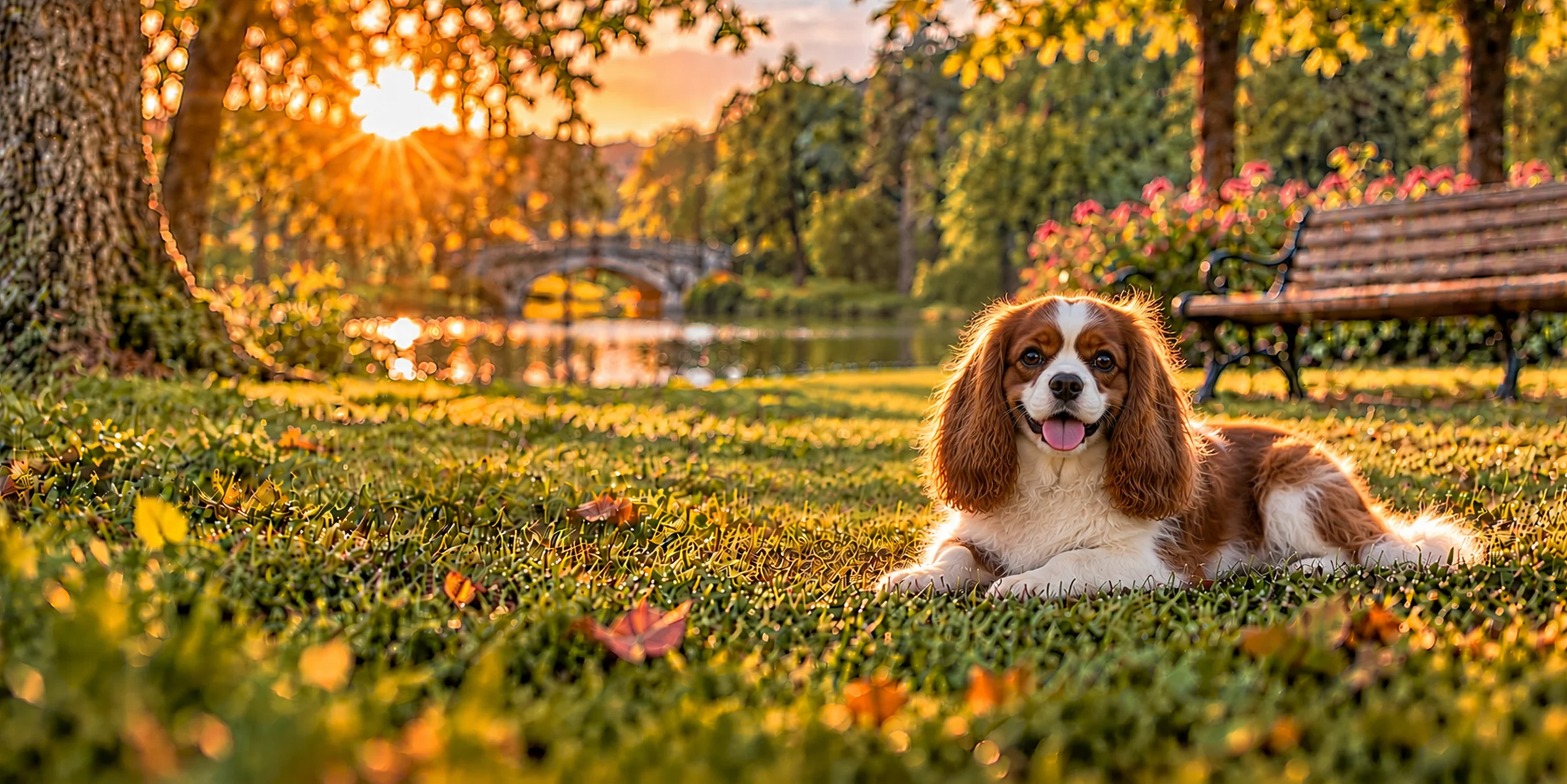
Cavalier King Charles Spaniel
A similar red-and-white spaniel look in a smaller, softer package. The Cavalier loves everyone and is content as a lap dog; the Kooikerhondje is more athletic, more alert and choosier about people.

Boykin Spaniel
A small, water-loving sporting dog of similar weight and trainability. The Boykin is a sociable, busy hunting companion; the Kooiker is more reserved, more sensitive and less driven in the field.