

medium breed
Brittany
More Brittanys have finished as both show and field champions than any other breed, which tells you most of what there is to know: this is a compact, athletic, affectionate gundog that is superb with children and genuinely good at the job. The energy level tops this site's scale - two hours of real activity most days, not a walk around the block - and they are soft enough that harsh handling sets them back rather than forward.

Pup Height
17.5-20.5 in
One height range covers both sexes. Orange and white or liver and white, plain or roan. The AKC dropped Spaniel from the name in 1982 because the Brittany does not work like one - they point and retrieve rather than flushing, which puts them with the pointing breeds. Many are born with a naturally short tail. Source: AKC breed standard.

Pup Weight
30-40 lb

Pup Lifespan
12-14 years
Your pup, at a glance
What’s Life With This Pup Really Like?

Very affectionate and closely bonded. They were bred to work within range of one person and behave the same way indoors - though the cuddle arrives after the exercise, not instead of it.

Excellent. Playful, sturdy, patient and a sensible size for a family rather than an overwhelming one. The caveat is their sheer bounce around toddlers.

Very good. Sociable with dogs and generally fine with cats. There is real bird drive from the hunting history, so poultry is a different question.

Moderate. They announce arrivals and are not constant talkers, though an under-exercised Brittany finds their voice quickly.

The top of the scale. Two hours of real activity most days, and this is genuinely one of the most demanding breeds on this site regardless of size.

Moderate. A dense coat with feathering that sheds steadily year-round and comes out on the comb more than on the furniture.

Relentlessly enthusiastic. They will retrieve until you stop, and they stay that way well into old age.

Very low. A clean, dry-mouthed dog.

Very good. Bright, willing and handler-focused by breeding - and soft enough that reward-based work is necessary rather than merely preferable.

Poor. They notice a visitor and go to greet them. The friendliness is the point of the Brittany.

Moderate and undemanding. Twice-weekly brushing, a comb through the feathering after country walks, weekly ears, and almost no trimming.

Moderate. They settle into new homes and routines readily; what they do not adapt to is a household that cannot meet two hours a day.
Lifestyle fit
Could This Be Your Best Breed?
A Brittany suits a house with a yard and a genuinely active household - runners, hikers, hunters, people whose weekends involve mud. Costs are modest at $1,400 to $2,300 a year across twelve to fourteen years, so the real price is the hours. Anyone whose week is a desk, a commute and a walk around the block should look elsewhere, and so should anyone about to talk themselves into an apartment because a Brittany looks compact enough.

Living Space
A house with a yard and a genuinely active household. Brittanys are compact, quiet and clean enough that people talk themselves into apartments, and it goes badly - the issue is not the space but what a dog with this much drive does with an ordinary day.

Pup Experience
Manageable for a committed first-time owner who is honest about the exercise. Brittanys are bright, willing and easy to teach; the two things that catch people out are an energy level that tops this site's scale and a sensitivity that makes harsh handling actively counterproductive.

Daily Pup Time
Two hours of real activity most days with something for the head in it, plus brushing twice a week and weekly ears. The coat itself is undemanding.

Allergies & Coat
The Brittany scores 4/10 for shedding and 2/10 for drooling. No dog is truly hypoallergenic. The allergens come from dander and saliva, and a dog that sheds this much will leave plenty of hair behind - especially on your furniture, floors, and clothes.
Quirks & challenges
The Not-So-Easy Stuff

The Highest Energy Here
Two hours of real activity most days, and mental work on top. Under-exercised they become frantic, mouthy and impossible to settle.
Not Actually a Spaniel
They point and retrieve rather than flushing. Expect gundog training advice aimed at spaniels to be the wrong advice.
Sensitive to Correction
They read tone acutely and take telling-off hard. Reward-based work is not a preference with this breed, it is what functions.
Shy Without Socialization
Thin early exposure produces a genuinely timid adult, and it is far harder to undo than to prevent. This is the failure mode.
Hates Being Left Alone
Bred to work at a handler's side and closely attached because of it. Long solo days are a poor fit for this breed.
Ears Need Weekly Care
Drop ears on a dog who works wet ground and long grass. Weekly cleaning and drying prevents infections that otherwise recur.
The good, the bad & the hairy
Health, Care & Costs
Understanding the health risks and ongoing costs of a Brittany helps you plan for a happy, healthy life together.

12-14 years
$45-$70
per groom (bath, tidy, feathering and ears), every 8-12 weeks ($200-$400/year)
$1,400-$2,300/year
all-in (food, routine vet, grooming, insurance, incidentals)

Health Risks
Conditions this breed is prone to.

The hip joint develops loosely, so the ball and socket grind instead of gliding. It leads to arthritis and, in severe cases, surgery - which matters more in a dog whose whole life is physical. Ask to see hip scores for both parents.
Seizures with no other underlying cause, usually first appearing between one and five years old. It is controlled with daily medication rather than cured, and the drugs and monitoring are a lifelong cost.
Drop ears on a dog who works wet ground and pushes through cover. Structural rather than inherited, and the most predictable recurring cost in the breed - weekly cleaning and thorough drying is genuine prevention.
The thyroid stops producing enough hormone, causing weight gain, lethargy and a coat that thins or dulls. A daily tablet manages it completely and the medication itself is inexpensive.
The lens clouds and vision goes with it. Surgery restores sight in most cases but runs into thousands per eye, and breeding stock should carry a current eye examination certificate.
An inherited immune system fault documented specifically in this breed, in which part of the infection-fighting cascade is missing and affected dogs get recurrent serious infections. It is rare, and it is one of the reasons a Brittany with repeated unexplained infections deserves investigating rather than another course of antibiotics.

Insurance & Health Coverage
A sound, long-lived breed whose costs are mostly chronic rather than catastrophic.

Epilepsy is the one that shapes the decision. It typically appears between one and five years old and then means daily medication and regular bloodwork for the remainder of a twelve to fourteen year life - the textbook chronic condition an insurer excludes the moment it appears in the notes, and the first seizure is when that happens.

Ears are the recurring line and start earlier still. On a gundog who works wet ground that record builds in the first year, which makes cover arranged early worth more than the premium difference suggests. Joint surgery is the main one-off, in the low thousands, and cataract surgery is thousands per eye.
 Get a Pet Insurance Quote
Care needs
The Daily Routine

Grooming
Brush twice a week with a slicker and a comb through the feathering on the ears, legs and chest where burrs and mats collect. Very little trimming - a tidy of the feet and ears is enough. Ears cleaned weekly and dried after every swim, and a check through the feathering after any walk in long grass.

Exercise
Two hours most days, and the type matters as much as the total. Gundog work, agility, tracking, canicross and long runs all suit them; two hours of lead walking will tire their legs and leave them no calmer than when you set off.

Food & Weight
Two measured meals with training treats coming out of the ration. Brittanys are lean, hard-working dogs who should stay that way, and at thirty-five pounds a few extra treats a day show up quickly on a working frame.
Similar breeds
If This Isn’t Quite the One

Boykin Spaniel
A similar size and a similar enthusiasm in a dog that genuinely is a spaniel - the Boykin flushes and retrieves rather than pointing, is a shade less demanding on exercise, and carries more hip risk for their size.

Braque Francais, Pyrenean
The rarer French pointer with much the same soft, closely-bonded temperament and a similar working style. The Pyrenean is larger and considerably harder to find; the Brittany is the version you can actually find, with a fuller coat to look after.

Vizsla
A similar-sized pointing dog with the same appetite for work and a far greater need to be with someone. Vizslas struggle with long days alone where a Brittany copes, and the Brittany's coat handles cold and heavy cover more easily.
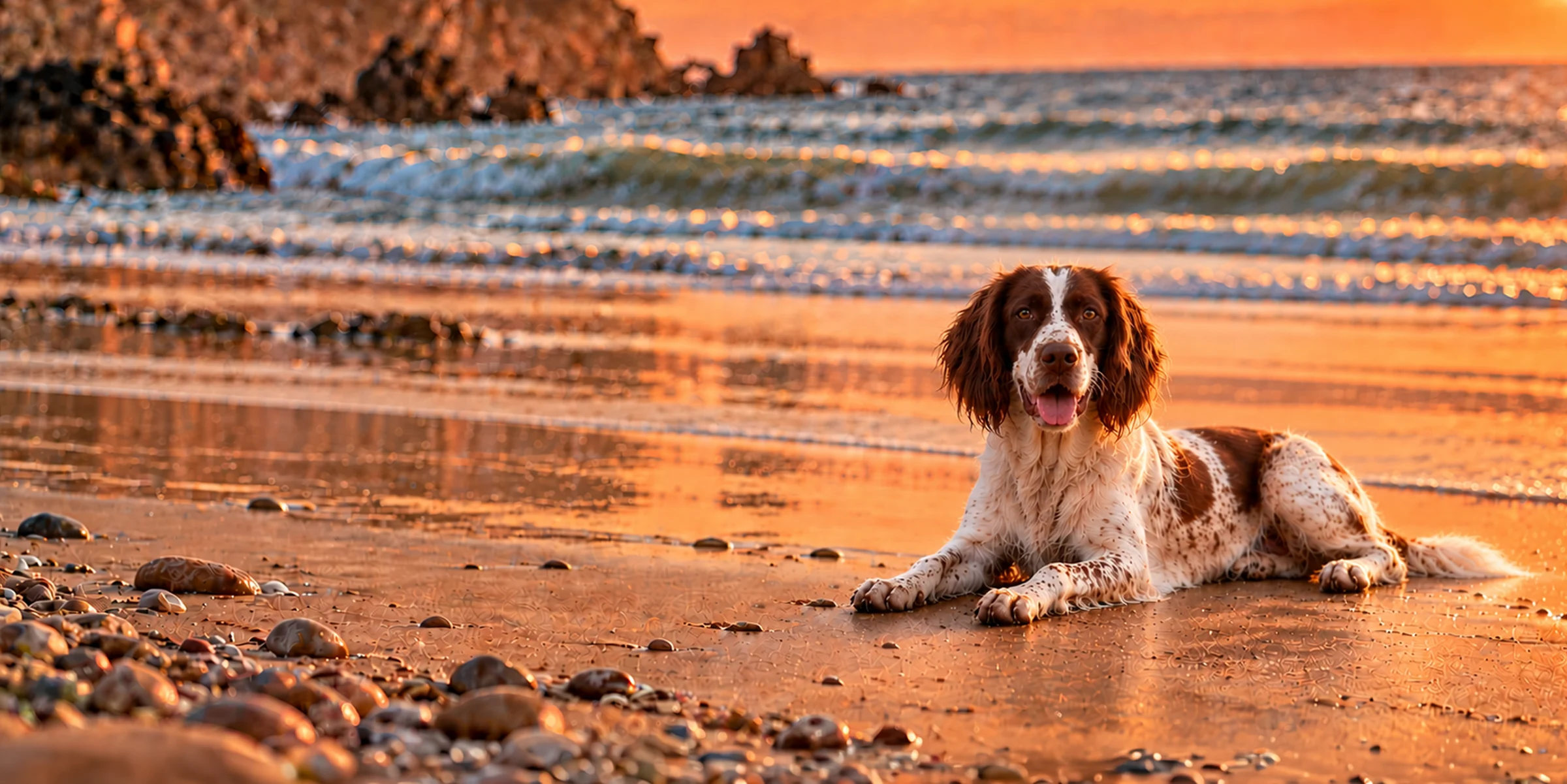
French Spaniel
The larger French pointing breed the Brittany shares its country with. French Spaniels stand 21.5-24 in against a Brittany's compact frame, work at a steadier pace, and take harsh handling badly.