

large breed
Old Danish Pointer
A Danish pointing breed traced to the early 1700s and to Morten Bak, who crossed traveling people's dogs with local farm dogs near Randers and bred on for eight generations. The Old Danish Pointer is heavier and houndier than most pointers, with a dewlap, deep flews and a slow, methodical hunting style that stays in contact with the handler. At home they are calm, gentle and easy with children.

Pup Height
19.5-23.5 in

Pup Weight
57-77 lb
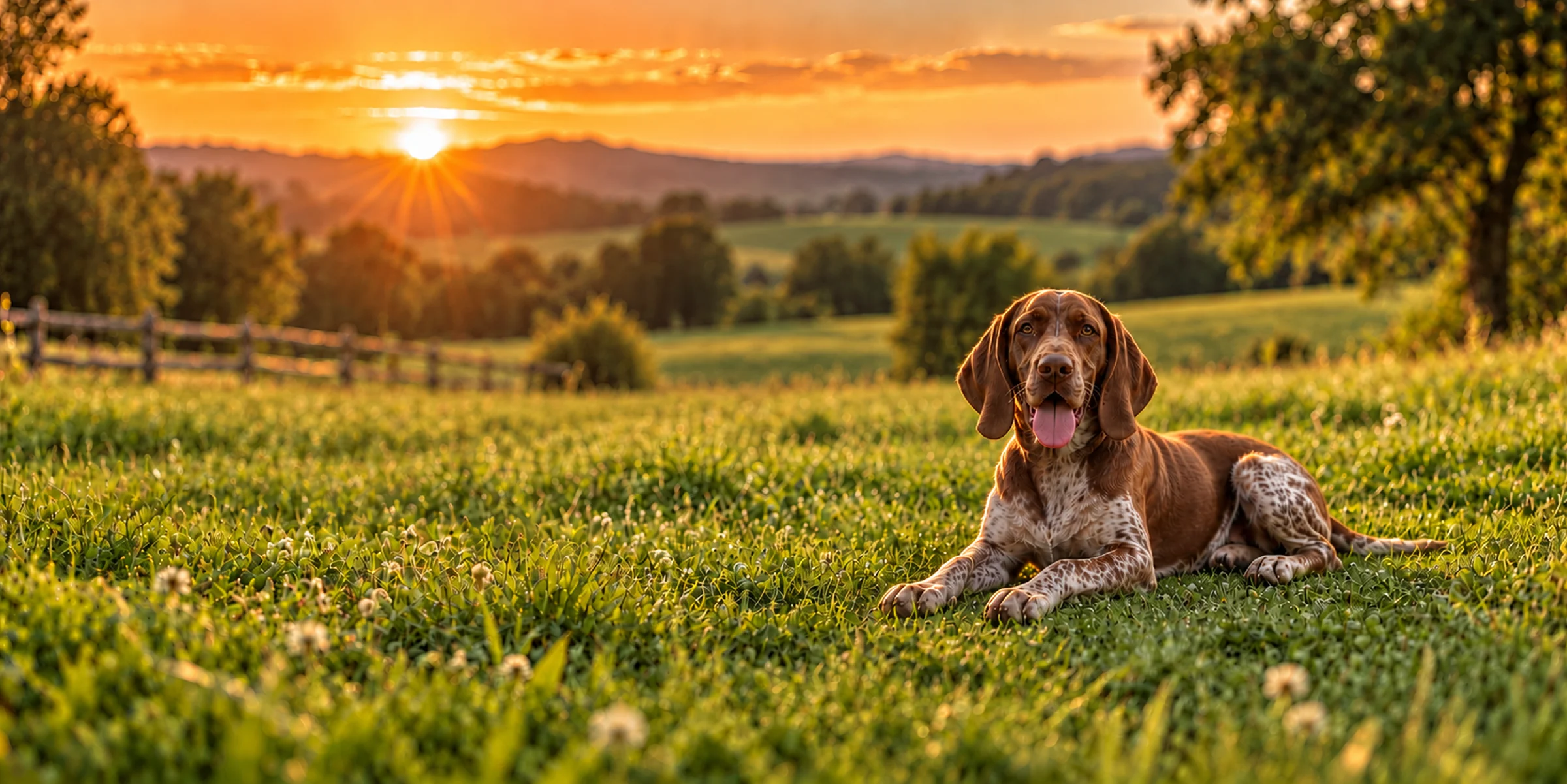
Males 21.5-23.5 in and 66-77 lb, females 19.5-22 in and 57-68 lb, with a clear difference in substance between the sexes that the standard treats as a feature. White with brown markings - a few large patches or many small freckles - with brown to dark brown preferred. A short, dense, somewhat hard coat, and loose skin on the head and neck forming a dewlap. Entropion, ectropion and distichiasis are disqualifying faults. In the AKC's Foundation Stock Service since 2026. Source: FCI breed standard.

Pup Lifespan
10-13 years
Your pup, at a glance
What’s Life With This Pup Really Like?

High. Affectionate and happy to settle close by once the day's exercise is done.

Very good. Calm and tolerant, though a strongly built young dog can knock over small children in play.

Good with dogs. Cats and small animals depend on early socialization, since the bird and prey drive is real.

Low. They are generally quiet at home and bark to announce something rather than for entertainment.

High. A steady, methodical worker rather than a whirlwind, but they still need real daily exercise.

Moderate. The short coat sheds steadily year-round and the hairs weave into fabric.

Easygoing and willing, with the most enthusiasm saved for searching, retrieving and field work.

Moderate for a pointer. Deep flews and a dewlap mean a wet muzzle after drinking.

Good. Cooperative and handler-focused, with bird drive as the main competition for their attention.

Moderate. They will announce visitors and are reserved with strangers, but there is little guarding instinct.

Low. A weekly brush plus ear, fold and foot checks.

Moderate. Calm indoors, but they need space, exercise and ideally a hunting or field outlet.
Lifestyle fit
Could This Be Your Best Breed?
Old Danish Pointers need a house with a yard and regular access to open country, and they suit someone who hunts or runs a field sport, though a committed first-timer can manage the steady temperament. Ten to thirteen years at $1,400 to $2,400 a year, with nearly the whole population in Denmark and Sweden and thin published health data. A household whose dog gets a walk around the block should leave this breed in Scandinavia.

Living Space
A house with a yard and regular access to open country. Old Danish Pointers are quiet and settled indoors for a gundog, but they are strongly built, bird-driven dogs who need somewhere real to run and search.

Pup Experience
Workable for a committed first-time owner who hunts or wants a field sport, easier still for someone who has lived with a pointing breed. The temperament is steady and cooperative; the harder parts are the bird drive and simply finding a puppy.

Daily Pup Time
An hour to ninety minutes of exercise daily, ideally with off-leash searching or field work in it. The coat takes a few minutes a week, plus weekly ears.

Allergies & Coat
The Old Danish Pointer scores 5/10 for shedding and 4/10 for drooling. No dog is truly hypoallergenic. The allergens come from dander and saliva, and a dog that sheds this much will leave plenty of hair behind - especially on your furniture, floors, and clothes.
Quirks & challenges
The Not-So-Easy Stuff

Very Hard to Find
A small population concentrated in Denmark and Sweden, only recently in the AKC's Foundation Stock Service. Expect a waitlist or an import.
Bird Drive Is Real
Bred to find and point game birds. Recall around wildlife needs honest limits and a long line.
Needs Daily Work
Calmer than many pointers, but still a hunting dog. A short walk around the block does not settle them.
Ears Need Weekly Care
Low-set drop ears on a dog who works wet ground. Check, clean and dry them weekly.
Some Drool
Deep flews and a dewlap mean a wet muzzle after drinking and some drool when excited or hot.
Thin Health Data
Few published studies exist for the breed. Ask breeders directly for hip scores and eye examinations.
The good, the bad & the hairy
Health, Care & Costs
Understanding the health risks and ongoing costs of a Old Danish Pointer helps you plan for a happy, healthy life together.

10-13 years
$40-$70
per groom (bath, nails, ears), every 10-12 weeks or done at home ($0-$300/year)
$1,400-$2,400/year
all-in (food, routine vet, grooming, insurance, incidentals)

Health Risks
Conditions this breed is prone to.

Worth saying plainly. The breed is small and mostly Scandinavian, and there are few published health surveys in English. The conditions below are the ones flagged for the breed and for similar heavy pointers, not a complete picture from large studies.
The joints develop loosely and wear into arthritis, sometimes needing surgery that runs into the thousands. Both parents should have official hip and elbow scores, and puppies benefit from controlled growth.
Eyelids that roll in or sag out, and extra eyelashes that rub the eye. The looser facial skin makes eyelid problems a reasonable concern, and the standard disqualifies all three. Ask for eye examinations on both parents.
Low-set drop ears trap warmth and moisture, and a dog working wet cover makes it worse. Weekly checking, cleaning and drying is the prevention; ignored, it becomes chronic.
The stomach fills with gas and twists, cutting off circulation, and it kills within hours without emergency surgery. A deep-chested, strongly built dog is at real risk - split meals and keep hard exercise away from feeding.
Not inherited, but a common reason a hunting dog sees a vet. Cut pads, torn nails, grass seeds in the ears and between the toes, and the occasional cruciate injury.

Insurance & Health Coverage
Insure early, while the record is clean. The joint and eyelid conditions that matter in this breed tend to show up young, and once they appear in the notes they become permanent exclusions.

Accident cover earns its keep with a working pointer. Cuts, torn ligaments and foreign bodies picked up in the field are the claims most likely to arrive, and several policies exclude injuries sustained while hunting - check that before you commit, because it removes exactly the cover this dog needs.

Bloat is the emergency to plan for. And because published health data for the breed is thin, a breeder who can show hip, elbow and eye results on both parents is worth waiting for.
 Get a Pet Insurance Quote
Care needs
The Daily Routine

Grooming
A short, dense, somewhat hard coat that needs a quick brush once a week, more during seasonal shedding. Clean the dewlap folds and lips if they stay wet, check and dry the ears weekly, and trim nails regularly. After a day in the field, look over the feet, ears and coat for seeds, cuts and ticks.

Exercise
An hour to ninety minutes daily, with off-leash searching in a safe area, field work, retrieving or long hikes. Old Danish Pointers are calmer than many pointing breeds, but they are not a walk-around-the-block dog.

Food & Weight
Two measured meals a day scaled to the work, with hard exercise kept away from feeding because of the bloat risk. A working dog in season burns far more than one in the off months, so adjust portions and keep them lean for the joints.
Similar breeds
If This Isn’t Quite the One

German Shorthaired Pointer
The versatile pointer most people know, with a similar short liver-and-white coat. The Shorthair is lighter, faster and far more intense; the Old Danish Pointer is heavier, slower and calmer, and much harder to find.
Bracco Italiano
Another old continental pointer with loose skin, deep flews and a steady, deliberate way of hunting. The Bracco is larger, droolier and more hound-like; the Old Danish Pointer is more compact and easier to fit into an ordinary house.

Braque du Bourbonnais
A rare European pointing breed that also works close to the gun and settles well at home. The Bourbonnais is smaller and lighter with a ticked coat; the Old Danish Pointer is more strongly built and brings more drool.