

medium-to-large breed
Pharaoh Hound
The national dog of Malta, where they are the Kelb tal-Fenek, the rabbit dog. Lean, amber-eyed and famous for blushing - ears and nose flushing pink when they are pleased. Pharaoh Hounds are among the healthier purebreds and about as low-maintenance as a coat gets, and the costs sit elsewhere: a sensitivity to anesthesia and flea products worth flagging to any new vet, thin skin, and a real dislike of cold.

Pup Height
21-25 in
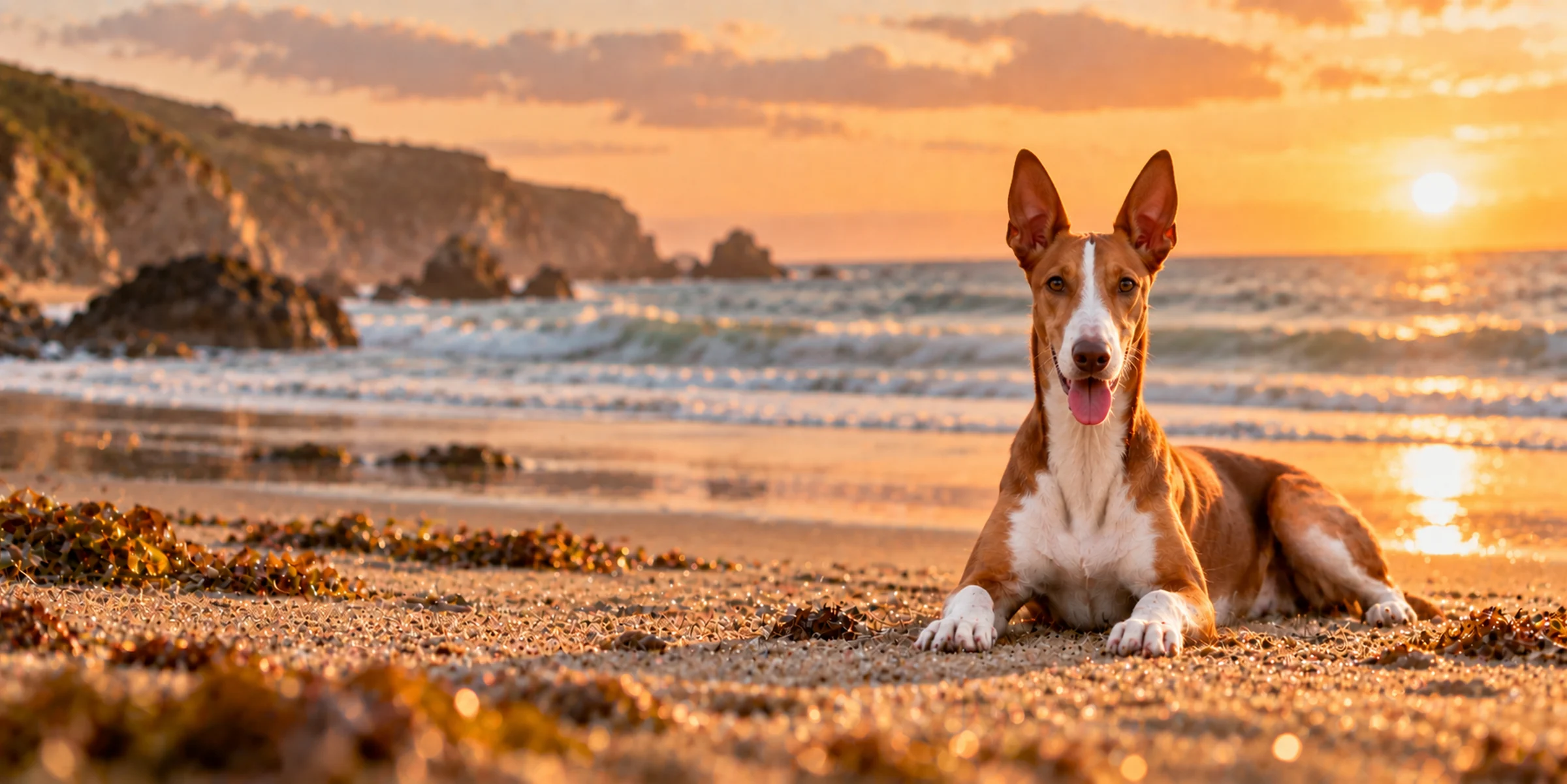
Males 23-25 in, females 21-24 in; the standard sets no weight. Tan or rich tan, from light to chestnut, with a white tail tip much desired and white allowed on the chest, toes and a slim blaze down the center of the face. Amber eyes and a flesh-colored nose that blends with the coat. A short, glossy, single coat. Recognized by the AKC in 1983. Source: AKC breed standard.

Pup Weight
45-55 lb

Pup Lifespan
12-14 years
Your pup, at a glance
What’s Life With This Pup Really Like?

High. Pharaoh Hounds are affectionate with their own people and happy to share the sofa after a run.

Good. Playful and gentle with respectful children, though a sensitive hound does not enjoy rough handling.

Low for small animals. Usually good with other dogs, but cats, rabbits and rodents trigger a strong chase instinct.

Moderate. Many are vocal, barking at movement and yodeling or talking when excited.

High. They need a daily chance to sprint, then settle calmly indoors.

Low. A short single coat that sheds lightly.

Very playful. Clownish, inventive and fond of chase games well into adulthood.

Very low.

Moderate. Quick to learn and willing when training is fun, but independent and easily bored by repetition.

Moderate. Alert and quick to announce arrivals, with no guarding instinct behind the noise.

Very low. A weekly rub-down and regular nail trims are the whole routine.

Moderate. Calm indoors and adaptable to smaller homes, but cold-sensitive and in need of secure space to run.
Lifestyle fit
Could This Be Your Best Breed?
Pharaoh Hounds fit an active household with a tall, solid fence and somewhere safe to let a sighthound run flat out - $1,300 to $2,300 a year, twelve to fourteen years, and almost nothing at the groomer. They are playful, clownish company at home and reserved with visitors. A four-foot fence and a resident cat are the two dealbreakers, and neither is negotiable.

Living Space
A house with a tall, solid fence is the honest answer. Pharaoh Hounds are calm enough indoors to manage an apartment with committed exercise, but they need somewhere safe to run flat out, and a four-foot fence is a suggestion to a dog that can clear it from a standstill.

Pup Experience
Workable for a first-time owner who is patient and realistic about recall. Pharaoh Hounds are affectionate and fairly biddable for a hound, but independent, sensitive to harsh handling, and driven by a chase instinct no amount of training fully switches off.

Daily Pup Time
About an hour of exercise daily, including a chance to sprint somewhere enclosed. Grooming is close to nothing - a weekly rub-down and nails.

Allergies & Coat
The Pharaoh Hound scores 2/10 for shedding and 1/10 for drooling. No dog is truly hypoallergenic. The allergens come from dander and saliva, and a coat that sheds this little leaves far less of them on your furniture, floors, and clothes.
Quirks & challenges
The Not-So-Easy Stuff

Strong Prey Drive
Bred to chase rabbits, and anything small that runs triggers it. Cats and small pets are a real risk.
Unreliable Recall
Once a Pharaoh Hound locks onto movement, they are gone and not listening. Off-leash only in secure spaces.
Jumpers and Escapers
Athletic enough to clear a low fence from a standstill. A tall, solid fence and supervision in the yard are needed.
Feels the Cold
A short coat and very little body fat. A warm coat for winter walks and a soft bed indoors are not optional.
Anesthesia Sensitivity
Lean hounds can react badly to barbiturates and some drugs. Make sure every vet knows the breed before any procedure.
Vocal and Clever
Many bark, yodel and talk, and a bored one invents mischief. Daily exercise and play keep the noise and mischief down.
The good, the bad & the hairy
Health, Care & Costs
Understanding the health risks and ongoing costs of a Pharaoh Hound helps you plan for a happy, healthy life together.

12-14 years
$40-$70
per groom (bath, nails, ears) if used at all - most owners do it at home ($0-$250/year)
$1,300-$2,300/year
all-in (food, routine vet, grooming, insurance, incidentals)

Health Risks
Conditions this breed is prone to.

Worth saying first. The breed has few known inherited problems and no breed-specific DNA tests, and most Pharaoh Hounds reach their teens. Choose a breeder who still screens hips, knees and eyes.
Like other lean sighthound types, Pharaoh Hounds can be sensitive to barbiturates and some anesthetic drugs, and recover slowly or react badly at standard doses. Tell every vet before surgery or dentistry, and ask about the anesthetic protocol.
Some owners and breeders report reactions to certain insecticides, flea and tick products and yard chemicals. Use products your vet has approved for the breed and keep treated lawns in mind.
The hip joint develops loosely and wears into arthritis over time. Uncommon in the breed, but both parents should still have hip scores.
The kneecap slips out of its groove, causing a skipping gait. Mild cases need nothing; severe ones need surgery, so ask for parents' knee evaluations.
A thin, short coat offers little protection, and some Pharaoh Hounds develop itchy skin from environmental or food allergies. Usually managed with diet changes and vet-prescribed treatment.

Insurance & Health Coverage
A genuinely healthy breed, so the illness side of a policy is light and premiums should be modest.

What you are insuring is the athlete. A Pharaoh Hound running flat out collects torn skin, broken toes and soft-tissue injuries, and a dog that clears a fence or slips a collar after a rabbit is a road-traffic risk. Accident cover earns its keep more than illness cover here.

The anesthesia sensitivity matters too: any procedure that needs a careful protocol or longer monitoring costs more, so check that the policy's per-condition limits leave room for it.
 Get a Pet Insurance Quote
Care needs
The Daily Routine

Grooming
About as easy as a coat gets - a short, glossy single coat that needs a weekly wipe with a rubber curry brush or damp cloth and very occasional baths. Pharaoh Hounds have little doggy odor. The routine that matters is nails, trimmed every couple of weeks, plus checking the thin skin for scrapes after a run.

Exercise
About an hour a day, and part of that should be a real sprint in a securely fenced area - leash walks alone do not touch a dog built to run. Lure coursing, agility and play dates with other fast dogs suit them well. On cold days, a coat outside and shorter outings.

Food & Weight
Pharaoh Hounds should be lean, with the outline of the last ribs and hip bones just visible - correct condition for the breed, not an underfed dog. Feed measured meals to the dog's activity level and resist adding weight because they look thin next to other breeds.
Similar breeds
If This Isn’t Quite the One
Ibizan Hound
The closest look-alike - another large-eared, amber-eyed Mediterranean rabbit hound with the same prey drive and jumping ability. The Ibizan is taller and lighter, comes in red and white and in a wire coat; the Pharaoh Hound is solid tan and a little more compact.

Cirneco dell'Etna
The small Sicilian cousin, with the same tan coat, upright ears and hunting style. The Cirneco is roughly half the size and easier to house; the Pharaoh Hound needs more room to run.

Basenji
Another clean, short-coated, independent hound with a strong chase instinct. The Basenji is smaller, more aloof and notably harder to train; the Pharaoh Hound is more playful and openly affectionate.