

medium-to-large breed
Porcelaine
One of the oldest French scenthounds, from the Franche-Comte on the Swiss border, where packs hunted hare and roe deer. The breed nearly vanished after the Revolution and was rebuilt in the 1800s, and the name comes from a glossy white coat that looks like porcelain. Porcelaines are 55 to 62 pounds of gentle, good-natured pack hound, and the two things that complicate them are a bay that carries and a nose that outranks any recall.

Pup Height
21-23 in
Males 22-23 in, females 21-22 in. A very white coat with round orange spots that should not join into a blanket, and orange mottling often on the ears. The hair is short, fine and glossy over thin skin. One variety. Recognized by the FCI and in the AKC's Foundation Stock Service. Source: FCI breed standard.

Pup Weight
55-62 lb

Pup Lifespan
12-13 years
Your pup, at a glance
What’s Life With This Pup Really Like?

Fairly high. Affectionate and gentle at home, and happy to settle close to their people after a good run.

Very good. Gentle and even-tempered with children, though a sensitive hound does best with kids who are calm around dogs.

Mixed. Easy with other dogs, as a pack hound should be, and a genuine risk to cats, rabbits and small pets.

High. A clear, carrying bay on a scent and a tendency to howl when bored or left alone.

High outdoors. An hour or more of running and nose work daily, after which most settle well indoors.

Low to moderate. The fine, short coat drops little hairs steadily, but there is not much of it.

Cheerful and nose-led. They enjoy scent games and running with other dogs more than fetch.

Low. A tidy-mouthed hound.

Moderate. Willing and bright indoors, and easily distracted once a scent is in play.

Low. They may bay at an arrival, then greet whoever it is.

Very low. A weekly rub-down and ear check covers it.

Low. Poorly suited to apartments, close neighbors, cold climates without a coat, or long days alone.
Lifestyle fit
Could This Be Your Best Breed?
Porcelaines want country or open suburb: a securely fenced yard, an hour or more of walking and scent work a day, and an owner who has kept a hound before and trains with a light hand. Costs run $1,300 to $2,200 a year over twelve or thirteen. Very few live in the US, so expect an import. A subdivision with houses ten feet apart is the setting where this goes wrong fastest.

Living Space
A house with a securely fenced yard, ideally in the country or the suburbs with some distance from neighbors. A Porcelaine bays on a scent and runs a long way after one, and neither suits an apartment or thin shared walls.

Pup Experience
Best with someone who has lived with a scent hound before. The temperament is gentle and easy, but the nose, the voice and a soft, sensitive nature that sulks under harsh handling all take some understanding.

Daily Pup Time
An hour to ninety minutes of exercise daily, with real scent work in it. The coat takes a few minutes a week.

Allergies & Coat
The Porcelaine scores 4/10 for shedding and 2/10 for drooling. No dog is truly hypoallergenic. The allergens come from dander and saliva, and a dog that sheds this much will leave plenty of hair behind - especially on your furniture, floors, and clothes.
Quirks & challenges
The Not-So-Easy Stuff

Recall Is Unreliable
Once a Porcelaine is on a scent, the owner stops existing. Fences and a long line, not trust.
A Voice That Carries
A pack hound bays to keep in touch with the hunt. Neighbors will hear it.
Soft and Sensitive
Harsh corrections make this breed anxious and less cooperative, not better behaved. Rewards and patience work.
Real Prey Drive
Bred for hare and deer. Rabbits, squirrels and unfamiliar cats will be chased.
Dislikes Being Alone
A dog bred to live in a pack does badly with long days by themselves and may howl about it.
Very Rare in the US
Few breeders and little breed-specific data. Expect to import or wait, and to ask a lot of questions.
The good, the bad & the hairy
Health, Care & Costs
Understanding the health risks and ongoing costs of a Porcelaine helps you plan for a happy, healthy life together.

12-13 years
$40-$60
per groom (bath, nails, ears), every 10-12 weeks or done at home ($0-$240/year)
$1,300-$2,200/year
all-in (food, routine vet, grooming, insurance, incidentals)

Health Risks
Conditions this breed is prone to.

The breed has mostly been kept as a working hound in France and is not known for serious inherited diseases. Honestly, there are no large health surveys, so the absence of known problems is partly an absence of study.
The hip joint forms loosely and wears into arthritis over time. It turns up in most medium and large hounds, and hip scoring on both parents is the sensible screen to ask for.
Long, thin, folded ears trap warmth and moisture, especially after work in wet cover. Weekly checks and cleaning prevent most of it; neglected infections become chronic.
The coat is very short and fine over thin skin, so brambles and rough ground cause cuts, and the dog feels cold weather more than the size suggests. A coat for winter walks is reasonable.
Not inherited, but a common reason a hound sees a vet. A dog running rough country after a scent collects torn pads, strains and the occasional run-in with wire, roads or wildlife.
With so few dogs in North America, a litter may come from a narrow base. The individual breeder's health testing and pedigree matter more than general breed statistics.

Insurance & Health Coverage
A generally healthy hound, so the case for insurance is mostly about accidents rather than inherited disease.

A Porcelaine who slips a leash or clears a fence can travel miles on a scent, and roads, wire and wildlife are where the big bills come from. Accident cover earns its keep here.

Ear infections are the steady, smaller cost. Get a policy in place before the first one lands on the record, since some insurers exclude recurring ear conditions.
Because breed health data is thin, underwriters have little to go on either - read the exclusions and per-condition caps rather than assuming a rare breed is priced as low risk.
 Get a Pet Insurance Quote
Care needs
The Daily Routine

Grooming
A very short, fine, glossy coat that needs only a weekly rub with a rubber mitt to lift loose hair. Check and clean the ears weekly, keep nails short, and look over the legs and pads after any run through rough cover. The thin coat also means a warm coat is worth having for cold-weather walks.

Exercise
An hour to ninety minutes a day, and the nose work matters more than the mileage. Long leash walks, tracking, trailing games and runs in a securely fenced field suit the breed; off-leash time in open country is a gamble most owners lose.

Food & Weight
Two measured meals a day and an honest count of treats, with the kitchen bin secured. Porcelaines are lean, athletic hounds and should stay that way - a hound whose exercise drops off gains weight quietly.
Similar breeds
If This Isn’t Quite the One
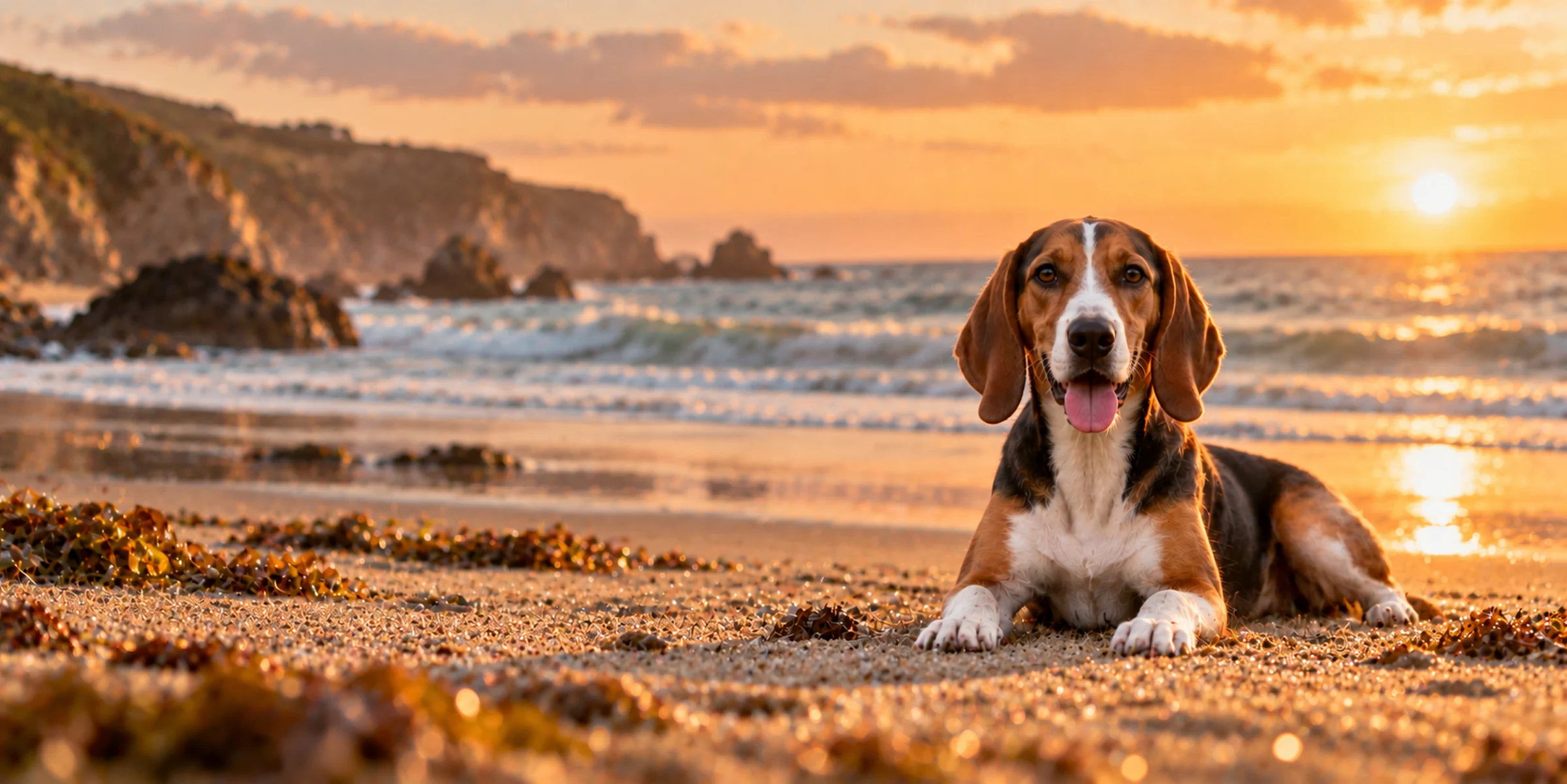
Harrier
Another pack hound of similar size bred for hare. The Harrier is tricolor, sturdier and far easier to find in the US; the Porcelaine is finer-boned, more sensitive and very rare.
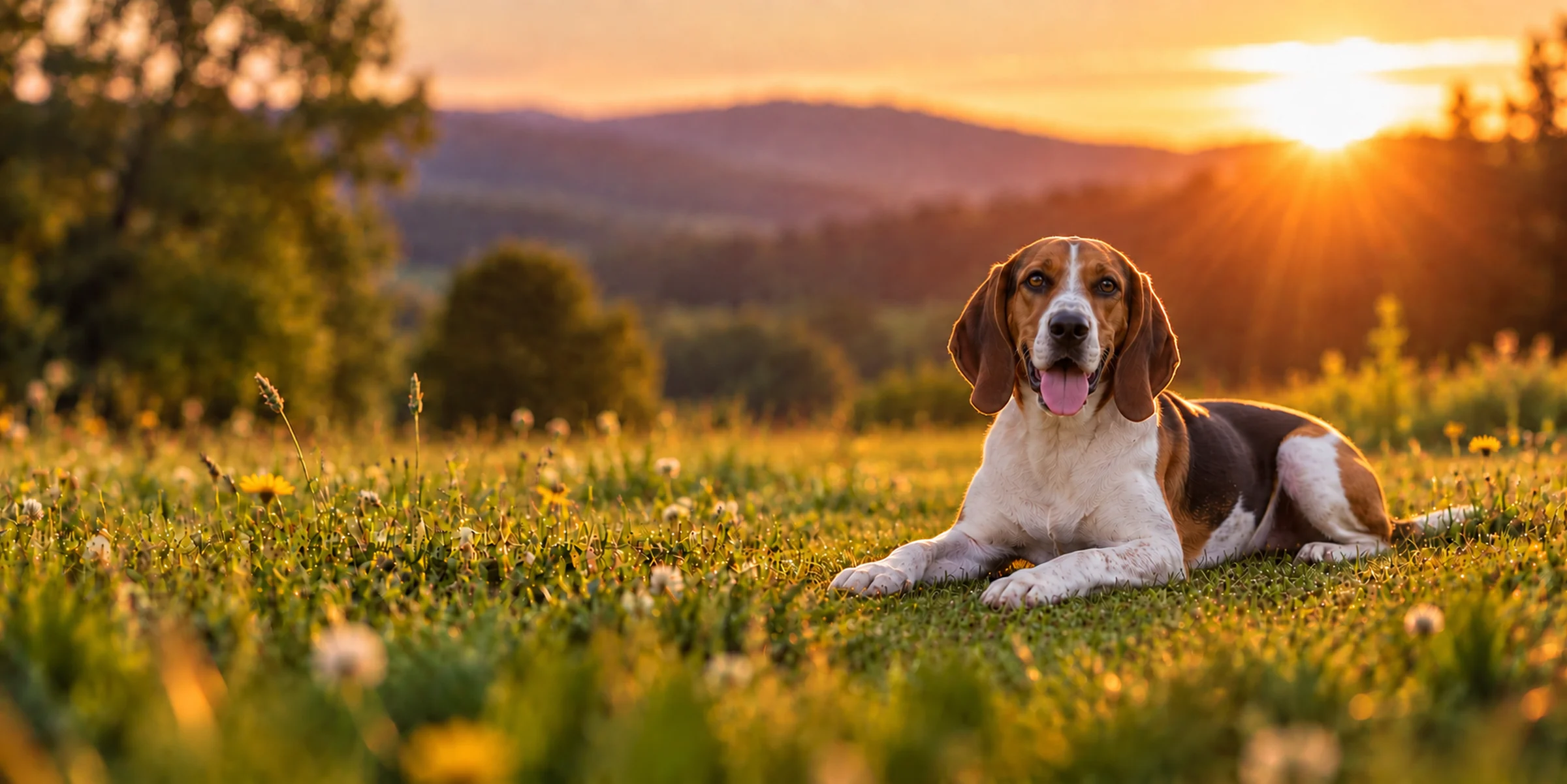
American Foxhound
A leggy, vocal pack hound with the same long-range nose. The American Foxhound has even more stamina and independence; the Porcelaine is softer-natured and a little more settled indoors.
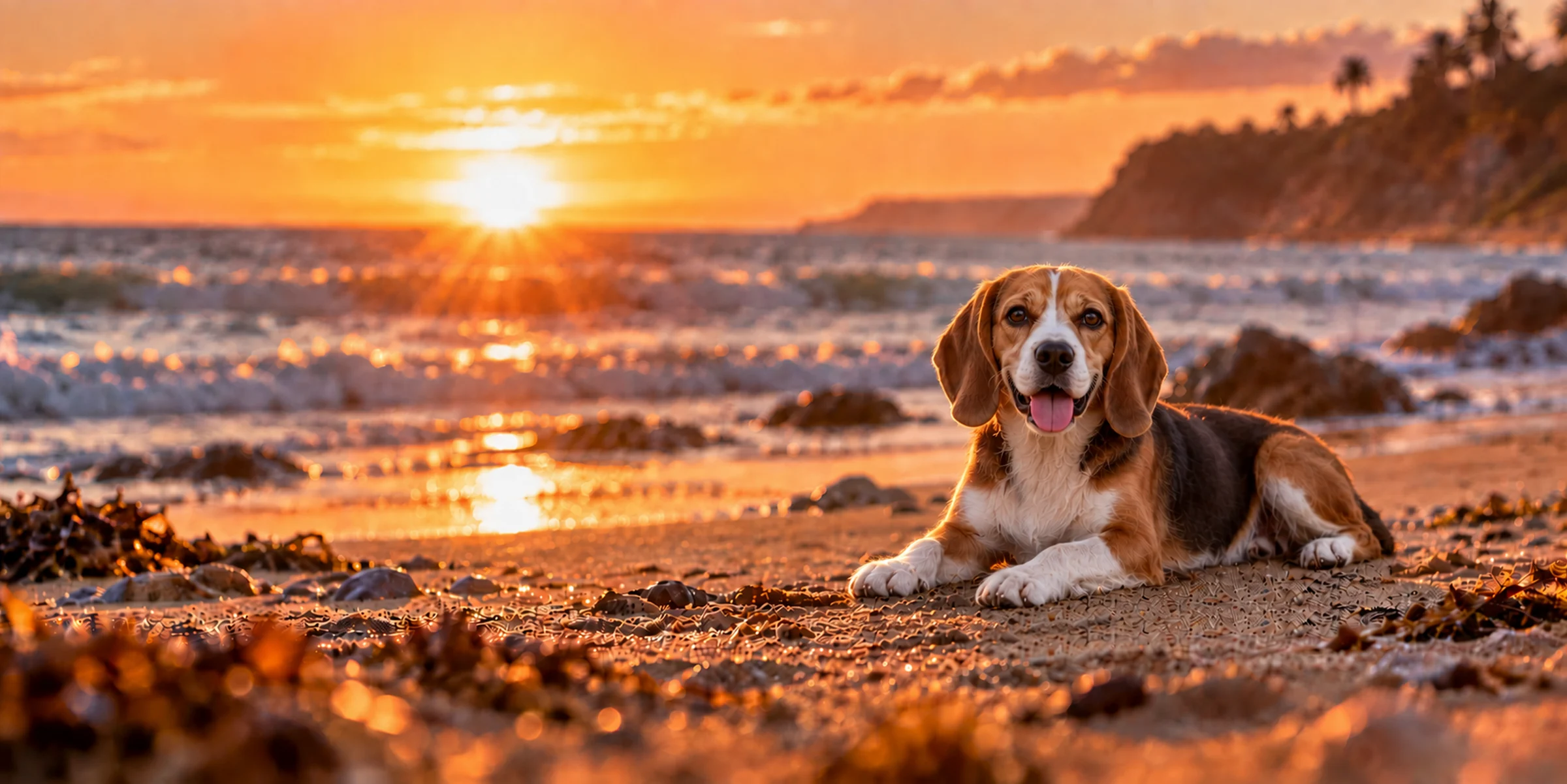
Beagle
The familiar small pack hound with the same nose-first priorities and baying voice. The Beagle is half the size and easy to find; the Porcelaine needs more space and more running.