

large breed
Rhodesian Ridgeback
The African lion hound - bred to find big game, hold it at bay and leave the rest to the hunter, which took nerve, independence and a great deal of drive. Rhodesian Ridgebacks are quiet in the house, clean, barely shed, and devoted to their own family in an undemonstrative way. They are also 70 to 85 pounds of dog who will think a request over before answering it.

Pup Height
24-27 in

Pup Weight
70-85 lb
Males 25-27 in with a desirable weight of 85 lb, females 24-26 in with a desirable weight of 70 lb. Light wheaten to red wheaten, with a little white on the chest and toes allowed; the nose is black or brown. A short, dense, sleek coat. The ridge along the back, where the hair grows in the opposite direction to the rest of the coat, is the defining feature: it should start just behind the shoulders, taper to a point between the hips and hold two matching crowns (whorls). Ridgelessness is a disqualification, though ridgeless puppies do turn up in litters from ridged parents. Source: AKC breed standard.

Pup Lifespan
10-12 years
Your pup, at a glance
What’s Life With This Pup Really Like?

High. Affectionate and often a couch lover with their own people, though not demanding about it.

Good. Patient with children in their own family, but a boisterous adolescent can knock over a small child, and play needs supervision.

Limited. Often fine with pets raised alongside them, but prey drive makes small animals and unfamiliar cats a real risk, and same-sex dogs can clash.

Low. Ridgebacks bark when there is a reason and are quiet otherwise.

Fairly high. Athletic and built for endurance, but calm indoors once exercised.

Low to moderate. A short coat that sheds steadily in small amounts.

Playful and clownish at home, especially when young, with a love of chasing and running.

Minimal. A dry-mouthed breed.

Moderate. Intelligent and food-motivated, but independent, and quick to tune out repetitive or harsh training.

High. Alert, reserved with strangers and naturally protective, without much noise.

Low. A weekly rubdown, nails and ears.

Below average. Needs exercise, a secure yard and an experienced owner, and does poorly left alone for long hours.
Lifestyle fit
Could This Be Your Best Breed?
A Rhodesian Ridgeback suits an experienced owner who runs or hikes daily and has a yard fenced properly - low fences get cleared, and a cat across the street is a target. Plan on $1,800 to $3,500 a year and ten to twelve years, short for the size. Without a fence you would trust around a dog who does not come when called, do not.

Living Space
A house with a securely fenced yard. Adult Ridgebacks are quiet and settled indoors, but a strong prey drive and a talent for clearing low fences mean the yard needs a proper barrier, and counters are never out of reach.

Pup Experience
Best with someone who has owned an independent, strong-willed dog before. A Ridgeback is not aggressive, but Ridgebacks weigh up a request before obeying, and a first-time owner who expects retriever-style compliance will struggle.

Daily Pup Time
About an hour or more of exercise daily - brisk walks, jogging, off-leash running in a secure area - plus consistent training through adolescence. Grooming takes minutes a week.

Allergies & Coat
The Rhodesian Ridgeback scores 3/10 for shedding and 2/10 for drooling. No dog is truly hypoallergenic. The allergens come from dander and saliva, and a coat that sheds this little leaves far less of them on your furniture, floors, and clothes.
Quirks & challenges
The Not-So-Easy Stuff

Strong Prey Drive
Built to chase and hold large game. Small animals and running cats trigger the chase, and recall is rarely reliable.
Independent Streak
A Ridgeback considers a command before deciding whether to follow it. Training works, but it takes patience.
Reserved With Strangers
Aloof and watchful with people they do not know. Early socialization keeps that reserve from turning into suspicion.
Counter Surfing
Tall, athletic and food-motivated. Anything left on a counter or table is at risk.
Slow to Mature
Puppyish and boisterous until two or three years old. A big adolescent with poor manners takes real management.
Escape Artist
Athletic enough to clear low fences when something interesting is on the other side. A secure yard matters.
The good, the bad & the hairy
Health, Care & Costs
Understanding the health risks and ongoing costs of a Rhodesian Ridgeback helps you plan for a happy, healthy life together.

10-12 years
$40-$70
per groom (bath, nails, ears), occasionally - most owners do it all at home ($0-$250/year)
$1,800-$3,500/year
all-in (food, routine vet, grooming, insurance, incidentals)

Health Risks
Conditions this breed is prone to.

A tube-like skin defect along the spine, present from birth, that can become infected and usually needs surgery. It is linked to the gene duplication that creates the ridge, so ridged puppies carry the risk and ridgeless ones do not. A DNA test shows how many copies of the ridge gene a dog carries, which helps breeders plan litters, but there is no DNA test for dermoid sinus itself; breeders check every puppy by feel along the neck and back before placing them.
Malformed joints that lead to lameness and arthritis. There is no DNA test; ask for OFA or PennHIP hip scores and OFA elbow results on both parents, and keep the dog lean.
An underactive thyroid, often autoimmune in this breed, causing weight gain, coat changes and low energy. A blood test diagnoses it and a daily tablet manages it; responsible breeders screen parents through the OFA thyroid database.
A progressive spinal cord disease that causes hind-leg weakness in older dogs. A DNA test for the SOD1 mutation shows whether a dog is clear, a carrier or at risk, so tested parents can avoid producing at-risk puppies.
Brief muscle jerks, often while the dog is relaxed or dozing, starting in young dogs and sometimes progressing to full seizures. It is caused by a mutation in the DIRAS1 gene, and a DNA test lets breeders avoid pairing two carriers.
The stomach fills with gas and can twist, which is fatal without emergency surgery. Deep-chested breeds like the Ridgeback are at risk; learn the signs (a swollen belly, retching with nothing coming up, restlessness) and ask the vet about a preventive gastropexy.

Insurance & Health Coverage
Insure young. The claims that matter here are the expensive, sudden ones: bloat surgery, a dermoid sinus that becomes infected, and the swallowed socks and corn cobs that a counter-surfing Ridgeback manages to find. Emergency surgery on a large dog runs well into the thousands.

Dermoid sinus is present at birth, so it is congenital and a policy will not cover it. Have the vet check the neck and back carefully at the first visit, and ask the breeder whether the puppy was checked too.

Hip dysplasia, elbow dysplasia and hypothyroidism tend to appear in young adulthood. Once any of them is noted on the record before cover starts, it becomes a permanent exclusion, which is the main argument for a policy from the first weeks at home.
 Get a Pet Insurance Quote
Care needs
The Daily Routine

Grooming
A short, sleek coat that needs a quick rub with a rubber curry brush or grooming mitt once a week. Shedding is light to moderate. Baths are rarely needed. Trim nails every few weeks, check ears weekly, and brush teeth.

Exercise
An hour or more a day for adults - long brisk walks, jogging, hiking and off-leash running in a securely fenced space. Ridgebacks are good running partners once fully grown. Puppies need moderation, not mileage, until the growth plates close at around 18 months. Prey drive means a leash or long line anywhere unfenced.

Food & Weight
Large-breed puppy food for steady rather than rapid growth. Adults do best lean, on two measured meals a day, with vigorous exercise kept away from mealtimes because of the bloat risk. Ridgebacks are notorious food thieves, so keep food stored securely and counters clear.
Similar breeds
If This Isn’t Quite the One

Dogo Argentino
Another big-game hunter bred to find and hold dangerous quarry, with short coat and strong prey drive. The Dogo is more intense, more protective and harder with other animals; the Ridgeback is lighter, more reserved and more of a family companion.

Azawakh
An African hound with the same aloofness toward strangers and a strong chase instinct. The Azawakh is a lean sighthound, lighter and more sensitive; the Ridgeback is heavier, sturdier and steadier in a busy household.
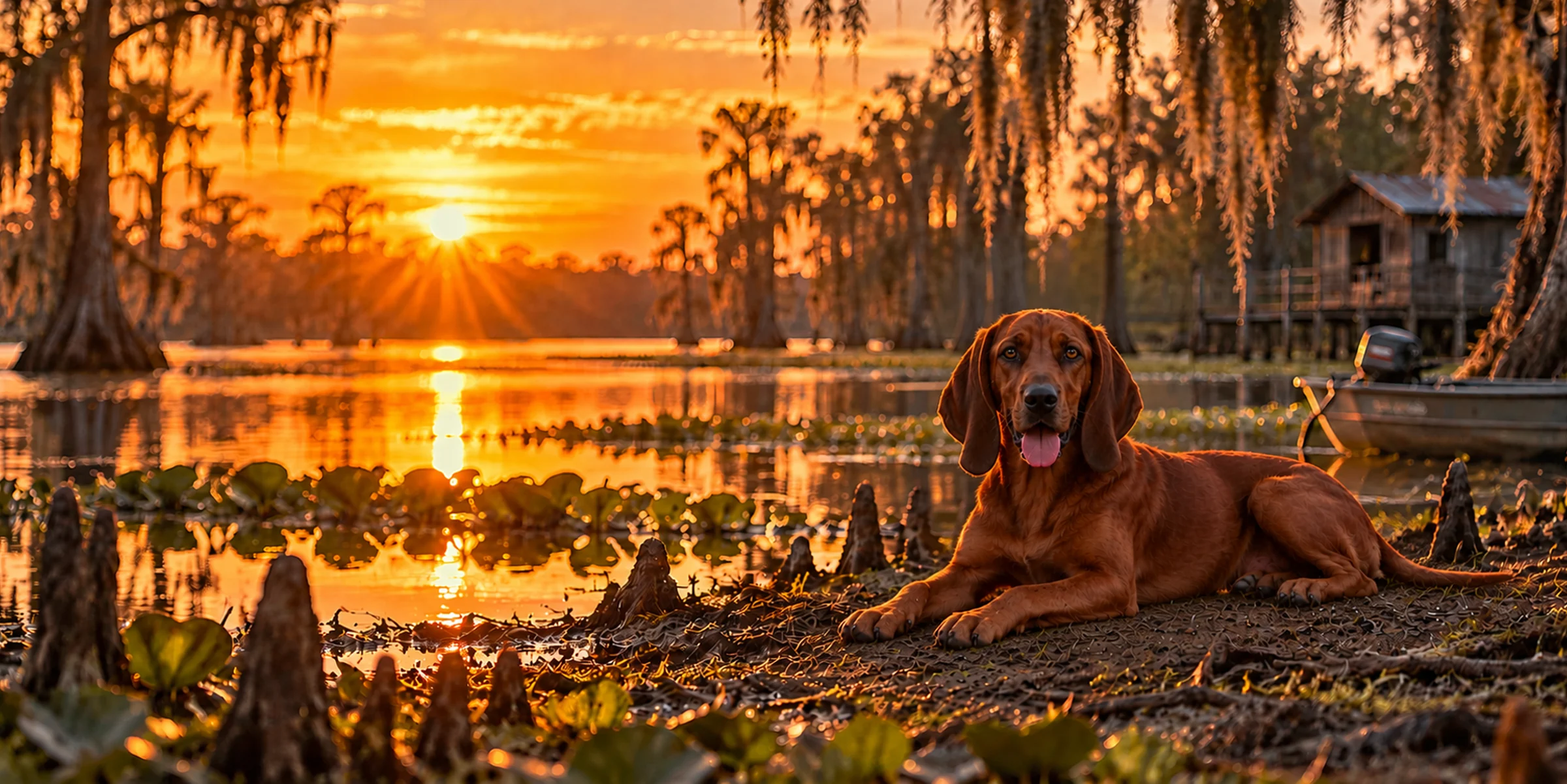
Redbone Coonhound
A short-coated red hound with a strong prey drive and an independent mind. The Redbone is friendlier with strangers and far more vocal on the trail; the Ridgeback is quieter, larger and more guarded.