

large breed
Transylvanian Hound
Hungary's big-game hound, worked in the Carpathians on bear, boar and lynx, nearly extinct a century ago and bred back from the long-legged type from 1968. Transylvanian Hounds stand as tall as a Labrador on a much leaner frame, are hardy in weather that stops other breeds, and cost almost nothing to feed or groom. The bill comes due elsewhere: a ringing voice built to carry across a valley, and two hours of real work a day.

Pup Height
21.5-25.5 in

Pup Weight
55 lb and up
Ideal height at the withers is 55-65 cm (about 21.5-25.5 in), one range for both sexes, and the standard says overall balance counts for more than the tape. Weight is given as a floor rather than a range: minimum 25 kg (about 55 lb), with no upper figure named. Two varieties developed and were always kept together, a long-legged and a short-legged one; the short-legged variety disappeared, and the standard now describes only the long-legged dog. The base color is black, with a tan point over each eyebrow and tan on the muzzle and legs, clearly demarcated from the black. White is allowed on the nose, as a blaze, a collar, on the chest, lower legs, feet and tail tip, and white over more than a fifth of the body is undesirable. The coat is short, straight, dense, close-lying and coarse over an undercoat, a little longer on the neck, withers, backs of the thighs and underside of the tail. FCI Group 6, Section 1.2, medium-sized hounds, with a working trial required. In the AKC's Foundation Stock Service. Source: FCI breed standard.

Pup Lifespan
10-14 years
Your pup, at a glance
What’s Life With This Pup Really Like?

Moderate. Affectionate with their own household and undemanding about it - a Transylvanian Hound who has worked settles quietly in the same room rather than climbing into a lap.

Very good. The standard asks for good-natured and even, and that is what turns up around children in the family, though the size, the energy and the voice suit school-age kids far better than toddlers.

Limited. Fine with dogs, having been bred to hunt alone or in a brace, and cats, poultry and small pets sit on the wrong side of a prey drive built for big game.

High. A high, ringing bay used on a trail and designed to be heard across a valley - trainable down to manageable, never quiet.

Very high. Selected to gallop broken mountain ground for hours in any weather, and an hour of walking does not come close to covering that.

Moderate. A short, close-lying coat over a genuine undercoat that sheds steadily and turns over hard twice a year.

Keen but serious. Nose games and tracking hold them properly; a thrown ball is entertaining for about five minutes.

Very low. The standard asks for dry, tight-fitting lips, and that is what the breed delivers.

Moderate, and independent by design. Transylvanian Hounds learn fast and are genuinely good at solving problems, and a hound bred to hunt hundreds of yards from anyone makes their own decisions. Short, clear, reward-based sessions get far more than repetition.

High. Reserved with strangers, loyal to the household, and loud enough that nobody arrives unannounced - though the response stops at telling you about it.

Very low. A weekly curry, the occasional bath, and an ear and tick check after every outing in cover.

Low. Hardy in weather that stops most breeds, and badly matched to close neighbors, ordinary fencing and a household with no work to give.
Lifestyle fit
Could This Be Your Best Breed?
A Transylvanian Hound belongs on rural ground with forest or field to work over, no close neighbors, and an owner who hunts or competes in serious scent sport. Feeding and grooming are cheap - $1,200 to $2,100 a year - and the cost is time, two hours of it most days. People who wanted a handsome, easygoing hound for suburban walks are the ones who give these dogs up.

Living Space
Rural ground with forest or field to work over, and no close neighbors. Transylvanian Hounds are quiet and undemanding in the house, which fools people - the voice that made them worth keeping in the Carpathians carries a long way across a subdivision, and a nose aimed at big game takes a hound under an ordinary fence and out of the county.

Pup Experience
Experienced owners, and realistically hunting or serious scent-sport homes. The temperament itself is good-natured and easy to live with; the difficulty is structural, because the standard asks for a hound who hunts independently at a great distance from the handler, and centuries of selecting for that make a poor first dog.

Daily Pup Time
Two hours or more of real work most days, with the scent half not optional, plus ground secure enough to do it on. Grooming is a ten-minute brush once a week and an ear check after every outing.

Allergies & Coat
The Transylvanian Hound scores 5/10 for shedding and 2/10 for drooling. No dog is truly hypoallergenic. The allergens come from dander and saliva, and a dog that sheds this much will leave plenty of hair behind - especially on your furniture, floors, and clothes.
Quirks & challenges
The Not-So-Easy Stuff

Bred for Bear and Boar
The long-legged variety was put on big game that fights back. That courage does not switch itself off in a suburb.
A Voice That Carries
High, ringing and meant to be followed across a valley. Giving tongue on a trail is the whole point of the breed, and close neighbors hear all of it.
Works Far Out and Alone
The standard asks for a hound who hunts at a great distance from the handler. Recall loses to a warm trail, so long lines and secure ground do that job instead.
Serious Prey Drive
Cats, chickens and small pets are rarely safe. Careful raising softens this rather than solving it.
Mountain Stamina
Selected to gallop broken Carpathian ground for hours at a stretch. An hour's walk barely registers.
Rare Outside Hungary
Numbers sit in Hungary and neighboring Romania, where breeders place puppies into hunting homes. Expect a wait, travel or an import.
The good, the bad & the hairy
Health, Care & Costs
Understanding the health risks and ongoing costs of a Transylvanian Hound helps you plan for a happy, healthy life together.

10-14 years
$40-$60
per groom (bath, nails, ears), every 8-12 weeks or easily done at home ($0-$250/year)
$1,200-$2,100/year
all-in (food, routine vet, parasite prevention, insurance, incidentals)

Health Risks
Conditions this breed is prone to.

Worth saying first, with the caveat attached. A rustic hunting breed tested in the field rather than bred for looks carries a genuinely short inherited-disease list, and this one was rebuilt from very few dogs once organized breeding resumed in 1968. That leaves a small population, little published screening and no breed-specific DNA tests, so one breeder's own records and pedigree matter more here than breed-level statistics.
The hip joint develops loosely, so the ball wears in the socket instead of gliding, and the end of it is arthritis and sometimes surgery. Rates look low for a working hound of this size, and both parents should still have scored hips - ask, because screening is not universal in the home clubs.
Ears that hang closely against the cheeks hold warmth and moisture over the canal, and a dog in wet forest all day makes that worse. Weekly checking, cleaning and thorough drying is the entire prevention; skipped, it turns into a chronic problem that costs money for years.
The likeliest reason a Transylvanian Hound ever sees a vet, and nothing to do with inheritance. Boar tusks cause deep punctures to the chest and forelegs, rock and frozen ground split pads and nails, and a torn cruciate repaired properly runs into the thousands.
Central European forest is tick country, and Lyme, anaplasmosis, ehrlichiosis and babesiosis all come with it. Year-round preventive treatment and a tick check after every outing belong in the routine rather than on a list of extras.
A hound built to gallop all day puts weight on quickly when the season ends or an injury lays them up, and extra pounds on a lean frame speed up joint wear. Feed to the workload and keep the ribs easy to find.

Insurance & Health Coverage
A cheap breed to keep and, on the evidence available, a sound one, so the illness half of a policy should price well. The catch is how thin that evidence is - a small rebuilt population with almost no published health surveying - and cover arranged while a young hound's record is still clean is worth more than the premium difference suggests.

Trauma is the real exposure. Big-game work in rough country produces puncture wounds, split pads and torn ligaments, and a cruciate repair or an emergency surgery lands in the thousands with no warning. Read the exclusions before the price: several insurers refuse injuries sustained while hunting or working, and that one clause removes exactly the protection this dog needs.

Under the large claims sits a steady drip of small ones - ears, ticks, stitched cuts, pulled grass awns. None is expensive alone, and together they test the annual limit and the per-condition caps, which are the numbers worth reading for a hound who is in the woods every week.
 Get a Pet Insurance Quote
Care needs
The Daily Routine

Grooming
About as easy as a coat gets. Short, straight and coarse over a real undercoat, slightly longer at the neck, withers and thighs, and a rubber curry once a week stays on top of it - twice a week through the spring and fall turns. Baths are occasional. The routine that actually matters is the post-outing check: ears cleaned and dried, ticks combed out, pads and nails looked over after rock and ice, and a run of the hands along the chest and legs for anything picked up in cover.

Exercise
Two hours or more daily, with the scent half doing most of the work. Tracking, mantrailing, long hikes over broken ground and real field work all suit a dog selected to gallop mountains for hours; a walk on sidewalks is transport and nothing more.

Food & Weight
Inexpensive to feed for the work delivered. Two measured meals scaled to the season - generous through a working winter, cut back sharply once the dog is idle - and keep hard exercise clear of mealtimes, which is ordinary caution for any big hound fed around a working day. Transylvanian Hounds should stay lean enough that the ribs are easy to feel.
Similar breeds
If This Isn’t Quite the One
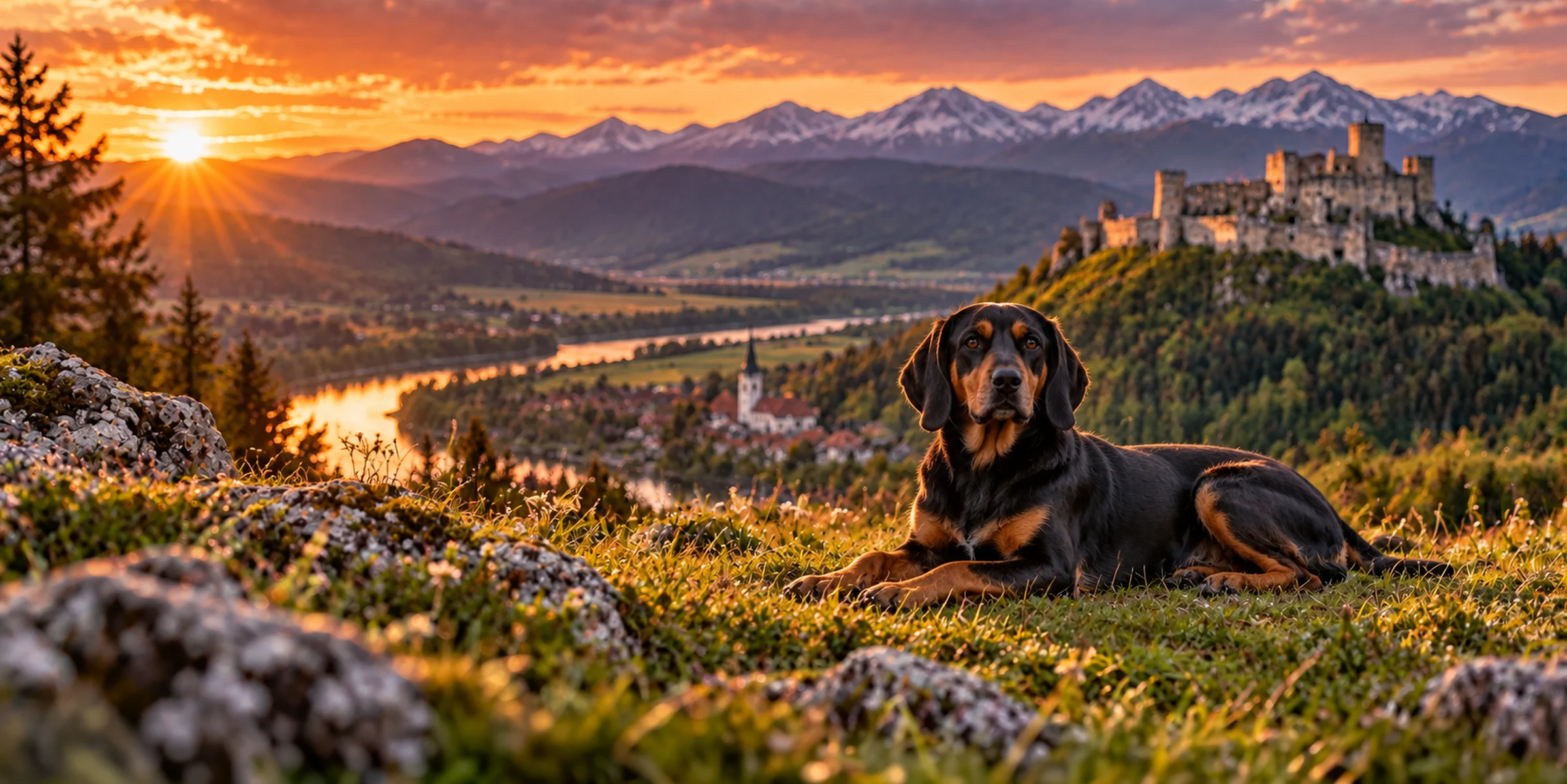
Slovensky Kopov
The nearest neighbor in every sense - another Carpathian hound in the AKC's Foundation Stock Service, bred for the same forest and the same boar. The Kopov weighs about half as much, stands a good deal shorter and allows no white at all; the Transylvanian Hound is taller and heavier, carries white on the chest and feet, and was put on bear and lynx as well.
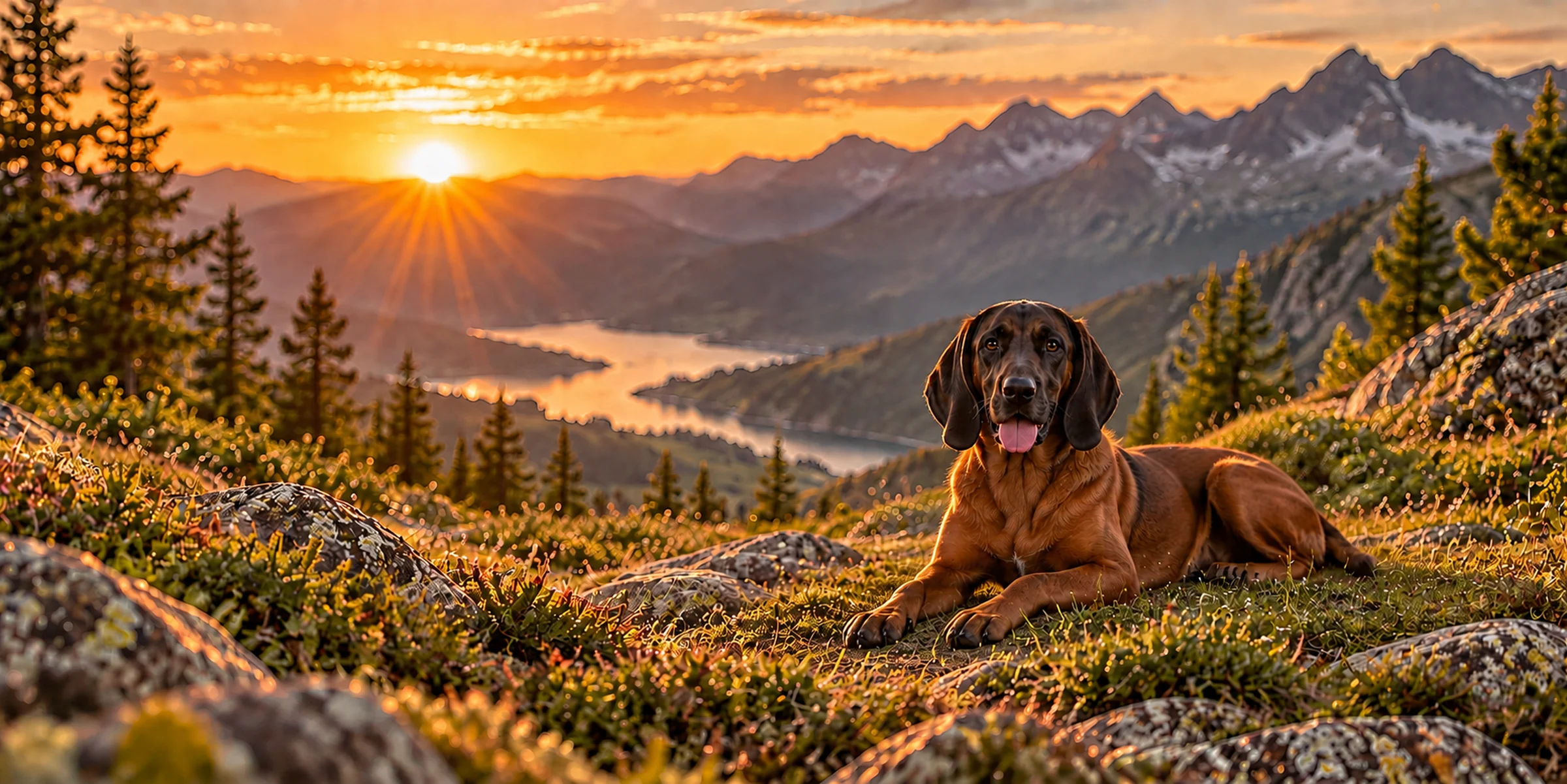
Bavarian Mountain Scent Hound
The other half of a Central European hunt, and a clean contrast. The Bavarian works a cold blood trail silently on a long line after the shot and attaches to one handler; Transylvanian Hounds work live game far out and loudly, and are considerably warmer with the rest of the household.
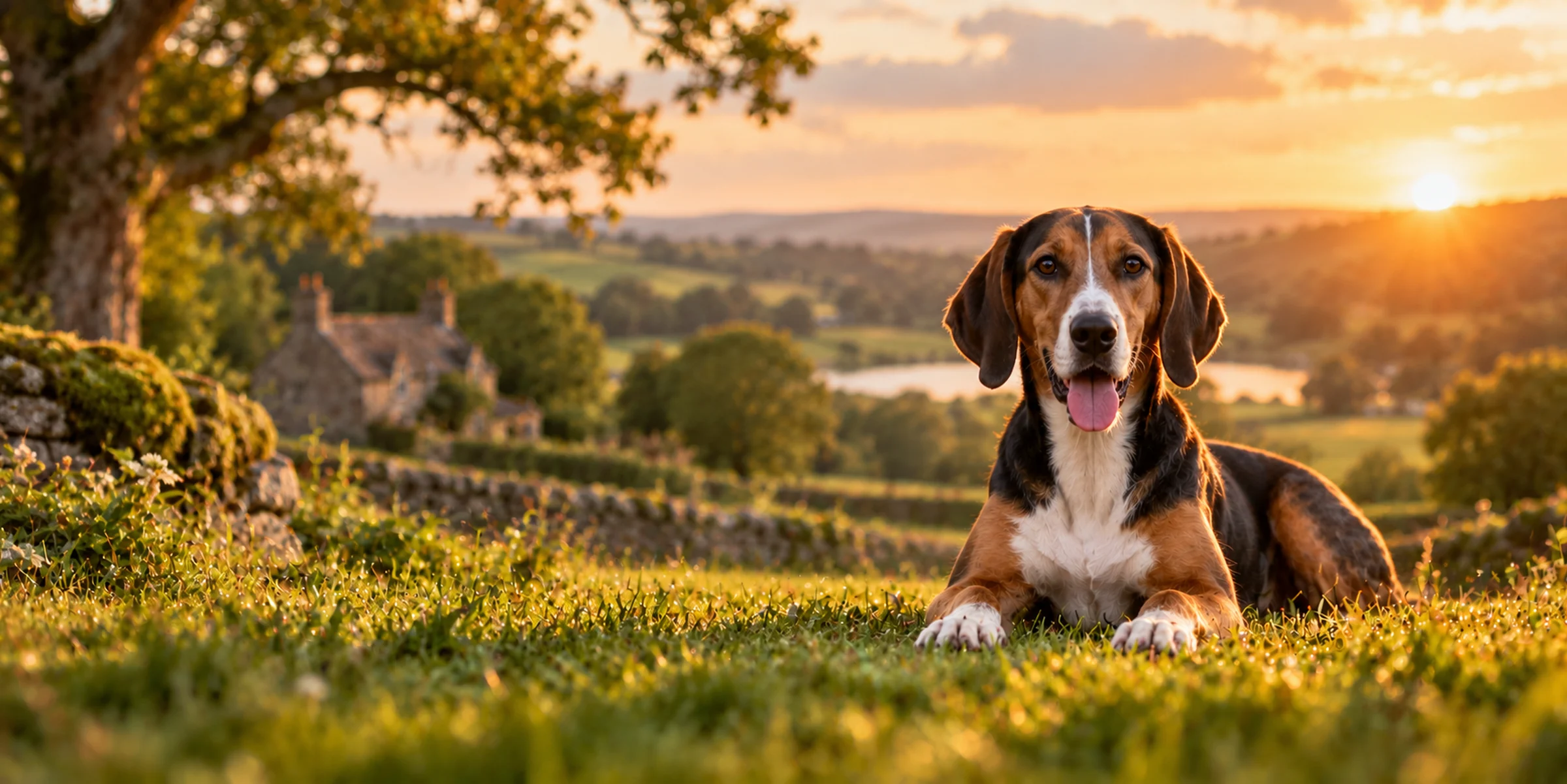
Hamiltonstovare
Strikingly similar to look at, in the same black, tan and white, and a much easier dog to live with. The Hamiltonstovare hunts hare and fox alone and settles into a family home readily; the Transylvanian Hound was made for game that fights back and needs more ground, more work and better fencing.
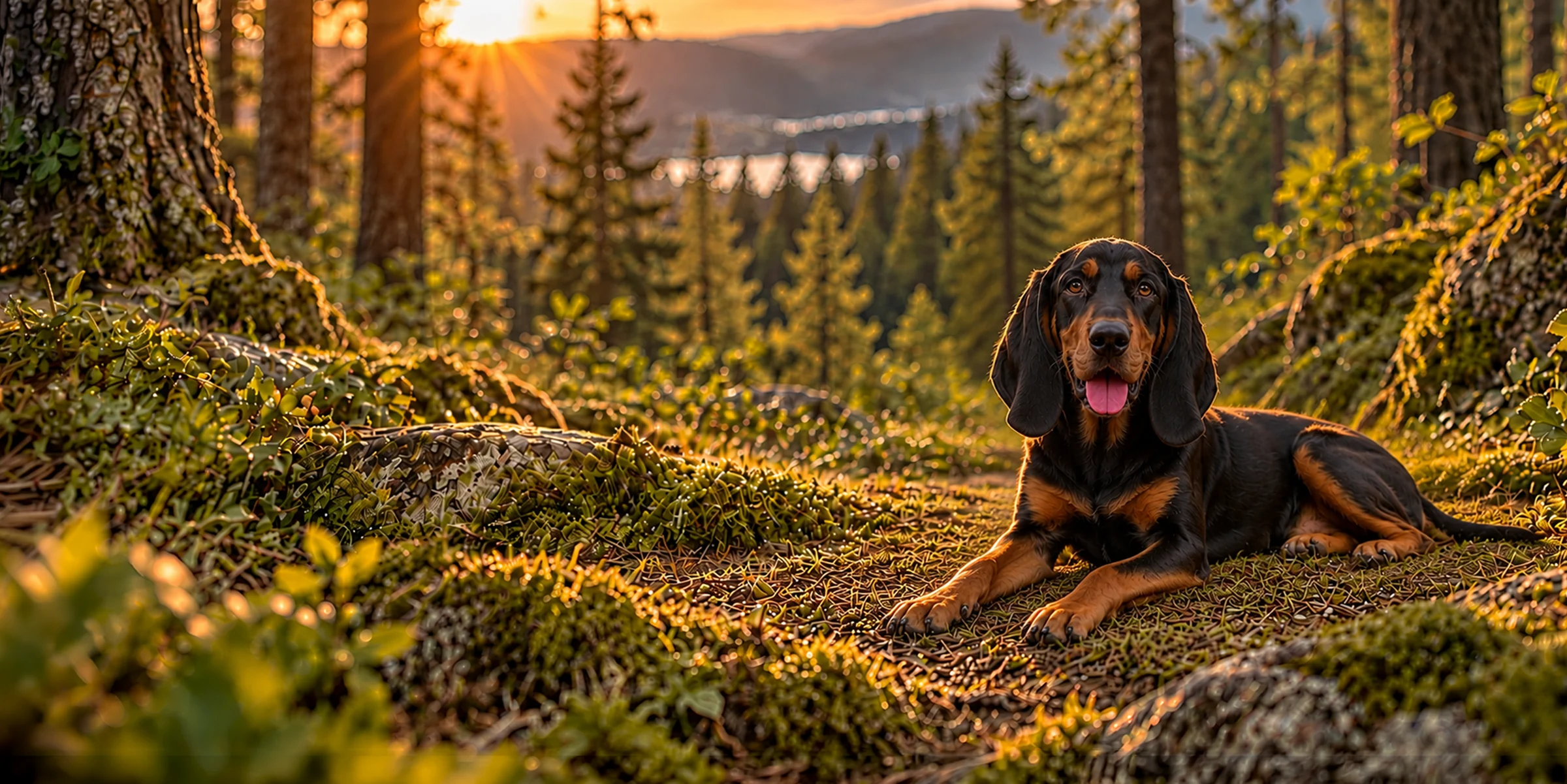
Black and Tan Coonhound
The same black-and-tan pattern and a voice built for the same purpose, on a heavier, slower, far lazier American hound. The Coonhound trails raccoon and trees them, drools, and is easy to find in the US; the Transylvanian Hound is leaner, faster over mountains and genuinely rare outside Hungary and Romania.