

medium-to-large breed
Welsh Springer Spaniel
One of Britain's oldest sporting breeds, and a separate breed from the English Springer rather than a red-and-white version of one - red and white land spaniels were working in Wales long before the two were registered apart. Welsh Springers are devoted, cheerful and gentle with their own family, and noticeably more reserved with strangers than other spaniels. The costs are the exercise, weekly ear care, and a dog who wants company all day.

Pup Height
17-19 in
Males 18-19 in at the withers, females 17-18 in - compact and substantial rather than leggy. Always rich red and white, which is the only color the standard allows; any pattern of red on white is correct and ticking is permitted. The coat is straight, flat and soft, dense enough to be waterproof, thornproof and weatherproof, with moderate feathering on the legs, chest and underside and only light feathering on the comparatively small, vine-leaf-shaped ears and the tail. Coat heavy enough to hinder work in the field, and obvious barbering, are both discouraged. Source: AKC breed standard.

Pup Weight
35-55 lb

Pup Lifespan
12-15 years
Your pup, at a glance
What’s Life With This Pup Really Like?

Very high. Welsh Springers attach to their own family, follow them from room to room, and lean in once the day's work is done.

Excellent. Gentle, sturdy and patient with the children they live with, and one of the breed's real strengths.

Very good. Sociable with other dogs and usually fine with cats raised alongside them, with a prey drive aimed mostly at birds.

Moderate. Welsh Springers announce a stranger at the door and mean it, without being persistently noisy.

High. Ninety minutes to two hours daily with real scent work - genuine working stamina rather than a nervous fizz.

Moderate. A dense, weatherproof coat that sheds steadily year-round with heavier seasonal turns; twice-weekly brushing keeps most of the hair off the furniture.

Enthusiastic. Retrieving, water and nose games, with the cheerful spaniel bounce and rather more focus on their own person than most.

Very low.

Good. Willing and quick, but softer and slower to mature than the English Springer, so short sessions and gentle methods get much further than pressure.

Moderate. The reserve with strangers makes for a real alarm dog, with no guarding instinct behind the announcement.

Moderate. Twice-weekly brushing, very little trimming, and the weekly ear check that is the part people skip.

Moderate. Welsh Springers travel and settle well alongside their own people, but the exercise requirement and the reserve with new faces make busy city life harder than it looks.
Lifestyle fit
Could This Be Your Best Breed?
A Welsh Springer Spaniel belongs in a house with a fenced yard, with an active owner who takes early socialization seriously and can put ninety minutes to two hours a day into walking, water and scent work. Twelve to fifteen years at $1,400 to $2,400 a year is the commitment. If two hours outdoors most days is not realistic, this is a breed to admire rather than get.

Living Space
A house with a securely fenced yard. Welsh Springers settle quietly indoors once the day's work has happened, but the work is not optional - this is a flushing spaniel bred to cover wet, thorny Welsh ground all day, and an apartment only works if someone is genuinely putting in two hours outside every day.

Pup Experience
Fine for an active first-time owner who takes the socialization seriously. Welsh Springers are sensitive and reserved by nature, so gentle methods are the ones that work, and early exposure to strangers, traffic and handling matters more in this breed than in any of the other flushing spaniels.

Daily Pup Time
Ninety minutes to two hours daily with real scent work in it, plus a thorough brush twice a week and weekly ear care.

Allergies & Coat
The Welsh Springer Spaniel scores 5/10 for shedding and 2/10 for drooling. No dog is truly hypoallergenic. The allergens come from dander and saliva, and a dog that sheds this much will leave plenty of hair behind - especially on your furniture, floors, and clothes.
Quirks & challenges
The Not-So-Easy Stuff

Reserved With Strangers
A genuinely aloof spaniel, by standard rather than by accident. Without heavy early socialization the reserve hardens into shyness.
Real Working Stamina
Bred to hunt wet, heavy cover all day. Ninety minutes to two hours daily, with scent work in it, is the honest requirement.
Ears Need Weekly Work
Small drop ears that hang tight against the cheeks, on a dog who works water. A skipped month turns an infection chronic.
Poor at Long Days Alone
Bred to work beside one person and attached to the family accordingly. Long days by themselves go badly for this breed.
Nose Beats Recall
A spaniel working a line in cover is only half listening. Long line and secure ground until the recall is proven.
Uncommon, Expect a Wait
Few litters a year in North America. Breeders place puppies from waiting lists, and travel across the country is normal.
The good, the bad & the hairy
Health, Care & Costs
Understanding the health risks and ongoing costs of a Welsh Springer Spaniel helps you plan for a happy, healthy life together.

12-15 years
$55-$90
per groom (bath, feathering tidy, feet, ears, nails), every 8-10 weeks or done at home ($0-$550/year)
$1,400-$2,400/year
all-in (food, routine vet, grooming, insurance, incidentals)

Health Risks
Conditions this breed is prone to.

Worth saying first. The Welsh Springer never went through a popularity boom, the parent club screens hips, eyes and thyroid as a matter of course, and the inherited-disease list is short. Most Welsh Springers live long, healthy lives on routine care.
The hip joint develops loosely so the ball grinds in the socket instead of gliding, ending in arthritis and sometimes surgery that runs into the thousands. This is the breed's main orthopedic watch - both parents should have OFA or PennHIP scored hips, and a puppy kept lean, with jumping limited until the growth plates close, has better odds.
Pressure builds inside the eye because the drainage angle is malformed, and the result is agonizing and can destroy sight within a day or two of the first signs. A red, cloudy, painful eye is an emergency, not a next-week appointment. There is no DNA test - gonioscopy by a veterinary ophthalmologist examines the drainage angle, so ask for results on both parents and keep annual eye exams up. Entropion, where the eyelid rolls inward, also turns up and is surgically corrected.
Idiopathic epilepsy occurs in the breed, usually with a first seizure between one and three years old. There is no test for it and no cure, and most affected dogs are managed on daily medication for life, which means bloodwork, dose changes and a standing prescription rather than one bill. Ask the breeder directly about seizures in the line - good breeders expect the question.
Lightly feathered drop ears that hang close against the cheeks seal warmth and moisture into the canal, and a dog working water and wet cover makes that worse. Weekly checking, cleaning and drying is the whole prevention; left alone, an infection becomes chronic and occasionally surgical.
The immune system attacks the thyroid until the gland fails, bringing weight gain, coat loss, low energy and sometimes a change in temperament. The AKC lists thyroid disease among the breed's screening priorities, and an OFA thyroid panel on breeding stock is the check. Once diagnosed, a daily tablet manages the condition cheaply.

Insurance & Health Coverage
Ears are the reason to get cover early. Chronic otitis is the routine claim in heavy-eared spaniels, and insurers commonly exclude ear conditions after a couple of claims - or from the start, once any infection is on the record. A policy in place before the first ear appointment is worth more than a cheaper one afterward.

Glaucoma and epilepsy are the two that decide whether a policy was worth having. Glaucoma can mean an emergency referral, pressure-lowering drops for life and, in bad cases, removal of the eye; epilepsy means medication and monitoring for the rest of the dog's life. Both usually arrive in adulthood, and both run for years - so read the per-condition and annual caps rather than the premium, and check whether hereditary conditions are covered at all, because some policies exclude them outright.

If you intend to work them in the field, check for a hunting exclusion. Several insurers will not pay for injuries sustained while hunting, and heavy cover is exactly where a spaniel collects punctures, torn pads and scratched eyes.
 Get a Pet Insurance Quote
Care needs
The Daily Routine

Grooming
A straight, flat, dense coat with moderate feathering on the legs, chest and underside, and only light feathering on the ears and tail - less coat than a show-bred English Springer, and correspondingly less work. A thorough brush twice a week holds it, with a comb behind the ears and through the trousers where mats start. The standard discourages obvious barbering, so trimming is limited to tidying the feet, hocks and ear fringes. Ears need checking, cleaning and drying weekly, and the hair inside the flap kept short so air reaches the canal.

Exercise
Ninety minutes to two hours daily, and the scent half counts for more than the mileage. Fieldwork, tracking, water retrieving, hiking and nose games all suit them; a walk around the block does not touch a dog built for a day in heavy cover.

Food & Weight
Two measured meals scaled to the work. Welsh Springers gain weight easily under the feathering when the exercise drops off, so go by feel through the ribs rather than by the bowl, and count the training treats. Keep a growing puppy lean - the hips do better for it.
Similar breeds
If This Isn’t Quite the One
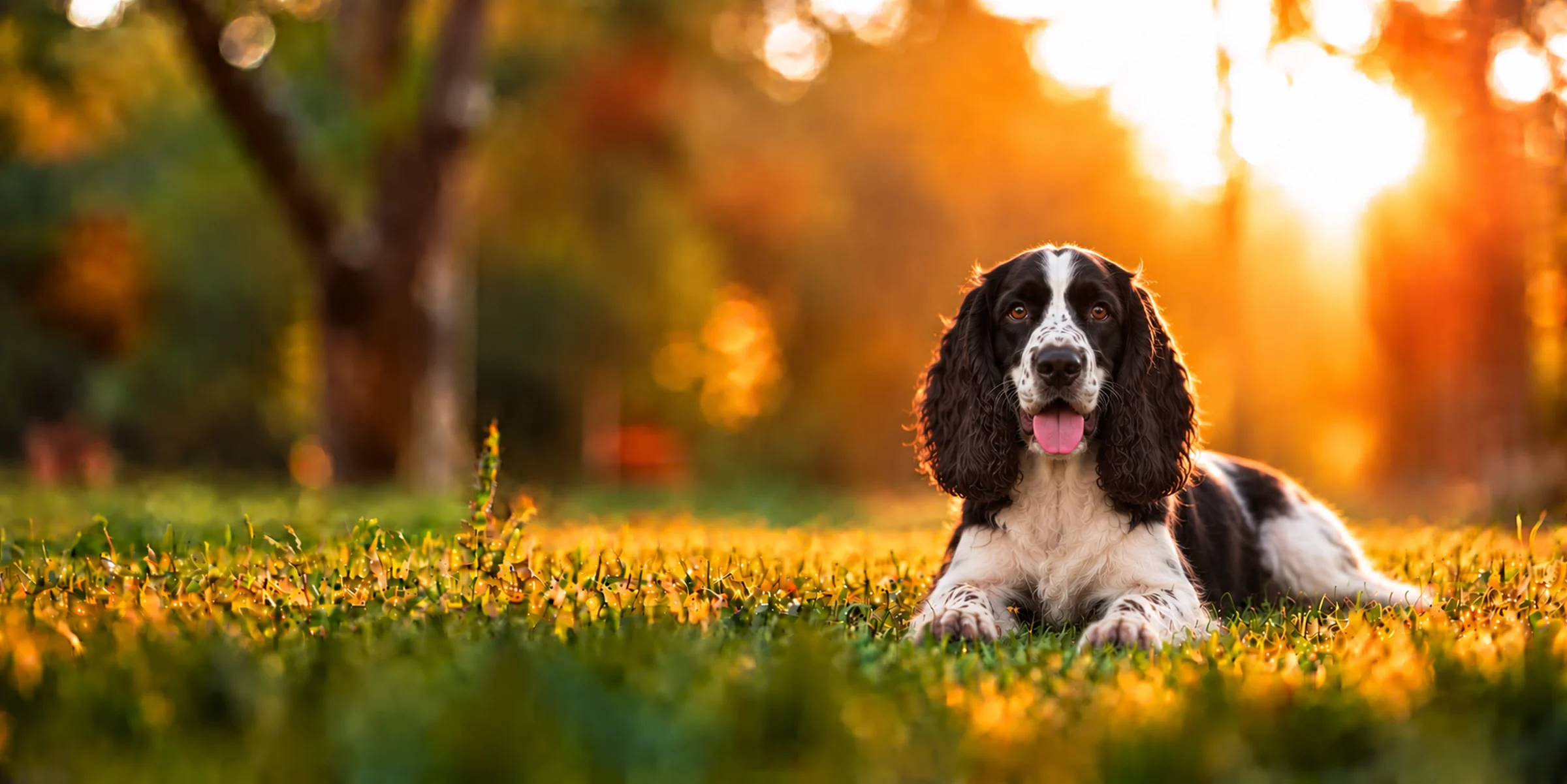
English Springer Spaniel
The comparison everyone makes, and the two are separate breeds rather than color varieties of one - the Welsh is the older of them. Welsh Springers stand shorter and more compact, carry less coat and much smaller ears, come only in red and white, and are markedly more reserved with strangers. The English Springer is taller, openly friendly with everyone, and split into field and show types that the Welsh breed never developed.
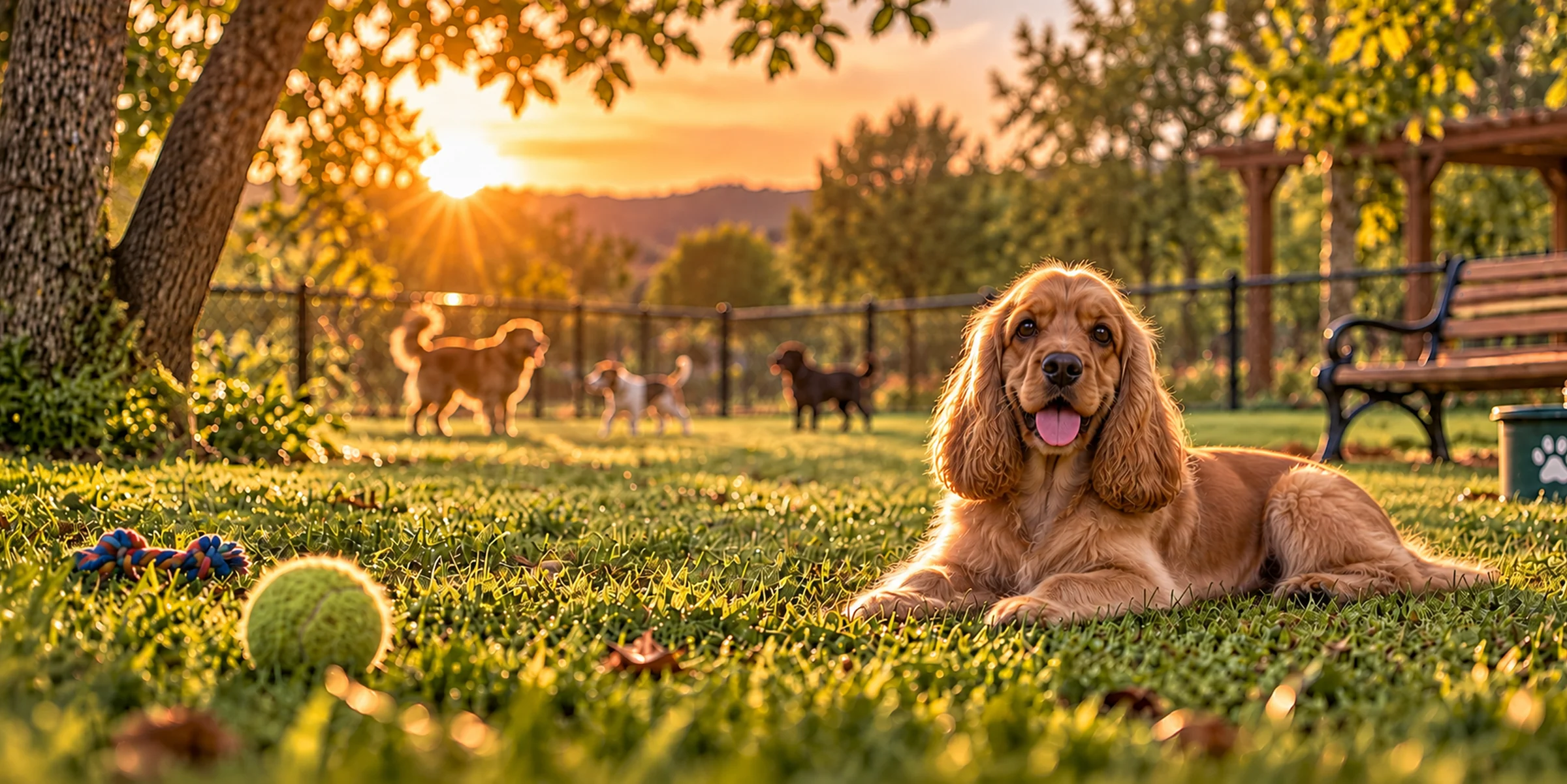
English Cocker Spaniel
The next size down in flushing spaniels - the AKC describes the Welsh Springer as bigger and stronger than a Cocker Spaniel but smaller than an English Springer. The English Cocker is more outgoing with new people and needs somewhat less work; the Welsh Springer covers more ground and keeps more closely to their own family.
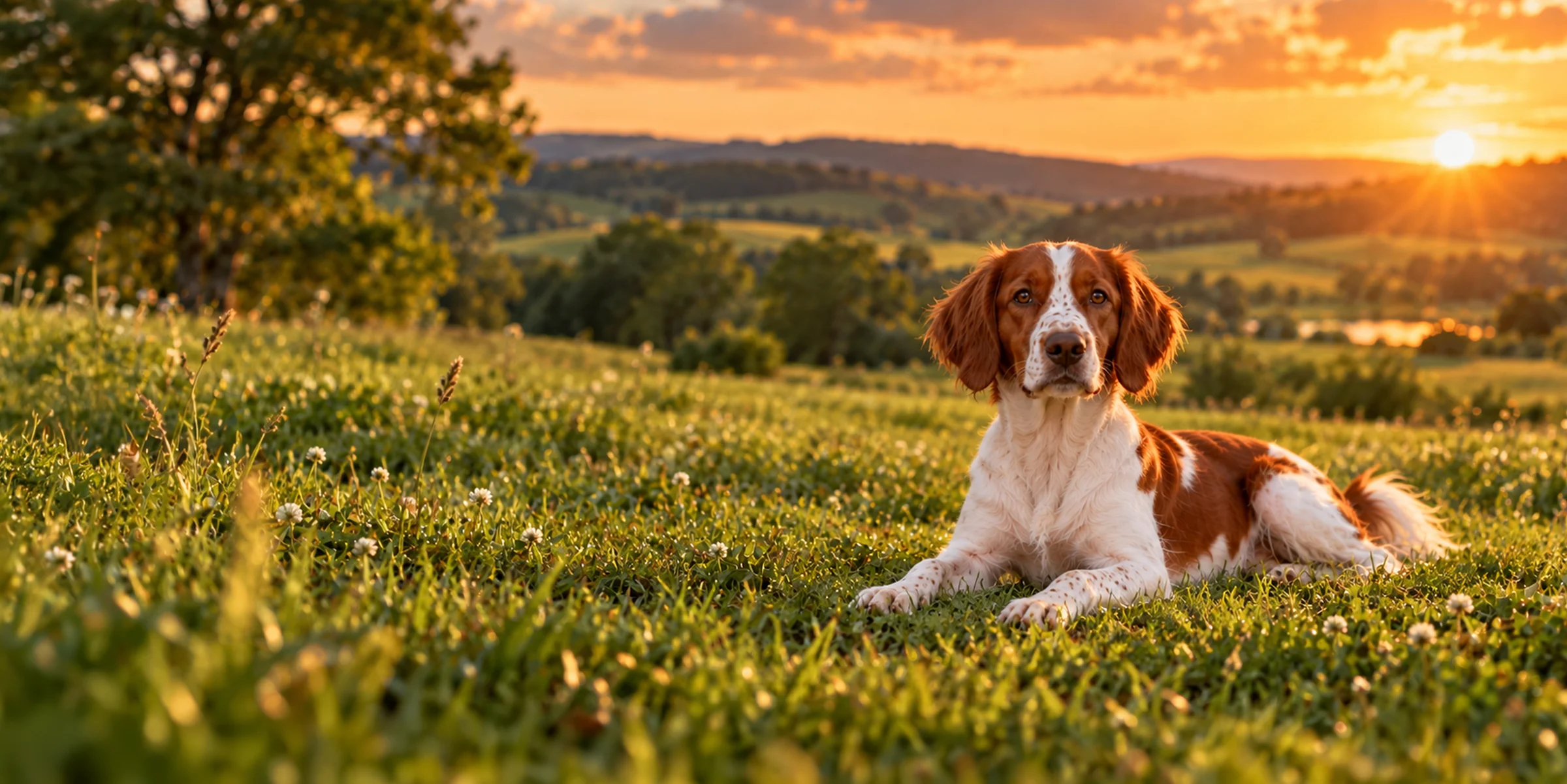
Irish Red and White Setter
The other red-and-white Celtic gundog, and another breed that dwindled badly and was rebuilt from very few dogs. The Setter is far bigger, ranges much wider and points rather than flushes; the Welsh Springer works close in cover and fits an ordinary house far more easily.