

medium breed
English Springer Spaniel
The working flushing spaniel most other spaniels descend from, and still a dog built to push birds out of cover all day in wet country. Springers are joyful, endlessly enthusiastic, superb with children and among the easiest dogs here to train. The two things people get wrong are the exercise, which is closer to two hours than one, and the field-versus-show split, which in this breed produces genuinely different dogs.

Pup Height
19-20 in

Pup Weight
40-50 lb
Males about 20 in and 50 lb, females 19 in and 40 lb. Named for what they did - springing game into flight for falconers and, later, guns. Black or liver with white, or either with tan markings, and both roan and clearly patched coats occur. Field and show lines have diverged sharply: field dogs are lighter, shorter-coated and higher-drive, show dogs heavier with far more feathering. Source: AKC breed standard.

Pup Lifespan
12-14 years
Your pup, at a glance
What’s Life With This Pup Really Like?

Very high. They are affectionate without reserve, follow their people everywhere, and settle against them happily once the work is done.

Excellent. Cheerful, gentle and sturdy, and one of the more reliable sporting breeds around children.

Very good. Sociable with dogs and generally fine with cats, with a prey drive aimed mostly at birds.

Moderate. They announce arrivals and get vocal when excited, without being persistently noisy.

Very high, particularly in field lines. Two hours with real scent work is the honest requirement.

Moderate. A double coat with feathering that sheds steadily year-round and shows on furniture.

Among the most playful here. They retrieve, swim and invent games, and the enthusiasm does not fade with age.

Very low.

Outstanding. Fast, willing and highly food-motivated, with a softness that makes gentle methods essential.

Moderate as an alarm. They announce a visitor and then try to befriend them.

Moderate. Brushing several times a week, a trim every couple of months, and weekly ear care that is the part people skip.

Moderate to good. They suit houses with ground well and adapt badly to apartments and to long days alone.
Lifestyle fit
Could This Be Your Best Breed?
An English Springer Spaniel suits an active family with a fenced yard and somebody home for most of the day - they do badly left alone. Budget $1,500 to $2,600 a year, add weekly ear care and a trim every couple of months, and expect twelve to fourteen years. Ask the breeder about rage syndrome in the line. The Springers that get handed back went to quiet apartments and to houses empty all day, to people with one walk in them rather than two hours.

Living Space
A house with a securely fenced yard. Springers are genuine working gundogs with the stamina to match, and an apartment with two short walks produces a frustrated, destructive dog.

Pup Experience
Good for an active first-time owner who has costed the exercise honestly. The English Springer Spaniel is one of the most trainable breeds there is, and the failure mode is almost always too little work rather than anything about temperament.

Daily Pup Time
Ninety minutes to two hours daily with real scent work in it. Grooming is a thorough brush two or three times a week plus a trim every couple of months and weekly ear care.

Allergies & Coat
The English Springer Spaniel scores 6/10 for shedding and 2/10 for drooling. No dog is truly hypoallergenic. The allergens come from dander and saliva, and a dog that sheds this much will leave plenty of hair behind - especially on your furniture, floors, and clothes.
Quirks & challenges
The Not-So-Easy Stuff

Field vs Show Lines
Field-bred dogs are considerably higher-drive and lighter-coated. Which one you get changes the dog you live with.
Serious Exercise Needs
Two hours with scent work. Under-exercised they are destructive, noisy and impossible to settle.
The Ears Need Weekly Work
Long, hairy drop ears on a dog who works wet cover. Neglect turns infection chronic.
Separation Anxiety
Bred to work beside a person and bonded hard. Long days alone go badly for this breed.
Nose Over Recall
A springer on a scent in cover is only partly listening. Long line in open ground.
Rage Syndrome in Some Lines
A rare seizure-like aggression disorder, historically tied to a few show lines. Ask the breeder directly.
The good, the bad & the hairy
Health, Care & Costs
Understanding the health risks and ongoing costs of a English Springer Spaniel helps you plan for a happy, healthy life together.

12-14 years
$60-$95
per groom (bath, trim, feathering, ears, nails), every 8-10 weeks ($350-$700/year)
$1,500-$2,600/year
all-in (food, routine vet, grooming, insurance, incidentals)

Health Risks
Conditions this breed is prone to.

The defining routine health problem. Long heavy ears covered in hair seal the canal against airflow, so warmth and moisture build and infection follows - worse in a dog working wet cover. Weekly checking, cleaning and drying is the whole prevention; ignored it becomes chronic and occasionally surgical.
The joints develop loosely or unevenly and wear into arthritis, sometimes needing surgery. Present at moderate rates and screened by scoring both parents.
The retina degenerates gradually until the dog is blind, usually starting with night vision. There is no treatment and a DNA test exists, so tested parents remove the risk entirely.
An inherited enzyme disorder found in this breed, in which red blood cells break down during exertion or stress, causing episodes of weakness, dark urine and anemia. It is DNA testable, so a breeder can rule it out in both parents before a puppy exists.
Sometimes called rage syndrome, and worth handling carefully. It is a rare seizure-like disorder of unprovoked aggression associated historically with a small number of show lines. It is genuinely uncommon, most Springers will never show it, and a reputable breeder discusses it openly rather than denying it exists.
The breed carries higher rates than most of immune-mediated disease, including hemolytic anemia and thyroid problems. These are managed with medication over the dog's life rather than cured.

Insurance & Health Coverage
Ears are the reason to read the wording carefully. Chronic otitis is common enough in this breed that some insurers exclude ear conditions after a couple of claims, or from the start once any infection is on the record - and it is the single most likely thing you will claim for. Get cover before the first ear appointment rather than after.

If you intend to work them, check whether the policy excludes injuries sustained while hunting; several do, and a spaniel in cover is exactly where the accident claims come from.

Progressive retinal atrophy and phosphofructokinase deficiency are both congenital, so no policy pays for either. Both are DNA testable in the parents, which makes the breeder's paperwork worth more than any insurance on those two risks specifically.
 Get a Pet Insurance Quote
Care needs
The Daily Routine

Grooming
A medium double coat with feathering on the ears, chest, legs and belly that needs a thorough brush two or three times a week - mats form fastest behind the ears and under the elbows. A trim every couple of months keeps the feet, hocks and ear fringes tidy. Ears need checking, cleaning and drying weekly, with the hair inside the flap kept short so air reaches the canal.

Exercise
Ninety minutes to two hours daily, and the scent half matters more than the distance. Gundog work, tracking, agility, swimming and nose games all suit them far better than a walk on pavement.

Food & Weight
Two measured meals scaled to the work. They are food-keen and gain weight easily under the feathering, so go by feel through the ribs and count the training treats.
Similar breeds
If This Isn’t Quite the One
English Cocker Spaniel
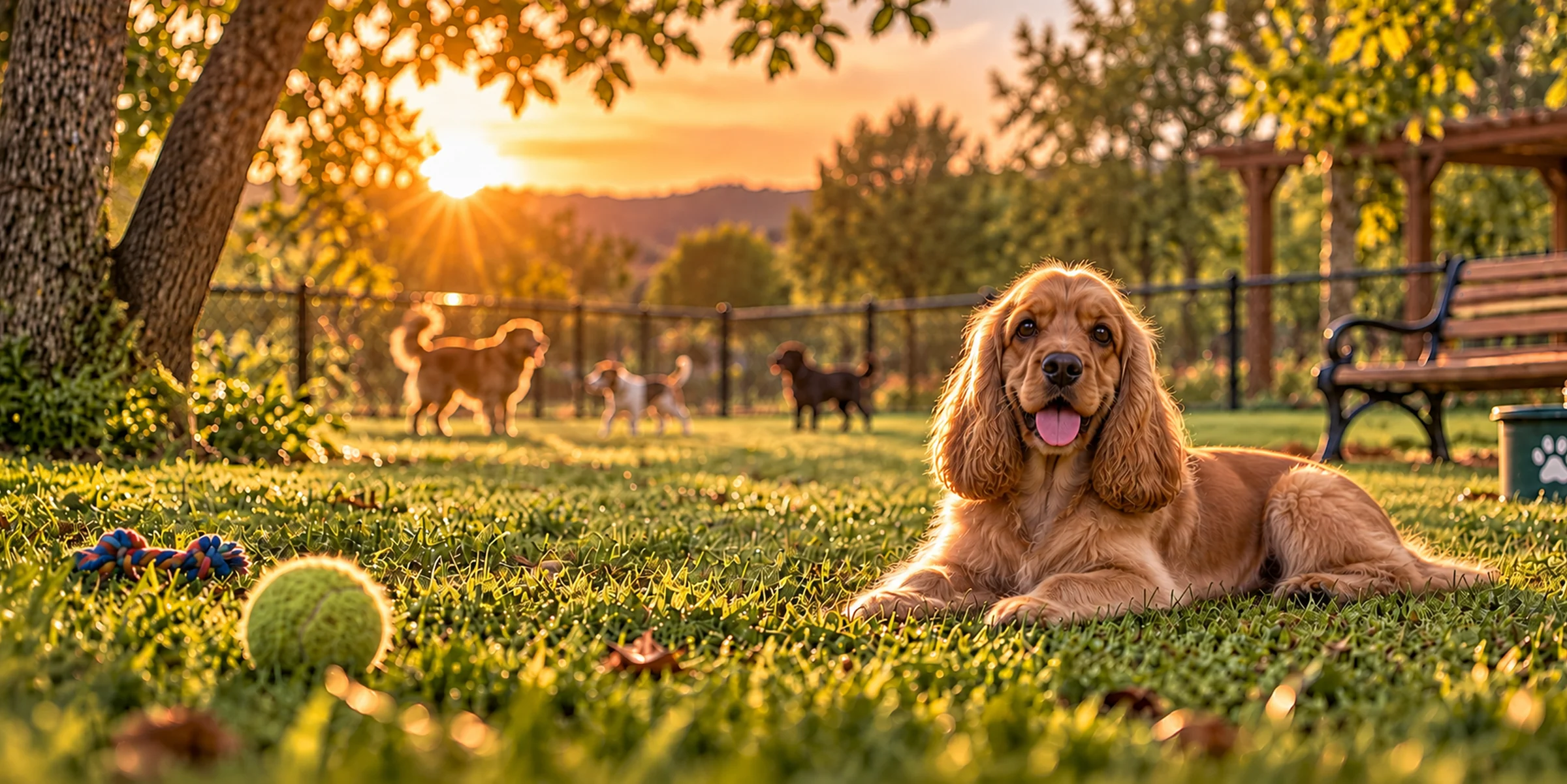
The closest relative and the natural comparison - the same flushing job in a smaller frame, with the same cheerfulness, ear care and show-versus-working split. The Cocker needs somewhat less exercise; the Springer covers more ground.

Brittany
A similar-sized versatile gundog with comparable energy and an equally soft temperament. The Brittany points rather than flushes and carries less coat; the Springer is the more biddable of the two.
Welsh Springer Spaniel
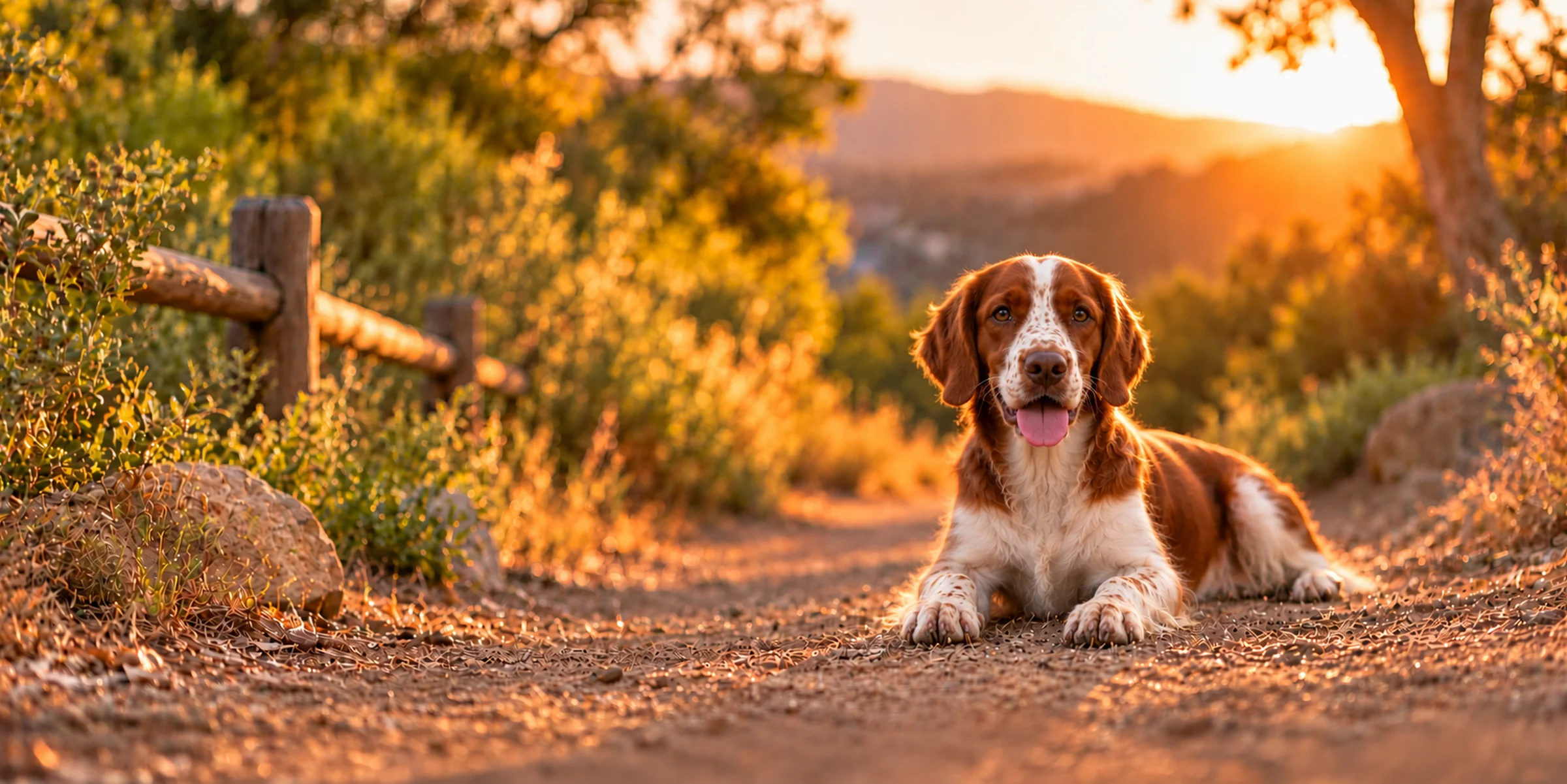
The older Welsh breed, red and white only and never split into field and show lines. Welsh Springers are more compact with smaller ears, markedly more reserved with strangers, and a one-family dog where the English Springer greets everyone.