

medium breed
Australian Cattle Dog
A hard, honest working dog who attaches to their person with genuinely unusual intensity - a Cattle Dog will follow you from room to room for a decade. They are tough, clever, endlessly capable and wary of anyone outside the family, and they are relentless. The commonest mistake owners make is underestimating what relentless means on a wet Tuesday in February, when two hours of real activity still has to happen somehow.

Pup Height
18-20 in
Figures are for males; females are 17-19 in. The blue and red speckled coats are the same breed and the same standard - a blue heeler and a red heeler differ only in color. Puppies of both are born white and develop their markings over the first weeks. Source: AKC breed standard.

Pup Weight
35-50 lb

Pup Lifespan
12-16 years
Your pup, at a glance
What’s Life With This Pup Really Like?

Devoted to the point of comedy, but on their terms - they want to be touching you while remaining ready to leave at speed. The shadowing is the affection.

Good with children Cattle Dogs are raised with, complicated with children generally. The heeling instinct fires at anything running, and a nipped ankle is the commonest complaint about this breed in family homes.

Fine with dogs a Cattle Dog grows up alongside and reliable with livestock. Strange dogs meet a fairly blunt personality, and small fast animals meet the herding drive.

Moderate. A Cattle Dog is an alert dog rather than a noisy one, and most barking is purposeful - which makes them a better neighbor than their energy suggests.

As high as this site goes. Bred to drive cattle across country for days, and two hours is the floor rather than a good day.

Moderate year-round with two heavier turns a year. The hairs are short and stiff and they get into everything.

Intense and focused rather than silly. They play like they work, and they would nearly always rather have a task than a toy.

Almost none. A dry, tidy dog.

Exceptional, and that cuts both ways. Very few repetitions to learn something, and no distinction in their mind between what you meant to teach and what they picked up.

Excellent. Alert, territorial and naturally suspicious of strangers, and Cattle Dogs take the job seriously without any encouragement.

Very low. A weekly brush covers it, with more during the shed. The coat is built to shrug off weather and largely looks after itself.

Low. They cope with change well enough, but there is no version of this dog that adapts to being under-exercised, and that is what most homes actually ask of them.
Lifestyle fit
Could This Be Your Best Breed?
An Australian Cattle Dog suits a house with land and a household that is genuinely active rather than one that means to be. They learn everything, including what nobody intended to teach them, so they need an owner who is deliberate about what gets rewarded. Costs are low at $1,400 to $2,400 a year across twelve to sixteen years. Take one into an apartment or a desk-bound week and the relentlessness stops being an asset and becomes the thing you live with.

Living Space
A house with land, and a household that is genuinely active. Cattle Dogs are compact enough that people talk themselves into apartments, and it goes badly - the issue is not the square footage but what a dog of this intensity does with an empty afternoon.

Pup Experience
Not a first dog. Cattle Dogs are one of the most trainable breeds on this site, which is exactly the problem: they learn everything, including the things you did not intend, and an owner who is not deliberate about what gets rewarded ends up with a very clever dog running the household.

Daily Pup Time
Two hours of real activity most days, and at least a third of it has to engage their head. The coat takes five minutes a week.

Allergies & Coat
The Australian Cattle Dog scores 6/10 for shedding and 1/10 for drooling. No dog is truly hypoallergenic. The allergens come from dander and saliva, and a dog that sheds this much will leave plenty of hair behind - especially on your furniture, floors, and clothes.
Quirks & challenges
The Not-So-Easy Stuff

They Nip Heels
This is how they move cattle, and a running child or a jogger reads the same. Redirecting it early is far easier than correcting it at two.
Relentless, Not Just Active
Two hours a day, most of it structured. They were bred to work past the point where other dogs stop, and Cattle Dogs will.
Reserved With Strangers
The dingo side. Naturally suspicious of new people and slow to warm, which broad early socialization manages rather than removes.
Bored Is Destructive
A clever dog with nothing to do finds a job. Doors, baseboards and yards are the usual first choices.
They Feel Less Pain
Notably high pain tolerance means injuries get hidden. Worth a closer look when something seems slightly off rather than obviously wrong.
One Person, Really
A Cattle Dog picks someone and shadows them. Charming until you need to leave the house, or until the rest of the family feels like staff.
The good, the bad & the hairy
Health, Care & Costs
Understanding the health risks and ongoing costs of a Australian Cattle Dog helps you plan for a happy, healthy life together.

12-16 years
$40-$60
per groom (bath, nails and ears), every 8-12 weeks - a short coat needs little ($180-$300/year)
$1,400-$2,400/year
all-in (food, routine vet, grooming, insurance, incidentals)

Health Risks
Conditions this breed is prone to.

The gene that produces the white base coat also affects the inner ear, and this breed carries it - puppies can be deaf in one ear or both from birth. A BAER hearing test identifies it in the first weeks and reputable breeders test litters, so ask whether this one was.
An inherited disease that slowly destroys the retina, ending in blindness. There is a DNA test for the form that runs in this breed, which makes it entirely avoidable through testing - ask to see both parents' results.
The hip joint develops loosely, so the ball and socket grind instead of gliding. It leads to arthritis and, in severe cases, replacement surgery. Ask to see hip scores for both parents.
Similar to hip dysplasia but in the elbow joint - the bones do not fit together properly, causing pain and early arthritis. Treatment ranges from management to surgery depending on severity.
The knee ligament tears under the load of a hard-working dog turning at speed. It usually needs surgery, and dogs that do one side often do the other later.
The lens clouds and vision goes with it, sometimes well before old age. Surgery restores sight in most cases but runs into thousands per eye, and breeding stock should carry a current eye certificate.

Insurance & Health Coverage
One of the longest-lived breeds on this site - twelve to sixteen years is normal, and the oldest dog ever recorded by Guinness was an Australian Cattle Dog. That length of life is itself the argument for arranging cover early.

The expensive risks come from how hard they work. Cruciate surgery runs several thousand dollars per knee and a dog moving at this intensity is a real candidate, with a fair chance of the second knee following. Joint surgery for hip or elbow dysplasia sits in the same range, and cataract surgery is thousands per eye.

The deafness and the retinal disease are different in kind - both are congenital, both would be excluded on any policy, and the protection against them is a BAER test on the litter and DNA results on the parents rather than anything an insurer sells.
 Get a Pet Insurance Quote
Care needs
The Daily Routine

Grooming
A short, weatherproof double coat that needs a weekly brush and a bit more during the seasonal shed. Nails, teeth and ears on the usual schedule - one of the lowest-maintenance coats on the site.

Exercise
Two hours most days, and the shape matters more than the total. Herding, agility, flyball, canicross and scent work all suit them; two hours of leash walking will tire their legs and leave their head entirely unoccupied.

Food & Weight
Two measured meals, with training treats coming out of the ration rather than on top. A Cattle Dog is a compact, muscular dog and a couple of extra pounds sit badly on knees that are already working hard - go by ribs rather than by the scoop.
Similar breeds
If This Isn’t Quite the One
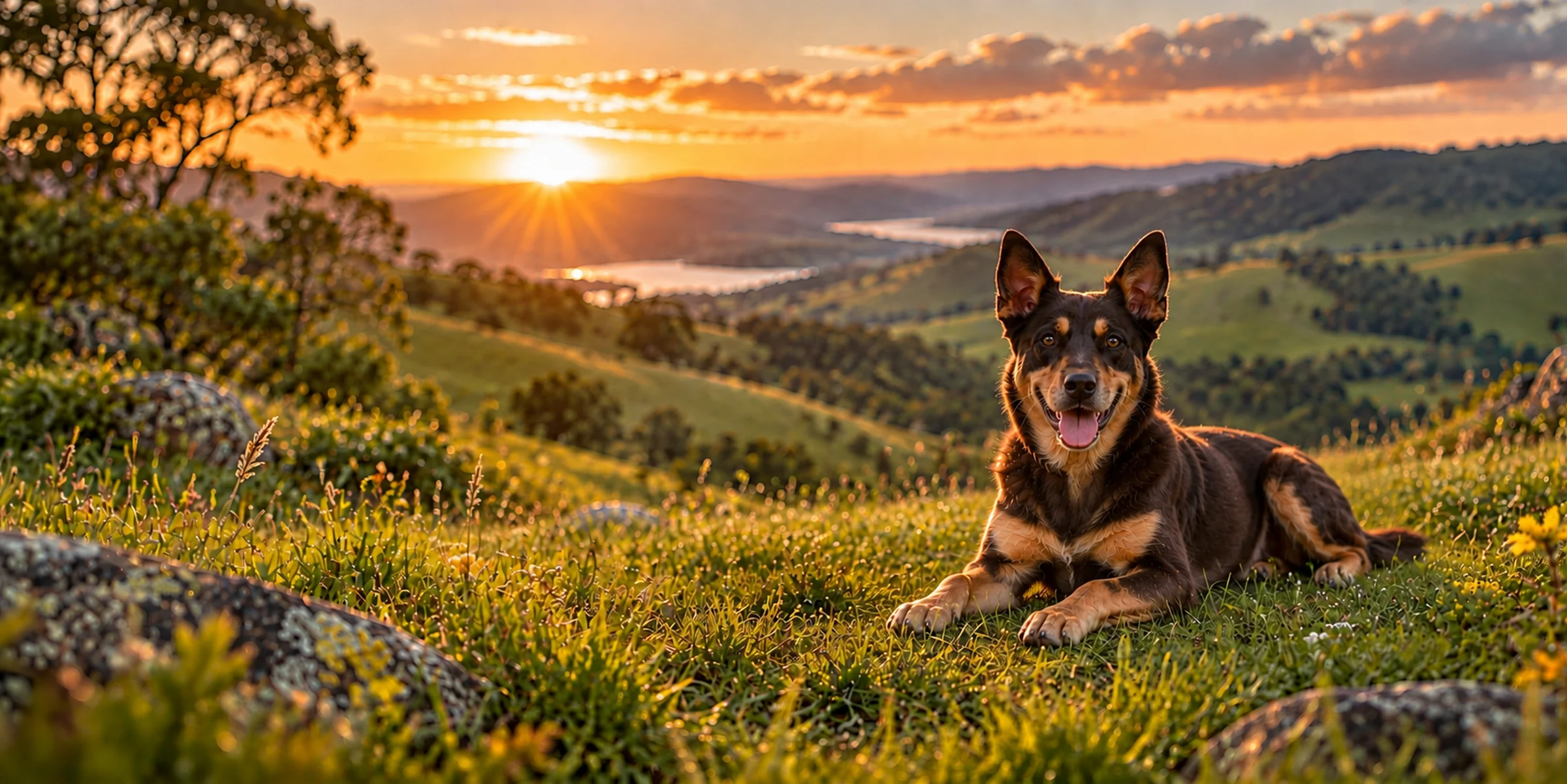
Australian Kelpie
The closest comparison on this site - the same country, the same era, the same extreme working drive. The Kelpie is the more independent of the two and works sheep at a distance; the Cattle Dog is closer, harder and far more attached to one person.
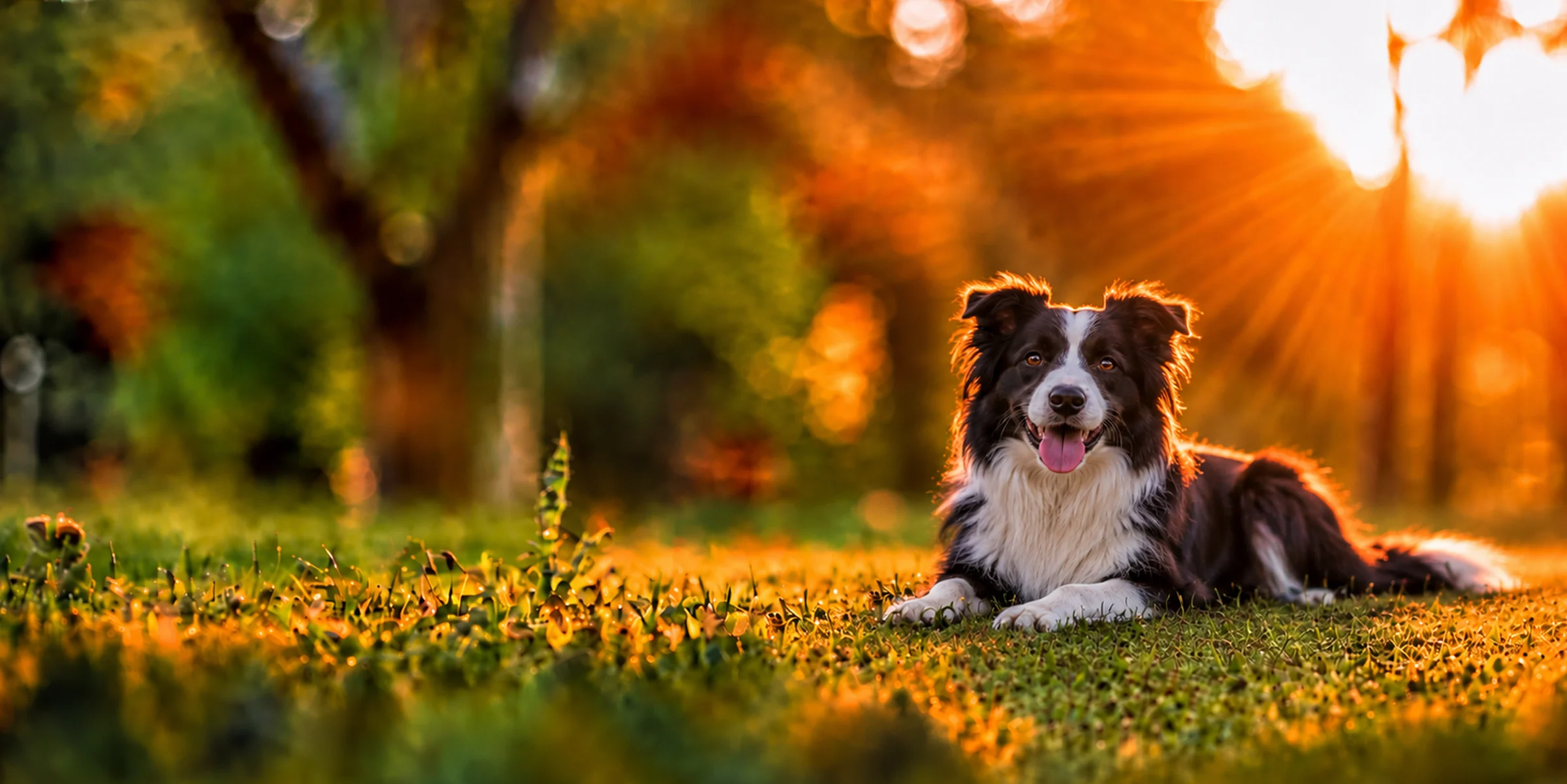
Border Collie
The same order of intelligence and drive with a very different way of working - the Border Collie controls stock with eye and precision rather than by nipping heels, is softer with strangers, and is considerably easier to find.