

medium-to-large breed
Border Collie
The cleverest dog on this site and, by a distance, the most demanding. A Border Collie does not want a walk, they want a job - agility, flyball, herding, something with rules. Give them one and they are extraordinary. Do not, and they invent their own: circling children, nipping heels, fixating on a ball until nothing else exists. This breed is surrendered for behavior problems more than any other here, and it is almost never the dog's fault.

Pup Height
19-22 in

Pup Weight
31-55 lb
Figures are for males; females are 18-21 in and 26-42 lb. Source: Kennel Club and FCI breed standards.

Pup Lifespan
13.1 years
Your pup, at a glance
What’s Life With This Pup Really Like?

Devoted but not especially cuddly. They'd rather be watching you from across the room, waiting for something to happen.

Good with kids who understand them, but the herding instinct can turn into circling and heel-nipping at running children.

Fine, though they may try to herd whatever else lives with you. Cats rarely enjoy it.

Moderate, and usually purposeful - alerting, herding, or telling you they're bored. The last one is the common case.

Top of the scale, and the mental half is what most owners underestimate. Two hours daily, and at least half of it has to be thinking rather than just running.

A double coat that sheds year-round and blows out heavily twice a year. Rough coats need more attention than smooth.

Will play until they injure themselves. You have to be the one who stops it - especially with a ball.

Very low. A dry, tidy mouth.

Usually rated the most trainable dog alive. That's a demand, not a convenience - untrained ones train themselves, badly.

Watchful and quick to alert, without much guarding weight behind it. They notice everything.

Twice-weekly brushing, more in the molt. Check behind the ears and the trousers where mats form.

Routine-driven and noise-sensitive. Fireworks, thunder and disrupted schedules all land harder than they would on most breeds.
Lifestyle fit
Could This Be Your Best Breed?
Border Collies suit a rural or properly suburban home with room to run, and an owner already itching to take up agility or scent work. Running costs are moderate at $1,600 to $2,900 a year, much of it activity rather than grooming, across a median 13.1 years. The people filling out those surrender forms thought two long walks would cover it, in an apartment, with a full working day alone in the middle.

Living Space
Room to run, ideally rural or properly suburban. An apartment is a hard no here, and no amount of good intentions makes up for the space.

Pup Experience
Not a starter dog. Brilliant, intense and completely unforgiving of a hands-off owner - unless you're already itching to take up agility or scent work, in which case, perfect match.

Daily Pup Time
Two hours-plus, and at least half of it has to be thinking rather than running. A tired body with a bored brain is still a Border Collie looking for a job.

Allergies & Coat
The Border Collie scores 7/10 for shedding and 2/10 for drooling. No dog is truly hypoallergenic. The allergens come from dander and saliva, and a dog that sheds this much will leave plenty of hair behind - especially on your furniture, floors, and clothes.
Quirks & challenges
The Not-So-Easy Stuff

Always On
There's no off switch. An unemployed Border Collie will invent a job, and you won't like their choice.
Herding Everything
Cars, bikes, joggers, children - anything that moves may get rounded up.
Obsessive Streak
Shadow-chasing, light-fixation and tail-chasing can tip from quirk into genuine compulsion.
Noise Nerves
Fireworks and thunder land hard with this breed.
Heel Nipping
How they move livestock. Less charming when it's your toddler.
Ball Obsession
They'll fetch until they're injured. You have to be the one who calls time.
The good, the bad & the hairy
Health, Care & Costs
Understanding the health risks and ongoing costs of a Border Collie helps you plan for a happy, healthy life together.

13.1 years
median; the all-breed median is 12.5
$50-$80
per groom if used ($0-$350/year); most owners manage at home
$1,600-$2,900/year
all-in (food, routine vet, sport/activity costs, insurance, incidentals)

Health Risks
Conditions this breed is prone to.

An inherited malformation of the eye that is present from birth and detectable in puppies. Most affected dogs see well enough for a normal life, but a minority lose significant sight. Both parents should be tested.
The hip joint develops loosely, so the ball and socket grind instead of gliding. It leads to arthritis and, in severe cases, replacement surgery. Ask to see hip scores for both parents.
The breed has a notable predisposition. Recurrent seizures with no other underlying cause, typically first appearing between one and five years old. It is managed with lifelong daily medication rather than cured, and it is one of the conditions insurers exclude once it is on the record.
Causes severe sensitivity to common veterinary drugs. A mutation that stops the blood-brain barrier clearing certain common drugs, including some wormers, sedatives and anesthetics. A dog carrying it can be seriously harmed by an ordinary dose. A cheek swab tests for it - do it before any surgery, not after.
An inherited disease that slowly destroys the retina. Night vision goes first, then daylight vision, usually ending in blindness. There is no treatment, but it is painless and gradual, and most dogs cope well in a home they already know. Responsible breeders DNA-test for it.
Often accelerated by an intensely athletic life. Joint cartilage wears down and the joint becomes stiff and painful. It is managed rather than cured, and keeping the dog lean is the single most effective thing you can do about it.
An inherited immune disorder in Border Collies where white blood cells cannot leave the bone marrow, leaving puppies unable to fight infection. It is fatal, and a DNA test identifies carriers.

Insurance & Health Coverage
Two things drive claims in this breed. The first is the MDR1 mutation - a Border Collie carrying it can be severely harmed by standard veterinary drugs, so genetic testing is genuinely worth doing before any surgery.

The second is orthopedic wear: these are athletes that will run themselves into cruciate tears and early arthritis, and repair runs $3,500-$6,000 per knee.

Epilepsy is the quiet one - lifelong anticonvulsant management and monitoring is a recurring annual cost rather than a single event, and it is exactly the kind of chronic condition that gets excluded once diagnosed.
 Get a Pet Insurance Quote
Care needs
The Daily Routine

Grooming
Brush twice weekly, more during seasonal sheds. Rough-coated dogs need attention behind the ears and on the trousers where mats form.

Exercise
2+ hours daily, with at least 30 minutes of it being mental work rather than running. Dog sports are close to a requirement. Avoid repetitive high-impact ball-throwing, which drives both joint damage and obsessive fixation.

Food & Weight
A working build should look lean, with an obvious waist and ribs easy to feel. Most of the risk here is treat load rather than dinner: this is a breed trained constantly with food, so take training treats out of the daily ration rather than adding to it.
Similar breeds
If This Isn’t Quite the One

German Shepherd
Similar intelligence and work ethic but calmer indoors and easier to settle, if the relentlessness is the problem.

Labrador Retriever
Comparable trainability with a genuine off switch - the usual answer when someone loves the smarts but cannot supply two hours a day.

Standard Poodle
Nearly matches the intelligence with far more moderate exercise needs, and no herding instinct to redirect onto your children.

Golden Retriever
A significant step down in intensity while keeping the eagerness to work with you.
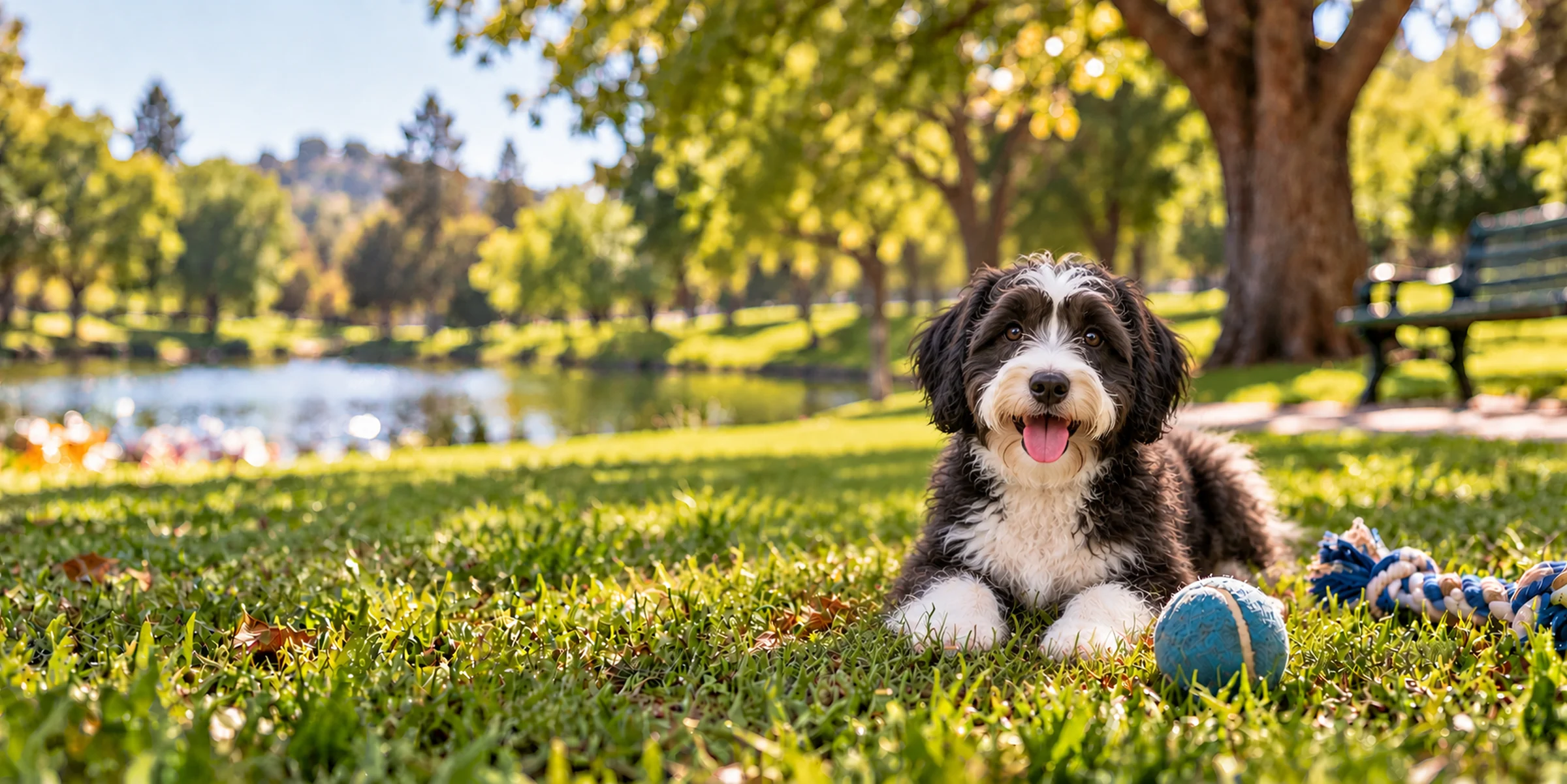
Bordoodle
The Poodle cross, and no calmer for it - two of the brightest breeds in dogs make a dog with enormous capacity and enormous need. The Border Collie tendency to fixate comes through, so a settle is the skill to teach first.