

medium-to-large breed
Barbet
One of the pleasantest temperaments here - sweet, goofy, endlessly people-oriented and genuinely easy with children and with other dogs. The Barbet is calm indoors, not noisy and not territorial, which makes them an easier neighbor than most dogs their size. The catch is entirely practical: that woolly coat mats to the skin in about a week if nobody keeps on top of it, and this is a breed that does badly left alone all day.

Pup Height
22.5-25 in

Pup Weight
35-65 lb
Figures are for males; females are 20.5-23 in. The weight range is wide because the standard describes a medium, rustic build rather than fixing a number. Black, gray, brown and fawn are all accepted, with or without white markings. Recognized by the AKC in 2020 after years in the Foundation Stock Service. Source: AKC breed standard.

Pup Lifespan
12-14 years
Your pup, at a glance
What’s Life With This Pup Really Like?

Among the highest here. A Barbet is a genuine velcro dog who wants to be against you, involved in whatever is happening, and preferably damp from something.

Excellent. Sturdy, patient, playful and entirely without edge - one of the best family temperaments on this site, and the breed's real selling point.

Very good with dogs and generally fine with cats a Barbet is raised alongside. There is some bird drive from the gundog history, so poultry is a different question.

Low. They will announce someone at the door and then lose interest, which makes them an easy dog to have near neighbors.

Moderate to high. An hour or ninety minutes covers them, and swimming does more for them in twenty minutes than walking does in an hour.

Very low. The curls hold what they drop, which is why the coat needs combing out rather than vacuuming up - low shedding is not the same as low maintenance.

Cheerful and slightly ridiculous. A Barbet is a goofy dog well into middle age and takes almost nothing seriously except water.

Low in itself, but the beard arrives at the water bowl and leaves with a good deal of it. Budget for the towel rather than the drool.

Very good. Bright, soft and keen to please, and one of the easier sporting breeds to teach. They respond badly to pressure and very well to reward.

Poor, and pleasantly so. They may announce a visitor and will then want to be introduced. The friendliness is the point of them.

One of the highest on this site, and the real cost of the breed. Several long brush-outs a week to the skin, a groomer every six to eight weeks, weekly ears and a daily beard.

Good on environment, poor on absence. They settle into new homes, routines and cities readily; what they do not adapt to is being left alone all day.
Lifestyle fit
Could This Be Your Best Breed?
A Barbet suits a household where someone is usually home, with an hour or more of daily exercise and ideally some water in it. Grooming is the real cost - twenty minutes of brushing several times a week plus a professional groom every six to eight weeks, inside $2,000 to $3,200 a year over twelve to fourteen years. At that price the grooming is not the part you can skip, and neither is the company, so a ten-hour workday or a low-maintenance household should stop here.

Living Space
A house with a yard suits them best, though they are calm enough indoors that an apartment works if the exercise genuinely happens and someone is usually home. The Barbet is not a noisy dog and not a territorial one, which makes them an easier neighbor than most breeds their size.

Pup Experience
Good for a first-time owner on temperament and a poor one on grooming. They are friendly, biddable and forgiving of mistakes; the thing that catches people out is that a curly, woolly coat mats to the skin in about a week if nobody is keeping on top of it.

Daily Pup Time
An hour to ninety minutes of exercise daily, ideally with water in it somewhere, plus twenty minutes of brushing several times a week and a professional groom every six to eight weeks.

Allergies & Coat
The Barbet scores 2/10 for shedding and 3/10 for drooling. No dog is truly hypoallergenic. The allergens come from dander and saliva, and a coat like this one holds on to them rather than spreading them around your home - which is what a groomer is clearing out every six to eight weeks.
Quirks & challenges
The Not-So-Easy Stuff

The Coat Is the Whole Job
Woolly curls that mat to the skin within a week if neglected. Several long brush-outs a week plus a groomer every six to eight weeks.
They Cannot Be Left Alone
Deeply attached and prone to separation anxiety. A household out for ten hours a day is the worst possible fit for this breed.
Ears Need Weekly Work
Heavy drop ears, hair growing inside them, and a dog who swims at every opportunity. Infections follow unless they are cleaned and dried.
The Beard Delivers Water
It collects half the bowl at every drink and carries it to the nearest soft furnishing. A daily wipe rather than a grooming-day job.
They Will Find the Water
Marsh, pond, puddle or a muddy ditch - if there is water on the walk they are in it, and the coat brings most of it home.
Rare and Slow to Get
Few breeders, long waiting lists, and a small gene pool. Worth asking directly about health testing and coefficients of inbreeding.
The good, the bad & the hairy
Health, Care & Costs
Understanding the health risks and ongoing costs of a Barbet helps you plan for a happy, healthy life together.

12-14 years
$90-$140
per groom (bath, full brush-out, clip and ears), every 6-8 weeks ($700-$1,200/year)
$2,000-$3,200/year
all-in (food, routine vet, grooming, insurance, incidentals)

Health Risks
Conditions this breed is prone to.

The hip joint develops loosely, so the ball and socket grind instead of gliding. It leads to arthritis and, in severe cases, replacement surgery. This breed screens worse than average for it, and a small gene pool makes parental hip scores a requirement rather than a nicety.
Similar to hip dysplasia but in the elbow joint - the bones do not fit together properly, causing pain and early arthritis. Treatment ranges from management to surgery depending on severity.
Seizures with no other underlying cause, usually first appearing between one and five years old. The breed clubs run health surveys on it because the population is small enough for a single line to matter. It is controlled with daily medication rather than cured.
Heavy drop ears with hair growing inside them, on a dog who swims whenever they can. Structural rather than inherited, and the single most predictable recurring cost in the breed - weekly cleaning and thorough drying is genuine prevention.
The eyelid rolls inward and the lashes rub the surface of the eye, which is painful and scars the cornea if left. It is corrected surgically and usually shows up in the first year or two.
A dense curly coat holds moisture against the skin, and a damp dog plus an allergy tendency produces hot spots that flare quickly. Thorough drying after swimming does more here than any product.

Insurance & Health Coverage
A generally sound breed, but a small one - the population came back from very few dogs after the wars, and that is the honest frame for everything below.

Hips are the item to take seriously. This breed screens worse for dysplasia than most sporting dogs, and joint surgery runs several thousand dollars. Epilepsy is the other significant one, and it is a chronic cost rather than a single bill: daily medication and regular monitoring for the rest of their life, usually starting in the first few years.

Ears are what most owners actually meet first, and they are exactly the sort of recurring condition an insurer writes into an exclusion once it appears in the notes. On a dog who swims this much, that record starts building early - which makes arranging cover in the first year worth more here than the premium difference suggests.
 Get a Pet Insurance Quote
Care needs
The Daily Routine

Grooming
Brush thoroughly several times a week with a slicker and a comb, working right down to the skin - a surface brush leaves mats forming underneath and they felt within days. A professional groom every six to eight weeks. Ears cleaned weekly and dried after every swim, and the beard wiped daily.

Exercise
An hour to ninety minutes daily. Swimming and retrieving are what they were built for and settle them better than anything else; gundog work, scent games and obedience all suit them. They are happy to be a walking companion, but water is where the dog actually appears.

Food & Weight
Two measured meals with training treats coming out of the ration. A thick curly coat hides weight gain completely, so go by ribs rather than by eye - and keep them lean while they are growing, since fast weight on developing joints matters in a breed with hip trouble in it.
Similar breeds
If This Isn’t Quite the One

Standard Poodle
The close relation and the obvious comparison - the Barbet sits near the root of the Poodle's family tree, with much the same coat commitment and water drive. The Standard Poodle is sharper, more driven and vastly easier to find; the Barbet is the softer, sillier, more easygoing of the two.
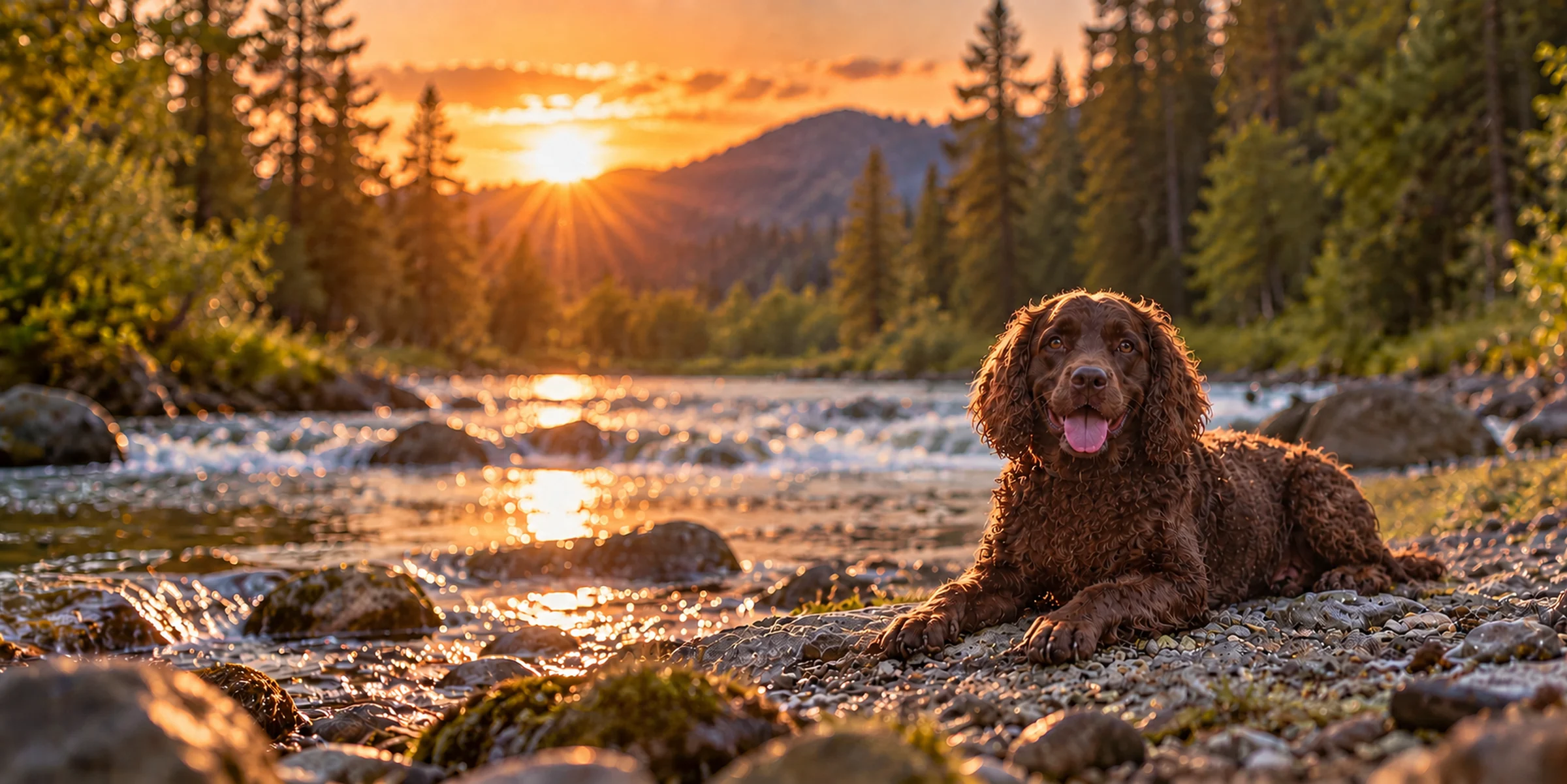
American Water Spaniel
The other curly water retriever here, in a smaller and considerably more complicated package. The American Water Spaniel is reserved with strangers and often a one-person dog, where the Barbet likes everybody - if the water work appeals but the aloofness does not, this is the swap.