

medium-to-large breed
Berger Picard
A rustic French shepherd with erect ears, a beard and a tousled coat that is meant to look unbrushed - and, unusually for a herding dog, almost no grooming to speak of. Picards are lively, funny and genuinely goofy well into adulthood, devoted to their family and reserved with everyone else. They are also soft: harsh handling shuts them down, and they often do not settle into an adult mind until three.

Pup Height
23.5-25.5 in
Figures are for males; females are 21.5-23.5 in. Only two colors are recognized, fawn and brindle, and the naturally erect ears are never cropped or trained to stand - they do it themselves. The crisp two-inch coat is meant to look unkempt and is never trimmed or clipped. Recognized by the AKC in 2015. Source: AKC breed standard.

Pup Weight
50-70 lb

Pup Lifespan
12-13 years
Your pup, at a glance
What’s Life With This Pup Really Like?

Very attached to their own people and physically close with them, while remaining aloof with everyone else. The contrast is one of the nicer things about the breed.

Very good with children they are raised with - playful, patient and genuinely fond of them. The herding instinct turns running into a job, so the usual caveat about nipped heels applies.

Fine with dogs they grow up alongside and workable with cats. Small fast animals meet a herding drive rather than a hunting one, which is easier to manage but not nothing.

Moderate. They announce visitors and unusual activity and are not a constant talker, though a bored Picard finds their voice quickly.

High but not frantic. Ninety minutes covers them, and they have a real off switch indoors that the Border Collie and the Kelpie never developed.

Low. The harsh coat holds most of what it drops, which is why an occasional comb-out matters more than vacuuming.

One of the funniest dogs here. Genuinely goofy, inventive, and still behaving like an adolescent at two and a half.

Low. The beard collects water from the bowl, but there is little actual drool.

Good and conditional. They learn quickly and work willingly for someone they trust, and they are soft - pressure sets the whole thing back rather than speeding it up.

Excellent. Watchful, territorial and reserved with strangers, and they take an unfamiliar arrival seriously without being aggressive about it.

Very low, and unusual for how shaggy they look. A brush twice a month and nothing else - no trimming, no clipping, no professional grooming for the whole of their life.

Moderate. They settle into new homes and routines readily; what they do not adapt to is a household that leaves them under-exercised or short of company.
Lifestyle fit
Could This Be Your Best Breed?
Berger Picards suit a house with a yard, an active household out in it daily, and a patient owner who will socialize hard early and never train by correction. Costs are moderate at $1,600 to $2,600 a year over twelve or thirteen years, with grooming close to free. Anyone in an apartment, anyone impatient with a dog who grows up slowly, and anyone unwilling to wait out a long breeder list should look elsewhere.

Living Space
A house with a yard and a household that is out in it daily. Picards are quieter and less frantic than most herding dogs, but they are working shepherds with a guarding streak and a voice, and an apartment is a poor fit for both.

Pup Experience
Not a first dog, and the reason is temperament rather than difficulty. They are soft, sensitive and slow to mature, so they need an owner who can be patient for three years and firm without being heavy - the two mistakes that ruin this breed are correcting them harshly and skipping the socialization.

Daily Pup Time
An hour to ninety minutes of exercise daily with something for the head, and remarkably little grooming - a brush once or twice a month, and no trimming at all.

Allergies & Coat
The Berger Picard scores 3/10 for shedding and 2/10 for drooling. No dog is truly hypoallergenic. The allergens come from dander and saliva, and a coat that sheds this little leaves far less of them on your furniture, floors, and clothes.
Quirks & challenges
The Not-So-Easy Stuff

Slow to Grow Up
Physically mature well before they are mentally there - often not settled until three. Expect a large, silly adolescent for longer than you planned.
Sensitive to Correction
They take telling-off hard and withdraw rather than pushing back. Reward-based work is not a preference with this breed, it is what functions.
Shy Without Socialization
Reserved with strangers by nature, and genuinely timid if the early exposure was thin. This is the failure mode to plan against.
A Real Mischief Streak
Clever, observant and entertained by getting away with things. They learn what you do not want them to know as readily as what you teach.
They Circle and Herd
Gathering running children is instinct rather than naughtiness, and it comes with nudging and the occasional nipped heel.
Hard to Find, Long Waits
A few thousand exist in France and far fewer elsewhere. Expect a waiting list and a small gene pool worth asking about.
The good, the bad & the hairy
Health, Care & Costs
Understanding the health risks and ongoing costs of a Berger Picard helps you plan for a happy, healthy life together.

12-13 years
$40-$65
per groom (bath, nails and ears) if you outsource it, every 10-12 weeks - the coat itself needs a brush twice a month and no trimming ($0-$260/year)
$1,600-$2,600/year
all-in (food, routine vet, grooming, insurance, incidentals)

Health Risks
Conditions this breed is prone to.

The hip joint develops loosely, so the ball and socket grind instead of gliding. It leads to arthritis and, in severe cases, replacement surgery. A small breeding population makes parental hip scores a requirement rather than a nicety - ask to see them.
An inherited disease that slowly destroys the retina. Night vision goes first, then daylight vision, usually ending in blindness. There is no treatment, but it is painless and gradual, and most dogs cope well in a home they already know. Eye clearances on both parents are the protection.
The retina forms with folds or detached patches, present from birth rather than developing later. Mild cases never affect the dog; severe ones cause blindness in that eye. A puppy eye examination identifies it, which is why breeders in this small a population screen litters.
Similar to hip dysplasia but in the elbow joint - the bones do not fit together properly, causing pain and early arthritis. Treatment ranges from management to surgery depending on severity.
The stomach fills with gas and twists, cutting off its own blood supply. Without surgery within hours it is fatal. Deep-chested dogs are most at risk, and feeding one large meal a day or exercising straight after eating makes it likelier.
The thyroid stops producing enough hormone, causing weight gain, lethargy and a coat that thins or dulls. A daily tablet manages it completely and the medication itself is inexpensive.

Insurance & Health Coverage
A sound breed with no great burden of inherited disease, and one of the cheaper large dogs on this site to keep - the coat asks for almost nothing.

Eyes are the line worth taking seriously. Two separate conditions run here, retinal atrophy and retinal dysplasia, and both are congenital: no insurer pays for them, and the protection is the parents' eye certificates and a puppy examination rather than a policy. In a population this small that is a question to ask directly rather than assume.

What cover is for is the joints and bloat. Joint surgery runs several thousand dollars, and bloat is an emergency in the same range on a deep-chested dog. Both are sudden rather than gradual, which is the case for insurance rather than a savings pot.
 Get a Pet Insurance Quote
Care needs
The Daily Routine

Grooming
One of the lowest loads on this site. Brush once or twice a month with a slicker and a comb, hand-pluck the odd mat behind the ears, and leave the coat alone otherwise - it is meant to look tousled and trimming or clipping ruins the texture that keeps the weather out. Bathe two or three times a year. Nails, teeth and ears on the usual schedule.

Exercise
An hour to ninety minutes daily with real mental work in it. Herding, agility, obedience, tracking and long walks over varied ground all suit them; they have genuine stamina but settle well at home once the work is done.

Food & Weight
Two measured meals rather than one large one, with hard exercise clear of mealtimes given the bloat risk. Grow puppies slowly - they are slow to mature in body as well as mind, and pushing weight onto developing joints causes problems that last.
Similar breeds
If This Isn’t Quite the One
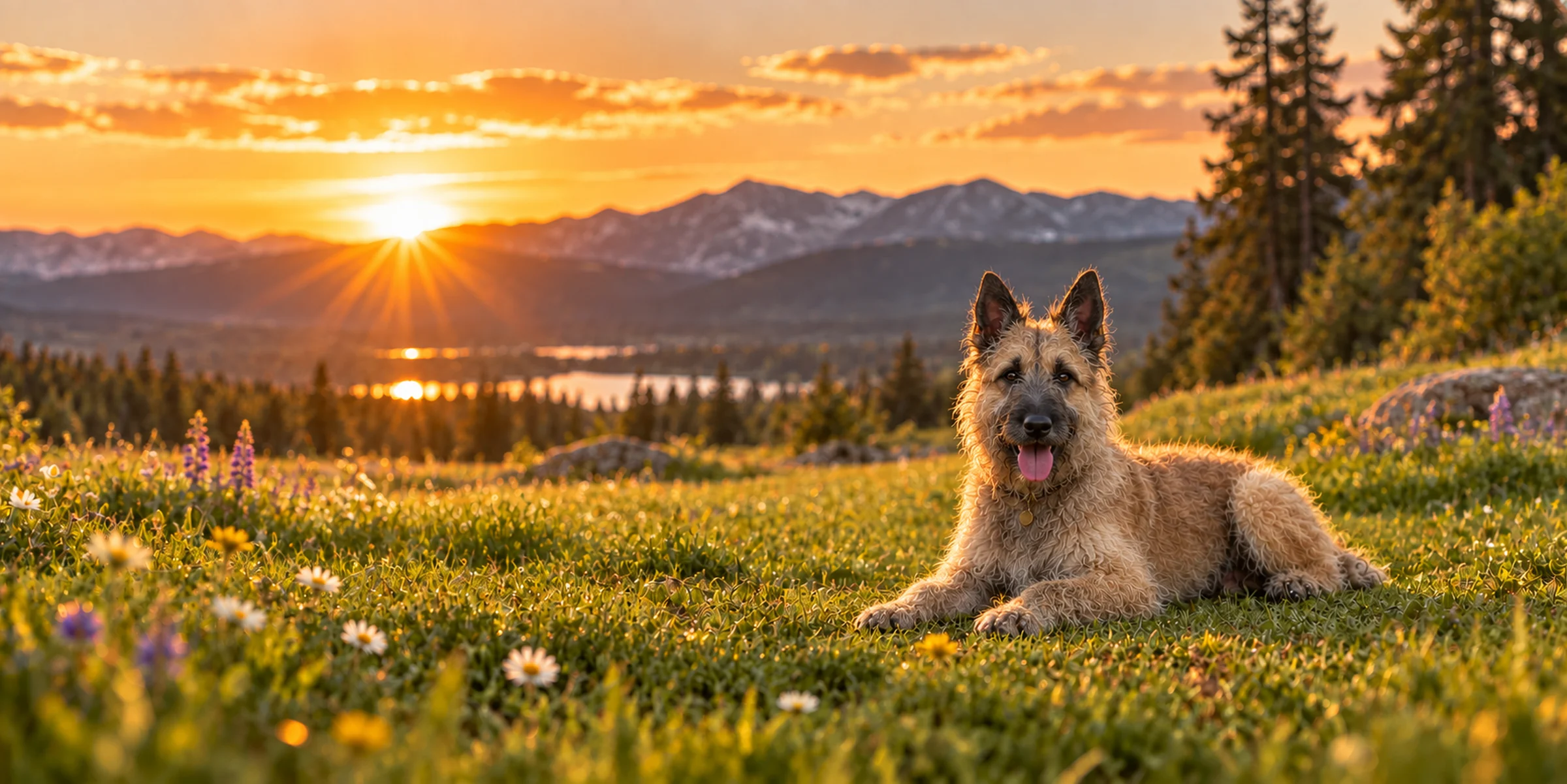
Belgian Laekenois
The closest match on this site - a rough-coated continental herding dog of similar size, similarly reserved with strangers and similarly rare. The Laekenois is the harder, more driven of the two; the Picard is softer and considerably goofier.
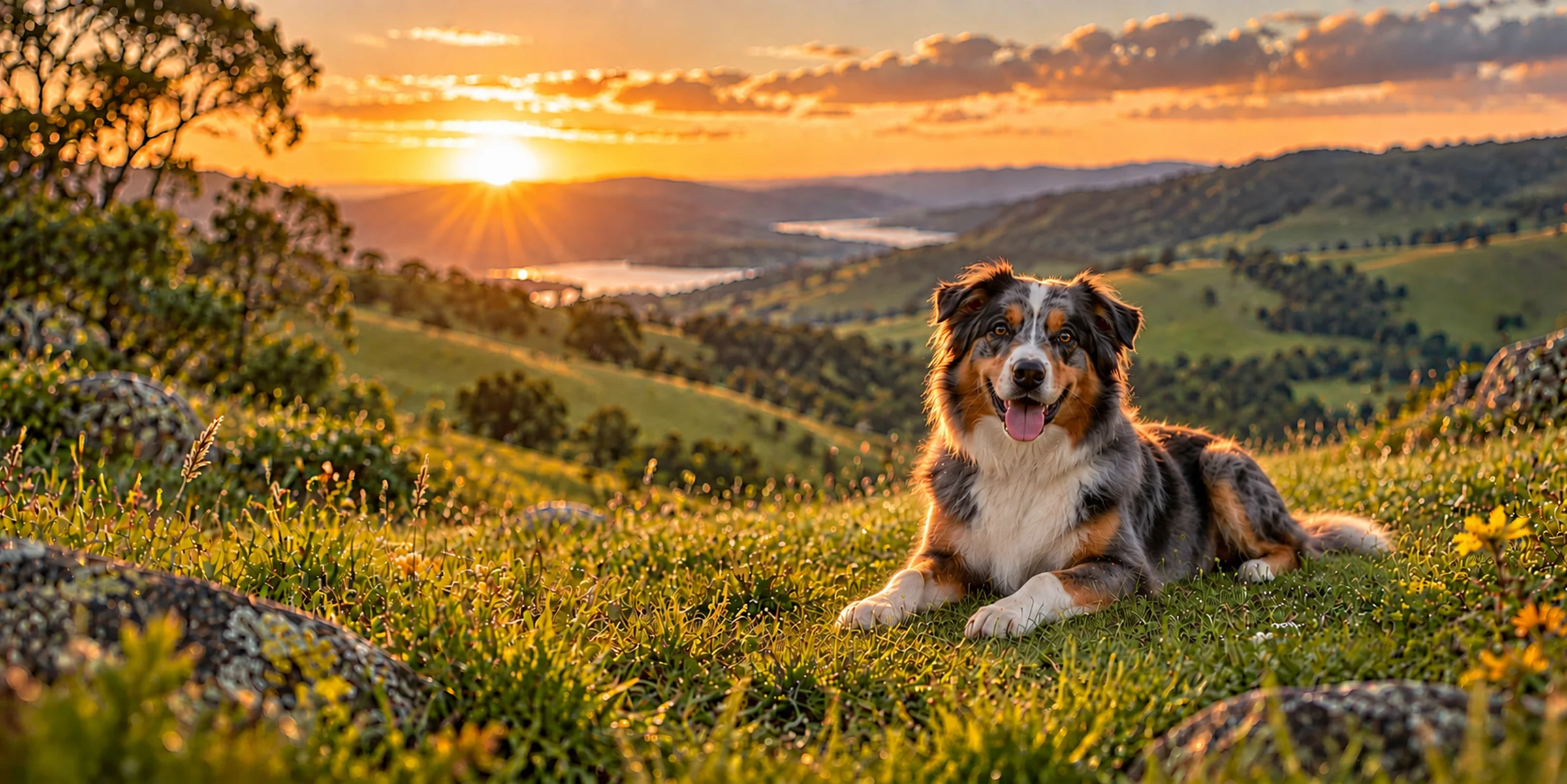
Australian Shepherd
If the shaggy herding dog appeals but the waiting list does not, an Aussie is the available version - more biddable and far easier to find, at the cost of a heavy shedding coat and a higher exercise requirement.