

large-to-giant breed
Bernese Mountain Dog
One of the gentlest large breeds there is - patient, affectionate, unhurried, superb with children, and entirely convinced they are a lap dog at a hundred pounds. The catch is not temperament or training. Bernese live seven to ten years, short even for a giant breed, and cancer is the main reason. Heat is the other constraint: a heavy black coat on a dog this size makes warm weather genuinely hard.

Pup Height
25-27.5 in

Pup Weight
80-115 lb
Figures are for males; females are 23-26 in and 70-95 lb. The Bernese is the only long-coated one of the four Swiss Sennenhund breeds, and the tricolor markings are fixed by the standard - black with rust and white, a white blaze, and the white cross on the chest. Source: AKC breed standard.

Pup Lifespan
7-10 years
Your pup, at a glance
What’s Life With This Pup Really Like?

The joint highest on this site. A Bernese is a hundred-pound dog with every intention of sitting on you, and the famous lean - putting their full weight against your legs - is how the breed says hello.

Excellent, and one of the best here. Patient, gentle and almost impossible to provoke, with the single caution that a dog this size knocks a toddler over without noticing.

Very good. Easygoing with other dogs and generally relaxed about cats - there is little prey drive and less inclination to argue.

Low. They have a deep bark and do not use it much, which makes them a considerably easier neighbor than their size suggests.

Moderate to low. Forty-five minutes to an hour suits them, and they are content to spend the rest of the day asleep somewhere cool.

Very heavy, and one of the highest on this site. A long double coat on a large dog, shedding year-round with two dramatic seasonal turns.

Gentle and a bit clownish rather than athletic. They enjoy a game and are not built for a long one, and they stay sweet-natured about it into old age.

Moderate. Some jowl and real drool around food and water, though nothing like a mastiff.

Good. Soft, willing and quick to learn, and they respond badly to correction - patience gets far more out of them than firmness ever will.

Moderate. A Bernese notices arrivals and announces them, then greets them warmly. The size is the deterrent, not the intention.

High and continuous. Three or four brush-outs a week, daily during a coat blow, and a professional groom every couple of months for a coat this size.

Moderate on routine and low on climate. They settle into new homes calmly, and there is no adapting a black double coat to a hot summer.
Lifestyle fit
Could This Be Your Best Breed?
A Bernese Mountain Dog suits a cool climate, a house with a yard and a cold floor to sprawl on, and a family that wants a calm companion rather than a hiking partner. Budget $2,200 to $3,600 a year, much of it grooming on a coat that sheds everywhere. Seven to ten years is the one thing about this breed that no amount of care will change, and a hot region or a spotless house only makes the rest of it harder.

Living Space
A house with a yard and a cool floor to lie on. Bernese are calm enough indoors that space is not really the constraint - heat is. A heavy black coat on a hundred-pound dog makes a warm climate genuinely hard on them.

Pup Experience
Fine for a first-time owner on temperament - they are gentle, biddable and forgiving. What the breed asks for is not skill but preparation: for the shedding, for a dog who reaches a hundred pounds while still mentally a puppy, and for a life that is likely to be short.

Daily Pup Time
Forty-five minutes to an hour of steady exercise daily, kept clear of the heat of the day, plus brushing three or four times a week and considerably more during the seasonal blow.

Allergies & Coat
The Bernese Mountain Dog scores 9/10 for shedding and 6/10 for drooling. No dog is truly hypoallergenic. The allergens come from dander and saliva, and a dog that sheds this much will leave plenty of hair behind - especially on your furniture, floors, and clothes.
Quirks & challenges
The Not-So-Easy Stuff

A Short Life, Honestly
Seven to ten years is normal, which is brief even for a giant breed. It is the single most important thing to know before choosing one.
Cancer Is the Reason
Histiocytic sarcoma in particular runs in this breed far above the rate in dogs generally, and it is what shortens the average so sharply.
Heat Is Dangerous
A dense black coat on a heavy dog. Exercise early and late in summer, and treat panting at rest as a reason to stop rather than a quirk.
The Coat Is Everywhere
Heavy year-round shedding with two much heavier turns. Three or four brush-outs a week is maintenance, not a deep clean.
Grows Fast, Matures Slow
Adult size well before an adult mind, on joints that are still forming. Slow growth and controlled exercise in the first year matter.
Bloat Is a Live Risk
Deep-chested and large. Split meals, no hard exercise around feeding, and know the signs before you need them.
The good, the bad & the hairy
Health, Care & Costs
Understanding the health risks and ongoing costs of a Bernese Mountain Dog helps you plan for a happy, healthy life together.

7-10 years
$90-$140
per groom (bath, blow-out and deshedding on a very large coat), every 6-8 weeks ($700-$1,200/year)
$2,200-$3,600/year
all-in (food, routine vet, grooming, insurance, incidentals)

Health Risks
Conditions this breed is prone to.

An aggressive cancer of the immune system's histiocyte cells, and the signature disease of this breed - it occurs here at rates far above dogs generally and is the main reason the average lifespan is so short. It usually strikes in middle age, moves quickly, and treatment is palliative more often than curative. There is no screening test, which is why breeders track it through pedigrees instead.
Mast cell tumors, lymphoma and osteosarcoma all appear more often than average on top of the histiocytic sarcoma. Cancer of one kind or another accounts for a large share of Bernese deaths, and any new lump on this breed warrants a vet rather than a wait.
The joints develop loosely so the surfaces grind rather than glide, leading to arthritis and, in severe cases, surgery. Both are common in the breed and both are screened - ask to see scores for both parents, not just hips.
The stomach fills with gas and twists, cutting off its own blood supply. Without surgery within hours it is fatal. Deep-chested dogs are most at risk, and feeding one large meal a day or exercising straight after eating makes it likelier.
A progressive disease of the spinal cord that causes the hind legs to weaken and then fail, painlessly but irreversibly, usually in older dogs. There is a DNA test, so a breeder can tell you the parents' status.
An inherited clotting disorder, so a routine spay or dental can bleed far more than it should. A DNA test identifies carriers and affected dogs, and knowing beforehand is the entire point.

Insurance & Health Coverage
This is the breed on this site where insurance matters most, and the reason is blunt: cancer is common, it arrives in middle age, and treating it is expensive.

Histiocytic sarcoma and the other cancers Bernese see are diagnosed with imaging and biopsy and treated with surgery, chemotherapy or both - a course that runs into many thousands of dollars, often at a specialist referral center. Owners routinely face that decision at six or seven years old, which is exactly when an uninsured dog has already accumulated enough in the notes for a new policy to be full of exclusions.

The orthopedic side is the other significant cost. Joint surgery on a hundred-pound dog sits at the top of the range, and bloat is an emergency in the thousands. Arranging cover in the first year, and choosing a policy without a low annual cap, is worth more thought here than in any other breed on this site.
 Get a Pet Insurance Quote
Care needs
The Daily Routine

Grooming
Brush three or four times a week with a slicker and an undercoat rake, working down to the skin behind the ears, on the trousers and around the ruff where the coat mats first. Daily during the twice-yearly blow. Never clipped - the double coat insulates against heat as well as cold, which matters more in this breed than most.

Exercise
Forty-five minutes to an hour of steady daily exercise, and no more than that while they are growing. They enjoy carting and draft work, which is what they were built for, and hiking in cool weather. Avoid the heat of the day entirely in summer.

Food & Weight
Two or three measured meals rather than one large one, with hard exercise kept well clear of mealtimes given the bloat risk. Grow puppies slowly on large-breed food - pushing weight onto developing joints in a dog headed for a hundred pounds is one of the few things about their health that is genuinely in your hands.
Similar breeds
If This Isn’t Quite the One
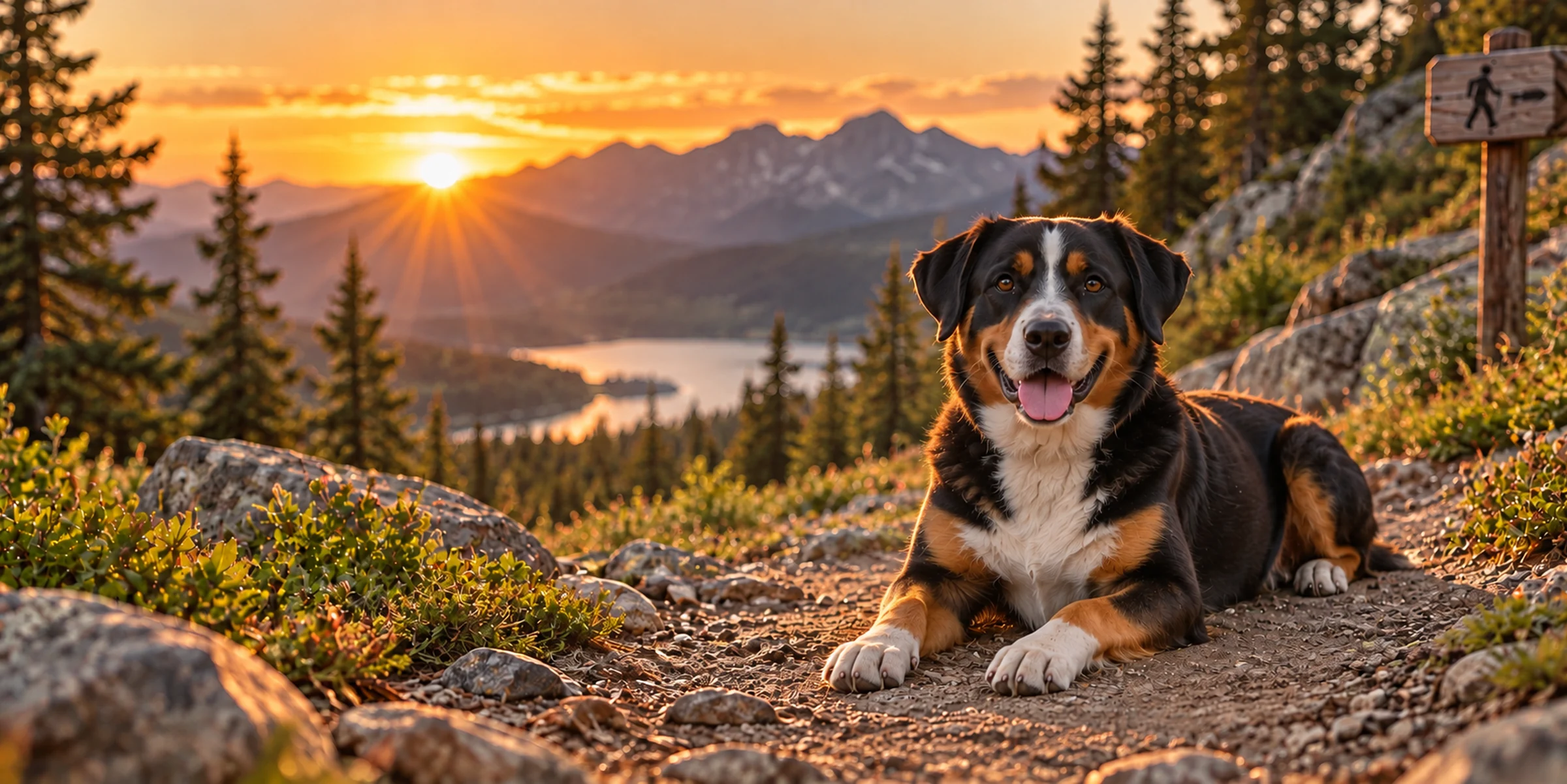
Appenzeller Sennenhund
The same Swiss farm-dog family, and a useful contrast - the Appenzeller is the short-coated working version, half the weight, several times the energy, and considerably longer-lived. If the Bernese appeals but the lifespan frightens you, this is the branch to look at.
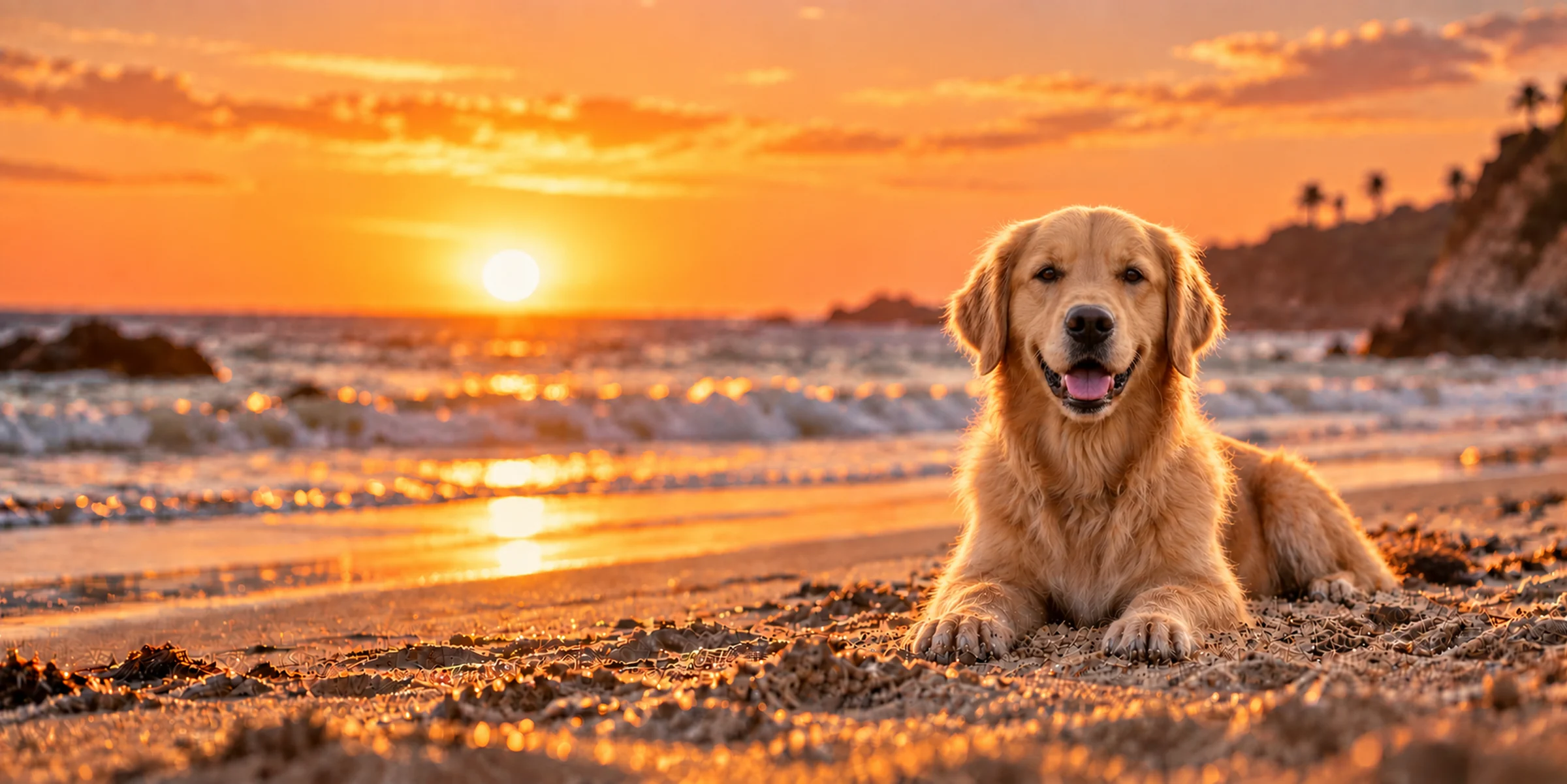
Golden Retriever
Much the same gentle, biddable, child-friendly temperament in a dog with several more years in them and a body that copes with heat. The Golden asks for a great deal more exercise; the Bernese is the calmer of the two by some distance.
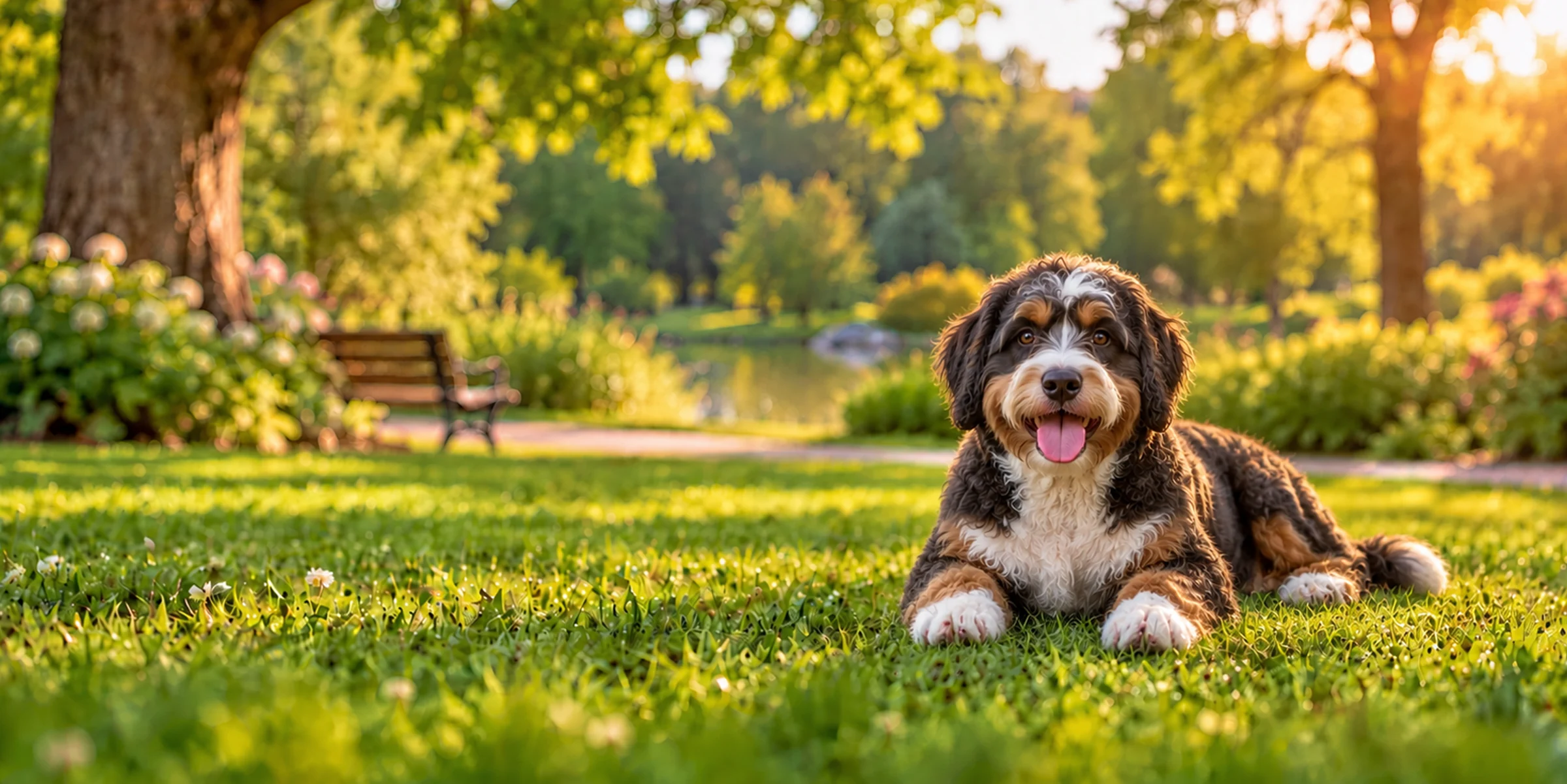
Bernedoodle
The Poodle cross, usually chosen in the hope of a longer-lived Berner. It may help a little - the Poodle side is long-lived - but no study has measured it, and cancer risk is spread across many genes rather than one a test can find.