

small-to-large cross
Bernedoodle
Not a breed but a cross - Bernese Mountain Dog to Poodle, with no kennel club standard behind it, so size, coat and shedding all depend on the two parents rather than on anything written down. Temperament usually lands gentle, people-centered and notably sensitive, slower and heavier than a Labradoodle. The low-shedding coat is the usual draw and it is never guaranteed: littermates differ, and there is no standard to appeal to.

Pup Height
12-29 in

Pup Weight
10-90 lb
No kennel club recognizes the Bernedoodle, so there is no breed standard and no reliable average. Size follows whichever Poodle was used - tiny, miniature and standard crosses run roughly 10-24, 25-49 and 50-90 lb, and a standard out of a heavy Bernese can pass 100. At the shoulder, tiny crosses stand about 12-17 in, miniatures 18-22 in and standards 23-29 in. Generation moves the coat rather than the size: F1 litters vary most, while F1b and multigen litters skew more consistently toward the Poodle coat. The parents' actual weights are the only useful guide.

Pup Lifespan
10-13 years
Your pup, at a glance
What’s Life With This Pup Really Like?

Very high, and from both sides - the Bernese lean plus the Poodle attachment. Assume a dog who follows you room to room.

Generally excellent. The usual caution applies with force: a standard Bernedoodle knocks a toddler over without noticing, and gets there long before the brain catches up.

Good. Little prey drive on the Bernese side and little territoriality on either, so most settle easily with other dogs and cats.

Low to moderate. Both parents are quiet by large-dog standards, and what noise there is tends to be boredom or loneliness rather than temperament.

Moderate. Forty-five to seventy-five minutes, which is more than a Bernese wants and less than a Poodle would take - where an individual lands between the two is genuinely unpredictable. Scored for the standard-size cross.

Usually low, and the least reliable score on this page. A puppy who inherits the furnishings variant sheds little; a flat-coated littermate sheds like a Bernese. No breeder can guarantee which arrives, and F1b or multigen litters only improve the odds.

Playful in bursts and then done. Gentle about it rather than athletic, with the Poodle half showing up in puzzles and scent games.

Low. The Poodle side tidies up the Bernese jowl, though a heavier-headed one can still leave a damp patch after a drink.

High and sensitive with it. Two biddable parents make the mechanics easy; the catch is that correction-heavy handling shuts these dogs down rather than speeding them up.

Low to moderate. Most will announce an arrival and then ask for a fuss. Size is the deterrent, not intent.

The real recurring cost, and worse than on a small cross because there is simply more coat. Brushing to the skin most days, a professional groom every six to eight weeks for life, and a large-dog price each time.

Moderate. Fine about places and routines, much less fine about being left, and a dark heavy coat makes a hot climate hard in the way it is for the Bernese parent. Assumes a standard-size dog.
Lifestyle fit
Could This Be Your Best Breed?
A Bernedoodle suits a household that wants a big, soft, biddable dog, has someone home most of the day, and has costed the coat at $700 to $1,400 a year inside $2,400 to $3,900 all in. The Bernese parent lives seven to ten years and cancer is why; the Poodle side may pull that upward, but no study says so. Anyone told this cross fixes the Bernese lifespan has been promised a certainty nobody can give.

Living Space
A house with a yard and a cool floor suits a standard best. Minis genuinely fit an apartment. What none of them handle is a long empty day - this cross bonds hard and notices when the house is quiet.

Pup Experience
Forgiving on temperament and unforgiving on planning. The training is easy; the standing grooming appointment on a seventy-pound coat, and the honest conversation about lifespan, are what catch people out.

Daily Pup Time
Forty-five to seventy-five minutes of walking and play, kept clear of the heat of the day for the heavier ones, plus ten to fifteen minutes of coat work most days.

Allergies & Coat
The Bernedoodle scores 4/10 for shedding and 3/10 for drooling. No dog is truly hypoallergenic. The allergens come from dander and saliva, and a dog that sheds this much will leave plenty of hair behind - especially on your furniture, floors, and clothes.
Quirks & challenges
The Not-So-Easy Stuff

The Lifespan Question
The Bernese parent lives seven to ten years. The cross may do better and there is no study that says by how much, so plan for the possibility rather than the promise.
Velcro And Separation
Most bond hard and cope badly with long days alone. Practice short absences from the first week, before the pattern sets.
A Genuinely Soft Dog
Harsh handling lands badly here. A Bernedoodle who has been shouted at shuts down and takes far longer to come back than a Labrador would.
Coat Roulette
Coat type varies inside a single litter. A puppy who inherits the flat Bernese coat sheds heavily and looks nothing like the wavy sibling you met.
A Big Coat Costs Big
Seventy pounds of wool mats faster than anyone expects, and a matted large dog gets shaved rather than brushed out. The bill is four figures a year.
Grows Fast, Matures Slow
Adult size well before an adult mind, on joints still forming. Slow growth and controlled exercise through the first year matter.
The good, the bad & the hairy
Health, Care & Costs
Understanding the health risks and ongoing costs of a Bernedoodle helps you plan for a happy, healthy life together.

10-13 years
no study exists for this cross; the figure sits between the Bernese parent's 7-10 and the Poodle's 12-14 and is not a promise
$100-$170
per professional groom on a large doodle coat, every 6-8 weeks ($700-$1,400/year)
$2,400-$3,900/year
all-in (food, routine vet, grooming, insurance, incidentals)

Health Risks
Conditions this breed is prone to.

From the Bernese side, and the reason lifespan is the central question on this page. Histiocytic sarcoma is an aggressive cancer of the immune system's histiocyte cells that occurs in Bernese Mountain Dogs at rates far above dogs generally, and mast cell tumors, lymphoma and osteosarcoma are all raised too. There is no screening test and no single gene to breed away from, so a breeder can only show you what the pedigree died of and at what age. Ask.
Carried by both parent breeds. The joints develop loosely so the surfaces grind rather than glide, ending in arthritis and sometimes replacement surgery. Both are screened - ask to see hip and elbow scores for both parents, not hips alone, and remember that surgery on a seventy-pound dog sits at the top of the price range.
A risk from both parents, who are each deep-chested. The stomach fills with gas and twists, cutting off its own blood supply. Without surgery within hours it is fatal. Feeding one large meal a day or exercising straight after eating makes it likelier, so split meals and keep hard play well clear of them.
A progressive spinal cord disease that weakens and then fails the hind legs, painlessly but irreversibly, usually in older dogs. A DNA test exists, both parents should have one, and two clear parents take this off the table entirely.
An inherited disease that slowly destroys the retina - night vision first, then daylight vision, usually ending in blindness. There is no treatment, though most dogs cope well in a home they already know. The PRA-prcd DNA test is cheap and definitive, and both parents should have been tested.
An inherited clotting disorder, so a routine spay or dental can bleed far more than expected. A DNA test identifies carriers and affected dogs, and knowing before an operation is the entire point of testing.
Two Standard Poodle conditions that come along with the coat. Addison's disease stops the adrenal glands producing enough cortisol, and the vague symptoms - lethargy, vomiting, poor appetite - mean it is often missed until a crisis; it is then managed for life with medication. Sebaceous adenitis destroys the skin's oil glands, leaving dry, scaly skin and patchy coat loss, and is managed with oil baths rather than cured.

Insurance & Health Coverage
The reason people cross a Bernese with a Poodle is almost always the lifespan, and the honest position is that the cross may help and cannot promise to.

Hybrid vigor is a real effect, but it works by avoiding two copies of a recessive gene, and it only helps where the parents do not share the risk. Cancer risk in Bernese Mountain Dogs is polygenic rather than one recessive you can test away, and both parents here are often screened for nothing at all. No study has followed Bernedoodles long enough to say what they actually live to. So the defensible statement is this: the Poodle contribution probably lowers the odds somewhat, the Bernese contribution is still there, and anyone quoting you a confident fifteen years is quoting something nobody has measured.

That uncertainty is the insurance case in one line. Cancer in a Bernese line arrives in middle age and is diagnosed with imaging and biopsy and treated with surgery, chemotherapy or both - a course that runs into many thousands of dollars at a referral center, and often at six or seven years old, exactly when an uninsured dog has enough in the notes for a new policy to be full of exclusions.
Orthopedic surgery on a large dog and emergency bloat surgery each sit in the thousands as well. Arranging cover in the first year, on a policy without a low annual cap, is worth more thought here than the grooming bill people actually budget for.
 Get a Pet Insurance Quote
Care needs
The Daily Routine

Grooming
Brush to the skin at least every other day for wavy and curly coats, daily once the adult coat comes in around eight to twelve months, when matting arrives almost overnight. Professional groom every 6-8 weeks without exception, and expect to pay a large-dog rate. Ears checked and cleaned weekly. A flat-coated Bernedoodle needs an undercoat rake instead and sheds like the Bernese parent.

Exercise
45-75 minutes daily, less while they are growing, and kept out of the heat of the day if the coat came out dark and heavy. Steadier than a Labradoodle - a long walk with some scent work suits them better than an hour of hard running.

Food & Weight
Adult weight ranges from twenty pounds to well over ninety with no standard behind it, so feed the dog rather than the chart on the bag: ribs easy to feel, a waist visible from above. Two or three measured meals rather than one large one given the bloat risk on both sides, and grow standard puppies slowly on large-breed food - keeping weight off developing joints is one of the few things about their health genuinely in your hands.
Similar breeds
If This Isn’t Quite the One
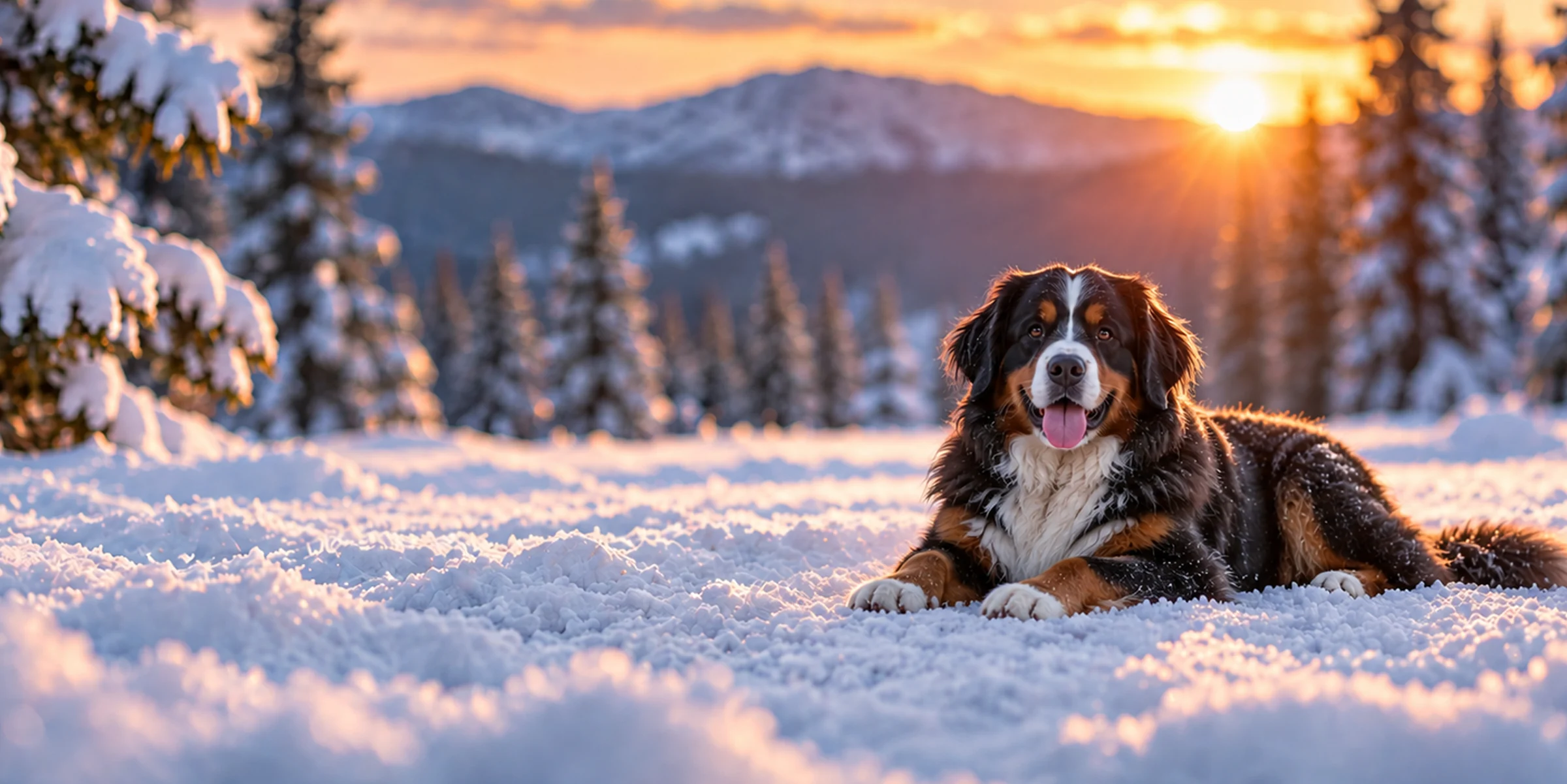
Bernese Mountain Dog
One parent, and the record with the real evidence behind it - a written standard, a measured 7-10 year lifespan and the cancer picture the cross inherits. Read that page before choosing this one.

Standard Poodle
The other parent, and the predictable version: a Standard Poodle gives you a known coat, a known size and twelve to fourteen years, rather than a cross where all three are estimates.

Goldendoodle
The same coat and grooming bill with a lighter, sunnier, less sensitive dog behind it, and a parent breed that lives considerably longer than the Bernese.
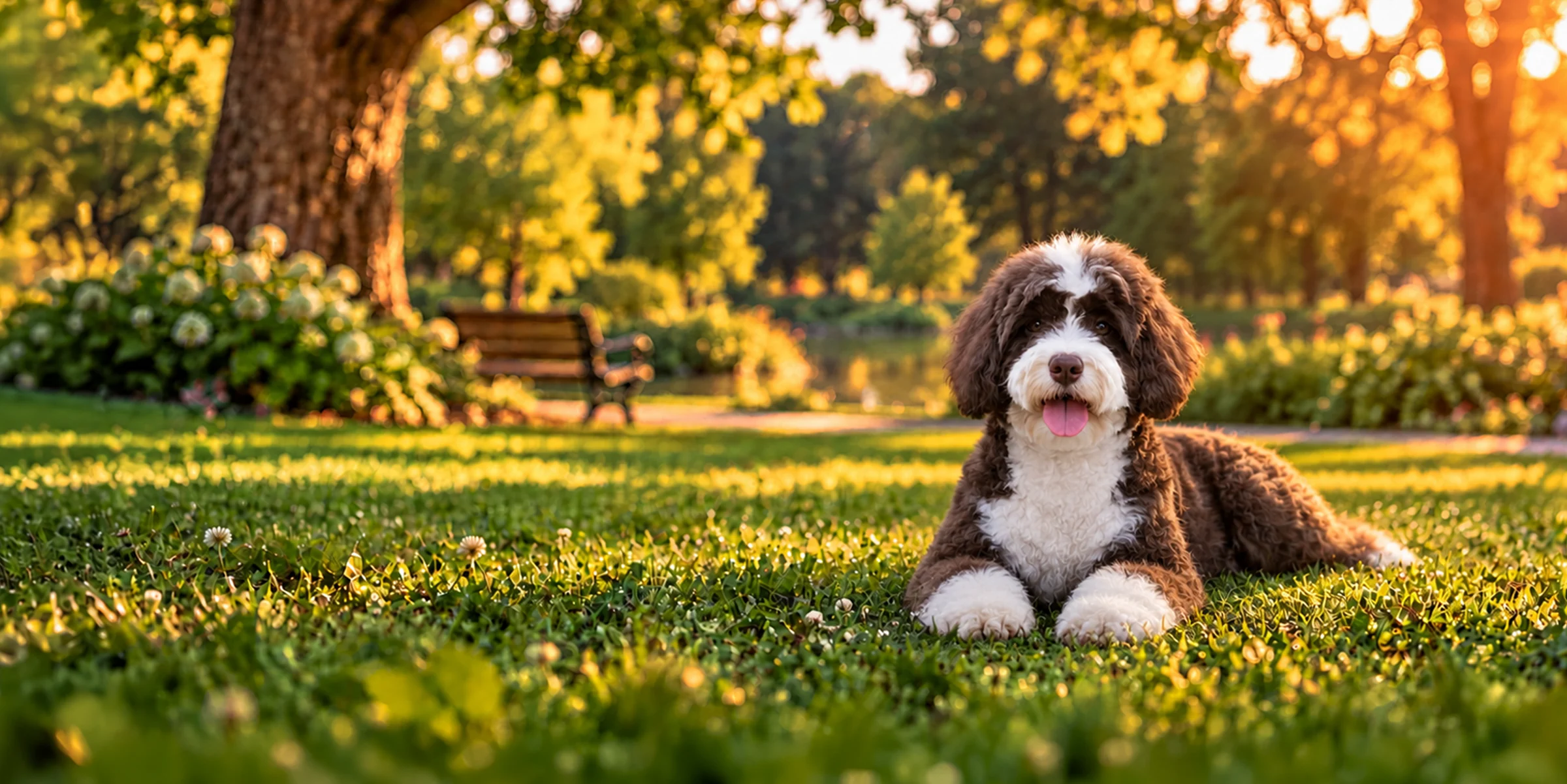
Labradoodle
Noticeably more energy and bounce for the same grooming commitment - worth comparing if the Bernese-side calm sounds more like sluggish than restful.