

giant breed
Boerboel
A South African farm guardian at a hundred and fifty to two hundred pounds, calm and confident indoors, deeply attached to their own family and gentle with the children in it. They are also genuinely territorial, dominant by default, bred to decide for themselves who belongs, and restricted or banned outright in several countries. In the wrong home a Boerboel is one of the most consequential mistakes anyone could make.

Pup Height
24-27 in

Pup Weight
150-200 lb
Figures are for males; females are 22-25 in and 110-154 lb. The name is Afrikaans for farmer's dog, and the standard asks for a dog that looks capable of the job rather than a heavy show mastiff - blocky but athletic, and able to move. Fawn, red, brown and brindle are all accepted, with or without a black mask. Source: AKC breed standard.

Pup Lifespan
9-11 years
Your pup, at a glance
What’s Life With This Pup Really Like?

Genuinely affectionate with their own family and physically heavy about it - they lean, they lie against you, and they have no concept of their own weight. None of that extends to visitors.

Good with their own family's children and protective of them, which is the complication rather than the reassurance. A guarding breed misreading a visiting child's rough game is serious at two hundred pounds, and supervision is not optional.

Difficult. Same-sex aggression is common, prey drive toward smaller animals is real, and the consequences of any incident scale with their size. Best as an only dog in most households.

Low. They are not noisy guards - they watch, position themselves, and speak rarely. When they do, it means something.

Moderate to low. Forty-five minutes to an hour suits them, and they spend most of the day lying somewhere they can see the approach.

Low to moderate. A short, dense coat that sheds steadily and is easy to live with.

Sober. The Boerboel will play briefly with their own people and is not a dog who invents games - the job is the point and they treat it that way.

Moderate to high. Loose flews on a mastiff-type head mean real drool, particularly around food and water.

Reasonable and conditional. They learn willingly for a handler they respect and will test an inconsistent one relentlessly - and at this size, a test you fail once is difficult to un-teach.

The joint highest on this site. Territorial by breeding, physically overwhelming, and entirely prepared to act on their own judgment.

Very low for the coat. The folds, the eyes and the nails are the actual routine, and none of it takes long.

The lowest here. They need land, fencing, an experienced handler and a jurisdiction that permits them, and there is no version of this dog that adapts to a household missing any of the four.
Lifestyle fit
Could This Be Your Best Breed?
A Boerboel belongs on land, behind serious fencing, in a jurisdiction that permits them, with an owner experienced in guardian breeds who will socialize relentlessly for two years. Exercise is modest at under an hour a day, but the food and vet bills are not - $2,600 to $4,200 a year over nine to eleven years. A rented apartment in a hot climate with another dog already in it is the worst version of this, and a first dog should never be this one.

Living Space
A house with land and serious fencing, in a jurisdiction that allows them. Boerboels are calm indoors and do not need much exercise, so this is not about space to run - it is about a two-hundred-pound territorial guardian needing a boundary and a household that can control access to it.

Pup Experience
Among the most demanding on this site. Boerboels are confident, dominant by default, and bred to make their own decisions about who belongs - in a body most people cannot physically restrain. Owners need real experience with guardian breeds, not enthusiasm, and the socialization has to be relentless for two years.

Daily Pup Time
Forty-five minutes to an hour of steady exercise daily, kept out of the heat, plus training that never becomes optional. The coat takes five minutes a week.

Allergies & Coat
The Boerboel scores 4/10 for shedding and 6/10 for drooling. No dog is truly hypoallergenic. The allergens come from dander and saliva, and a dog that sheds this much will leave plenty of hair behind - especially on your furniture, floors, and clothes.
Quirks & challenges
The Not-So-Easy Stuff

Legal Status Varies
Banned or restricted outright in several countries and some jurisdictions closer to home. Check where you live before anything else.
Insurance and Housing
Widely excluded by home insurers and refused by landlords. Get both in writing before a puppy, not after.
Bred to Guard, Seriously
Territorial judgment is what they were selected for. Relentless early socialization decides whether that reads as steady or dangerous.
Strength Is the Whole Point
Two hundred pounds that you cannot out-muscle. Leash skills are a safety requirement here, not a refinement.
Not a Multi-Dog Household
Same-sex aggression is common and the size makes any incident serious. Careful management rather than optimism.
Heat Is Dangerous
A heavy, thick-set dog. Exercise early and late in summer and treat heavy panting at rest as a reason to stop.
The good, the bad & the hairy
Health, Care & Costs
Understanding the health risks and ongoing costs of a Boerboel helps you plan for a happy, healthy life together.

9-11 years
$60-$95
per groom (bath, nails, ears and folds on a very large dog), every 8-10 weeks ($300-$550/year)
$2,600-$4,200/year
all-in (food, routine vet, grooming, insurance, incidentals)

Health Risks
Conditions this breed is prone to.

The hip joint develops loosely, so the ball and socket grind instead of gliding. It leads to arthritis and, in severe cases, replacement surgery on a dog who may weigh two hundred pounds - which puts it at the very top of what orthopedic work costs. Ask to see hip scores for both parents.
Similar to hip dysplasia but in the elbow joint - the bones do not fit together properly, causing pain and early arthritis. Common in giant, fast-growing breeds and screened alongside hips.
The eyelids roll inward or sag away from the eye, leaving the surface rubbed or exposed. It comes with the loose facial skin the breed is built on, and correction is surgical and close to routine here.
The stomach fills with gas and twists, cutting off its own blood supply. Without surgery within hours it is fatal. Deep-chested giants are most at risk, and feeding one large meal a day or exercising straight after eating makes it likelier.
Cardiomyopathy and valve problems turn up in the giant breeds, showing as exercise intolerance, coughing or collapse. It is managed with medication rather than cured, and a cardiac clearance on both parents is a reasonable thing to ask for.
The knee ligament tears under the load of an extremely heavy dog turning at speed. It usually needs surgery, the cost scales with size, and dogs that do one side often do the other later.

Insurance & Health Coverage
Two separate conversations here, and the harder one is not about their health.

Home and renter liability cover is the first. This breed is widely excluded by insurers and refused by landlords, and in several countries it is restricted or banned outright. That has to be resolved in writing before a puppy arrives, because discovering it afterward means choosing between the dog and the housing - and a dog this size rehomes very badly.

The health side is the giant-breed pattern with everything scaled up. Joint surgery on a two-hundred-pound dog is at the absolute top of the orthopedic range, bloat is emergency surgery in the thousands, and cardiac disease means lifelong medication. The short lifespan compresses all of that into nine to eleven years, so a policy without a low annual cap matters more here than the monthly premium does.
 Get a Pet Insurance Quote
Care needs
The Daily Routine

Grooming
A short, dense coat that needs a weekly rub-down with a rubber mitt and little else. The work is elsewhere: facial folds and the area around the eyes wiped out and dried regularly, ears checked weekly, and nails kept short on a dog whose weight makes overgrown ones a real problem.

Exercise
Forty-five minutes to an hour of steady walking daily, kept clear of the heat of the day. The Boerboel is not an endurance athlete and should not be jogged while growing - what they need is a routine and a boundary to patrol rather than distance.

Food & Weight
Two or three measured meals rather than one large one, with hard exercise kept well clear of mealtimes given the bloat risk. Grow puppies slowly on large-breed food - pushing weight onto developing joints in a dog headed for two hundred pounds is the single most damaging thing an owner can do here.
Similar breeds
If This Isn’t Quite the One
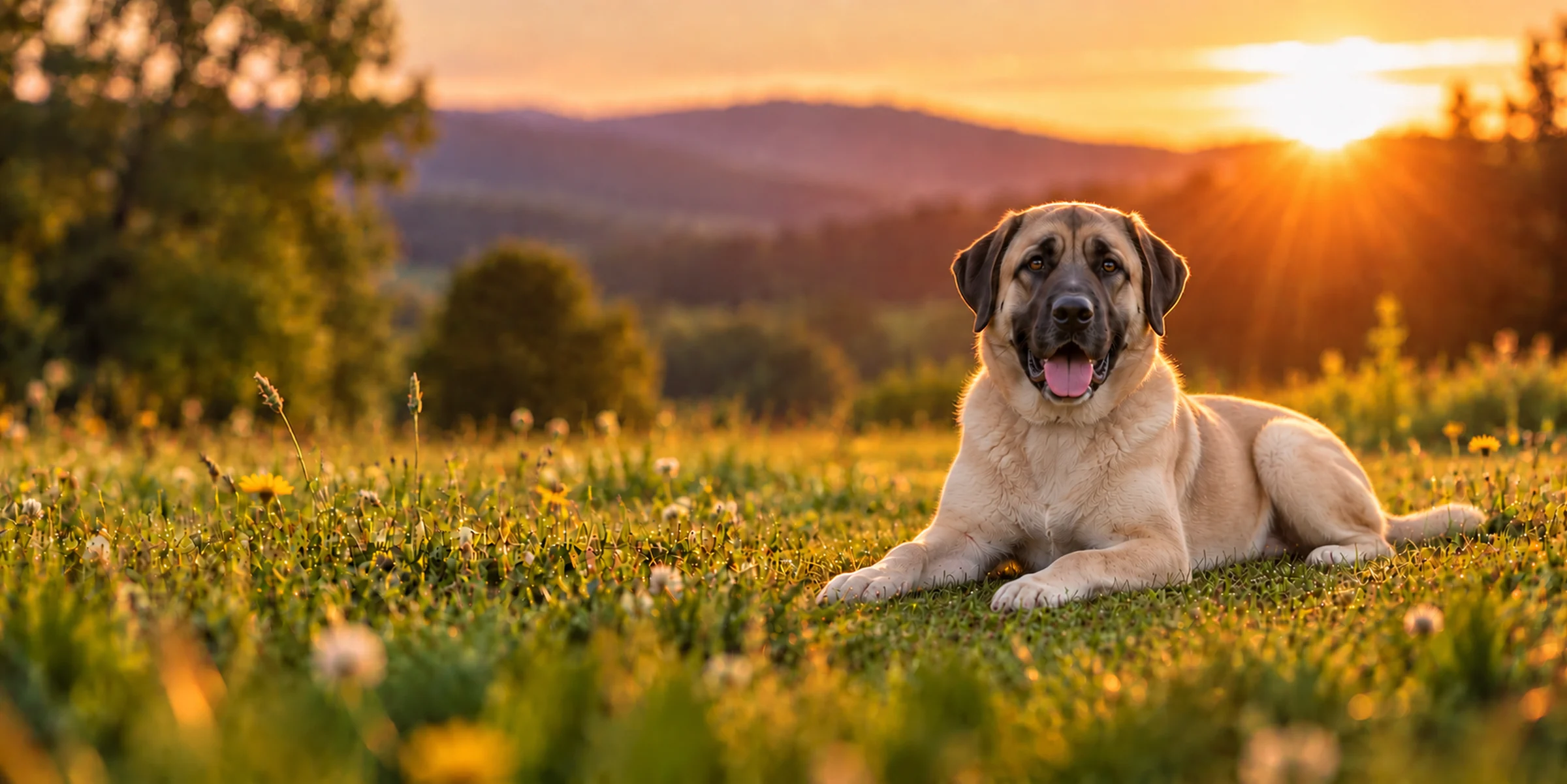
Anatolian Shepherd Dog
The closest match on job and scale - a livestock guardian bred to work alone and decide for themselves, with the same territorial instinct and the same warning about first-time owners. The Anatolian is leaner, needs more space and rather less training; the Boerboel is heavier and more handler-focused.

American Bulldog
A similar protective farm dog at roughly half the weight, and the more realistic version for most households - the same loyalty and guarding instinct in a body that can still be physically managed, with the same insurance and housing complications.