

small breed
Bolognese
The standard gives one size for both sexes, with females at the lower end, and pure white is the only color. The coat falls in loose open flocks rather than the tight curl of a Bichon Frise or the flat silk of a Maltese, and it is never scissored into shape - the outline is the natural coat. Source: FCI breed standard.
The calm one of the bichon family - where the Bichon Frise bounces, the Bolognese watches. Devoted, undemanding, quiet for a toy breed, and genuinely content to be a small presence in the room rather than the center of it. They ask for twenty minutes of walking and almost no skill from an owner. What they do ask for is company, and daily brushing that reaches the skin rather than gliding over it.

Pup Height
10-12 in

Pup Weight
5.5-9 lb

Pup Lifespan
12-14 years
Your pup, at a glance
What’s Life With This Pup Really Like?

The joint highest on this site. Nine hundred years of being a companion and nothing else - they want to be against you, and they are content to stay there quietly for hours.

Good with older, careful children. Bolognese are gentle and tolerant, and at seven pounds they are genuinely breakable, so the caution is for the Bolognese's sake rather than theirs.

Very good. No prey drive worth the name and no territorial streak, which makes them one of the easier dogs to add to a household that already has animals.

Low for a toy breed, which is unusual and worth knowing. They announce the door and then stop, rather than keeping up a commentary.

Low. Twenty to thirty minutes covers them and much of it can be indoors - one of the least demanding breeds here on exercise.

Effectively none. The single coat grows rather than drops, which is why it needs combing out instead of vacuuming up.

Gentle and moderate. They enjoy a game and are not clowns about it - noticeably more serious than their bichon cousins.

None. A neat, dry-mouthed little dog.

Reasonable. Soft, willing and food-motivated, and slower to housetrain than most - a bladder-size problem rather than an intelligence one.

Moderate. They notice arrivals and say so once, which is more useful than the constant alarm most toy breeds provide.

High, and all of it at home. Daily brushing to the skin, weekly ears, daily teeth - but no clipping and no scissoring, so the groomer's bill is optional in a way it is not for a Bichon.

High. Apartment or house, quiet household or busy one, they settle quickly. The one thing they do not adapt to is being left alone all day.
Lifestyle fit
Could This Be Your Best Breed?
A Bolognese suits an apartment, a quiet household, and an owner who is home most of the day - including an older or less active one, since the exercise is minimal. They are among the cheapest dogs to keep at $1,100 to $1,900 a year over twelve to fourteen years. If nobody is home during the day, or a daily comb that reaches the skin sounds like the chore you would skip, that is the answer.

Living Space
About as flexible as it gets. The Bolognese is small, quiet by toy-breed standards, sheds nothing and needs no yard, which makes them one of the better apartment dogs on this site. The only real constraint is that they do badly on their own.

Pup Experience
Good for a first-time owner, including an older or less active one. They ask for very little exercise and no great skill, and the two things that matter are daily brushing and a household that is usually home.

Daily Pup Time
Twenty to thirty minutes of walking and play, much of which can happen indoors, plus daily brushing that actually reaches the skin and teeth cleaned every day.

Allergies & Coat
The Bolognese scores 1/10 for shedding and 1/10 for drooling. No dog is truly hypoallergenic. The allergens come from dander and saliva, and a coat like this one holds on to them rather than spreading them around your home - which is what a groomer is clearing out every six to eight weeks.
Quirks & challenges
The Not-So-Easy Stuff

Hates Being Left Alone
Bred purely for company across nine centuries. A household out all day is the wrong home, and separation anxiety is the commonest problem here.
The Coat Mats in Days
A single long coat with no undercoat to hold it apart. It felts against itself quickly, and surface brushing hides it rather than fixing it.
Brushed, Never Trimmed
Unlike the Bichon Frise, the outline is not scissored - the coat is meant to fall naturally. That trades a groomer's bill for a daily job.
Quieter, Not Silent
Noticeably less vocal than most toys, which is a real selling point. They will still announce the door.
Housetraining Takes Longer
A small bladder and the usual toy-breed patience requirement. Routine gets there; frustration does not.
Genuinely Hard to Find
Uncommon outside Italy, with few breeders and a small gene pool. Expect a wait and ask what the parents were tested for.
The good, the bad & the hairy
Health, Care & Costs
Understanding the health risks and ongoing costs of a Bolognese helps you plan for a happy, healthy life together.

12-14 years
$55-$85
per visit (bath, brush-out and ears), every 6-8 weeks if you outsource it - or almost nothing beyond a good comb if you do the daily brushing yourself ($0-$650/year)
$1,100-$1,900/year
all-in (food, routine vet, grooming, dental, insurance, incidentals)

Health Risks
Conditions this breed is prone to.

The kneecap slips out of its groove, producing a skipping step or a leg carried for a stride or two. Extremely common across toy breeds. Mild cases are managed; severe ones need surgery, and it is worth a vet checking at the puppy visit.
The defining running cost of a dog this size. A small jaw with a full set of teeth crowds them together, tartar builds fast, and untreated it means extractions under anesthetic in middle age. Daily brushing genuinely changes the outcome and no insurance policy covers it.
An inherited disease that slowly destroys the retina. Night vision goes first, then daylight vision, usually ending in blindness. There is no treatment, but it is painless and gradual, and a small dog in a familiar home copes well. Eye clearances on both parents are the protection.
The blood supply to the head of the femur fails and the bone dies back, causing a painful hind leg in a young dog. Surgery is usually the answer, and it shows up in the first year rather than later.
The lens clouds and vision goes with it. Surgery restores sight in most cases but runs into thousands per eye, and breeding stock should carry a current eye examination certificate.
Itching, chewed paws and recurring ear trouble, usually from environmental allergens. Harder to spot early under a dense white coat, and managed rather than cured once it starts.

Insurance & Health Coverage
A sound little breed with no catastrophic condition hanging over it, and costs that are small and frequent rather than large and rare.

The surgical risks are the toy-breed set: knee surgery for a luxating patella in the low thousands, hip surgery if Legg-Calve-Perthes appears in the first year, and cataract surgery at thousands per eye. All are worth cover, and all tend to show up early enough that arranging it in the first year is the sensible move.

Dental is the honest exception. It will be the single most predictable expense of their life, most policies do not cover it at all, and the answer is daily brushing rather than insurance. Budget for it separately. The small gene pool is the other reason to ask a breeder directly what the parents were tested for - published data on a population this size is thin.
 Get a Pet Insurance Quote
Care needs
The Daily Routine

Grooming
Brush daily with a pin brush and follow with a comb to prove you reached the skin - a single coat with no undercoat felts against itself and a surface brush leaves the mats forming underneath. The coat is not trimmed or scissored into shape, so the daily work replaces a groomer's schedule rather than adding to it. Ears cleaned weekly, eyes wiped daily to keep tear staining off a white face, and teeth brushed every day.

Exercise
Twenty to thirty minutes daily, most of it indoors if you like. The Bolognese is one of the lowest-energy breeds on this site and is satisfied by short walks and a bit of play - which is what makes them such a good fit for a quieter household.

Food & Weight
Measure carefully. On a seven-pound dog a few extra treats a day is a large share of their intake, and weight sits badly on knees prone to slipping. Small frequent meals while they are puppies, since toy breeds have almost no reserve.
Similar breeds
If This Isn’t Quite the One
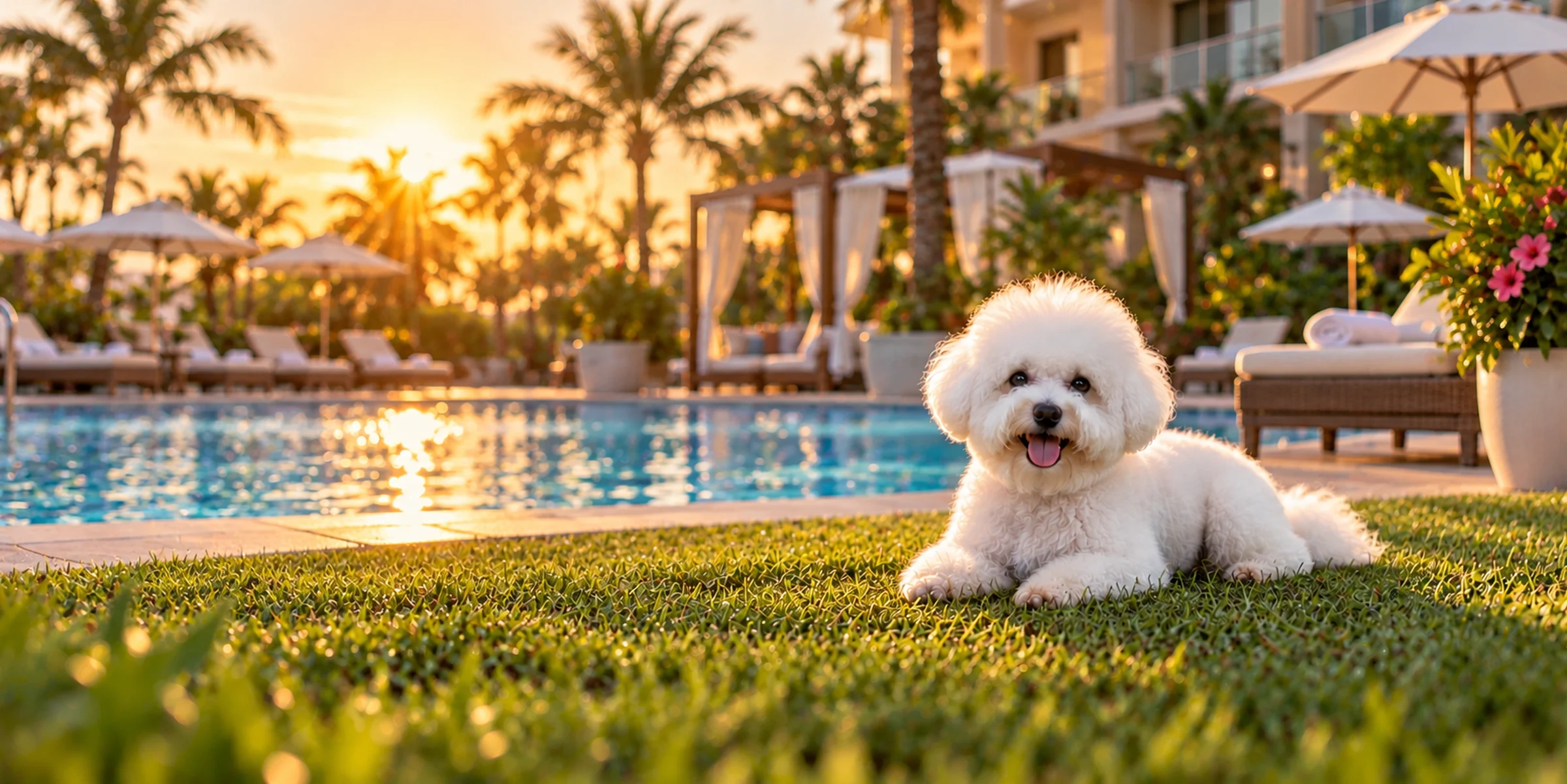
Bichon Frise
The close cousin, and the difference is temperament rather than looks - the Bichon is bouncier, merrier and noisier, where the Bolognese is calm and watchful. The Bichon also needs a groomer every four to six weeks; the Bolognese trades that for daily brushing at home.

Toy Poodle
The same size class and the same non-shedding coat, in a considerably brighter and busier dog. A Toy Poodle wants more to do and learns faster; the Bolognese is the more restful of the two by a wide margin.