

medium-to-large breed
Vizsla
A Hungarian pointer bred to find, point and retrieve for hunters on horseback, twice nearly lost in the wars and rebuilt from a handful of dogs taken out of the country. The Vizsla that came through is fast, elegant, short-coated and wildly affectionate - ten minutes of grooming a week and an hour or two of hard exercise a day. The hard part is company: this is a breed that genuinely cannot be left alone all day.

Pup Height
21-24 in

Pup Weight
44-60 lb
Males stand 22-24 in and females 21-23 in, and a dog more than 1.5 in outside those limits is disqualified; the AKC lists 55-60 lb for males and 44-55 lb for females. The coat is short, smooth, dense and close-lying, with no woolly undercoat, in solid golden rust of varying shades. Nose, eyerims, lips, nails and eyes blend with the coat color - a black nose is a disqualification - and small white marks on the forechest and toes are permitted. Recognized by the AKC in the Sporting Group in 1960. Source: AKC breed standard.

Pup Lifespan
12-14 years
Your pup, at a glance
What’s Life With This Pup Really Like?

Extreme. Vizslas want contact rather than company - against a leg, across a lap, under the blanket - and being in the same room is not enough.

Very good. Affectionate, playful and tolerant, though a bouncing adolescent flattens a toddler without meaning anything by it.

Good. Usually easy with other dogs and often better with one for company. Birds and small pets are a different question in a breed built to find them.

Moderate. Not a nuisance barker, but a vocal breed - whines, groans and a carrying moan when bored or shut out of a room.

Very high. One to two hours of hard work daily, and the mental half matters as much as the mileage.

Moderate. A short single coat, but the shedding is steady year-round and the stiff hairs work their way into fabric.

Exuberant and faintly ridiculous well into adulthood - fetch, water, wrestling and full-speed laps of the house.

Very low. A clean, dry-mouthed breed with tight lips.

High. Quick, eager and food-motivated, and sensitive enough that pressure and raised voices set the work back rather than speeding it up.

Moderate. Vizslas announce a visitor and then try to climb into their lap. Very little guarding instinct behind the noise.

Very low. Ten minutes a week with a rubber curry brush, plus nails and a weekly check of the drop ears.

Moderate. The coat handles heat far better than cold, and the exercise and company requirements rule out long working days and quiet households.
Lifestyle fit
Could This Be Your Best Breed?
Vizslas suit runners, hikers, hunters and people who work from home, in a house with a fenced yard or an apartment backed by real daily mileage. They cost $1,400 to $2,400 a year, live twelve to fourteen years, and spend the first two bouncing off the walls. An empty house from eight until six is the arrangement that breaks a Vizsla, however long the morning run was.

Living Space
A house with a securely fenced yard is the straightforward version. Vizslas are clean, short-coated and quiet enough indoors that an apartment can work, but only for someone who is out doing an hour or two of hard exercise every day and is home for most of the rest of it - the calm indoors is entirely downstream of the miles outdoors.

Pup Experience
Workable for a committed first-time owner, and unforgiving of a casual one. Vizslas are quick, eager and soft, so the training itself is pleasant; the demands are the schedule and the emotional intensity. Anyone who wants a dog that fills their own day should look elsewhere.

Daily Pup Time
One to two hours of real exercise daily with something for the nose in it, plus training. Grooming is ten minutes a week. The part people underestimate is company: this is a breed that needs someone around for most of the day.

Allergies & Coat
The Vizsla scores 4/10 for shedding and 2/10 for drooling. No dog is truly hypoallergenic. The allergens come from dander and saliva, and a dog that sheds this much will leave plenty of hair behind - especially on your furniture, floors, and clothes.
Quirks & challenges
The Not-So-Easy Stuff

Genuine Separation Anxiety
Not just protest barking - panic, drooling, destruction at doorways and self-injury in a crate. Build up alone time from puppyhood and get help early if it appears.
Two Hours a Day, Minimum
A hunting dog built for stamina. Walks around the block do not touch it, and an under-exercised Vizsla is a whirlwind indoors.
Always Underfoot
Vizslas want contact, not proximity. Expect a dog in the bathroom, on the sofa and under the blanket, every day.
Thin Coat, Cold Weather
No undercoat and almost no body fat. Below about 40F they need a coat, and they will not stay out in the wet for long.
Vocal Complaining
Whines, groans and a distinctive moan when bored, excited or shut out of a room. Thin-walled housing makes this everyone's problem.
A Long Adolescence
Full size at a year, sense at two or three. Counter-surfing, mouthing and selective hearing fill the gap.
The good, the bad & the hairy
Health, Care & Costs
Understanding the health risks and ongoing costs of a Vizsla helps you plan for a happy, healthy life together.

12-14 years
$40-$70
per groom (bath, nails, ears), every 8-12 weeks or done at home for the cost of a rubber brush ($0-$300/year)
$1,400-$2,400/year
all-in (food, routine vet, grooming, insurance, incidentals)

Health Risks
Conditions this breed is prone to.

Seizures with no other cause, usually starting between one and five years old, and more common in the breed than in dogs generally. There is no DNA test, so the only screening is an honest breeder who will talk about seizures in the line. Most dogs are controlled well on daily medication, but it is lifelong and needs monitoring bloodwork.
An immune-mediated disease that destroys the skin's oil glands, causing scaling, a musty smell and patchy hair loss. Diagnosis is by skin biopsy, which is also how breeding stock is screened, and treatment is lifelong oil soaks and medicated baths rather than a cure.
Lymphoma, hemangiosarcoma and mast cell tumors all show up in the breed and together account for a large share of deaths in older Vizslas. Nothing screens for them in advance; what helps is a vet looking at any new lump rather than watching it.
The hip joint develops loosely so the ball grinds in the socket and wears into arthritis. Rates are moderate for a sporting breed, and both parents should have OFA or PennHIP scores - controlled growth and no forced running on a puppy help too.
Autoimmune thyroiditis causes weight gain, coat loss and flat energy, and is managed with a daily tablet; an OFA thyroid panel screens for it. Entropion, distichiasis and progressive retinal atrophy also appear, and an annual ophthalmologist examination on breeding dogs is the standard check.
A breed-specific autoimmune muscle disease that usually shows as difficulty swallowing, drooling and wasting of the muscles over the skull. Rare, but it moves fast and needs immunosuppressive treatment, so any trouble eating deserves a same-week vet visit.

Insurance & Health Coverage
Insure young, and read the chronic-condition wording before the premium. The two expensive things in this breed - epilepsy and cancer - both tend to arrive after a few healthy years, which is exactly when a policy taken out late has already logged something as pre-existing.

Epilepsy is the claim that decides whether a policy was worth it. Diagnosis, medication and the bloodwork that goes with it run a few hundred dollars a year for the rest of the dog's life, and plenty of policies either cap each condition or quietly stop covering a chronic one at the next renewal. A lifetime policy with no per-condition limit is the shape to look for.

Accident cover earns its keep alongside it. A dog running full speed through rough cover collects torn pads, punctures and the occasional cruciate, and a cruciate repair alone runs into the thousands.
 Get a Pet Insurance Quote
Care needs
The Daily Routine

Grooming
About the easiest coat in the sporting group. A weekly going-over with a rubber curry brush or a grooming mitt lifts the dead hair - short as the coat is, Vizslas shed steadily and the stiff golden hairs weave into upholstery. Baths only when genuinely dirty, since there is no undercoat to protect the skin. Nails every few weeks, drop ears checked and dried weekly, and a full-body check for grass seeds and cuts after any outing in cover.

Exercise
One to two hours daily, and it has to be more than walking. Running, hiking, field work, swimming, retrieving, agility and canicross all suit the build. Scent work does as much for a Vizsla's head as running does for their legs. Hold back on hard, repetitive running until the growth plates close at around 14-18 months.

Food & Weight
Two measured meals a day, kept lean - a Vizsla in good shape shows a waist and the faint outline of the last rib or two. They burn a lot when working hard and much less on a quiet week, so feed the dog in front of you rather than the label. Keep hard exercise clear of mealtimes.
Similar breeds
If This Isn’t Quite the One
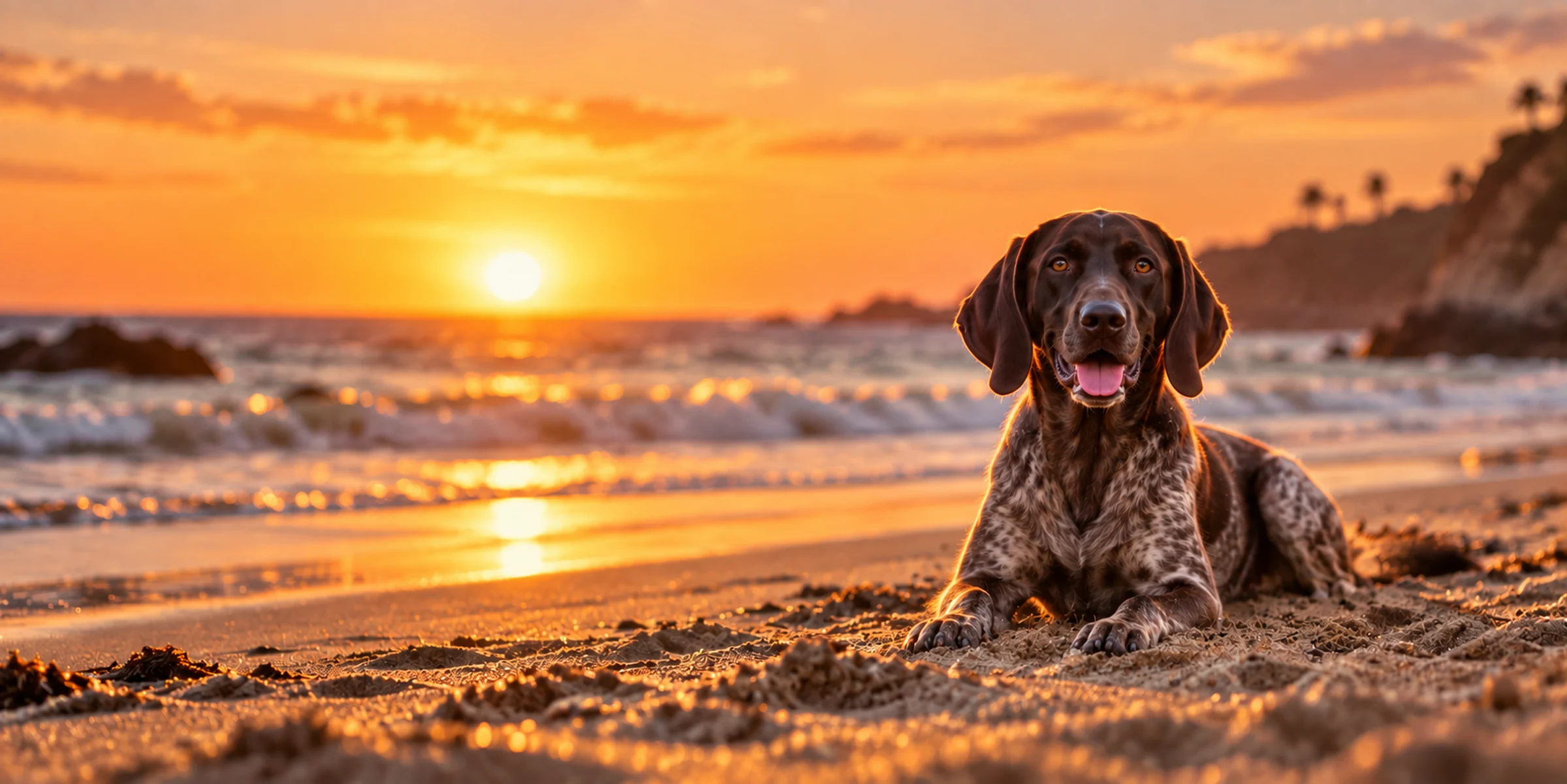
German Shorthaired Pointer
The closest comparison on exercise needs and versatile gundog work. The GSP is a little bigger and harder-coated, ranges further and copes better on their own; the Vizsla is more sensitive, more demonstrative and far more difficult to leave alone.

Pointer
Another short-coated bird dog with serious stamina. The Pointer is a wide-ranging specialist, more independent and notably calmer in the house; the Vizsla works close, wants constant contact and needs more of the day filled.
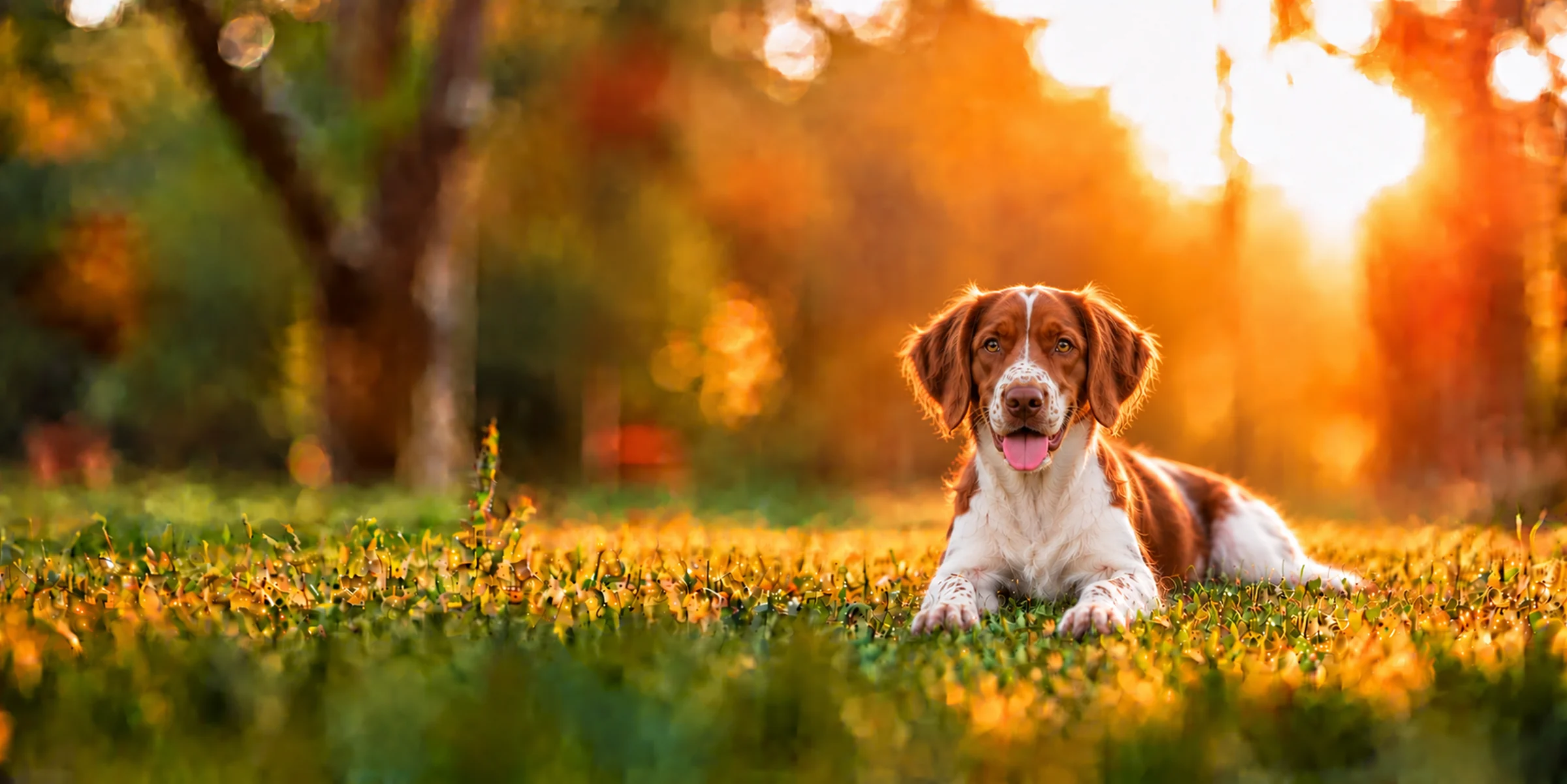
Brittany
A smaller versatile gundog with the same eagerness and roughly the same daily exercise bill in a 30-40 lb package. The Brittany is easier to house and generally steadier about being left; the Vizsla is bigger, sleeker and more intensely attached.
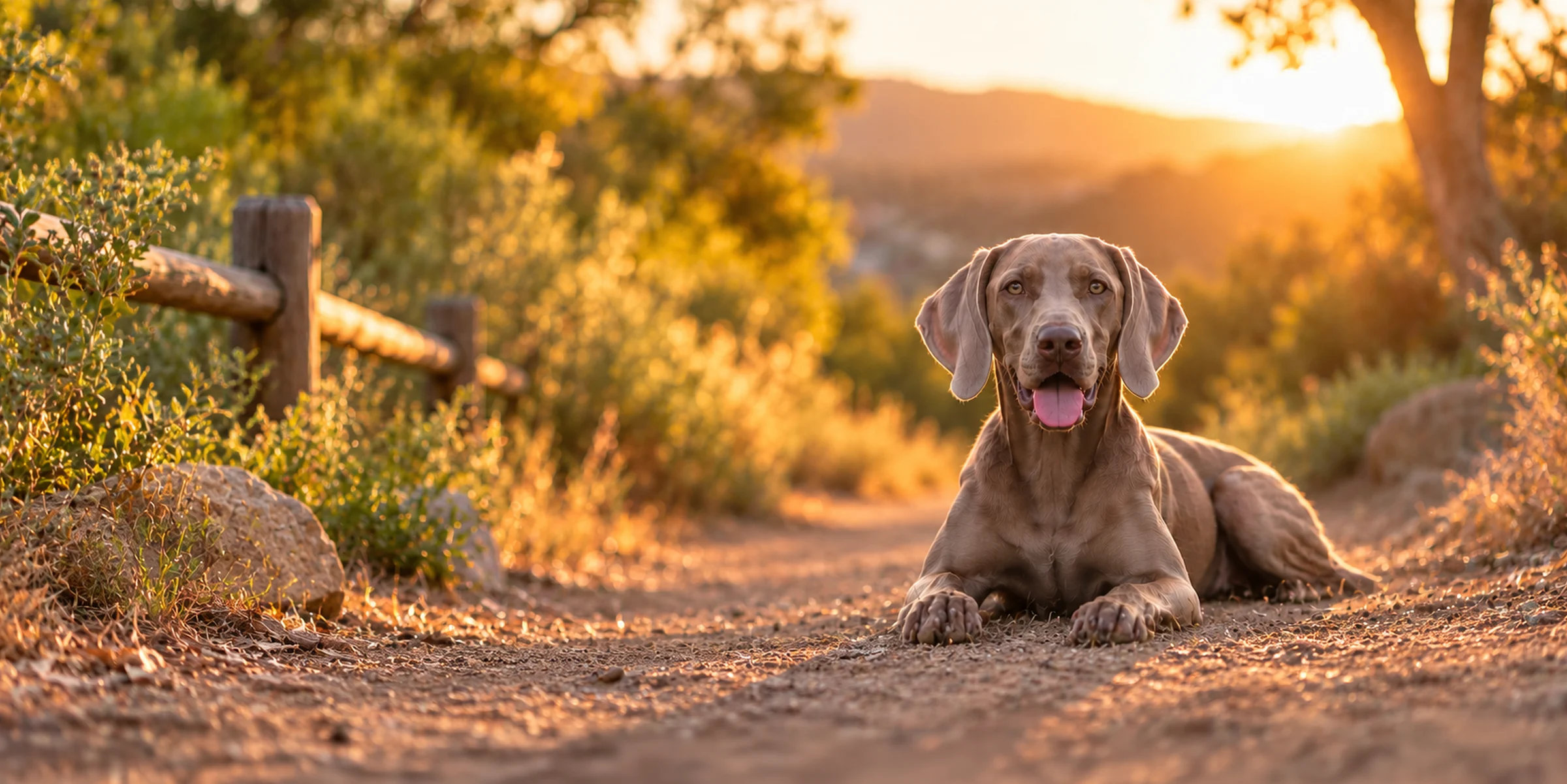
Weimaraner
The gray one, and the bigger of the two Hungarian-and-German pointer look-alikes. Weimaraners are heavier at 55-90 lb, carry the same separation anxiety, and were bred to hold larger game; the Vizsla is lighter, softer to handle and needs the same two hours a day.
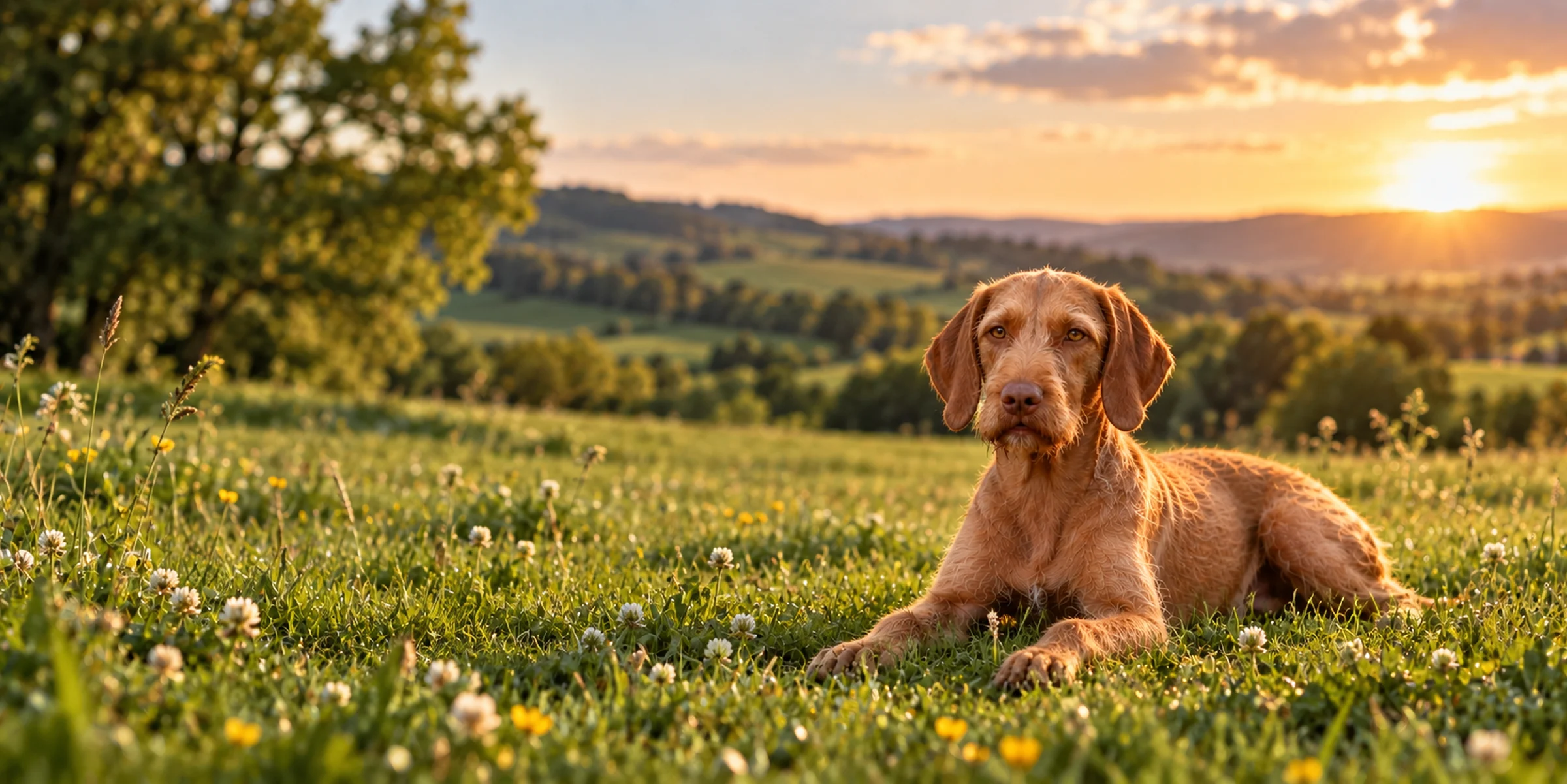
Wirehaired Vizsla
The wire-coated relative, and a separate breed rather than a coat variety - Vizslas crossed with German Wirehaired Pointers in the 1930s for a dog that could take cold water and thorn cover. Wirehaired Vizslas are heavier-boned and a shade taller, with the same need for company.