

medium-to-large breed
French Spaniel
France's large pointing spaniel, rebuilt from near-extinction a century ago largely by a French priest, Father Fournier, at the Saint-Hilaire kennel in Normandy - the North American stronghold is Quebec, and most dogs on this continent trace back there. French Spaniels are gentle, affectionate and outstanding with children. The costs are honest ones: a soft temperament that harsh handling ruins, a working exercise requirement, weekly ear care, and real scarcity.

Pup Height
21.5-24 in

Pup Weight
50-60 lb
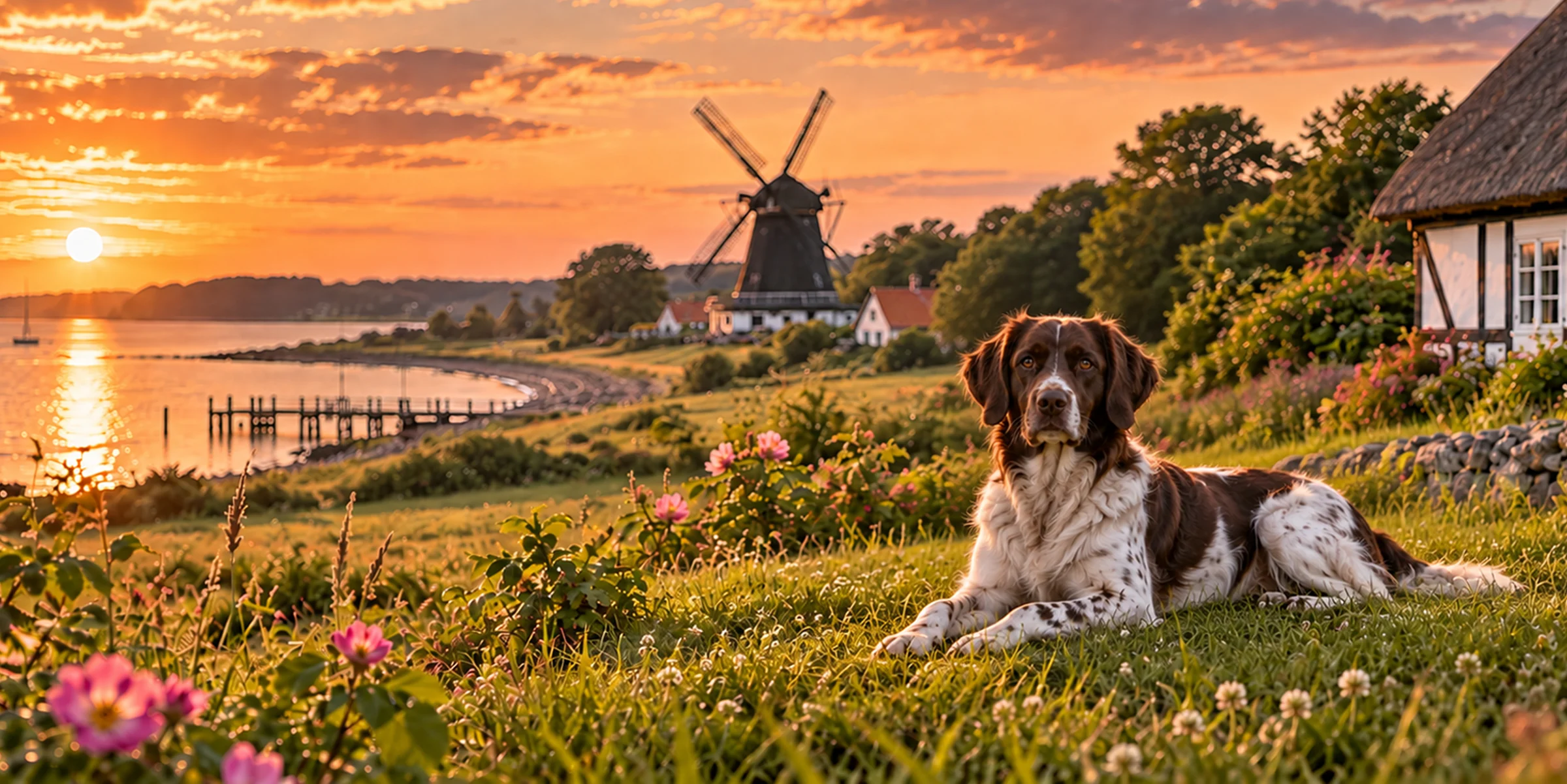
Males 56-61 cm (22-24 in) and females 55-59 cm (21.5-23 in), with a tolerance of plus 2 cm or minus 1 cm. The standard sets no weight; the AKC lists 50-60 lb. White and brown only, in irregular patches, lightly or moderately flecked and roan, with the brown running anywhere from cinnamon to dark liver - any other color is a disqualifying fault. The coat is flat and silky over the body with long wavy feathering on the ears, the backs of the legs and the tail. Classed by the FCI with the continental pointing dogs, spaniel type, and in the AKC's Foundation Stock Service. Source: FCI breed standard.

Pup Lifespan
10-12 years
Your pup, at a glance
What’s Life With This Pup Really Like?

Very high. French Spaniels attach hard to their people, follow them room to room and lean in for contact; a dog left in the yard all day is a miserable one.

Excellent. Gentle, patient and sturdy enough for a busy household, and the standard asks for a calm, docile temperament in so many words.

Very good. Bred to hunt in company and reliably easy with other dogs. Cats usually work out with early socialization, though the bird drive is genuine.

Low. They announce a visitor and then stop. Noise from this breed is almost always a report on the exercise, not a natural tendency.

High. An hour and a half to two hours daily with scent work in it, and that is a working requirement rather than a preference.

Moderate. A silky coat with feathering that sheds steadily year-round and heavier in spring, and twice-weekly brushing catches most of what would otherwise land on the couch.

Enthusiastic and soft-mouthed. Retrieving games and water are the whole answer, and they stay playful well past puppyhood.

Very low. A dry-mouthed breed, damp only after a drink or a swim.

Excellent. Biddable, attentive and fast with rewards, and soft enough that patience gets far more out of them than pressure ever will.

Low to moderate. A French Spaniel will tell you someone is at the door and then go and greet them; there is no guarding instinct behind the bark.

Moderate. Twice-weekly brushing, almost no trimming, and the weekly ear clean that is the part no owner should skip.

Low. The exercise requirement, the need for company and the scarcity of puppies make this a breed you plan a life around rather than one that slots into an existing routine.
Lifestyle fit
Could This Be Your Best Breed?
A French Spaniel suits an active household with a fenced yard and ground to run, an owner with a gentle voice, and a day that includes ninety minutes to two hours of scent work or retrieving. Budget $1,500 to $2,500 a year and expect ten to twelve years. Think twice if the exercise would come down to two short walks, if the house empties at eight, or if anyone in it trains by raising their voice.

Living Space
A house with a securely fenced yard, and ground to run on beyond that. French Spaniels settle well indoors once the day's work has happened, but this is a full-sized pointing dog bred to quarter a field for hours, and an apartment only works if someone is genuinely getting that done every day.

Pup Experience
Workable for a committed first-time owner on two conditions: the handling stays gentle, and the exercise actually happens. French Spaniels are soft - a raised voice or a heavy-handed correction sets them back for days - and they are easy to teach once the approach suits them. Hunting experience is a bonus rather than a requirement.

Daily Pup Time
An hour and a half to two hours of real exercise daily with scent work or retrieving in it, plus a thorough brush twice a week and a weekly ear clean.

Allergies & Coat
The French Spaniel scores 5/10 for shedding and 2/10 for drooling. No dog is truly hypoallergenic. The allergens come from dander and saliva, and a dog that sheds this much will leave plenty of hair behind - especially on your furniture, floors, and clothes.
Quirks & challenges
The Not-So-Easy Stuff

Points, Doesn't Flush
A pointing breed wearing a spaniel's name. Anyone expecting a Springer's close, busy flushing style gets a dog that works further out and stands staunch instead.
Harsh Handling Ruins Them
Soft and sensitive to a fault. Shouting and heavy corrections produce a shut-down French Spaniel rather than a trained one, and the ground lost takes weeks to make up.
Needs Work, Not Just Walks
An hour and a half to two hours daily with a nose-work half. A stroll around the block does not touch what this breed was built to do.
Ears Need Weekly Work
Long feathered drop ears on a dog who works water. Cleaned and dried weekly they stay healthy; left alone they turn chronic.
Hard to Find in the US
Numbers outside Quebec are small and most litters are placed with hunting homes. Expect a wait, a drive, and a conversation about what the dog will be doing.
Range Outruns Recall
Bred to hunt out ahead and stay on scent. Open-country freedom belongs on safe ground, with a long line until the recall has been proven under distraction.
The good, the bad & the hairy
Health, Care & Costs
Understanding the health risks and ongoing costs of a French Spaniel helps you plan for a happy, healthy life together.

10-12 years
$55-$85
per groom (bath, feathering tidy, ears, nails), every 8-12 weeks or done at home ($0-$450/year)
$1,500-$2,500/year
all-in (food, routine vet, grooming, insurance, incidentals)

Health Risks
Conditions this breed is prone to.

An inherited nerve disease documented in this breed, in which puppies lose pain sensation in the feet from a few months old and lick and chew their toes and pads, sometimes severely. There is no cure. The recessive mutation was identified in 2016 and a DNA test is available - two carriers can produce affected puppies, so ask for results on both parents.
The hip joint develops loosely, so the ball grinds in the socket instead of gliding and arthritis follows, sometimes needing surgery that runs into the thousands. Both parents should have scored hips, and keeping a growing puppy lean and off hard landings matters as much as the paperwork does.
Long feathered drop ears seal warmth and moisture against the canal, and a dog retrieving out of water makes that worse. Weekly cleaning and drying is the whole of the prevention; ignored, infections become chronic and a few end in surgery.
The breed passed through a bottleneck a century ago and was rebuilt from a small number of dogs, which is exactly how recessive conditions concentrate. French and Quebec clubs screen and record results, so ask to see them rather than assuming a rare breed is automatically a healthy one.
Not inherited, and the likeliest reason this breed sees a vet. A dog working cover collects cut pads, thorn punctures, grass seeds driven into the feathering and between the toes, and the occasional torn cruciate ligament, which is a four-figure repair.
A gundog fed like a working dog but exercised like a pet gets heavy quickly, and weight on loose hips brings arthritis on years sooner. Feed to the work actually being done, keep the waist visible, and expect the summer ration to be smaller than the hunting-season one.

Insurance & Health Coverage
Take out a policy early, before the first ear infection reaches the record. Recurring otitis is the likeliest thing to become a named exclusion on a spaniel's cover, and once a condition is listed, every later flare-up is yours to pay for.

Acral mutilation syndrome sits outside insurance altogether. The disease is congenital, so no policy pays toward it, and DNA results on both parents are the only real protection - ask the breeder for the paperwork before committing to a puppy.

The claims most owners actually make are accident claims: cut pads, thorn punctures, a grass seed dug out under anesthesia, a cruciate repair. If the dog is going to hunt, read the wording for an exclusion on injuries sustained while working, because a fair number of policies carry one and that clause removes exactly the cover this breed needs.
 Get a Pet Insurance Quote
Care needs
The Daily Routine

Grooming
The coat is flat and silky over the body with long feathering on the ears, legs and tail, and a thorough brush twice a week keeps it right - mats form first behind the ears and in the trousers. Very little trimming is wanted beyond tidying the feet. The routine that matters more is the one after every outing: ears cleaned and dried, grass seeds teased out of the feathering and from between the toes, and a look over for cuts picked up in cover.

Exercise
An hour and a half to two hours a day, and the nose-work half is not optional. Field work, tracking, water retrieving and long hikes over varied ground all suit the breed; a leash walk at heel does not, however long it goes on for.

Food & Weight
Two measured meals scaled to the season - a French Spaniel hunting three days a week eats considerably more than the same dog in July. Keep them lean rather than comfortable: hips and cruciate ligaments both last longer on a dog carrying no spare weight.
Similar breeds
If This Isn’t Quite the One

Brittany
The French pointing dog most Americans will actually meet, and the easy one to find. The Brittany is far smaller at 30-40 lb, quicker and more intense, and bred hard for field trials; the French Spaniel is a bigger, steadier dog that works at a walking hunter's pace and is slower to grow up.

English Springer Spaniel
The comparison worth making, because the two names suggest one dog and the work is opposite. The Springer flushes game into the air and stays close in; the French Spaniel points and holds, ranges further out, and is taller and heavier. Springers are also everywhere, which this breed is not.

Blue Picardy Spaniel
The other rare French pointing spaniel, and the lighter of the two - 43-45 lb, English Setter in the background, and blue-gray speckling instead of brown patches. The Blue Picardy is calmer and content with less; French Spaniels are bigger and want more work in a week.
Drentsche Patrijshond
The Dutch take on the same brief, and the better bet for a family that does not hunt. The Drent is more independent, more moderate in what a day has to contain, and easier to keep as a straight companion; the French Spaniel needs the job.