

giant breed
Bullmastiff
A hundred-and-twenty-pound dog who barks almost never, moves almost never, and would like to spend the day leaning on someone. Bullmastiffs are affectionate at home, startlingly low-maintenance for the size, and need only thirty to forty-five minutes of walking. The costs are blunt: seven to nine years, cancer accounting for a large share of deaths, a real bloat risk, and enough strength that the training has to be done early.

Pup Height
25-27 in

Pup Weight
110-130 lb
Figures are for males; females are 24-26 in and 100-120 lb. Fawn, red and brindle are accepted, always with a black mask. The breed was fixed at roughly sixty percent Mastiff to forty percent Bulldog - enough size to stop a man, enough agility to catch one. Source: AKC breed standard.

Pup Lifespan
7-9 years
Your pup, at a glance
What’s Life With This Pup Really Like?

Very high and physically overwhelming. They lean with their full weight, sprawl across laps, and have no concept of being too large for any of it.

Good with their own family's children - calm, patient and protective. The cautions are a Bullmastiff's size around toddlers and the fact that a guarding breed misreading a visiting child's game is serious at this weight.

Manageable with animals a Bullmastiff is raised alongside. Strange dogs meet a confident, territorial animal, and same-sex pairings are often difficult.

The lowest on this site alongside the Borzoi, and it is by design - a dog bred to catch poachers silently does not announce their presence. When a Bullmastiff does speak, it means something.

Low. Thirty to forty-five minutes suits them, and they spend most of the day lying somewhere they can see the door.

Moderate. A short dense coat that sheds steadily year-round and is easy to manage.

Sober. They will play briefly with their own people and are not dogs who invent games - the watching is what they enjoy.

High. Loose flews on a heavy head mean real drool, especially around food and water, and it travels.

Reasonable. Biddable for a guarding breed and thoroughly bored by repetition - short sessions work, drilling does not, and consistency matters more than firmness.

The joint highest on this site. Silent, watchful, physically overwhelming, and bred specifically to stop a person without hurting them.

Very low for the coat. The wrinkles, ears and nails are the actual routine and none of it takes long.

Moderate to low. They settle calmly into a household and the limits are practical - heat, floor space, and neighbors comfortable with a dog this size.
Lifestyle fit
Could This Be Your Best Breed?
A Bullmastiff suits a house with a yard, floor space for a very large dog, and an experienced owner who will do the leash work and socialization while a puppy still weighs less than they do. Budget $2,400 to $3,900 a year for seven to nine years. The questions to be honest about are whether you can steer a hundred and twenty pounds through a shared lobby, whether this is your first dog of the kind, and whether you can live with how short the clock is.

Living Space
A house with a yard and floor space for a very large dog to sprawl. Bullmastiffs are remarkably quiet and need little exercise, so an apartment is not impossible - what rules it out is a hundred and twenty pounds of territorial dog and a lobby full of strangers.

Pup Experience
Not a first dog. Bullmastiffs are calm, devoted and genuinely easy-going at home, and they are also enormously strong, naturally suspicious of people who do not belong, and stubborn in a way that gets harder to argue with as they grow. The training window closes while they are still liftable.

Daily Pup Time
Thirty to forty-five minutes of steady walking daily, kept out of the heat, plus a weekly brush, daily wrinkle wiping, and a towel wherever they drink.

Allergies & Coat
The Bullmastiff scores 4/10 for shedding and 8/10 for drooling. No dog is truly hypoallergenic. The allergens come from dander and saliva, and a dog that sheds and drools this much will leave plenty of both behind - especially on your furniture, floors, and clothes.
Quirks & challenges
The Not-So-Easy Stuff

Cancer Is the Big One
Lymphoma and mast cell tumors appear here well above average, and cancer is a leading cause of death. Any new lump warrants a vet, not a wait.
A Very Short Life
Seven to nine years is normal - among the shortest on this site. Worth knowing before you commit rather than discovering later.
Bloat Is a Live Risk
Deep-chested and huge. Split meals, no hard exercise around feeding, and know the signs before you need them.
Strength Needs Early Work
A hundred and twenty pounds that you cannot out-muscle. Leash manners have to be established while they are still liftable, not after.
Ask About Cystinuria
An inherited stone-forming condition documented in this breed, with a DNA test. Ask what both parents carry before choosing a puppy.
The Drool Is Real
Loose flews on a mastiff head. Expect it on walls, furniture and visitors, and a head shake sends it further than seems reasonable.
The good, the bad & the hairy
Health, Care & Costs
Understanding the health risks and ongoing costs of a Bullmastiff helps you plan for a happy, healthy life together.

Life expectancy 7-9 years - the figure published by the AKC, and the one this record follows
American Kennel Club, Bullmastiff breed page. A breed-club supplied figure rather than a study (2026)
Median survival 10.2 years (95% CI 9.9-10.5, n=2,188) for the Bullmastiff, against an all-breed median of 12.5 years and a purebred median of 12.7. Recorded as contrary evidence. The site publishes the AKC figure above; this is what the largest survival study of UK dogs found, and it is kept here so the disagreement is on the record rather than rediscovered in a later audit.
7-9 years
$60-$95
per groom (bath, nails, ears and wrinkles on a very large dog), every 8-12 weeks ($250-$450/year)
$2,400-$3,900/year
all-in (food, routine vet, grooming, insurance, incidentals)

Health Risks
Conditions this breed is prone to.

Lymphoma, mast cell tumors and osteosarcoma all appear at rates well above average, and cancer of one kind or another accounts for a large share of Bullmastiff deaths. Most present as a lump or a sudden change in energy, usually in middle age, and this is a breed where a new lump gets checked rather than watched.
The stomach fills with gas and twists, cutting off its own blood supply. Without surgery within hours it is fatal, and this is the emergency most likely to kill a dog of this build. Split meals, keep hard exercise clear of them, and discuss a preventive gastropexy with your vet.
The joints develop loosely so the surfaces grind rather than glide, leading to arthritis and, in severe cases, surgery on a dog who may weigh a hundred and thirty pounds. Both are screened and both parents should have scores.
An inherited fault in kidney transport that leaves cystine in the urine, where it forms stones - painful, often obstructive in males, and frequently needing surgery. There is a DNA test documented for this breed, so it is avoidable at the point of choosing a puppy rather than managed afterward.
The loose eyelids roll inward or sag away from the eye, leaving the surface rubbed or exposed. It comes with the heavy head and loose facial skin, and correction is surgical and fairly routine here.
An inherited disease that slowly destroys the retina, ending in blindness. There is a DNA test for the form that runs in this breed, which makes it avoidable through testing - ask to see both parents' results.

Insurance & Health Coverage
A breed where the case for cover is strong and the case for choosing carefully is stronger.

Three of the inherited conditions here - cystinuria, retinal atrophy and the joint scores - are testable before you commit. Cystinuria in particular is worth naming: it causes obstructive stones that need surgery, and a DNA test on the parents removes it entirely. No policy pays for a congenital condition, so the certificates do work insurance cannot.

What cover is genuinely for is cancer and bloat. Cancer treatment runs into many thousands at a referral center and typically arrives at five or six years old, which on a seven-to-nine-year lifespan is most of the way through. Bloat is emergency surgery in the same range at whatever hour it happens. Arrange cover early and read the annual cap rather than the premium - on a breed with this cancer rate the cap is what decides whether the policy helps.
 Get a Pet Insurance Quote
Care needs
The Daily Routine

Grooming
A short, dense coat that needs a weekly going-over with a rubber mitt. The work is the head: wipe out and dry the facial wrinkles daily, check the eyes for redness or rubbing, and clean the ears weekly. Nails matter on a dog this heavy - overgrown ones change how they stand.

Exercise
Thirty to forty-five minutes of steady walking daily, kept clear of the heat of the day. A Bullmastiff is not an endurance dog and should not be jogged while growing - a routine and a patch to patrol suits them far better than distance.

Food & Weight
Two or three measured meals rather than one large one, with hard exercise kept well clear of mealtimes given the bloat risk. Grow puppies slowly on large-breed food, and keep a Bullmastiff lean as an adult - extra weight on this frame is hard on joints and shortens an already short life.
Similar breeds
If This Isn’t Quite the One
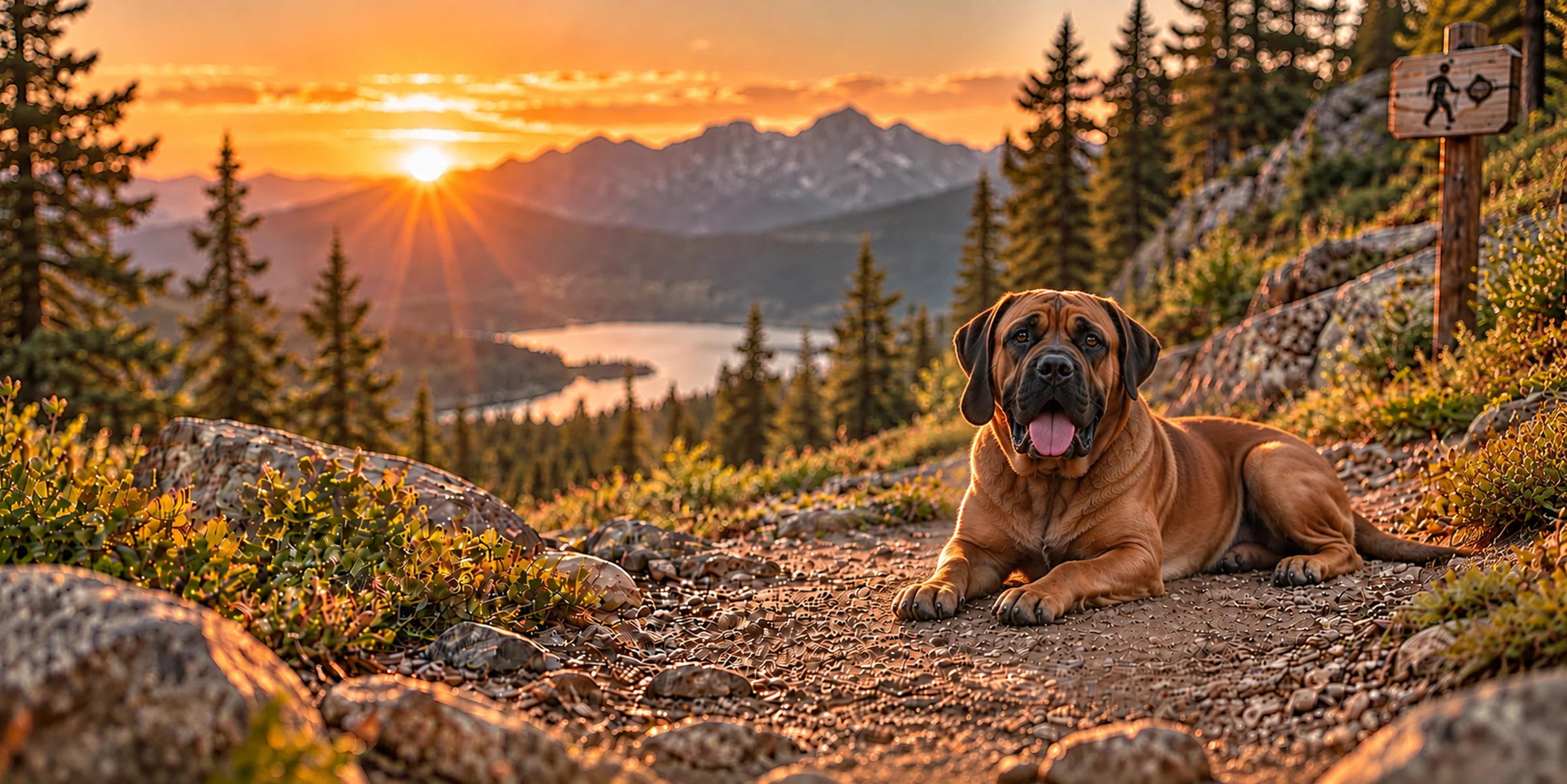
Boerboel
The same mastiff scale with a considerably sharper edge - the Boerboel is more territorial, more dominant and restricted outright in several countries. The Bullmastiff gives you similar presence with a more forgiving temperament.
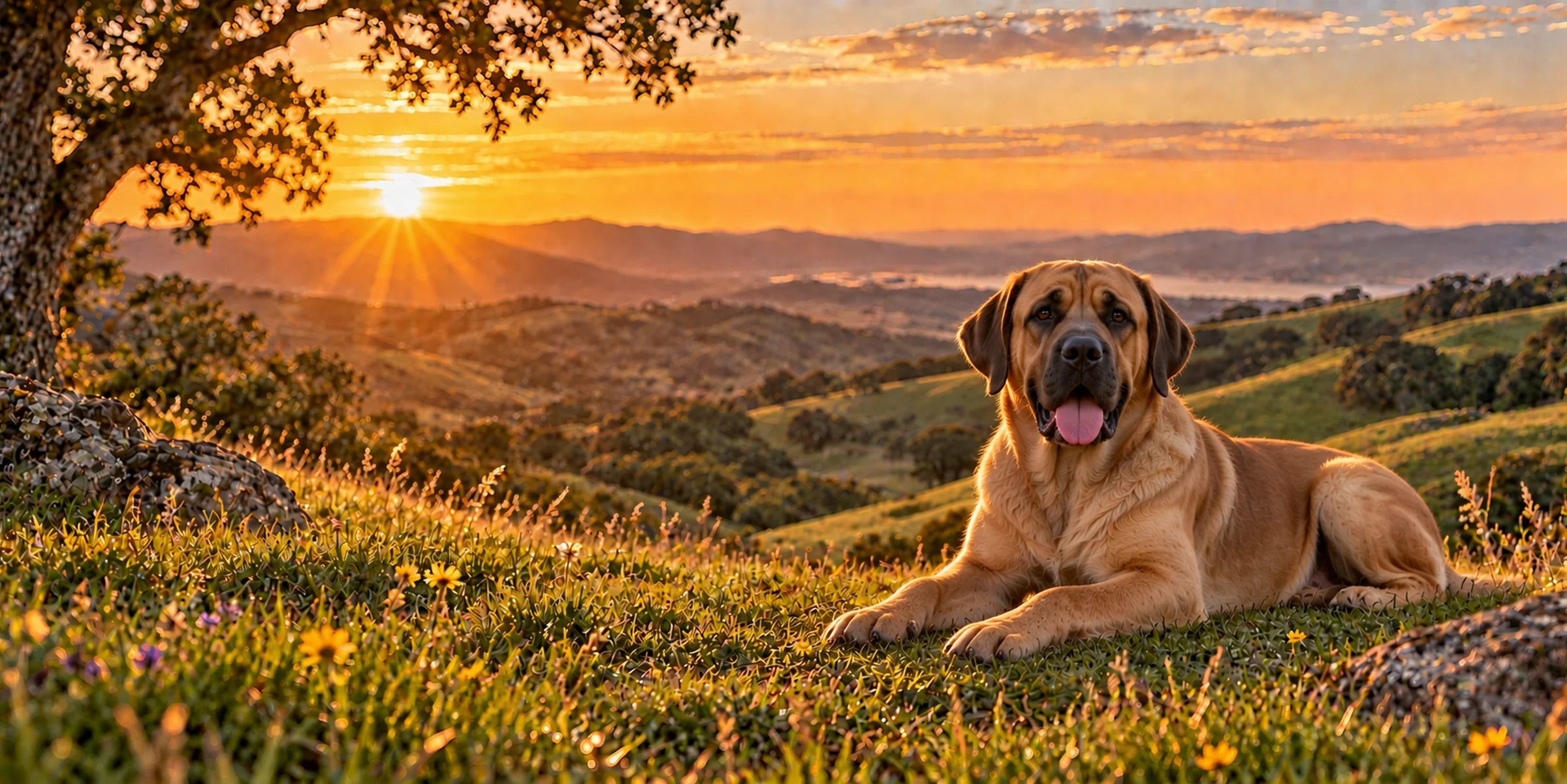
Broholmer
A closely comparable gentle giant from Denmark - similar weight, similar calm, similar short life. The Broholmer is rarer and slightly less protective; the Bullmastiff is easier to find and takes the guarding rather more seriously.