

medium-to-large breed
Canaan Dog
One of the healthiest dogs here and one of the loudest. Canaan Dogs are alert to an extraordinary degree, deeply suspicious of anything new, and intensely bonded to their own household - a combination that makes them a superb alarm dog and a difficult neighbor. Twelve to fifteen years, a weekly brush, and almost no inherited disease to speak of. The voice is what ends most attempts to keep one in a town.

Pup Height
20-24 in

Pup Weight
45-55 lb
Figures are for males; females are 19-23 in and 35-45 lb. Almost any color is allowed - sandy through red-brown, white, black, or patched - which is what you would expect from a landrace rather than a breed shaped for the ring. The Canaan is the national dog of Israel. Source: AKC breed standard.

Pup Lifespan
12-15 years
Your pup, at a glance
What’s Life With This Pup Really Like?

Devoted to their own household and undemonstrative about it. They want to be with their people and near them rather than on them, and none of that warmth extends to visitors.

Good with their own family's children and wary of other people's. A Canaan is not a naturally tolerant dog, and supervision matters more here than with the family breeds.

Manageable with animals they are raised alongside. Strange dogs meet a territorial animal, and there is enough prey drive that small pets are a poor bet.

Among the highest on this site. Alarm barking is what kept their ancestors alive and they apply it to everything - it is the single biggest practical obstacle to owning one in a town.

High but not extreme. Ninety minutes covers them, and the mental half does more work than the physical.

Heavy twice a year and moderate in between. A weatherproof double coat that comes out in handfuls each spring and fall.

Playful with their own people and businesslike about it. They are not clowns, and games with a purpose hold them far better than fetch.

None to speak of. A dry, tidy, efficient dog.

Good in capability and selective in application. They learn fast, weigh whether to comply, and respond badly to pressure - the independence is the point of them rather than a fault.

The highest on this site alongside the guarding breeds, and achieved differently - they miss nothing, trust nothing new, and tell you about all of it.

Low. A weekly brush most of the year, daily during the shed, and nothing else. One of the easier coats here.

Moderate. They cope with climate and terrain remarkably well and adapt poorly to close neighbors, constant strangers and anything resembling a small apartment.
Lifestyle fit
Could This Be Your Best Breed?
A Canaan Dog suits a house with land, a fence they cannot dig under, and neighbors at some distance - plus an owner who will keep socializing them for life rather than for a puppy course. They are cheap to keep at $1,300 to $2,100 a year and live twelve to fifteen years. An apartment with shared walls and a steady stream of visitors is where this falls apart fastest, and it is no one's first dog.

Living Space
A house with land and a fence they cannot dig under, and neighbors at some distance. A Canaan is a genuine alarm dog with an opinion about everything that moves, and shared walls are the fastest way to fall out with everyone around you.

Pup Experience
Not a first dog. Canaans are intelligent, hardy and remarkably sound, and they are also semi-wild survivors only a few generations from living on their own - the suspicion, the guarding and the independence are not training failures but the reason the type survived at all.

Daily Pup Time
An hour to ninety minutes of activity with real mental work, plus a weekly brush and considerably more during the twice-yearly shed. The grooming is easy; the socialization never really stops.

Allergies & Coat
The Canaan Dog scores 6/10 for shedding and 1/10 for drooling. No dog is truly hypoallergenic. The allergens come from dander and saliva, and a dog that sheds this much will leave plenty of hair behind - especially on your furniture, floors, and clothes.
Quirks & challenges
The Not-So-Easy Stuff

They Bark at Everything
Among the loudest breeds on this site, and it is the trait their ancestors survived on. Early work reduces it; nothing removes it.
Suspicious by Nature
Wariness of the unfamiliar is the default setting, not a fault. Without wide early exposure it hardens into genuine fearfulness.
A Landrace, Not a Pet Breed
Only a few generations from living independently. Expect independence, self-preservation and opinions rather than eagerness to please.
Resource Guarding Is Real
Food and possessions matter to a dog whose ancestors scavenged for them. Manageable with early work, and worth planning for.
Digs Like They Mean It
Denning is instinctive. A fence they can get under is not a fence, and a lawn is a starting point.
Socialize Early or Not at All
The window matters more here than in almost any breed on this site, and it closes early. This is the thing to get right.
The good, the bad & the hairy
Health, Care & Costs
Understanding the health risks and ongoing costs of a Canaan Dog helps you plan for a happy, healthy life together.

12-15 years
$45-$70
per groom (bath, deshedding, nails and ears), every 8-12 weeks ($200-$350/year)
$1,300-$2,100/year
all-in (food, routine vet, grooming, insurance, incidentals)

Health Risks
Conditions this breed is prone to.

Worth stating before the list rather than after it: thousands of years of natural selection produced one of the healthiest breeds on this site. There is no signature disease, joint scores are good, and twelve to fifteen years is normal. The conditions below appear, but at rates well under what most pedigree breeds carry.
An inherited disease that slowly destroys the retina. Night vision goes first, then daylight vision, usually ending in blindness. There is no treatment, but it is painless and gradual, and eye clearances on both parents are the protection.
The hip joint develops loosely, so the ball and socket grind instead of gliding. Rates here are low by any standard, but a small breeding population makes parental scores worth seeing rather than assuming.
The thyroid stops producing enough hormone, causing weight gain, lethargy and a coat that thins or dulls. A daily tablet manages it completely and the medication itself is inexpensive.
Seizures with no other underlying cause, usually first appearing between one and five years old. Uncommon here, and controlled with daily medication rather than cured when it does appear.
The kneecap slips out of its groove, producing a skipping step or a leg carried for a stride or two. Mild cases are managed; severe ones need surgery.

Insurance & Health Coverage
One of the strongest health profiles on this site, and the honest consequence is that the case for cover here is weaker than for most breeds.

There is no signature disease to plan around, joint rates are low, and the lifespan is long. What insurance is for in this breed is the ordinary set - a knee that needs surgery, an eye condition, an accident - rather than a near-certain expensive diagnosis.

The small breeding population is the one caveat: published data on a few thousand dogs worldwide is thinner than it looks, so ask a breeder about eye and hip testing directly rather than relying on breed-level reassurance. And if the natural wariness has not been managed well, a bite claim is a real liability question - which is a training issue rather than a health one, but it belongs in the same conversation.
 Get a Pet Insurance Quote
Care needs
The Daily Routine

Grooming
A harsh, weatherproof double coat that needs a weekly brush most of the year and daily attention during the twice-yearly blow, when it comes out in earnest. No trimming and no professional grooming required. Ears, teeth and nails on the usual schedule.

Exercise
An hour to ninety minutes daily with something for the head. Herding, agility, scent work and long walks over varied ground all suit them, and mental work does considerably more to settle them than extra distance.

Food & Weight
Two measured meals with training treats coming out of the ration. They are naturally lean, efficient dogs - a survivor's metabolism means they need less food than you would expect for their size, and they put weight on easily if fed like a working breed.
Similar breeds
If This Isn’t Quite the One
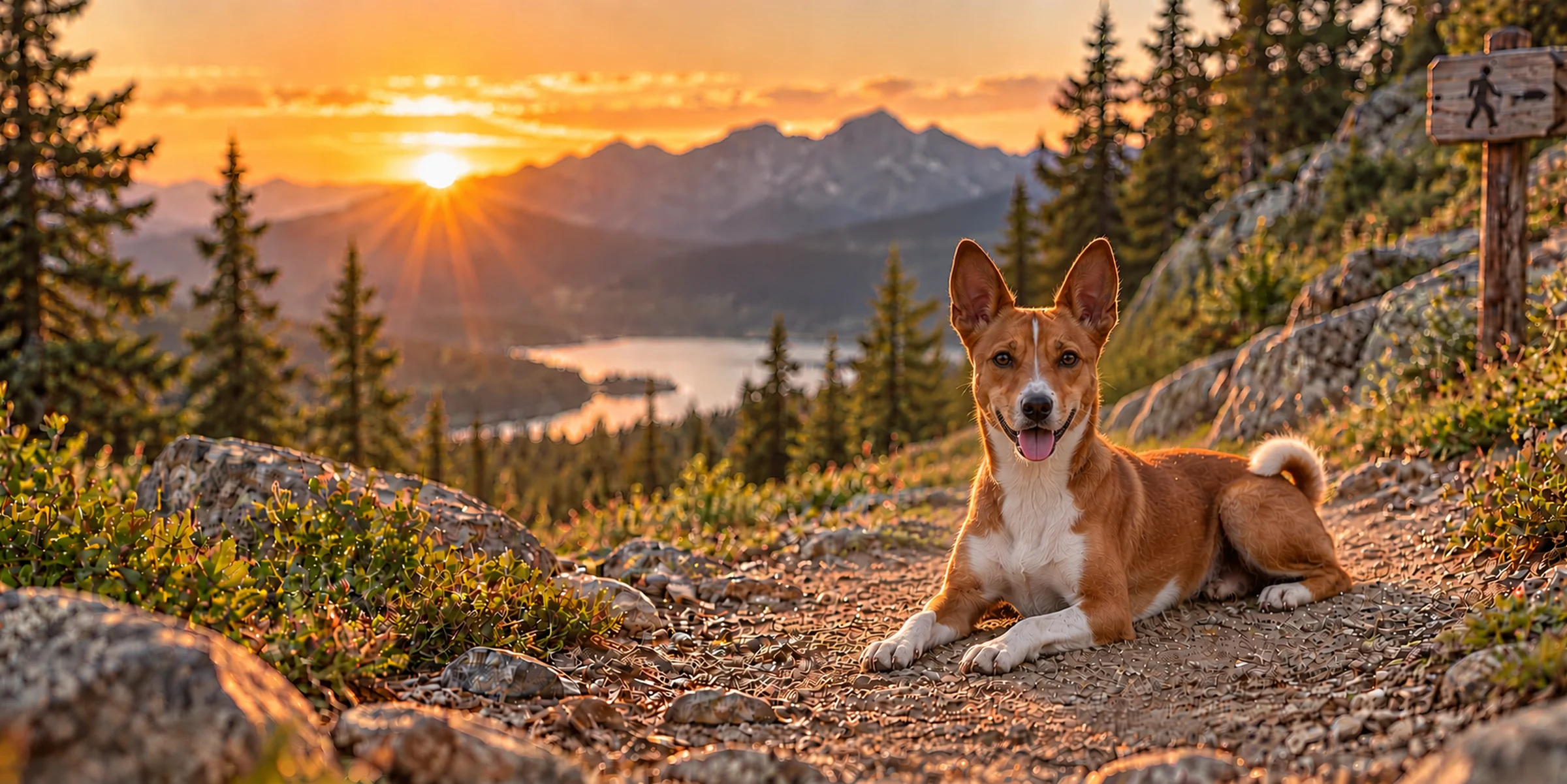
Basenji
The other true landrace here and the closest match on outlook - independent, aloof with strangers, resistant to obedience for its own sake, and shaped by survival rather than by breeders. The Basenji is far smaller and much quieter; the Canaan is the better watchdog by a distance.
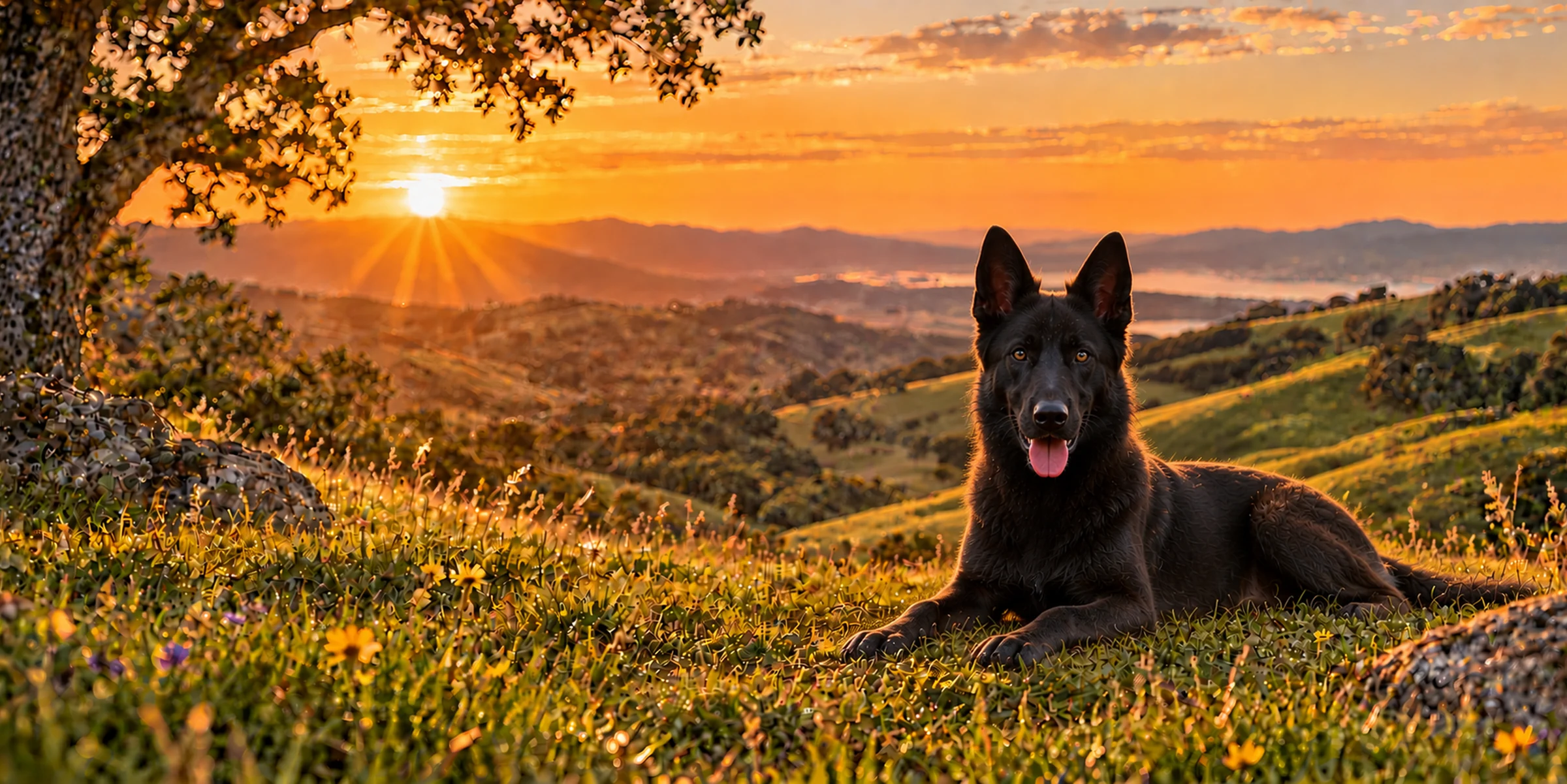
Calupoh
A similar proposition from the other side of the world - a primitive-type dog with real independence and a strong reserve toward strangers. The Calupoh is larger and needs more exercise; the Canaan is more vocal and more territorial.